Of all the economic missteps that can and do happen in the U.S.—prolonged major deficit spending, nonexistent budgets, unpredictable policies, tumultuous tariffs—the worst by far is the possibility of the government defaulting on its payments. But there’s an outside chance of that happening this fall if Congress cannot agree to raise the so-called “debt ceiling.”
While a single standoff in 2011 (that resulted in an increased ceiling) drew a credit rating downgrade from AAA to AA+ from Standard & Poor’s that is still in effect today, the potential damage of an actual default is incalculable. Which is why there is cause for concern: The U.S. hit the debt ceiling of $22 trillion on March 2. At this point, the U.S. cannot issue new bonds to borrow money and so has only cash on hand to pay bills. Only the Treasury Department’s use of so-called extraordinary measures—basically accounting tricks—is keeping the government functioning and not running out of money. But come September, the U.S. officially will run out of cash to pay its obligations. While experts say the probability is low that Congress would allow a default, the unpredictability of Donald Trump makes the unthinkable something that could happen.
Why the ceiling matters
The debt ceiling, first initiated in 1917, is often misunderstood. “The public operates under the misperception that raising the debt ceiling has something to do with the current level of debt, which it does not, or that it has something to do with government spending,” said Eric Winograd, a senior economist at investment management firm AllianceBernstein.
The debt ceiling limits the total amount of outstanding debt the U.S. has incurred by previously issuing Treasury bonds to pay for its financial commitments. The process works in a sense like a credit card, according to Rohit Kumar, now U.S. tax policy services leader for PwC, formerly deputy chief of staff for Senator Mitch McConnell. “When you pay it off, that’s paying for what you spent before, not what you’re spending today,” Kumar said. People don’t tell the credit card company they’re not going to pay because they want to stop spending less today. The credit card issuer expects payment for what people already spent.
“At the end of the day it keeps the full faith and credit of the United states in place,” said Chris Campbell, chief strategist at The Duff & Phelps Institute and former staff director for Orrin Hatch at the Senate Finance Committee. However, consistent deficit spending has put the U.S. into a circular rut, with a constant creation of bonds that add to the total debt, like taking money from one credit card to pay interest on another. But the practice has become critical to the country’s finances.
The nuclear option
Without an increase in the debt ceiling, the U.S. cannot borrow more. “At some point, programs get affected,” said Stuart Greenbaum, retired dean of the Olin Business School at Washington University. “They cut back here, they cut back there on spending.” And some debts don’t get paid, putting the U.S. into default.
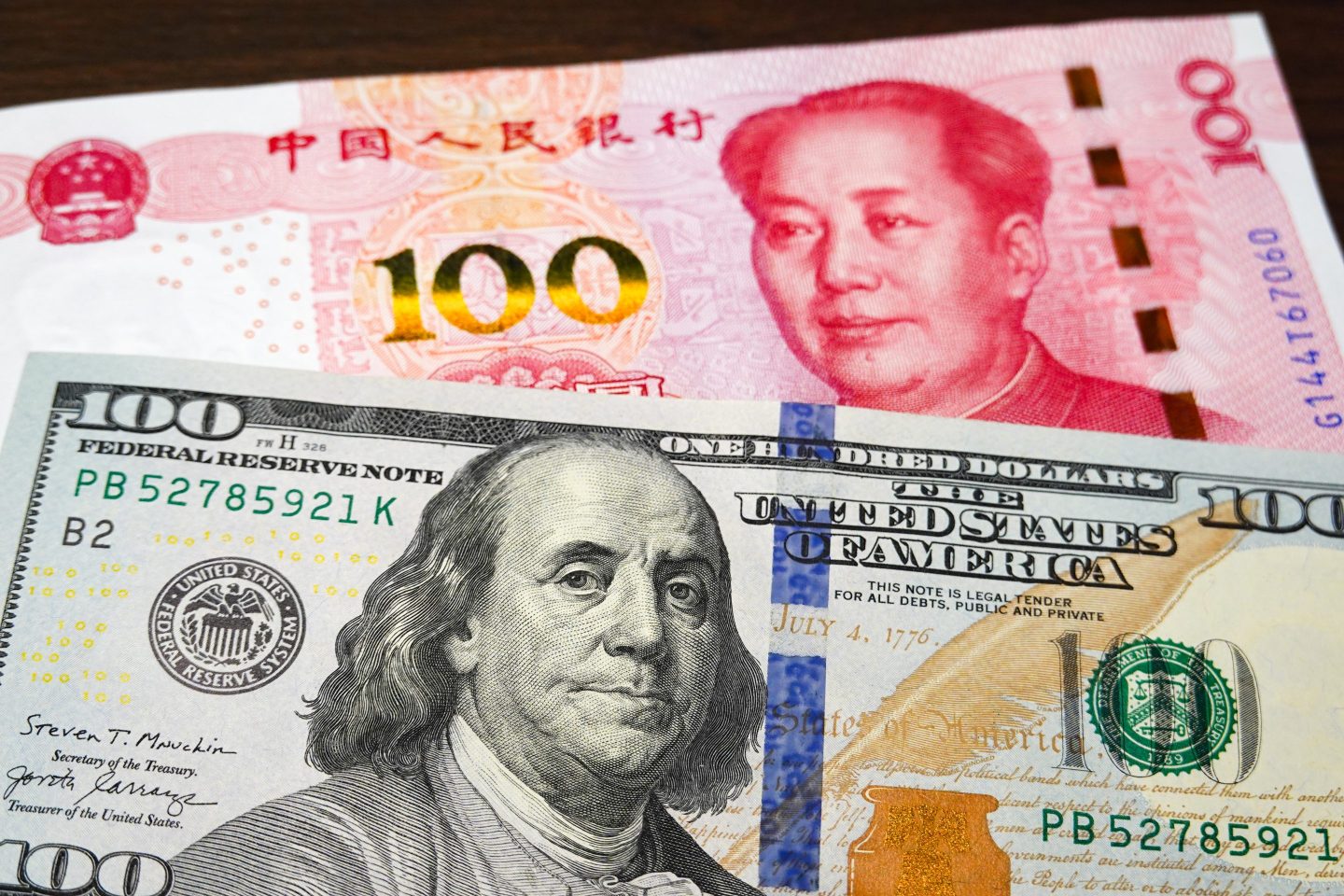
There are two major parts to the danger. One is the dominance of the dollar as a standard currency and critical part of the global economy’s foundation as the universally recognized store of value—the instrument of exchange and financial safety. The U.S. dollar has been the one trustworthy constant in a sea of change. The consequences of a default is unimaginably bad.
“The analogy that somebody used was it was like asking what happened if every nuclear warhead went off—whether you got [only] massive destruction or the end of everything,” said Kumar, who was involved in the negotiations during the 2011 debt crisis.
“Eventually, you can get a run on the dollar,” Greenbaum said. The value of the dollar would plummet, taking with it the stability of international trade and untold amounts of perceived value.
The other issue is the amount of investment that has been placed in the trust of the U.S. “Where are you supposed to go if U.S. assets are not safe?” Winograd asked. “What would be safe?” Nothing. At stake would be the full faith and credit of the U.S. and the global economy.
The waiting game
“I don’t think the markets are going to move in any material way until they get extraordinarily close to that outcome,” said Tony Roth, chief investment officer for Wilmington Trust. The chance of a default should be tiny, except for two factors: time and Trump.
Without pressure in advance, and there is seldom public interest, Congress will do nothing until it returns from its August recess. “Probably in conjunction with whatever the government funding that has to pass before September 30,” said Kumar, with the additional need of a spending bill complicating the picture.
Politics could make things even muddier. With the “Democrats in charge of the House, some of the Republicans may think they have more to gain politically by pushing it to the wall and try to blame the House,” said Joe White, a professor of political science at Case Western Reserve University. “The Republicans think that the problem is spending and the public is on their side, or at least [they are] convinced, so there may be real interest on the Republican side in debt ceiling games. And who knows what the President’s preference is?”
In December 2018, when the House and Senate had reached a compromise on spending, the president refused to sign the bill because it didn’t include the funding he wanted for border security, including the wall. A previous immigration deal fell through at the last minute when issue hard-liners pulled Trump back.
With House Democrats promising ongoing investigations, a deal could be harder to reach.
But one things for sure: If Congress can’t agree on a ceiling, the market will go through the floor.