Two out of three retail workers believe that technology will eventually replace some of their job responsibilities, underscoring the rising concern about the impact of automation and cutting-edge technology on the workplace.
That’s according to a new survey Thursday by The Fair Workweek Initiative, a project spawned from the non-profit labor-monitoring groups The Center for Popular Democracy and Organization United for Respect.
The report is intended to reveal how U.S. retail employees perceive the growing use of technology in their daily work-lives. In short, they see it as both a concern and potential opportunity.
Organizations like the World Economic Forum have forecast that innovations like machine learning will significantly alter the labor market, potentially leading to major job losses while creating new kinds of work. The retail sector is particularly prone to major disruption, led by online giant Amazon as it increases spending on new technology in an effort to cut costs.
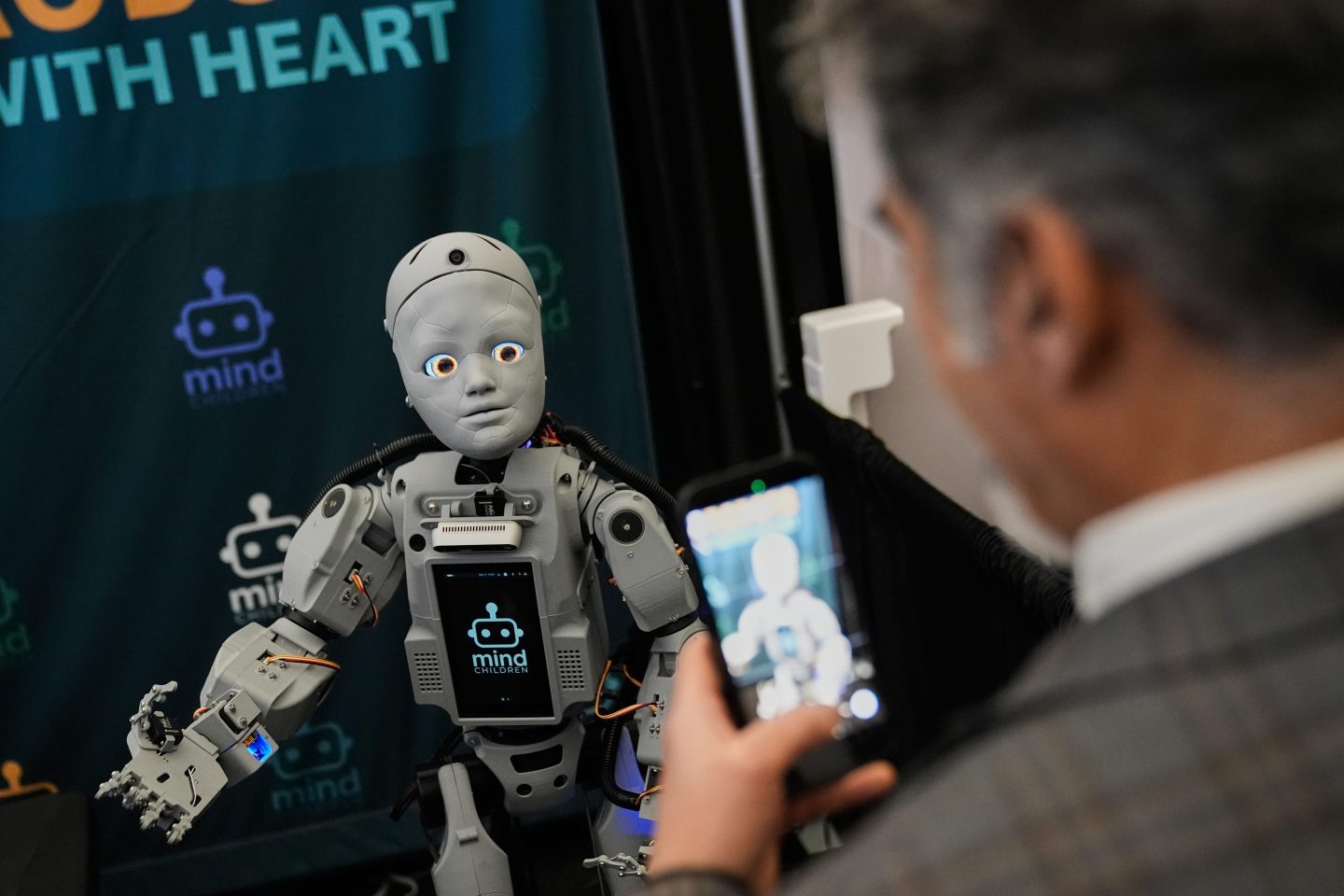
Self-checkout kiosks, computer screens in stores that shoppers can use to look up information, and the early and limited adoption of robots to handle tasks like moving boxes are just some of what’s being adopted in retail. And some of those technologies are already changing how retail employees work.
Overall, the survey shows that retail workers are “optimistic about technology,” said Carrie Gleason, director of the Fair Workweek Initiative. For instance, 62% of the respondents agreed with that notion that new technologies would create new job opportunities.
As an example, Gleason pointed to Amazon potentially using its Whole Foods grocery stores as distribution centers. The practice can create a new kind of job—store clerks who can work for Amazon’s logistics division or who can pick groceries and bag orders that are then delivered to customers.
Additionally, Gleason says that the rise of apps like for ride-sharing service Lyft has made people more hopeful about being able to take on second jobs to supplement their income if their primary jobs don’t pay enough.
Still, 66% of the respondents believe that technology may eventually replace some of their job duties. Meanwhile, 57% said that new technology would have a negative impact on the quality of their jobs such as reducing their wages, hours, and benefits.

The survey is based on responses from 1,100 retail workers at major companies in industries as diverse as automotive, e-commerce, grocery, and clothing. The pool is described as representative of the country’s retail workforce as a whole.
Although technology may eliminate some mundane tasks that employees don’t like, it could also end up “squeezing workers in ways that nobody thought about,” Gleason said.
Self-checkout kiosks, for instance, have replaced some cashiers. However, companies must still assign human workers to the machines to help confused shoppers, troubleshoot glitches, and guard against shoppers walking out the door without paying.
Get Data Sheet, Fortune’s technology newsletter.
Walmart worker Ashley Washington, of North Charleston, SC, said her job of overseeing multiple self-checkout stands—often placed at different areas in the stores—has made her working life more difficult rather than easier. She wishes that the store would hire more people to help her oversee the self-check machines so that “it won’t be so stressful and frustrating.”
Washington said technology may eventually take over her job, but she added that human workers would still be needed in some capacity. “You still need people to oversee the machines because something can always go wrong,” she said.
Despite tech’s impact on retail, 63% of respondents say that their current retail job won’t be fully replaced by technology during their lifetimes. The findings shows that people believe there are still tasks that humans can do more efficiently than machines.

Still, Gleason said the survey “found some contradictions.”
For instance, 78% of female respondents say tech won’t replace their jobs, compared to 50% of male respondents. But the reality, according to the report, is that women face the greatest potential for job loss in retail, primarily because 73% of cashiers are women and “cashiers are considered one of the easiest jobs to automate.”
Gleason said this could be because some women feel that stores need human cashiers for “high-quality customer service” and its relationship to emotional labor, which society often places on women.
But, not all women believe their jobs will be safe from technology. For Dreama Lovett, a Walmart employee in Jacksonville, Fla. who assembles and delivers online orders to customers visiting her Walmart store, “it’s inevitable” that tech will replace some jobs. She pointed to the rise of self-checkout kiosks and the possibility that stores would introduce robots to patrol aisles and potentially clean spills.
If she were to start her career over again, Lovett said that she “would go to school to be a technology person.”
“That’s where the jobs are going to be.”