Even after merger talks between T-Mobile and Sprint broke down last November, T-Mobile CEO John Legere never gave up hope. Combining his third-ranked wireless carrier with fourth-ranked Sprint could potentially unleash cost savings worth tens of billions of dollars and create a company with the heft to truly take on market leaders AT&T and Verizon, Legere believed.
But it wasn’t until a few months later that a leaked White House document about the next generation of wireless networks known as 5G gave Legere a new opening to restart deal talks. The product of a National Security Council staffer’s worries that China would surpass the U.S. in developing 5G technologies, the paper proposed creating a government-built network dubbed “The Eisenhower National Highway System for the Information Age.”
Legere had no interest in a nationalized 5G network, but the alarmist rhetoric on the issue could come in handy, he realized. Antitrust regulators had long opposed reducing the number of major wireless carriers from four down to three. But Sprint and T‑Mobile combined would have greater resources to build a 5G system more quickly than either could separately. The argument helped Legere persuade his corporate parent, Deutsche Telekom, and Masayoshi Son—chairman of Sprint’s majority owner, SoftBank—to finally strike a merger deal.
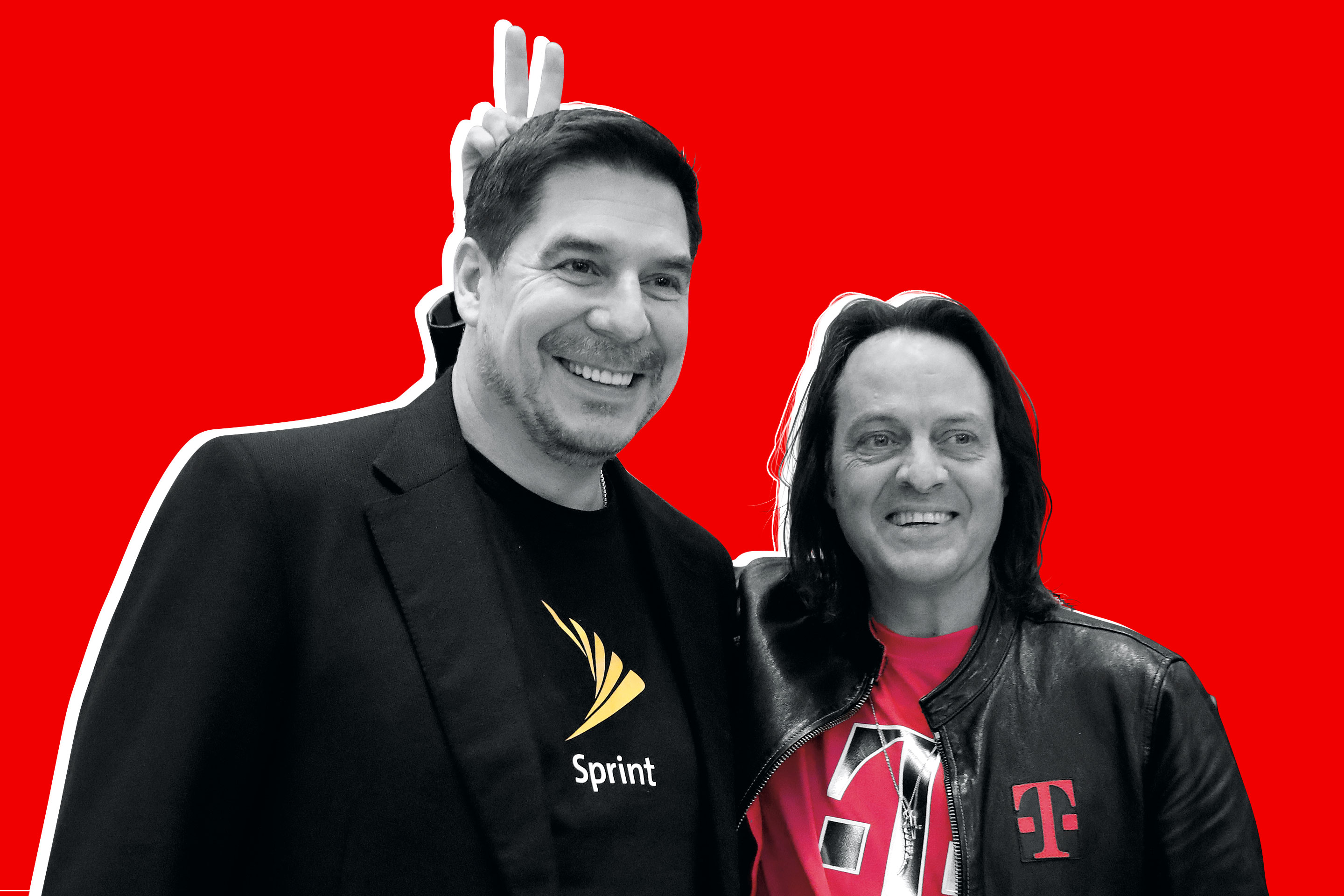
“The awareness by the United States of its trailing countries like China and the possibilities of what we could do together … that became kind of the pushing point for this last emphatic push,” Legere told Fortune after announcing the $26.5 billion deal, which would see him remain CEO of the combined company.
Still, some aren’t convinced. “No matter how you cut it, 5G is not a legitimate justification for this merger,” NYU economics professor and telecom expert Nicholas Economides says. New 5G networks are years away, he says, arguing the real justification for the deal is higher prices.
The 5G argument had better be persuasive, because antitrust experts don’t think much has changed in the wireless market since the Obama administration killed Sprint and T-Mobile’s first effort to combine in 2014, as well as AT&T’s 2011 move to buy T-Mobile. Though the carriers say they will compete even more fiercely if combined—and promise not to raise prices—economists say the incentives shift toward a more cooperative dynamic when a market shrinks from four major players to three.
“We’ve heard all this before,” says Maurice Stucke, who tried cases for the Justice Department’s antitrust division and then helped defend Microsoft when it was sued back in the 1990s. “There’s nothing to suggest the division got it wrong the last two times.”
When President Trump came into office with a pro-business agenda, many inferred a lighter touch on merger reviews. But at least so far, Trump’s antitrust regulators have been active: suing to block AT&T and Time Warner from merging, stopping DraftKings and FanDuel from combining, and even moving to protect competition in the market for prosthetic knees by stopping Otto Bock Healthcare from acquiring rival Freedom Innovations.
“It’s always risky to bet that the antitrust division will view merger law differently due to a change in faces,” says David Turetsky, former deputy assistant attorney general for antitrust. Trump’s top antitrust lawyer, Makan Delrahim, “seems like a serious and experienced enforcer,” he adds.
T-Mobile and Sprint have tried to combat that narrative by pointing to a few new entrants, particularly the services from cable-TV giants Comcast and Charter Communications. But in addition to the tiny market share the cable companies currently have, they are also both leasing wireless service from Verizon, not building their own networks, limiting their ability to cut prices or otherwise undercut their spectrum landlord.
That means it’s all likely to come down to 5G. Qualcomm successfully persuaded the White House to block Broadcom’s unwanted acquisition attempt, saying the deal would slow its 5G push. T-Mobile’s Legere sees a similar argument helping him win approval: “We know all of the ways they’re going to view these questions, and the answers are all in the best interests of all parties involved.”
This article originally appeared in the June 1, 2018 issue of Fortune.