• Home
  • News
  • Fortune 500
  • Tech
  • Finance
  • Leadership
  • Lifestyle
  • Rankings
  • Multimedia
Commentary

Commentary: 3 Reasons Amazon Will Buy Target This Year

By
Gene Munster
Gene Munster
Down Arrow Button Icon
By
Gene Munster
Gene Munster
Down Arrow Button Icon
January 5, 2018, 2:17 PM ET

Amazon is the world’s largest online retailer, about five times bigger in that space than Walmart and its Jet.com subsidiary. Yet despite Amazon’s deep online roots and dominance over Internet shopping, I believe it will buy Target in 2018.

After digging into the realities of both companies, it becomes clear that Amazon buying Target isn’t as bold of a prediction as one might think. Here are three reasons why a merger makes sense.

Offline sales will always be a big part of retail

It’s no secret that online retail is slowly killing offline. My firm, Loup Ventures, estimates that in the fourth quarter of 2017, about 10% of total U.S. retail sales, or about $125 billion, were online. The longer-term question is: How much of total retail will eventually happen online? Based on our analysis of U.S. retail sales by category (excluding gas and restaurant expenditures), 55% of total retail sales should eventually happen online.

Even if half of commerce shifts to online, that still leaves a massive market offline at 45%. People in the future will still want to pick up groceries at a local store. As retail changes dramatically going forward, the biggest winners will promote both online and offline opportunities.

Amazon clearly believes that offline retail is important. In 2017, it acquired 473 Whole Foods locations, opened 13 physical bookstores, and piloted one Amazon Go store, which is an automated convenience store that has no employees or checkout. Acquiring Target would be an extension of this pattern, adding 1,834 stores to bring Amazon’s total retail locations to 2,321. By comparison, Walmart has 5,412 U.S. locations.

An Amazon-Target combination would set up a U.S. retail duopoly. On one end, Walmart and Jet.com would focus on the middle- and low-income consumer, controlling about 25% of the market. On the other end, Amazon, Target, and Whole Foods would go after the high-income consumer, controlling about 15% market share.

They both pursue affluent consumers

Amazon’s acquisition of Whole Foods last year confirmed that the online giant’s focus is on the high-income consumer. Market research firm GfK MRI estimates the median household income for an Amazon shopper is $90,100, similar to Whole Foods at $95,200. Target reports its average shopper earns $87,000. These far exceed the U.S. median household income of $55,322.

By buying Target, Amazon would solidify its dominance of the high-income consumer. Conversely, if Amazon were to acquire a company targeting lower-income customers, such as Dollar Tree, Amazon would steer its focus away from its core consumers. In my years of observing tech companies, I’ve seen that owning a demographic usually yields the best results.

Brick and mortar will get more advanced

Over the following 10 years, I’d expect Amazon to convert Target and Whole Foods stores to an automated model with few employees. Stores would be monitored by computer vision systems; shelves would be stocked by robots; customers would be helped by service robots that understand natural language; and checkout would resemble Amazon Go locations, where customers simply walk out with their purchases. In this future, the lines between online shopping and automated brick and mortar stores would blur, as cost-focused stores become more like smart warehouses. The few employees working in stores would focus on delivering personalized service based on mutual understanding and empathy, which would enable retailers to differentiate themselves.

Any number of factors could derail such a combination, including government intervention. But sometimes mergers make too much sense to ignore. Amazon buying Target is one such situation.

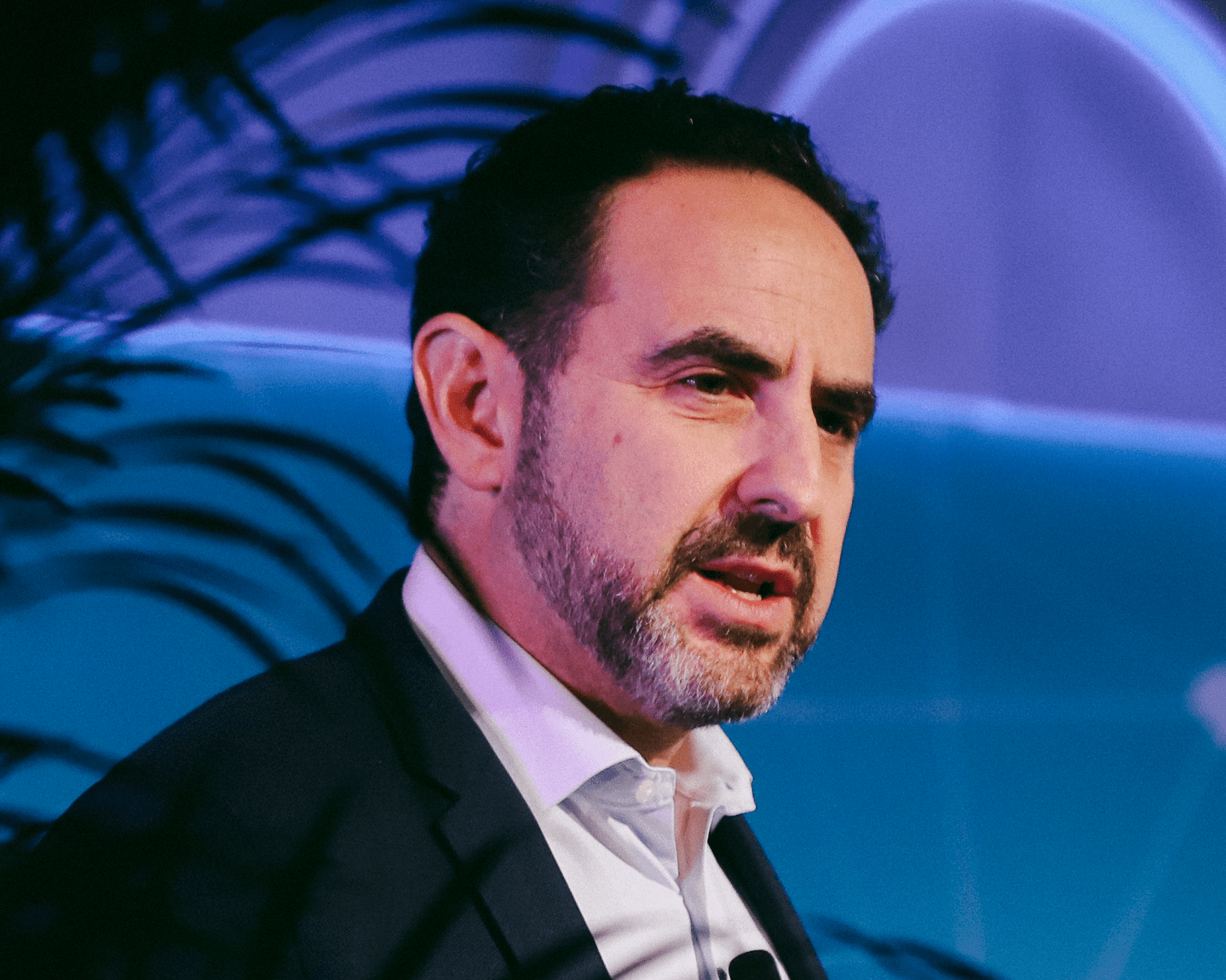
Gene Munster is a managing partner at Loup Ventures. He is not an investor of Amazon, Target, or Walmart.
About the Author
By Gene Munster
See full bioRight Arrow Button Icon

Latest in Commentary

Alex Amouyel is the President and CEO of Newman’s Own Foundation
Commentaryphilanthropy
Following in Paul Newman and Yvon Chouinard’s footsteps: There are more ways for leaders to give it away in ‘the Great Boomer Fire Sale’ than ever
By Alex AmouyelDecember 7, 2025
18 hours ago
Amit Walia
CommentaryM&A
Why the timing was right for Salesforce’s $8 billion acquisition of Informatica — and for the opportunities ahead
By Amit WaliaDecember 6, 2025
2 days ago
Steve Milton is the CEO of Chain, a culinary-led pop-culture experience company founded by B.J. Novak and backed by Studio Ramsay Global.
CommentaryFood and drink
Affordability isn’t enough. Fast-casual restaurants need a fandom-first approach
By Steve MiltonDecember 5, 2025
3 days ago
Paul Atkins
CommentaryCorporate Governance
Turning public companies into private companies: the SEC’s retreat from transparency and accountability
By Andrew BeharDecember 5, 2025
3 days ago
Matt Rogers
CommentaryInfrastructure
I built the first iPhone with Steve Jobs. The AI industry is at risk of repeating an early smartphone mistake
By Matt RogersDecember 4, 2025
4 days ago
Jerome Powell
CommentaryFederal Reserve
Fed officials like the mystique of being seen as financial technocrats, but it’s time to demystify the central bank
By Alexander William SalterDecember 4, 2025
4 days ago

Most Popular

placeholder alt text
Real Estate
The 'Great Housing Reset' is coming: Income growth will outpace home-price growth in 2026, Redfin forecasts
By Nino PaoliDecember 6, 2025
2 days ago
placeholder alt text
AI
Nvidia CEO says data centers take about 3 years to construct in the U.S., while in China 'they can build a hospital in a weekend'
By Nino PaoliDecember 6, 2025
2 days ago
placeholder alt text
Economy
The most likely solution to the U.S. debt crisis is severe austerity triggered by a fiscal calamity, former White House economic adviser says
By Jason MaDecember 6, 2025
1 day ago
placeholder alt text
Economy
JPMorgan CEO Jamie Dimon says Europe has a 'real problem’
By Katherine Chiglinsky and BloombergDecember 6, 2025
1 day ago
placeholder alt text
Big Tech
Mark Zuckerberg rebranded Facebook for the metaverse. Four years and $70 billion in losses later, he’s moving on
By Eva RoytburgDecember 5, 2025
3 days ago
placeholder alt text
Politics
Supreme Court to reconsider a 90-year-old unanimous ruling that limits presidential power on removing heads of independent agencies
By Mark Sherman and The Associated PressDecember 7, 2025
15 hours ago
Rankings
  • 100 Best Companies
  • Fortune 500
  • Global 500
  • Fortune 500 Europe
  • Most Powerful Women
  • Future 50
  • World’s Most Admired Companies
  • See All Rankings
Sections
  • Finance
  • Leadership
  • Success
  • Tech
  • Asia
  • Europe
  • Environment
  • Fortune Crypto
  • Health
  • Retail
  • Lifestyle
  • Politics
  • Newsletters
  • Magazine
  • Features
  • Commentary
  • Mpw
  • CEO Initiative
  • Conferences
  • Personal Finance
  • Education
Customer Support
  • Frequently Asked Questions
  • Customer Service Portal
  • Privacy Policy
  • Terms Of Use
  • Single Issues For Purchase
  • International Print
Commercial Services
  • Advertising
  • Fortune Brand Studio
  • Fortune Analytics
  • Fortune Conferences
  • Business Development
About Us
  • About Us
  • Editorial Calendar
  • Press Center
  • Work At Fortune
  • Diversity And Inclusion
  • Terms And Conditions
  • Site Map

© 2025 Fortune Media IP Limited. All Rights Reserved. Use of this site constitutes acceptance of our Terms of Use and Privacy Policy | CA Notice at Collection and Privacy Notice | Do Not Sell/Share My Personal Information
FORTUNE is a trademark of Fortune Media IP Limited, registered in the U.S. and other countries. FORTUNE may receive compensation for some links to products and services on this website. Offers may be subject to change without notice.