• Home
  • Latest
  • Fortune 500
  • Finance
  • Tech
  • Leadership
  • Lifestyle
  • Rankings
  • Multimedia
Commentary

Commentary: Where Did Trump’s Lawyer Hear a President Can’t Obstruct Justice?

By
David Alan Sklansky
David Alan Sklansky
and
Bethany Cianciolo
Down Arrow Button Icon
December 6, 2017, 2:33 PM ET
Galleon Group Co-Founder Raj Rajaratnam Insider Trading Trial
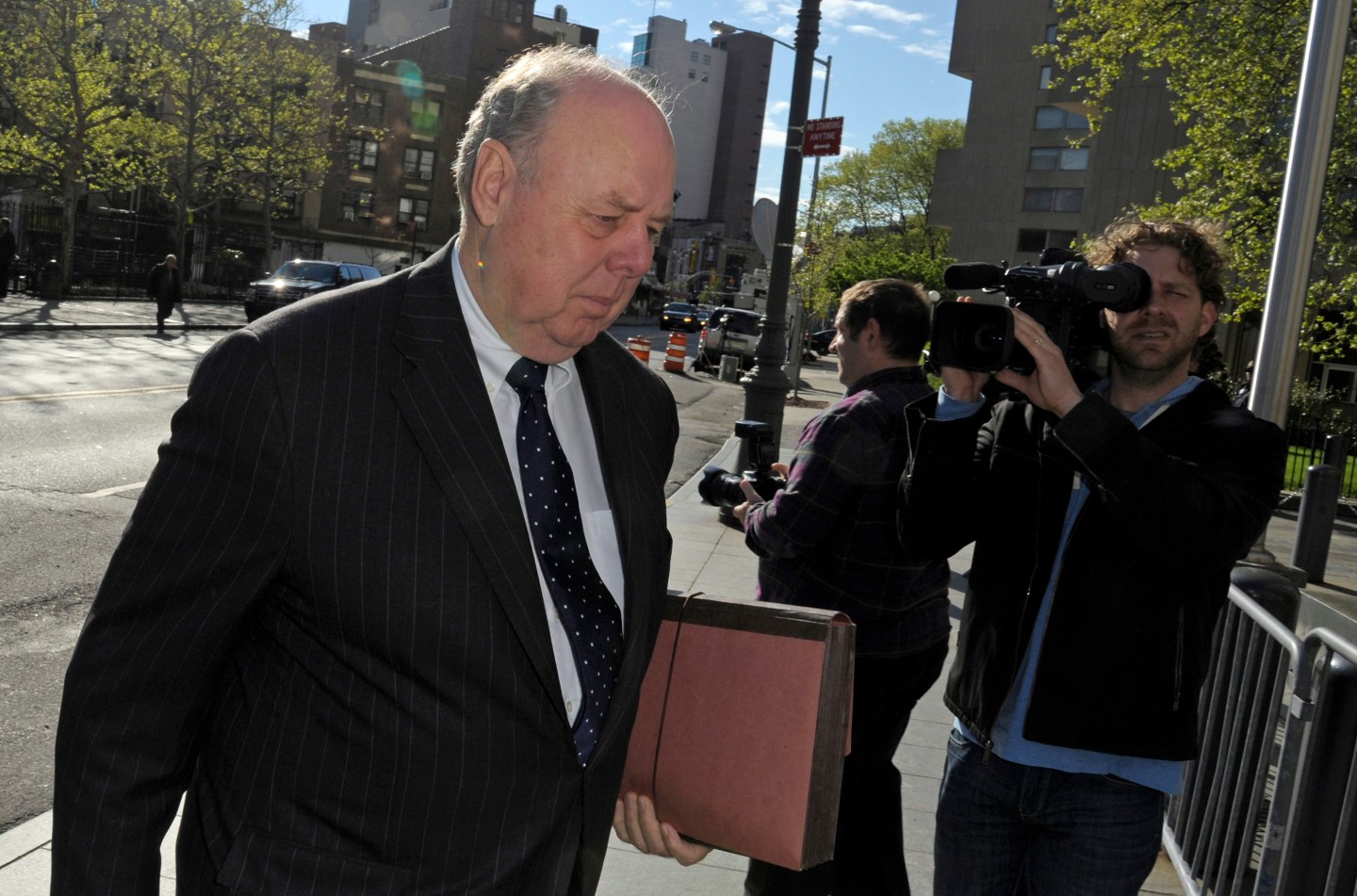
John Dowd, lead attorney for Raj Rajaratnam, co-founder of Galleon Group LLC, enters federal court in New York, U.S., on Thursday, May 5, 2011. Jurors in the insider-trading trial of Rajaratnam reheard recordings of wiretapped conversations played for them last week after restarting deliberations following the replacement of one member of the panel. Photographer: Peter Foley/Bloomberg via Getty ImagesPeter Foley—Bloomberg via Getty Images

Earlier this week, Donald Trump’s personal lawyer, John Dowd, said that the president “cannot obstruct justice.” He didn’t mean that the president shouldn’t obstruct justice, which would seem like a commonsensical proposition. He meant that it’s literally impossible for the president to obstruct justice, because anything the president does is, by definition, not obstruction—or at least anything he says to federal law enforcement officials.

It couldn’t have been obstruction of justice, for example, for Trump to ask the FBI director to drop the criminal investigation of Trump’s former national security advisor, Michael Flynn, who pleaded guilty to a felony last week. Dowd’s argument was that the Constitution makes the president the nation’s “chief law enforcement officer,” and that he “has every right to express his view of any case.” Therefore, the president can’t obstruct justice.

If that sounds like a non sequitur, it is. It amounts to saying that since the president oversees federal law enforcement, anything he does in that capacity has to be allowed. It’s a terrible argument. It is, in fact, almost precisely the argument that President Richard Nixon made 40 years ago, defending his authority to order illegal wiretaps and burglaries. “When the president does it,” Nixon said, “that means it is not illegal.” Nixon’s claim was rightly ridiculed, and Dowd’s variant isn’t much better.

Federal statutes make it a crime to “corruptly” interfere with, impede, or influence an official investigation, or to try to do so. “Corruptly” basically means with bad intent. It’s not a crime for a local sheriff to shut down an investigation because it doesn’t seem to be going anywhere; it is a crime if the motive is to avoid implicating the sheriff’s brother-in-law. The same rules apply to the president. There’s no exception in obstruction of justice statutes—or in any other criminal statutes—for the head of the Executive Branch.

There’s a longstanding debate about whether a sitting president can be prosecuted for a crime. Some legal scholars have thought that facing criminal charges while still in office would be an unacceptable distraction from the president’s important duties. That’s a tough argument to make, though, with respect to a president who spends much of his time watching television talk shows. More importantly, there’s little doubt that a president can be guilty of a crime committed while he is in office, or that—statutes of limitation aside—he can be prosecuted for the crime once he is again a private citizen. For example, when President Gerald Ford pardoned Nixon for offenses that Nixon may have committed while in office, the background assumption—which Ford made explicit—was that, without a pardon, Nixon could in fact be indicted by a grand jury and face a criminal trial.

One reason some scholars have suggested that a sitting president can’t be indicted is that the Constitution provides a separate way to deal with criminality in the Oval Office: impeachment. Impeachment is inevitably a political process, because it is handled entirely by Congress. The House of Representatives decides whether to charge the president, and the trial is conducted by the Senate. But impeachment is a legal process, too. The Constitution provides a legal standard for impeachment: “treason, bribery, or other high crimes and misdemeanors.” And Congress has historically taken care to interpret that clause in a principled manner.

One rule that emerges from history is that “high crimes and misdemeanors” can include obstruction of justice by the president. Nixon’s obstruction of justice—including his efforts “to interfere with the conduct of investigations by the Department of Justice”—constituted part of the grounds for the articles of impeachment adopted by the House Judiciary Committee in July 1974, triggering Nixon’s resignation. The articles of impeachment adopted by the full House of Representatives against President Bill Clinton in 1998 also included obstruction of justice, relating to the sexual harassment suit brought against Clinton by Paul Jones and the cover-up of Clinton’s relationship with Monica Lewinsky. The Senate rejected the charges against Clinton. What it did not reject was the underlying tenets that obstruction of justice can be grounds for impeachment, and that no one, not even the president, is above the law.

David Alan Sklansky is a law professor at Stanford and a former federal prosecutor.
About the Authors
By David Alan Sklansky
See full bioRight Arrow Button Icon
By Bethany Cianciolo
See full bioRight Arrow Button Icon

Latest in Commentary

Finance
Lorem ipsum dolor sit amet, consectetur adipiscing elit, sed do eiusmod tempor incididunt ut labore et dolore magna aliqua. Ut enim ad minim veniam
By Fortune Editors
October 20, 2025
Finance
Lorem ipsum dolor sit amet, consectetur adipiscing elit, sed do eiusmod tempor incididunt ut labore et dolore magna aliqua. Ut enim ad minim veniam
By Fortune Editors
October 20, 2025
Finance
Lorem ipsum dolor sit amet, consectetur adipiscing elit, sed do eiusmod tempor incididunt ut labore et dolore magna aliqua. Ut enim ad minim veniam
By Fortune Editors
October 20, 2025
Finance
Lorem ipsum dolor sit amet, consectetur adipiscing elit, sed do eiusmod tempor incididunt ut labore et dolore magna aliqua. Ut enim ad minim veniam
By Fortune Editors
October 20, 2025
Finance
Lorem ipsum dolor sit amet, consectetur adipiscing elit, sed do eiusmod tempor incididunt ut labore et dolore magna aliqua. Ut enim ad minim veniam
By Fortune Editors
October 20, 2025
Finance
Lorem ipsum dolor sit amet, consectetur adipiscing elit, sed do eiusmod tempor incididunt ut labore et dolore magna aliqua. Ut enim ad minim veniam
By Fortune Editors
October 20, 2025

Most Popular

Finance
Lorem ipsum dolor sit amet, consectetur adipiscing elit, sed do eiusmod tempor incididunt ut labore et dolore magna aliqua. Ut enim ad minim veniam
By Fortune Editors
October 20, 2025
Finance
Lorem ipsum dolor sit amet, consectetur adipiscing elit, sed do eiusmod tempor incididunt ut labore et dolore magna aliqua. Ut enim ad minim veniam
By Fortune Editors
October 20, 2025
Finance
Lorem ipsum dolor sit amet, consectetur adipiscing elit, sed do eiusmod tempor incididunt ut labore et dolore magna aliqua. Ut enim ad minim veniam
By Fortune Editors
October 20, 2025
Finance
Lorem ipsum dolor sit amet, consectetur adipiscing elit, sed do eiusmod tempor incididunt ut labore et dolore magna aliqua. Ut enim ad minim veniam
By Fortune Editors
October 20, 2025
Finance
Lorem ipsum dolor sit amet, consectetur adipiscing elit, sed do eiusmod tempor incididunt ut labore et dolore magna aliqua. Ut enim ad minim veniam
By Fortune Editors
October 20, 2025
Finance
Lorem ipsum dolor sit amet, consectetur adipiscing elit, sed do eiusmod tempor incididunt ut labore et dolore magna aliqua. Ut enim ad minim veniam
By Fortune Editors
October 20, 2025
Rankings
  • 100 Best Companies
  • Fortune 500
  • Global 500
  • Fortune 500 Europe
  • Most Powerful Women
  • Future 50
  • World’s Most Admired Companies
  • See All Rankings
Sections
  • Finance
  • Leadership
  • Success
  • Tech
  • Asia
  • Europe
  • Environment
  • Fortune Crypto
  • Health
  • Retail
  • Lifestyle
  • Politics
  • Newsletters
  • Magazine
  • Features
  • Commentary
  • Mpw
  • CEO Initiative
  • Conferences
  • Personal Finance
  • Education
Customer Support
  • Frequently Asked Questions
  • Customer Service Portal
  • Privacy Policy
  • Terms Of Use
  • Single Issues For Purchase
  • International Print
Commercial Services
  • Advertising
  • Fortune Brand Studio
  • Fortune Analytics
  • Fortune Conferences
  • Business Development
About Us
  • About Us
  • Editorial Calendar
  • Press Center
  • Work At Fortune
  • Diversity And Inclusion
  • Terms And Conditions
  • Site Map

© 2025 Fortune Media IP Limited. All Rights Reserved. Use of this site constitutes acceptance of our Terms of Use and Privacy Policy | CA Notice at Collection and Privacy Notice | Do Not Sell/Share My Personal Information
FORTUNE is a trademark of Fortune Media IP Limited, registered in the U.S. and other countries. FORTUNE may receive compensation for some links to products and services on this website. Offers may be subject to change without notice.


Latest in Commentary

Charles Lamanna
CommentaryMicrosoft
I lead Microsoft’s enterprise AI agent strategy. Here’s what every company should know about how agents will rewrite work
By Charles LamannaDecember 15, 2025
11 hours ago
Julian Braithwaite is the Director General of the International Alliance for Responsible Drinking
CommentaryProductivity
Gen Z is drinking 20% less than Millennials. Productivity is rising. Coincidence? Not quite
By Julian BraithwaiteDecember 13, 2025
2 days ago
carbon
Commentaryclimate change
Banking on carbon markets 2.0: why financial institutions should engage with carbon credits
By Usha Rao-MonariDecember 13, 2025
2 days ago
Dr. Javier Cárdenas is the director of the Rockefeller Neuroscience Institute NeuroPerformance Innovation Center.
Commentaryconcussions
Fists, not football: There is no concussion protocol for domestic violence survivors
By Javier CárdenasDecember 12, 2025
3 days ago
Gary Locke is the former U.S. ambassador to China, U.S. secretary of commerce, and governor of Washington.
CommentaryChina
China is winning the biotech race. Patent reform is how we catch up
By Gary LockeDecember 12, 2025
3 days ago
millennial
CommentaryConsumer Spending
Meet the 2025 holiday white whale: the millennial dad spending $500+ per kid
By Phillip GoerickeDecember 12, 2025
3 days ago

Most Popular

placeholder alt text
Success
'I had to take 60 meetings': Jeff Bezos says 'the hardest thing I've ever done' was raising the first million dollars of seed capital for Amazon
By Dave SmithDecember 15, 2025
7 hours ago
placeholder alt text
Success
Meetings are not work, says Southwest Airlines CEO—and he’s taking action, by blocking his calendar every afternoon from Wednesday to Friday 
By Preston ForeDecember 15, 2025
9 hours ago
placeholder alt text
Success
Sorry, six-figure earners: Elon Musk says that money will 'disappear' in the future as AI makes work (and salaries) irrelevant
By Orianna Rosa RoyleDecember 15, 2025
11 hours ago
placeholder alt text
AI
Deloitte's CTO on a stunning AI transformation stat: Companies are spending 93% on tech and only 7% on people
By Nick LichtenbergDecember 15, 2025
14 hours ago
placeholder alt text
Uncategorized
Transforming customer support through intelligent AI operations
By Lauren ChomiukNovember 26, 2025
19 days ago
placeholder alt text
Real Estate
A 'new era' in the housing market is about to begin as affordability finally improves 'for the first time in a bunch of years,' economist says
By Jason MaDecember 14, 2025
1 day ago