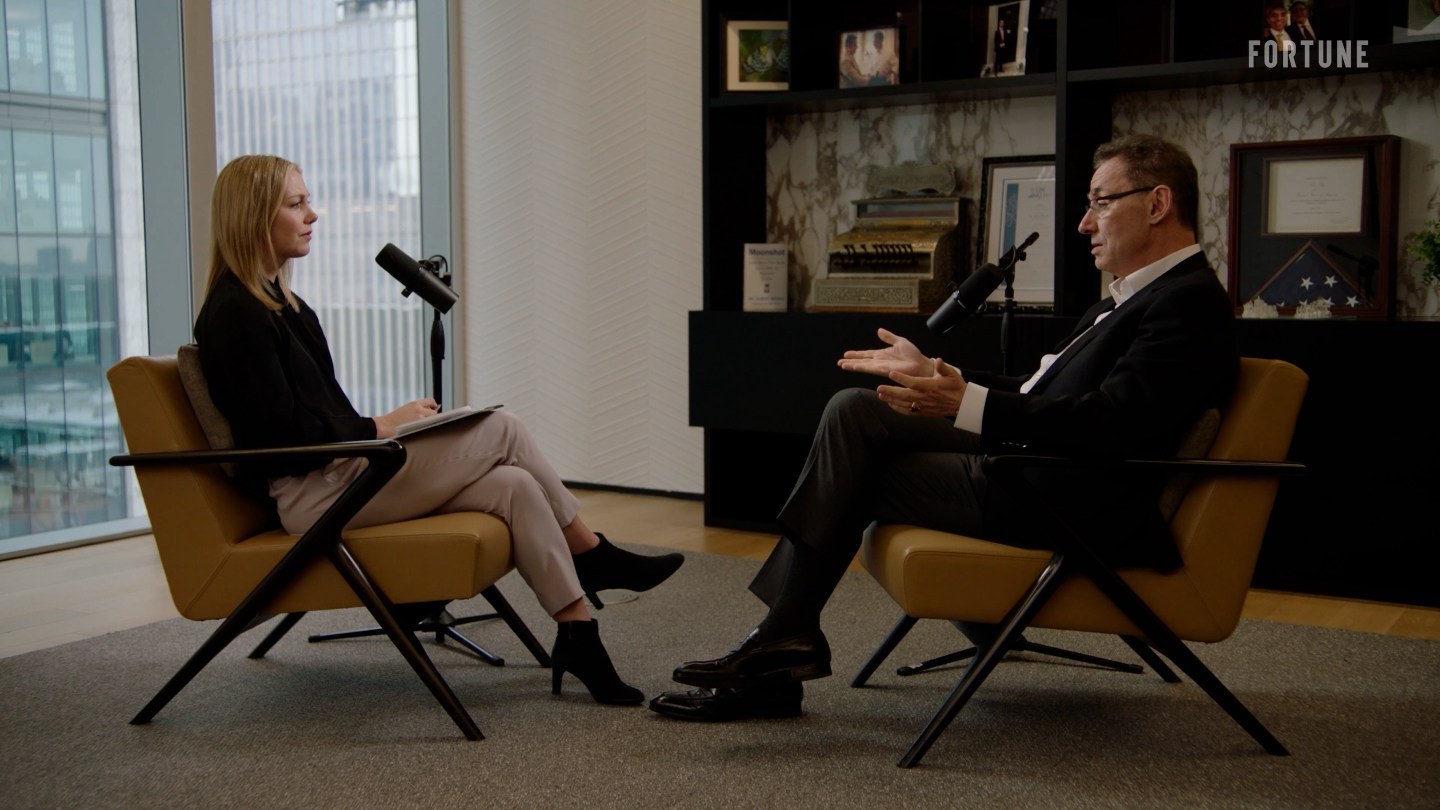
Those who know me well know that I am an unabashed devotee of the author, podcaster, and life-hacking guru Tim Ferriss. I’ve listened to too many of his podcasts to count, and applied many tips from them to my life. So when I heard he had a new book coming out, the 624-page Tribe of Mentors: Short Life Advice from the Best in the World, I had to seize the opportunity to sit down with him. (I did the same thing last year, when he released Tools of Titans: the Tactics, Routines, and Habits of Billionaires, Icons and World-Class Performers, a 736-page tome full of life advice of a different sort.) In this excerpt of our conversation, we explored why he chose to write a book again so soon—and how the serial experimenter approached the daunting process of preparing for his first TED talk.
Fortune: So why did you do this book? Your last book, Tools of Titans, came out a year ago and was an enormous volume of advice, and you’ve followed it less than a year later with another enormous volume of advice. What was the ‘why’ behind this book?
Ferriss: I didn’t have any plans to do another book, but I had a really difficult 2017, the ingredients of which included a number of things. It had me observing the passing of a number of close friends in close succession. I turned 40, so then having that reminder of mortality. I didn’t have a midlife crisis, but I did have a midlife realization. I was like, ‘okay, maybe I’m more than halfway around this single lap that we call life.’ And also, on the 10th anniversary to the day of the publication of The 4-Hour Workweek, I got on stage at TED for the first time and gave a brand new talk. I had a presentation ready that I had worked on for months, and I scrapped it the week before to do an entirely new talk, where I came out and talked very, very bluntly about my close brush with suicide in college. The juxtaposition of having the tenth anniversary of what people perceive to be and is, objectively, a publishing success come on the day when I went back to the darkest period of my life was really surreal.
All those things combined led me to want to take a step back and reassess my priorities: My relationships with loved ones, how well or not so well was I separating the “trivial many” from the “critical few,” and so on. And I sat with these questions and I asked myself, what might answering these questions look like if it were easy? And the answer I came up with was taking the same questions I’m struggling to answer, sending them to a dream list of a few people I would love to have as mentors, and having them give me answers I could copy and paste or test out. And as I started getting these fricking amazing answers, I thought, if I’m going to go and do all this work, why don’t I just come up with the incentive of writing a book so that I can get even more people to respond, and then compile it and share it? So that’s how it came to be. I really couldn’t find the book that I needed, so I compiled it for myself. And it’s just a playbook full of other people’s playbooks. That’s it.
As you say, you gave your first TED talk this year. You certainly speak a lot, but mostly on your podcast.
Most of my speaking is by myself in my house. I don’t handle groups very well.
I think a lot of people don’t. But TED is another order of intimidating. I gave a TED talk once and I’ve never in my life seen so many successful people sweat so much. So what kind of coaching did Tim Ferriss get for that? What did you do to get yourself ready?
Well, I did get some excellent tips from Tim Urban who has a fantastic blog, everyone should check out Wait But Why [author’s note: Urban’s post about preparing for his own TED talk is here and it is genius]. Tim was responsible for coaching four or five [TED speakers] and I was in that group. His job was made very difficult by the fact that I had scrapped the talk I was going to do and started over literally somewhere between five and seven days before the event. At that point, I was in such a crunch mode that there really wasn’t a lot of productive room for feedback. I just had to hone whatever I had and deliver that. But there were a few things I did for TED that were very different from prior speaking engagements that I think were useful.
This talk was targeted for 12 to 14 minutes. And it turns out that 60 minute speaking engagements or 30 minute speaking engagements are a lot easier than this very, very weird in between space that is 12 to 14 minutes. I had a lot of trouble with that length for purposes of storytelling and making the points and so on that I like to make. So I walked around—at the time San Francisco and then in Austin, Texas, where I live now—recording voice memos on my phone, with headphones in so I didn’t look like a complete lunatic, rehearsing over and over and over, and over and over again. And then text messaging certain versions I felt were reasonably strong as a rough draft to friends who could then provide feedback. So that was step one.
Once I had the timing down in solo practice, I realized that from a simulation standpoint, it was unproductive to practice with a single audience member, because then you feel obligated to do things that you would never do in a real game environment, like maintain eye contact with one person as you’re talking. It’s super weird. You don’t want to do that and it’s going to throw you off when you’re then in front of 1,500 people.
So I did two things. One was trying to replicate the stress and the hormones and anxiety that I would feel at TED just before giving the talk. And the way that I manufactured that was twofold. Number one, I called friends of mine who worked at startups with, say, 100-plus employees and I asked them if I could use the largest conference room they had available during lunch on a given day, and if they would be so kind as to send an email around inviting people to listen to a TED speaker rehearsing their talk and if they wanted to give feedback. So I’d have a room full of strangers, and I would give my presentation to them. And I would very often do two rehearsals for each meeting: I would do my 12 to 14 minutes, I would then get feedback from the group, and then I would do a round two and get a second round of feedback based on their recommendations, which proved really helpful.
By then I’m feeling pretty relaxed, but you’re not going to feel relaxed at TED, so what I then started to do is I would slam, say, three or four cups of coffee; do, like, 30 burpees so that I’m at 180 [heart]beats per minute; and then walk in, boom, hit play, and start my talk. Just to simulate how overstimulated and herky-jerky my physiology would be. That gave me a lot of confidence going into it, even though I was nervous as hell.
And like you said, if you really want to not feel calm, you can go to, I think they call it the “Chill Out Booth” or something right before the TED stage. Behind the scenes, they have a space that is a staging area for the next three to four speakers, and they call it the Chill Out Zone, or they use some label that’s intended to make everyone feel very zenned out. But when you go to the Chill Out Zone, it’s people freaking the fuck out. So I really avoided that place like the plague.
Another thing I did, and I appreciate the TED staff being understanding about this, is I politely declined being in the audience before my talk. There’s no upside, as far as I’m concerned. Either you’re going to see people hitting it out of the park and you’re going to feel really intimidated or go, ‘Oh my god, my talk sucks compared to this,’ and psych yourself out. Or, you’re going to see somebody face plant and blow it and then you’re going to be just as nervous. And there’s no upside, for me. So I kind of vanished and wandered around making all the staffers nervous right up until it was five minutes on the countdown clock, and then out I went.
One other thing I did was make sure that I could finish my talk in half the allotted time, speaking at twice the normal rate. So that I knew if I screwed up, flubbed, I could pick up the pace and not get pulled off stage, like Showtime at the Apollo. Which they will do. If you’re over by 30 to 60 seconds or more, they will come out and they will end your talk, which you do not want to have happen.
So those were some things that I did to simulate TED before experiencing TED. And I’ll give a quote, which is one of my favorites, from [the archaic Greek poet] Archilochos—the quote is, “We do not rise to the level of our expectations, we fall to the level of our training.” Put another way, as the filmmaker Jim Cameron would say, “hope is not a strategy.”