Mergers and acquisitions for fashion retailers are like a crop top t-shirt: a risk best braved by a select few and avoided after a certain age.
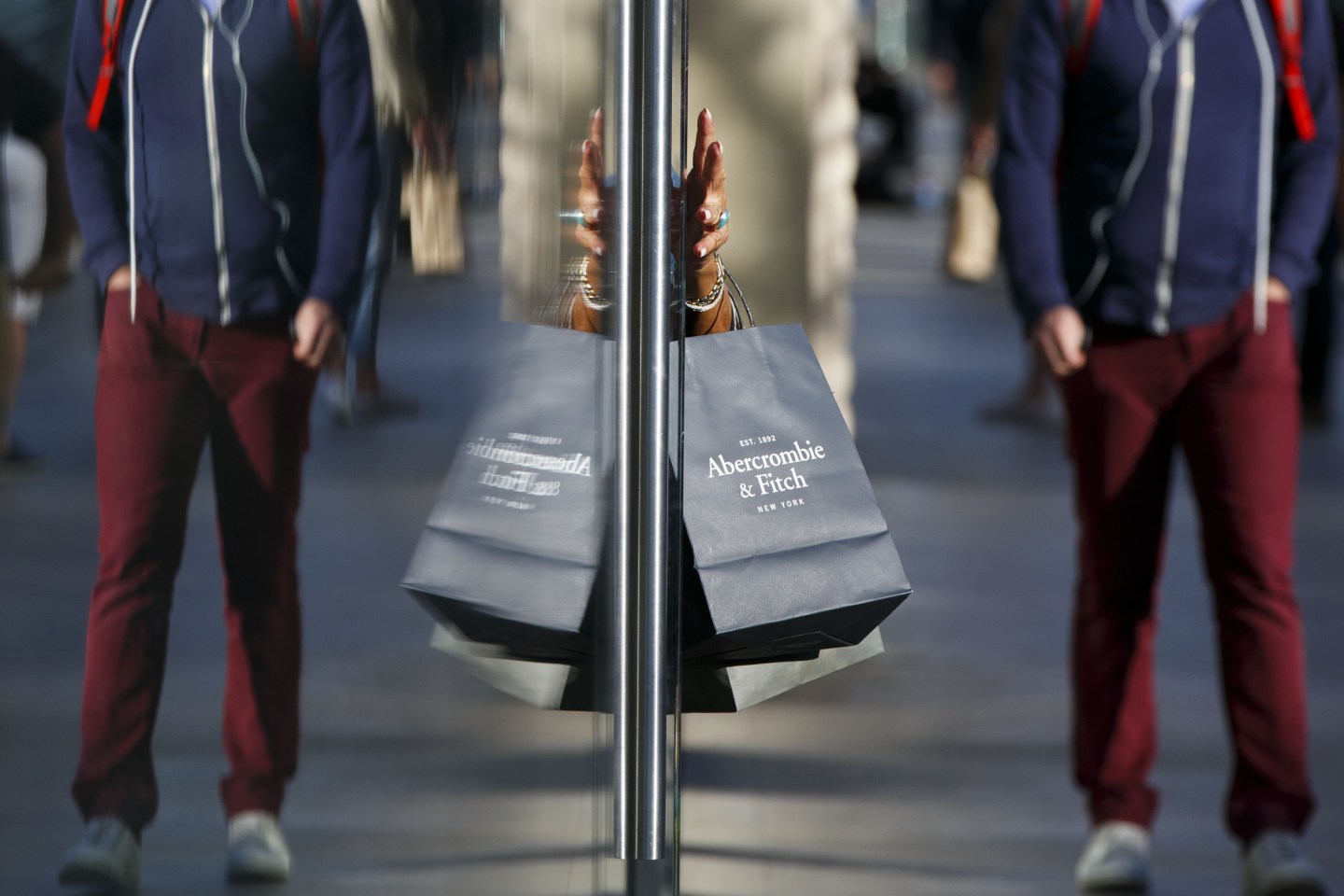
Abercrombie & Fitch (ANF), the teen brand with a 125-year heritage, became the latest to demonstrate that on Monday, ending talks about a potential sale after failing to agree terms with potential suitors.
Successful deals in the mercurial world of U.S. fashion are rare, and now look even less likely to succeed as sales dip across the board. Cost savings can be counterproductive if it means squeezing money out of marketing and design, and buyers are taking a risk on a style that can easily go out of favor.
As a result, established brands like Abercrombie are having problems finding a savior.
“Often, as well as spending the money to buy the brand or business, you then have to spend more to do something strategic that will propel growth, and that means paying out twice before getting a return,” said Neil Saunders, managing director of market research firm GlobalData Retail.
Five of the 20 companies involved in the biggest private equity apparel deals of the last decade have been restructured or gone bankrupt. All struggled under the debt load of a leveraged buyout. The biggest acquisition, Apollo Global Management’s roughly $3.1 billion leveraged buyout of Claire’s Stores, restructured in 2016.
The second-largest acquisition, J. Crew Group, which TPG Capital and Leonard Green & Partners bought for about $3 billion, is now being restructured. Gymboree Corp filed for bankruptcy last month, seven years after Bain Capital’s $1.8 billion purchase.
Mounting Pressure
Many U.S. fashion bosses are finding they have no option but to consider a sale as pressure mounts from more affordable fast-fashion chains from Europe such as Zara and H&M, and customers abandon malls in favor of Amazon.com Inc and other online retailers.
Outerwear brand Eddie Bauer, for example, is exploring a sale while also seeking relief from its debt load, sources have told Reuters. Teen brand American Apparel explored a sale last year before ultimately filing for bankruptcy.
As Abercrombie’s experience shows, finding a willing buyer at the right price is difficult.
“Public company board members are reticent about green-lighting large-scale mergers and acquisitions because it’s hard to find a good example of a business that has been rewarded by the equity market for doing so,” said Rohit Singh, who specializes in retail at UBS Investment Bank, not speaking specifically about Abercrombie.
Struggling retailers are a tough sell to potential acquirers. Merging with another company risks double the trouble – more brands falling flat and more stores bereft of customers.
Most fashion retailers are locked into store leases, and as landlords watch their malls empty out, they are increasingly unwilling to give their tenants and easy path out.
“Perhaps the reason the Abercrombie deal didn’t get done was that they’ve got way too many stores in way too many malls that don’t make any money, and the cost to unwind those pieces and get out of those stores is just too great to compensate for the upside,” said Mark Belford, a retail specialist at KPMG Corporate Finance.
After failing to strike a deal, Abercrombie now has no choice but to go it alone. On Monday, the New Albany, Ohio-based retailer said it will focus on its growing surf-wear brand Hollister and try to reposition its flagship brand, which has reported falling quarterly sales since 2014.
Sinking Rocks
The most successful acquisitions have been those of younger brands, which have room for growth and have yet to develop expensive supply chains and costly, little-used store bases.
Gap Inc’s $150 million purchase of athletic and yoga clothing line Athleta Inc in 2008, for example, gave it a foothold in a growing fashion trend. The acquisition helped save Gap when sales of its jeans slowed as shoppers shifted to leggings.
Apparel retailers which bought rivals in the hope of finding growth or eliminating competition have found little payoff.
“Oftentimes, the companies themselves aren’t growing, so it doesn’t solve the underlying challenge,” said Josh Chernoff, managing director, retail at consultant Parthenon-EY. “If you tie two rocks together, they sink just as fast or faster.”
The changing winds of fashion derailed Wolverine Worldwide’s $1.2 billion acquisition of boat shoe maker Sperry and other brands in 2012, several of which Wolverine tried to sell this year.
Shoppers’ addiction to discounting crushed Men’s Wearhouse Inc’s $1.8 billion acquisition of rival Jos. A. Bank, the value of which was almost written off. The suit retailer’s sales plunged after it abandoned its famous “buy-one-get-three-free” specials in the wake of the 2014 merger.
Ascena Retail Group Inc, one of the few serial acquirers in U.S. apparel, has been laid low by its roughly $2.1 billion acquisition of Ann Inc, parent of work-wear line Ann Taylor.
For more on fashion, watch Fortune’s video:
The 2015 acquisition was meant to give it a full portfolio of womenswear brands and enable it to cut $150 million over three years in costs as it centralized the different lines’ internet infrastructure, distribution and manufacturing.
But sales for all its brands have dropped, most recently a combined 8% in the third quarter of 2017. Ascena’s market value is now $400 million, roughly 85% lower than before the deal.
“Fashion is not something you can solve with math,” said Belford. “Fashion – you either get it or you don’t, and it either sells or it sits on the shelf.”