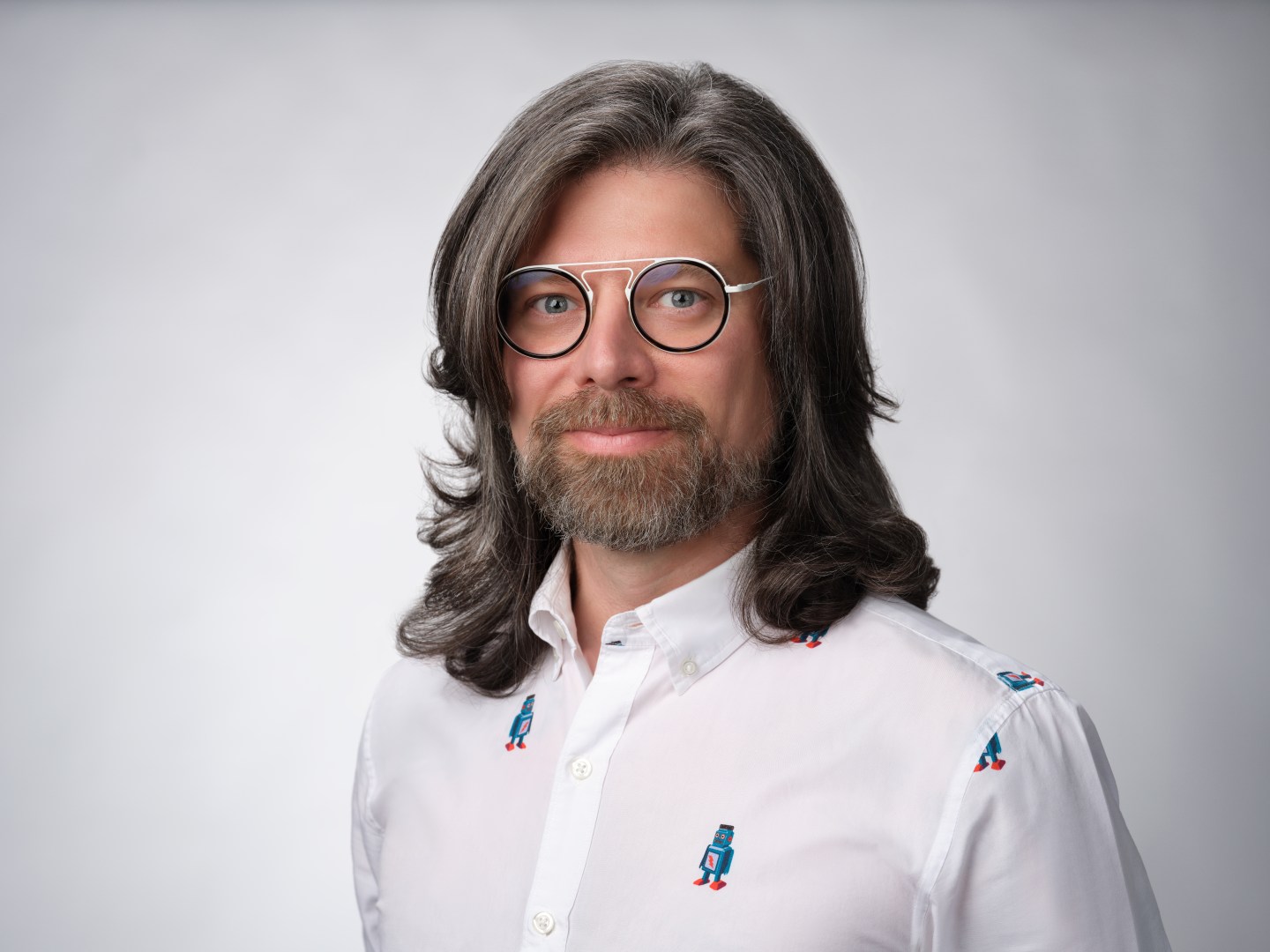

Since debuting three years ago, Slack has become a popular alternative to that quaint workplace communication tool known as email. Meanwhile, its founder and CEO, Stewart Butterfield, has become a guru of sorts on the evolution of work, including about things like chatbots (those automated attendants that increasingly respond to your customer service questions online).
Butterfield, a philosophy-major-turned-techie, isn’t just pontificating—Slack’s customers and its own workforce have provided a massive sandbox for his observations. More than 5 million workers use his emoji-friendly app daily to message their teams, track and share documents, and yes, send one another dancing bananas. Giants like IBM, Capital One, and eBay (not to mention thousands of startups) are Slack customers. As a result, the privately owned company has ballooned into an 800-person tech player, currently valued at nearly $4 billion.
At press time, media reports said technology giants including Amazon.com were interested in acquiring Slack, which was seeking additional funding at an even higher $5 billion valuation. Slack declined to comment.
We caught up with Butterfield to hear more about workplace trends—not just chatbots, but also artificial intelligence, crowdsourcing, and why you need your own virtual chief of staff.

Fortune: You built and used Slack at your now defunct video game startup, Glitch. Was the original vision in line with what Slack is today?
Butterfield: Yes, we started a company to do something totally different and along the way we had invented this “proto” of Slack. It didn’t have a name. But when we shut down Glitch we realized that this may be something that would be useful to other people because we would never work without it again. So we wrote a proposal for our investors. The mission was exactly what we ended up doing—to make peoples’ working lives simpler, more pleasant, and more productive.
More recently, you’ve been working on adding artificial intelligence features. How so?
This might seem like a weird analogy at first, but we’re trying to do what Google Maps did for the physical world. Inside all the computers of any large corporation is every decision that gets made. But people spend a huge amount of time trying to find the correct piece of information.
Like what?
Often it’s simple, factual questions like, Who was responsible for this project? Who is so-and-so’s manager? Where is the document relevant to today’s meeting? This is so taken for granted that people don’t really see it. And the degree of effort that people put into it is like the degree of effort that people put into finding geographic information back in the day—like pulling over at a gas station and asking the attendant how you get here or there, or folding and unfolding a map. Now you can just pinch and zoom into the world. Slowly, that will happen for people’s experience at work. Anything we can do that lets people find information more quickly is something we’re interested in.
How will we work five to 10 years out? And what’s Slack’s role in that future?
One way to describe it is that we are giving everyone a virtual chief of staff—someone who has infinite patience and infinite memory. It will proactively recommend things you should pay attention to. For example, we are working on something called “Highlights.” Of all of the messages you haven’t looked at yet, which are the ones that seem most important? Another example: Performance reviews can be handled by bots.
Wait, what?
A lot of companies lock up for a few weeks once a year for performance reviews. But there’s a way to collect feedback in real time from Slack so that by the end of the year you’ve already stored up all of this information.
What does Slack, the company name, actually mean?
I used to say internally that it stands for “searchable log of all communications and knowledge,” and then everyone forgot it. But there are two other meanings. The first one that often comes to mind is slacking off or slackers. The second one—and I think the more important one for us—is the idea of picking up the slack or cutting me some slack. As organizations have moved to increase efficiency, they’ve removed all the room for creativity and exploration from the system. Slack is actually a technical term in product management that means the excess capacity the system has to absorb any failures or to take on new work. That’s something that was really on our minds when we came up with it.
Stewart Butterfield
Founder and CEO, Slack
Age: 44
From: Lund, British Columbia
Early life: Until he turned 3 years old, Butterfield and his family lived in a log cabin with no running water. When he was still a kid, he taught himself how to code. He later studied philosophy at the University of Cambridge.
Claim to fame (pre-Slack): The entrepreneur cofounded photo-sharing site Flickr along with his ex-wife. The “Web 2.0” company sold to Yahoo in 2005 for a reported $35 million.
Origin story: Both Flickr and Slack were “pivots”—they originated out of gaming companies Butterfield attempted but that ultimately failed. He has said he’s unlikely to found another gaming startup.
A version of this article appears in the July 1, 2017 issue of Fortune.