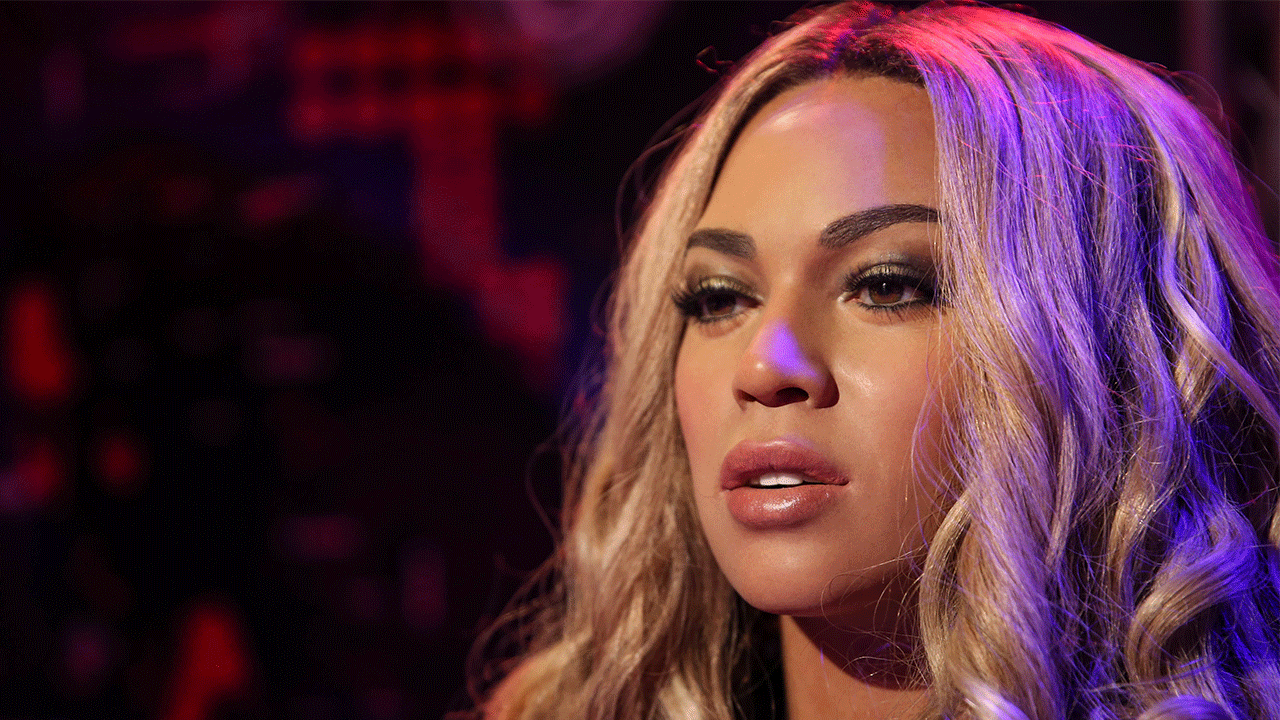
When a gossip site posted a photo of a pregnant-looking Beyoncé, it probably didn’t anticipate the fallout: A major copyright decision that could imperil the site’s business model and undermine a legal defense used by other websites that depend on user content.
The decision, handed down Friday by a federal appeals court in California, came as a defeat for LiveJournal, which hosts the popular blog called “Oh No They Didn’t,” a forum for users to upload news about celebrities and chat about them.
The ruling came after a paparazzi operation called Mavrix, which the court describes as “specializing in candid photographs of celebrities in tropical locations,” sued Live Journal for copyright infringement over the Beyoncé photo and 19 other photos.
LiveJournal responded by invoking a familiar legal defense—a law called the Digital Millennium Copyright Act, which shields websites from the actions of their users so long as the sites follow certain steps. In 2014, a federal judge agreed LiveJournal qualified for one of these so-called “safe harbors” under the DMCA and agreed to throw out the case.
Mavrix decided to appeal, prompting the entertainment industry, which has long groused that the safe harbors protect copyright cheats, to file briefs in support of the company. Meanwhile, well-known websites that depend on user contributions—including Pinterest and Etsy—filed to support LiveJournal, arguing the current DMCA rules work well.
In its ruling on Friday, a unanimous three judge panel decisively overturned the lower judge’s ruling, saying he failed to properly consider LiveJournal’s use of moderators, who appeared to have broad discretion to choose which photos submitted by users would appear on the site.
In support of its decision, the appeals court wrote that Mavrix “presented evidence that LiveJournal gave its moderators explicit and varying levels of authority to screen posts.” It went on to say that “Although LiveJournal calls the moderators ‘volunteers,’ the moderators performed a vital function in LiveJournal’s business model.”
The court also noted LiveJournal’s moderators published a number of photos even though they were imprinted with Mavrix watermarks.
The court concluded by sending the case back to the lower court to reconsider the case, and find out if the moderators should be found to be “agents” of LiveJournal—a finding that would destroy the site’s safe harbor protection. And in the event the moderators were not agents, the appeals court said the judge should consider if they had actual or “red flag” knowledge that the photos infringed on Mavrix’s copyright.
Finally, the appeals court instructed the judge to also look at the larger context of whether Live Journal made money from infringing photos that were under its control.
The ruling is not a final defeat for LiveJournal since it simply asks the lower court to reconsider its original decision. But the structure and tone of the ruling strongly nudges the court towards only one conclusion: copyright infringement.
What it means for websites
The decision has already led some digital advocacy groups, including the Electronic Frontier Foundation, to warn that Friday’s ruling is a dangerous erosion of safe harbors, and could expose more websites to questionable copyright claims.
Meanwhile, the ruling could open the door to further legal challenges seeking to narrow safe harbors still further. Such a development could post trouble to likes of Facebook and YouTube, which face ongoing complaints from the entertainment industry over how they police copyright.
On the other hand, the decision may not ripple far beyond “Oh No They Didn’t.” That’s because the site did things that appeared to earn the special disapproval of the appeals court—such as posting a number of photos clearly imprinted with Mavrix’s watermark.
According to Ed Klaris, a long-time intellectual property lawyer in New York, the opinion is hardly a death knell for those relying on DMCA protections, but certainly a warning not to get too involved in posting others’ content:
“Images could not be posted without human moderators’ intervention, raising the question whether the defendant was in effect an accomplice to the infringement. These facts forced a trial, which will cause websites to pay close attention. Until now, courts have given broad leeway to filter and curate content without losing immunity.”
Sign up for Data Sheet, Fortune’s technology newsletter.
Copyright owners, meanwhile, are likely to toast the decision as part of their long-running campaign to reduce the scope of safe harbor defenses.
It also shows how the legal landscape has been changing since the end of a landmark copyright lawsuit between Viacom and YouTube, which resulted in numerous defeats for Viacom, and appeared to confirm the ongoing strength of safe harbors.
Since the conclusion of that case in 2014, the entertainment industry has chipped away at the defense, earning several significant victories. These include last week’s LiveJournal ruling, and a 2016 decision in which a federal judge stripped safe harbor protection from the Internet service provider Cox Communications, and forced it to pay $25 million over illegal downloading by its customers.
(You can read a full copy of the LiveJournal decision here; I’ve underlined some of the key parts).