• Home
  • News
  • Fortune 500
  • Tech
  • Finance
  • Leadership
  • Lifestyle
  • Rankings
  • Multimedia
TechSunPower

SunPower Embraces Drones and Robots to Help Evolve Its Solar Farms

By
Katie Fehrenbacher
Katie Fehrenbacher
Down Arrow Button Icon
By
Katie Fehrenbacher
Katie Fehrenbacher
Down Arrow Button Icon
September 20, 2016, 8:00 AM ET
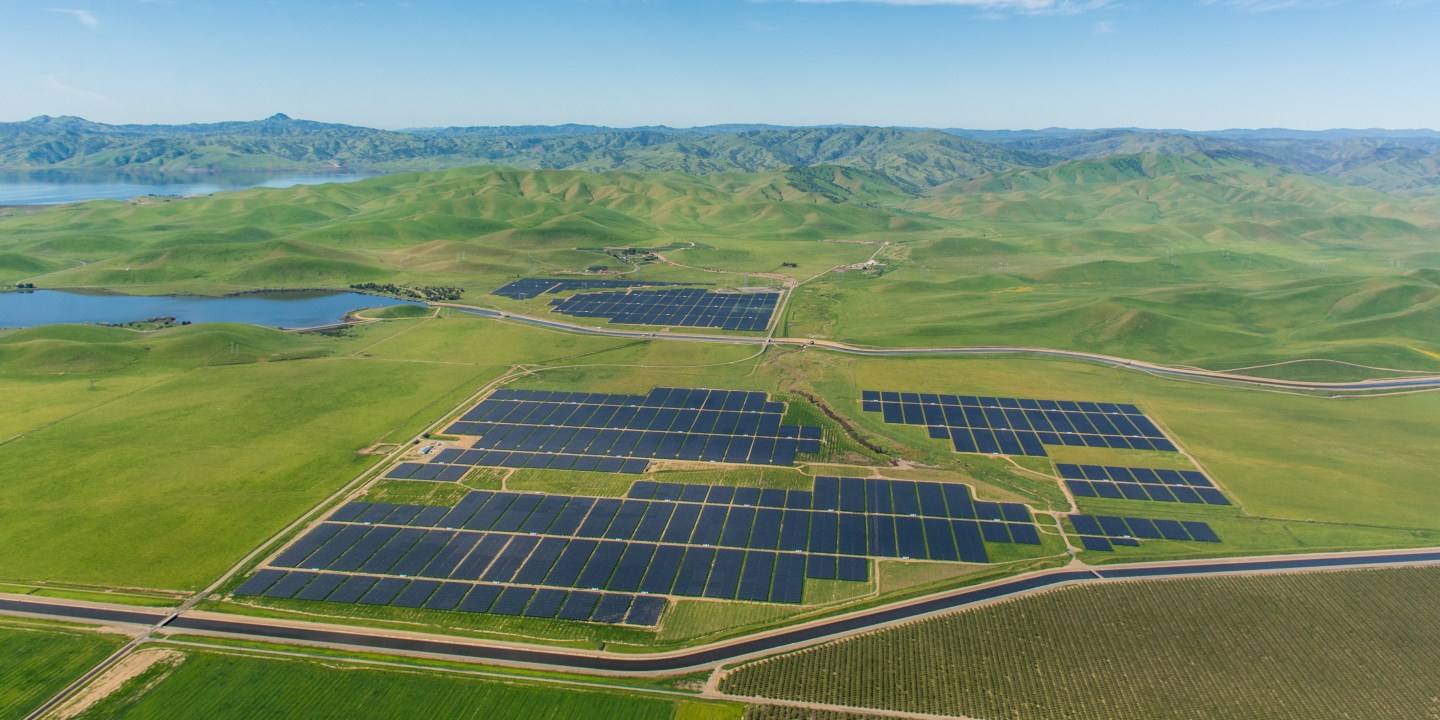
Steve Proehl/Proehl Studios

Solar panel maker and farm developer SunPower is embracing the latest in computing technology to help lower the cost of its solar panel farms while minimizing the impact that the farms have on land.

The Richmond, Calif.-based company on Tuesday announced an array of new technology that it’s using to design, build, operate, and monitor big solar panel farms that are built to sell energy to utilities and large companies.

See also: How Apple Is Pushing Its Suppliers to Use Clean Energy

While solar panels on home rooftops are the most visible form of solar energy, the majority of solar panels around the world are actually installed in sprawling ground-mounted systems. Seventy percent of the solar panels that will be deployed in the U.S. this year will be in these types of solar power plants.

But these large solar farms have a drawback. They have historically required a lot of space to place the rows upon rows of panels, gear, cables and power lines. For example, one of California’s first really big solar farms, called Topaz, stretches across almost 10 square miles with 9 million solar panels.

For more on the economics behind clean energy, watch Fortune’s video:

Environmentalists have long raised concerns about protecting animals and plants that share land with solar farms. Last week, the U.S. government released its plan to allocate only 388,000 acres of California’s deserts for clean energy projects, while putting aside 6.57 million acres for conservation.

Other countries, like Japan, which have limited space and large urban populations, are slowing the growth of solar partly over concerns about land use. Gone are the days where a solar farm can be built wherever a company wants it.

SunPower’s (SPWR) new system tries to make solar farms as compact as possible, while also lowering costs and speeding up construction time. The company is also hoping new ideas can enable agricultural land and solar production space to peacefully coexist.

Get Data Sheet, Fortune’s technology newsletter.

SunPower has started using drones to take aerial surveys and a 3D model of a potential solar site. Then smart software plots out various scenarios where panels should and should not be installed in order to make the new farm as low-cost and compact as possible.

SunPower says the software makes this design process 90% faster than it was before. Traditionally, it hasn’t been uncommon for solar companies to employ human surveyors to walk around a site taking notes and determining which portions of a site will be best for panels. That can take weeks and cost tens of thousands of dollars.

See also: A Jaw-Dropping World Record Solar Price Was Just Bid in Abu Dhabi

SunPower has also redesigned its solar farm gear, called trackers, which hold a panel and adjust it to face the sun as it moves across the sky. These trackers fit more solar panels on them than the standard ones do, enabling more energy to be created in a smaller space.

The company is working on ways that solar farms can share space with both crops and animals. On Tuesday, SunPower is announcing a new initiative with the University of California at Davis that will research how to integrate agriculture and solar farms. Already, in China, a SunPower solar farm was designed to allow yaks to safely graze amidst the rows of panels.

Finally, the solar giant is using robots to efficiently and quickly clean solar panels in dusty desert regions. The company says its robots can clean 10 megawatts worth of solar panels in 10 hours, using as little water as possible.

It’s not a surprise that SunPower is using computing tech to evolve its solar power plants. The industry has only been building big solar power plants for about five years, points out SunPower’s vice president of utility power plant products, Matt Campbell. “The first solar project that was greater than 10 megawatts was built the year of the iPhone,” he said.

About the Author
By Katie Fehrenbacher
See full bioRight Arrow Button Icon

Latest in Tech

SuccessWealth
Meet Luana Lopes Lara: The 29-year-old ballerina spent summers working for Ray Dalio—now she’s the youngest female self-made billionaire
By Orianna Rosa RoyleDecember 4, 2025
2 minutes ago
christmas
Arts & EntertainmentSpotify
From Spotify Wrapped to YouTube Recap to Amazon Delivered, the holidays are becoming a time of year for our tech to tell us who we are
By The Associated PressDecember 4, 2025
14 minutes ago
Matt Rogers
CommentaryInfrastructure
 I built the first iPhone with Steve Jobs. The AI industry is at risk of repeating an early smartphone mistake
By Matt RogersDecember 4, 2025
42 minutes ago
work
Future of Work
AI is reshaping the rhythm of the workweek–and leaders need to pay attention
By David ShimDecember 4, 2025
47 minutes ago
Venmo
CybersecurityVenmo
Venmo says it’s ‘back up and running’ after hours of trouble sending and receiving money
By Audrey McAvoy and The Associated PressDecember 4, 2025
47 minutes ago
Huang
Big TechWhite House
Nvidia’s Jensen Huang meets behind closed doors with Trump, then Republican senators
By Matt Brown and The Associated PressDecember 4, 2025
54 minutes ago

Most Popular

placeholder alt text
North America
Jeff Bezos and Lauren Sánchez Bezos commit $102.5 million to organizations combating homelessness across the U.S.: ‘This is just the beginning’
By Sydney LakeDecember 2, 2025
2 days ago
placeholder alt text
Economy
Ford workers told their CEO 'none of the young people want to work here.' So Jim Farley took a page out of the founder's playbook
By Sasha RogelbergNovember 28, 2025
6 days ago
placeholder alt text
North America
Anonymous $50 million donation helps cover the next 50 years of tuition for medical lab science students at University of Washington
By The Associated PressDecember 2, 2025
2 days ago
placeholder alt text
Economy
Two months into the new fiscal year and the U.S. government is already spending more than $10 billion a week servicing national debt
By Eleanor PringleDecember 4, 2025
3 hours ago
placeholder alt text
Economy
Scott Bessent calls the Giving Pledge well-intentioned but ‘very amorphous,’ growing from ‘a panic among the billionaire class’
By Nick LichtenbergDecember 3, 2025
21 hours ago
placeholder alt text
Innovation
Google CEO Sundar Pichai says we’re just a decade away from a new normal of extraterrestrial data centers
By Sasha RogelbergDecember 1, 2025
3 days ago
Rankings
  • 100 Best Companies
  • Fortune 500
  • Global 500
  • Fortune 500 Europe
  • Most Powerful Women
  • Future 50
  • World’s Most Admired Companies
  • See All Rankings
Sections
  • Finance
  • Leadership
  • Success
  • Tech
  • Asia
  • Europe
  • Environment
  • Fortune Crypto
  • Health
  • Retail
  • Lifestyle
  • Politics
  • Newsletters
  • Magazine
  • Features
  • Commentary
  • Mpw
  • CEO Initiative
  • Conferences
  • Personal Finance
  • Education
Customer Support
  • Frequently Asked Questions
  • Customer Service Portal
  • Privacy Policy
  • Terms Of Use
  • Single Issues For Purchase
  • International Print
Commercial Services
  • Advertising
  • Fortune Brand Studio
  • Fortune Analytics
  • Fortune Conferences
  • Business Development
About Us
  • About Us
  • Editorial Calendar
  • Press Center
  • Work At Fortune
  • Diversity And Inclusion
  • Terms And Conditions
  • Site Map

© 2025 Fortune Media IP Limited. All Rights Reserved. Use of this site constitutes acceptance of our Terms of Use and Privacy Policy | CA Notice at Collection and Privacy Notice | Do Not Sell/Share My Personal Information
FORTUNE is a trademark of Fortune Media IP Limited, registered in the U.S. and other countries. FORTUNE may receive compensation for some links to products and services on this website. Offers may be subject to change without notice.