• Home
  • Latest
  • Fortune 500
  • Finance
  • Tech
  • Leadership
  • Lifestyle
  • Rankings
  • Multimedia
CommentaryTheranos

How Theranos Created and Destroyed Investors’ Trust

By
Kent Grayson
Down Arrow Button Icon
By
Kent Grayson
Down Arrow Button Icon
August 1, 2016, 7:43 PM ET
Squawk Box - Season 20
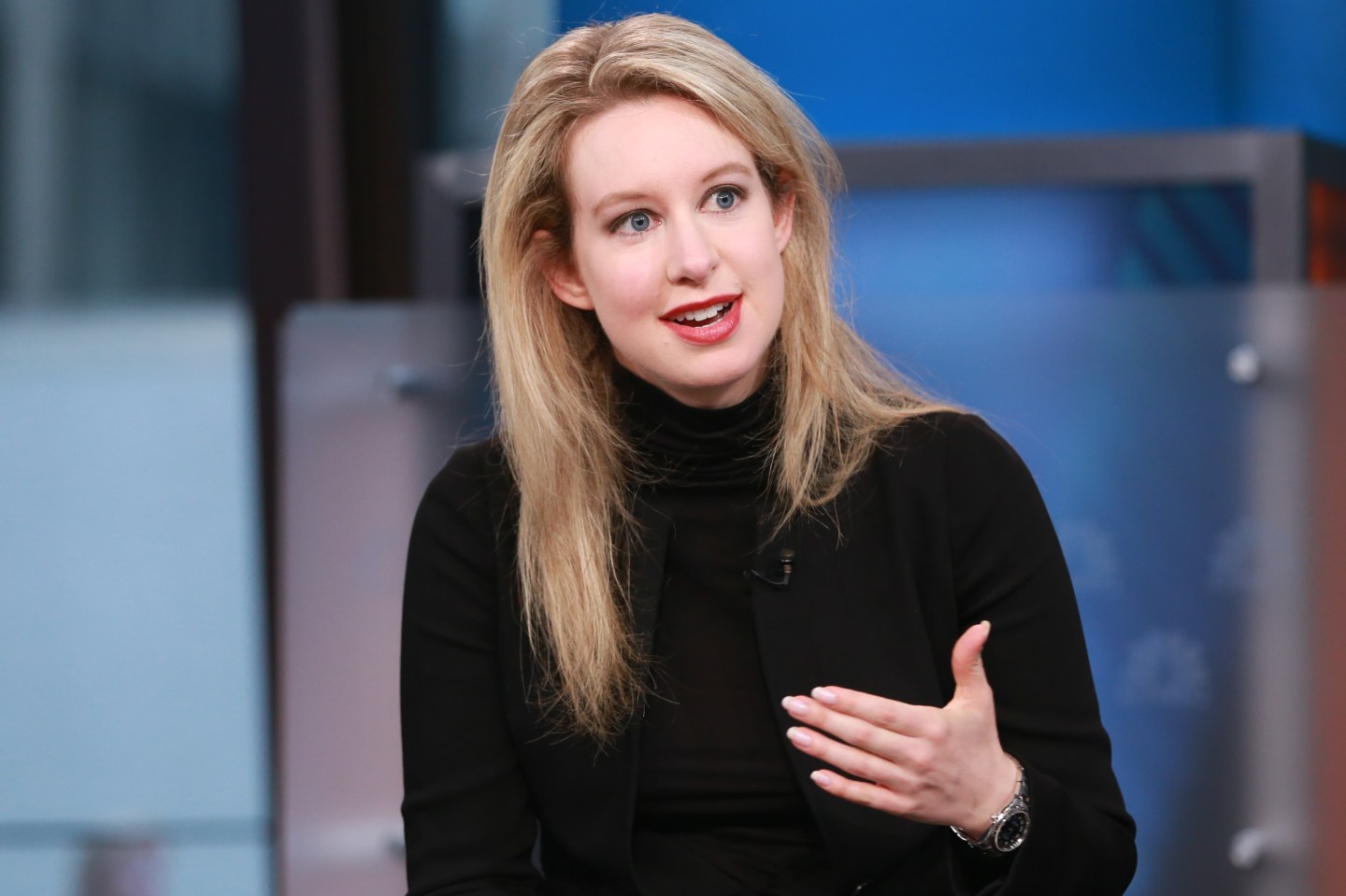
SQUAWK BOX -- Elizabeth Holmes, Theranos CEO and the world's youngest self-made female billionaire, in an interview on September 29, 2015 -- (Photo by: David Orrell/CNBC/NBCU Photo Bank via Getty Images)CNBC NBCU Photo Bank via Getty Images

Kent Grayson is an associate professor of marketing at Kellogg School of Management at Northwestern University and faculty coordinator of The Trust Project at Northwestern University.

Good investors usually do their homework. But what happens when a company’s product is so new or so technical that it’s hard to judge whether it’s good or not, even after lots of research? These are what economists call “credence goods”—things whose quality is difficult to judge, even after you pay for them. Lawyers and car mechanics sell credence goods. So do doctors.

The rise and fall of blood-testing start-up, Theranos, tells us a lot about credence goods.

And as founder Elizabeth Holmes unveiled a new blood-testing device on Monday at the American Association for Clinical Chemistry’s annual scientific meeting, it’s a good time to take another look at the company. Previously, Theranos promised a technology that would revolutionize medical testing: low-cost tests that can be done on just a few drops of blood. But the technology behind the test was quite new, and its patents were opaque. On top of that, Theranos was secretive about the details, claiming concerns about competitively sensitive information.

This made a Theranos investment very difficult to judge, even for an investor willing to do deep research. And, as many now know, the technology behind Theranos was more problematic than initially thought, which has led to a dramatic dive in the company’s market valuation.

So what factors encouraged people to invest? What makes anyone take the risk of trusting a credence good?

One factor is reputation. Reputation is often judged by the company one keeps. Doctors and lawyers build reputations by serving influential clients, and the endorsement of these clients makes it easier for newer clients to trust.

For Theranos, these kinds of endorsements were made by a number of high-profile investors, such as software giant, Larry Ellison, and a prestigious board, which included high-profile lawyer, David Boies, and former secretary of state, Henry Kissinger. When well-respected people buy into something, we often assume that they’ve done our homework for us. After all, would they risk their reputation without doing their own due diligence?

But as my research has shown, the reputation for a credence good is only as strong as the homework that early customers have done. If this homework was flawed, later customers still see only the endorsement. Lacking other evidence about product quality (which is usually not available for credence goods), later customers make decisions based on the best evidence they have, without realizing it may be flawed.

A second factor that encourages us to purchase a credence good is personal trust. We may not understand how a lawyer builds a case or how a doctor handles emergencies in the operating room, but we still feel we can still personally assess whether those we hire are honest, competent, and have our best interests at heart. The problem with trust—especially for credence goods— is that it can be based too strongly on factors that are not entirely relevant to the decision being made. For example, research shows that we naturally trust others in the marketplace if we know their personal stories, especially if those stories emphasize trust and success. Holmes had such a story, which was enhanced by persistent comparisons with Steve Jobs, the trusted and successful founder of Apple.

Our decisions about credence goods can also be helped by third parties, such as government agencies, professional associations, and the media. These institutions exist precisely because many goods and services are so difficult for average customers to assess. We entrust these institutions with the job of gaining expertise and information that we cannot acquire, and we give them the power to sanction organizations and individuals who do not live up to this trust. For many years, Theranos had the backing of third parties like these, including approval from the Food and Drug Administration to test for herpes and Ebola.

However, as the sociologist Susan Shapiro points out, third parties merely shift the trust problem from one entity to another. They save us from having to decide whether a company is trustworthy, but now we have to determine whether a government agency is trustworthy. And there’s no shortage of concerns about third parties—see for example a recent study of the FDA approval process.

Yet, while third parties played a supportive role in building trust in Theranos, they were instrumental in raising serious concerns later on. A journalistic investigation of Theranos first raised questions about its technology and provided evidence that it was not using its own testing regime to test samples sent to the firm. Around the same time, a surprise visit from the Food and Drug Administration (FDA) revealed that Theranos was using unapproved technology to collect blood. Several months later, The Centers for Medicare and Medicaid Services (CMS) identified a number of compliance problems with the company—problems that the CMS claimed were putting patients in immediate jeopardy—and imposed serious sanctions on the firm and its leaders.

No safeguards are perfect, so purchasing anything—even from a trusted brand with a good reputation—carries risks. Yet, however flawed third parties may be as they play their role in regulating the marketplace, the Theranos story points to the value of such institutions. Without reliable institutional safeguards, the viable market for goods can collapse, just as the market for powdered milk has shrunk considerably in China after food safety scandals in 2008.

About the Author
By Kent Grayson
See full bioRight Arrow Button Icon

Latest in Commentary

Finance
Lorem ipsum dolor sit amet, consectetur adipiscing elit, sed do eiusmod tempor incididunt ut labore et dolore magna aliqua. Ut enim ad minim veniam
By Fortune Editors
October 20, 2025
Finance
Lorem ipsum dolor sit amet, consectetur adipiscing elit, sed do eiusmod tempor incididunt ut labore et dolore magna aliqua. Ut enim ad minim veniam
By Fortune Editors
October 20, 2025
Finance
Lorem ipsum dolor sit amet, consectetur adipiscing elit, sed do eiusmod tempor incididunt ut labore et dolore magna aliqua. Ut enim ad minim veniam
By Fortune Editors
October 20, 2025
Finance
Lorem ipsum dolor sit amet, consectetur adipiscing elit, sed do eiusmod tempor incididunt ut labore et dolore magna aliqua. Ut enim ad minim veniam
By Fortune Editors
October 20, 2025
Finance
Lorem ipsum dolor sit amet, consectetur adipiscing elit, sed do eiusmod tempor incididunt ut labore et dolore magna aliqua. Ut enim ad minim veniam
By Fortune Editors
October 20, 2025
Finance
Lorem ipsum dolor sit amet, consectetur adipiscing elit, sed do eiusmod tempor incididunt ut labore et dolore magna aliqua. Ut enim ad minim veniam
By Fortune Editors
October 20, 2025

Most Popular

Finance
Lorem ipsum dolor sit amet, consectetur adipiscing elit, sed do eiusmod tempor incididunt ut labore et dolore magna aliqua. Ut enim ad minim veniam
By Fortune Editors
October 20, 2025
Finance
Lorem ipsum dolor sit amet, consectetur adipiscing elit, sed do eiusmod tempor incididunt ut labore et dolore magna aliqua. Ut enim ad minim veniam
By Fortune Editors
October 20, 2025
Finance
Lorem ipsum dolor sit amet, consectetur adipiscing elit, sed do eiusmod tempor incididunt ut labore et dolore magna aliqua. Ut enim ad minim veniam
By Fortune Editors
October 20, 2025
Finance
Lorem ipsum dolor sit amet, consectetur adipiscing elit, sed do eiusmod tempor incididunt ut labore et dolore magna aliqua. Ut enim ad minim veniam
By Fortune Editors
October 20, 2025
Finance
Lorem ipsum dolor sit amet, consectetur adipiscing elit, sed do eiusmod tempor incididunt ut labore et dolore magna aliqua. Ut enim ad minim veniam
By Fortune Editors
October 20, 2025
Finance
Lorem ipsum dolor sit amet, consectetur adipiscing elit, sed do eiusmod tempor incididunt ut labore et dolore magna aliqua. Ut enim ad minim veniam
By Fortune Editors
October 20, 2025
Rankings
  • 100 Best Companies
  • Fortune 500
  • Global 500
  • Fortune 500 Europe
  • Most Powerful Women
  • Future 50
  • World’s Most Admired Companies
  • See All Rankings
Sections
  • Finance
  • Leadership
  • Success
  • Tech
  • Asia
  • Europe
  • Environment
  • Fortune Crypto
  • Health
  • Retail
  • Lifestyle
  • Politics
  • Newsletters
  • Magazine
  • Features
  • Commentary
  • Mpw
  • CEO Initiative
  • Conferences
  • Personal Finance
  • Education
Customer Support
  • Frequently Asked Questions
  • Customer Service Portal
  • Privacy Policy
  • Terms Of Use
  • Single Issues For Purchase
  • International Print
Commercial Services
  • Advertising
  • Fortune Brand Studio
  • Fortune Analytics
  • Fortune Conferences
  • Business Development
About Us
  • About Us
  • Editorial Calendar
  • Press Center
  • Work At Fortune
  • Diversity And Inclusion
  • Terms And Conditions
  • Site Map

Latest in Commentary

Chris Nicholas
CommentaryLeadership
I’m the Sam’s Club CEO and I’ve got an AI leadership reality check: let purpose, not promise, guide investment
By Chris NicholasDecember 22, 2025
14 hours ago
Geoff Green
Commentarymortgages
Your mortgage likely cost $11,500 to originate—and reams of paperwork. How Salesforce Agentforce is helping improve the process
By Geoff GreenDecember 22, 2025
15 hours ago
sustainability
CommentarySustainability
2025: the year sustainability didn’t die 
By Andrew WinstonDecember 21, 2025
2 days ago
Thomas “Tom” McInerney is President, CEO and a Director of Genworth Financial
CommentaryCaregiving
I’m a CEO who’s spent nearly 40 years talking to presidents, lawmakers and leaders about our long-term care crisis. They knew this moment was coming
By Thomas McInerneyDecember 19, 2025
3 days ago
Kristin Olson
Commentaryinvesting advice
I lead Goldman Sachs’ alternatives for wealth globally. Around the world, investors want to know more 
By Kristin OlsonDecember 19, 2025
4 days ago
unemployed
CommentaryLayoffs
The AI efficiency illusion: why cutting 1.1 million jobs will stifle, not scale, your strategy
By Katica RoyDecember 18, 2025
4 days ago

Most Popular

placeholder alt text
Success
Billionaire philanthropy's growing divide: Mark Zuckerberg stops funding immigration reform as MacKenzie Scott doubles down on DEI
By Ashley LutzDecember 22, 2025
10 hours ago
placeholder alt text
Future of Work
Meet a 55-year-old automotive technician in Arkansas who didn’t care if his kids went to college: ‘There are options’
By Muskaan ArshadDecember 21, 2025
2 days ago
placeholder alt text
Success
Former U.S. Secret Service agent says bringing your authentic self to work stifles teamwork: 'You don’t get high performers, you get sloppiness'
By Sydney LakeDecember 22, 2025
12 hours ago
placeholder alt text
Success
Multimillionaire musician Will.i.am says work-life balance is for people 'working on someone else’s dream'—he grinds from 5-to-9 after his 9-to-5
By Orianna Rosa RoyleDecember 21, 2025
1 day ago
placeholder alt text
Travel & Leisure
After pouring $450 million into Florida real estate, Larry Ellison plans to lure the ultrarich to an exclusive town just minutes from Mar-a-Lago
By Marco Quiroz-GutierrezDecember 22, 2025
14 hours ago
placeholder alt text
Future of Work
A Walmart employee nearly doubled her pay after entering its pipeline for skilled tradespeople. 'I was able to move out of my parents' house'
By Anne D'Innocenzio and The Associated PressDecember 20, 2025
2 days ago

© 2025 Fortune Media IP Limited. All Rights Reserved. Use of this site constitutes acceptance of our Terms of Use and Privacy Policy | CA Notice at Collection and Privacy Notice | Do Not Sell/Share My Personal Information
FORTUNE is a trademark of Fortune Media IP Limited, registered in the U.S. and other countries. FORTUNE may receive compensation for some links to products and services on this website. Offers may be subject to change without notice.