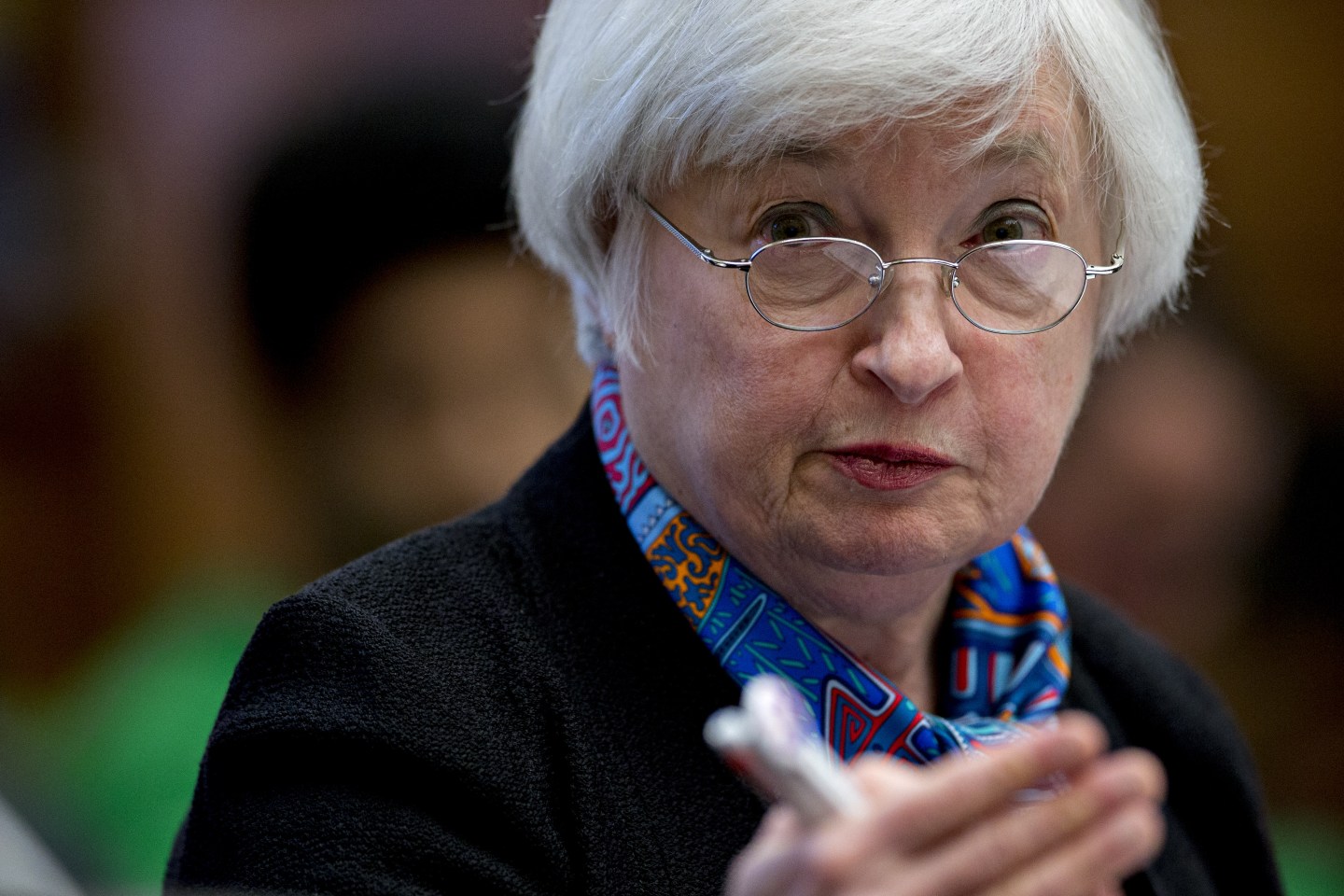
It’s virtually certain that at the end of their two-day meeting on Wednesday, Fed officials will leave interest rates exactly where they are—at near-record-low levels.
Just last month, Fed chair Janet Yellen argued that the central bank’s “cautious approach to adjusting monetary policy remains appropriate”—and that was before Britain’s Brexit vote to leave the European Union gave another shock to the system.
Now, the consensus on Wall Street is that the Fed won’t hike rates until at least December, if not 2017.
And that’s worrisome.
Why? Because the Federal Reserve will have raised rates only one time—last December—since the economic recovery began more than seven years ago. And this has been a much longer-than-average expansion, surpassing the average recovery cycle since World War II by nearly two years.
The risk of waiting
Low rates are usually considered a good thing in that they promote investments, lower borrowing costs, and give families struggling with debt a little more breathing room.
On the other hand, if the Fed keeps rates low for too long—and then realizes too late that inflation is creeping back into the economy—then the central bank will find itself scrambling to reverse course.
“If you wait too long and then have to move aggressively and fast, you could end up overreacting on the other side,” says Jim Paulsen, chief investment strategist and economist for Wells Capital Management. And if the Fed were forced to deal with inflation by hiking rates rapidly, he adds, “there would be a strong likelihood that the Fed would wind up creating a recession, which is the very thing they want to avoid.”
Inflation is back…
The Fed has openly discussed its desire to target a 2% inflation rate. The implication is that if prices were to rise much faster than 2%, it would be likely to step in and raise rates to cool the economy down.
A few weeks ago, the Labor Department reported that the consumer price index had risen just 1% over the past 12 months through June.
Yet that same report found that so-called core inflation — which strips out volatile food and energy costs — had actually climbed 2.3% over the past year. Six months ago, core inflation was running at 2% and a year ago, it was at a mere 1.8%.
This is not just happening in the United States. “In the U.S., U.K., Eurozone, China, Japan, and Canada—they’re all showing a decisive turn up in core inflation,” Paulsen says. “There’s broad-based evidence of the fastest increase in core inflation in this entire recovery, yet no one is watching because everyone is focused on the collapse in oil prices.”
…and could soon get worse
There are two big forces that could drive inflation higher in the coming months.
The first is wage growth.
Throughout much of this recovery—for much of the past decade, for that matter—wages have largely been stagnant. But the most recent Labor Department report shows that average hourly wages rose 2.6% over the past 12 months. A year ago, wages were rising a more modest 2%.
David Kelly, chief global strategist for JPMorgan Funds, noted that with wage pressures gradually rising, “core inflation is likely to move slowly higher in the months ahead.”
Inflation is also an outgrowth of an economy that’s heating up.
To be sure, this recovery has hardly been robust so far. But one key indicator, which doesn’t get much attention, is showing signs of accelerate growth ahead: The Citigroup U.S. Economic Surprise Index gauges the actual results of key economic data points against Wall Street expectations in the months prior. This indicator has been steadily improving recently and is at its highest level since late 2014—a possible sign of better times to come.
“I think we’re going to have pretty good growth in the second half” of 2016, Paulsen says.
And that, in turn, could lead to more inflation. “I don’t put high odds on runaway inflation,” he says. “But that doesn’t mean we can’t have strong, garden-variety inflation.”
This story originally appeared on Money.com.