• Home
  • Latest
  • Fortune 500
  • Finance
  • Tech
  • Leadership
  • Lifestyle
  • Rankings
  • Multimedia

Why Wall Street Wants Your iPhone Installment Payments

By
Aaron Pressman
Aaron Pressman
Down Arrow Button Icon
By
Aaron Pressman
Aaron Pressman
Down Arrow Button Icon
June 29, 2016, 11:11 AM ET
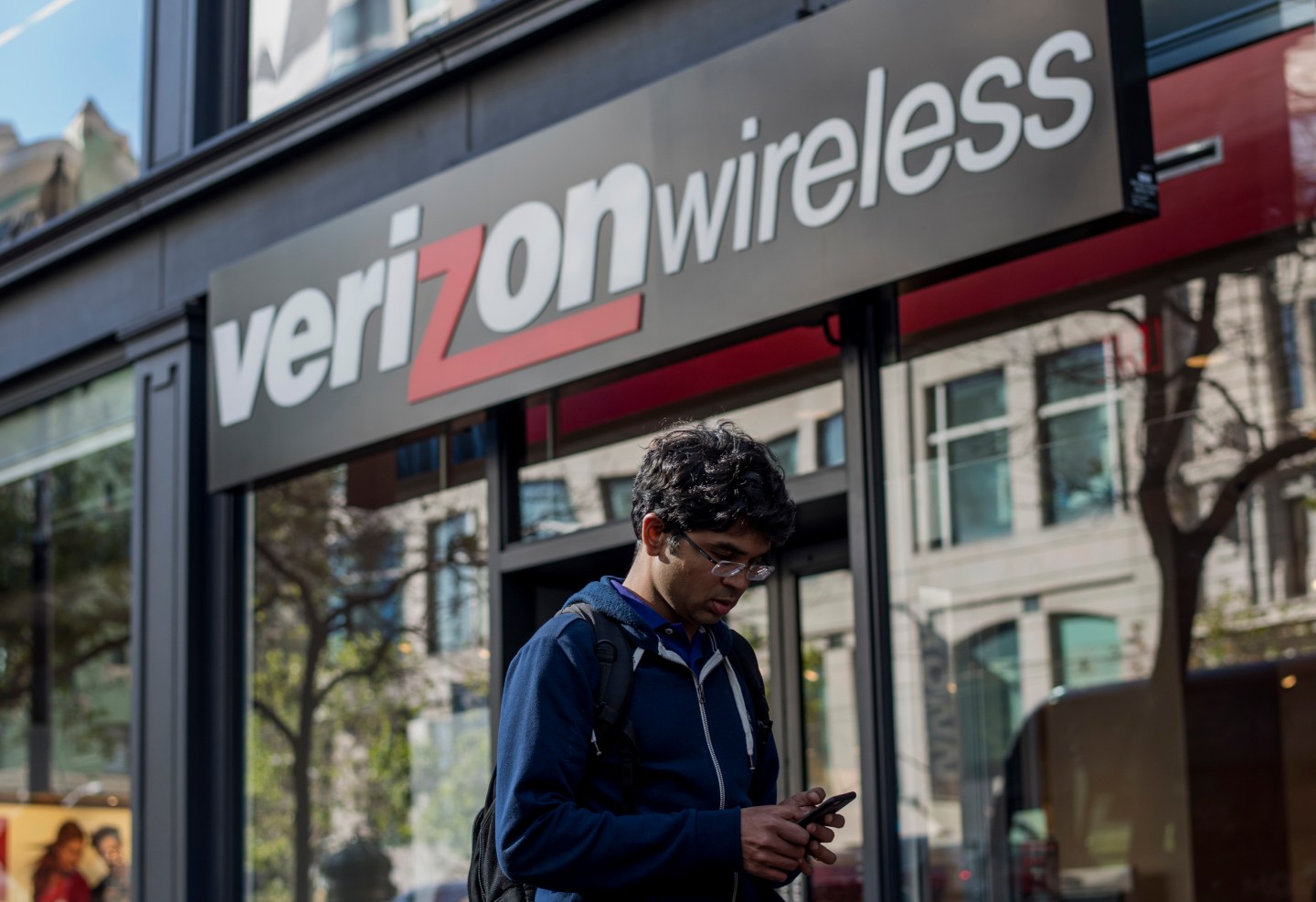
A Verizon Communications Inc. Store Ahead Of Earnings Figures
A pedestrian checks his mobile phone while walking past a Verizon Wireless store in San Francisco, California, U.S., on Wednesday, April 15, 2015. Verizon Communications Inc. is scheduled to release earnings data on April 21. Photographer: David Paul Morris/Bloomberg via Getty ImagesDavid Paul Morris — Bloomberg via Getty Images

Wall Street bankers have cleverly sliced and diced payments on everything from home mortgages and cars to David Bowie’s song royalties to create new kind of bonds. Now comes the latest twist on securitizing streams of payments: iPhone and Android smartphone installment plans.

Verizon Communications is planning the first public debt offering backed by smartphone installment plans, which is expected to be priced and sold in coming weeks. AT&T (T) and T-Mobile (TMUS) could follow, while Sprint’s (S) more difficult financial situation likely would make a public deal tougher to complete.

The moves are intended to raise cheap capital for the carriers, which are under pressure to keep spending to expand and improve their networks. They need tens of billions of dollars to pay for airwave licenses up for auction just this year. Bond investors like mutual funds and pension funds hope to buy securities with comparatively higher yields than other asset-backed debt that could also provide diversification benefits.

The bet is that the vast majority of smartphone buyers will keep paying what they owe, even if the economy weakens or they lose their jobs. Phone installment plans have only been around for a few years and no one knows for sure how consumers will behave in the next recession.

The opportunity arises because the big four U.S. wireless carriers, led initially by T-Mobile, have been weaning their customers off of subsidized phones and trying to get everyone to pay for phones in full—in return for somewhat lower monthly service charges. The deals include an offer to let customers pay for the phones, which often cost $650 or more, in 24 monthly installments.

Get Data Sheet, Fortune’s technology newsletter

The shift, which now covers the vast majority of new phones sold, has helped improve the carriers’ profit margins while cutting into upgrade sales at phone makers, including Apple (AAPL) and Samsung. The carriers didn’t make a profit on the old, subsidized phone plans, so they’ve benefitted from shifting the expense onto customers directly. Now, customers have discovered that they can trim their monthly bills by holding onto phones for longer than two years.

But the carriers’ improved profitability comes at a price. They have to pay Apple and other phone makers the full price of each device up front while getting paid back over two years. Customers don’t pay interest on the installment plans. That eats into the cash the carriers have available for other needs. Similar to retailers and other businesses operating under similar conditions, the carriers are turning to the securitization market to get immediate cash for receivables from their equipment installment plans, or EIPs.

“This is becoming increasingly common,” says Marah Formanek, research associate at Jefferies. “Due to the working capital pressure from EIP uptake, we’re not surprised to see the carriers factoring their sizable equipment receivable balance.”

Verizon (VZ) declined to comment, but a spokesman pointed to remarks by CFO Fran Shammo during an investor conference earlier this month.

“We have been looking at, for over a year now, alternatives to really looking at ways to finance the handsets because I don’t want to be in the finance business,” Shammo said on June 7. After speaking with investors, the company believes it will be able to pay less interest on the public phone-backed securities than it paid on its private deals with banks, Shammo added.

Verizon’s move to sell public asset-backed securities follows a variety of similar, private arrangements that the company and other wireless carriers have struck with big banks. But selling public securities will be cheaper and improve Verizon’s financial position in the view of credit rating agencies, the company has said.

For details about Verizon’s recent labor settlement, watch:

As Verizon’s deal is then first of its kind, the terms may be less generous than on subsequent issues. The carrier is putting up future installment payments worth over $1.5 billion to back the less than $1.2 billion of bonds. For the $1 billion of the bonds that will get paid back before other tranches, that provides a cushion of over 30%.

Some of that cushion is needed to pay interest to bondholders, however, because customers on installment plans don’t pay anything extra beyond the price of a phone. Discounted for the interest, the receivables in the deal are worth about $1.4 billion, according to an analysis published this week by Fitch Ratings.

Securitization has generally worked as advertised, although mortgage-backed securities and related derivatives were at the heart of the financial crisis almost a decade ago.

But the phone-backed securities market will be tiny in comparison to the multi-trillion dollar mortgage market—Verizon says it plans to securitize about $2 billion per quarter. With monthly payments on the order of $30 and mobile service at risk, phone owners should be far more likely to stay current on their payment plans than overburdened homeowners at the height of the housing bubble.


About the Author
By Aaron Pressman
See full bioRight Arrow Button Icon

Latest in

Finance
Lorem ipsum dolor sit amet, consectetur adipiscing elit, sed do eiusmod tempor incididunt ut labore et dolore magna aliqua. Ut enim ad minim veniam
By Fortune Editors
October 20, 2025
Finance
Lorem ipsum dolor sit amet, consectetur adipiscing elit, sed do eiusmod tempor incididunt ut labore et dolore magna aliqua. Ut enim ad minim veniam
By Fortune Editors
October 20, 2025
Finance
Lorem ipsum dolor sit amet, consectetur adipiscing elit, sed do eiusmod tempor incididunt ut labore et dolore magna aliqua. Ut enim ad minim veniam
By Fortune Editors
October 20, 2025
Finance
Lorem ipsum dolor sit amet, consectetur adipiscing elit, sed do eiusmod tempor incididunt ut labore et dolore magna aliqua. Ut enim ad minim veniam
By Fortune Editors
October 20, 2025
Finance
Lorem ipsum dolor sit amet, consectetur adipiscing elit, sed do eiusmod tempor incididunt ut labore et dolore magna aliqua. Ut enim ad minim veniam
By Fortune Editors
October 20, 2025
Finance
Lorem ipsum dolor sit amet, consectetur adipiscing elit, sed do eiusmod tempor incididunt ut labore et dolore magna aliqua. Ut enim ad minim veniam
By Fortune Editors
October 20, 2025

Most Popular

Finance
Lorem ipsum dolor sit amet, consectetur adipiscing elit, sed do eiusmod tempor incididunt ut labore et dolore magna aliqua. Ut enim ad minim veniam
By Fortune Editors
October 20, 2025
Finance
Lorem ipsum dolor sit amet, consectetur adipiscing elit, sed do eiusmod tempor incididunt ut labore et dolore magna aliqua. Ut enim ad minim veniam
By Fortune Editors
October 20, 2025
Finance
Lorem ipsum dolor sit amet, consectetur adipiscing elit, sed do eiusmod tempor incididunt ut labore et dolore magna aliqua. Ut enim ad minim veniam
By Fortune Editors
October 20, 2025
Finance
Lorem ipsum dolor sit amet, consectetur adipiscing elit, sed do eiusmod tempor incididunt ut labore et dolore magna aliqua. Ut enim ad minim veniam
By Fortune Editors
October 20, 2025
Finance
Lorem ipsum dolor sit amet, consectetur adipiscing elit, sed do eiusmod tempor incididunt ut labore et dolore magna aliqua. Ut enim ad minim veniam
By Fortune Editors
October 20, 2025
Finance
Lorem ipsum dolor sit amet, consectetur adipiscing elit, sed do eiusmod tempor incididunt ut labore et dolore magna aliqua. Ut enim ad minim veniam
By Fortune Editors
October 20, 2025
Rankings
  • 100 Best Companies
  • Fortune 500
  • Global 500
  • Fortune 500 Europe
  • Most Powerful Women
  • Future 50
  • World’s Most Admired Companies
  • See All Rankings
Sections
  • Finance
  • Leadership
  • Success
  • Tech
  • Asia
  • Europe
  • Environment
  • Fortune Crypto
  • Health
  • Retail
  • Lifestyle
  • Politics
  • Newsletters
  • Magazine
  • Features
  • Commentary
  • Mpw
  • CEO Initiative
  • Conferences
  • Personal Finance
  • Education
Customer Support
  • Frequently Asked Questions
  • Customer Service Portal
  • Privacy Policy
  • Terms Of Use
  • Single Issues For Purchase
  • International Print
Commercial Services
  • Advertising
  • Fortune Brand Studio
  • Fortune Analytics
  • Fortune Conferences
  • Business Development
About Us
  • About Us
  • Editorial Calendar
  • Press Center
  • Work At Fortune
  • Diversity And Inclusion
  • Terms And Conditions
  • Site Map
  • Facebook icon
  • Twitter icon
  • LinkedIn icon
  • Instagram icon
  • Pinterest icon

Most Popular

placeholder alt text
C-Suite
OpenAI’s Sam Altman says his highly disciplined daily routine has ‘fallen to crap’—and now unwinds on weekends at a ranch with no cell phone service
By Jacqueline MunisFebruary 5, 2026
2 days ago
placeholder alt text
Politics
Meet the Palm Beach billionaire who paid $2 million for a private White House visit with Trump
By Tristan BoveFebruary 3, 2026
4 days ago
placeholder alt text
Travel & Leisure
How Japan replaced France as the country young Americans obsessively romanticize—they’re longing for civility they don’t see at home
By Nick LichtenbergFebruary 5, 2026
2 days ago
placeholder alt text
Success
After decades in the music industry, Pharrell Williams admits he never stops working: ‘If you do what you love everyday, you’ll get paid for free'
By Emma BurleighFebruary 3, 2026
4 days ago
placeholder alt text
Success
Nestlé’s CEO drinks 8 coffees a day, but says Gen Z staffers are his secret to staying sharp by ‘learning constantly’
By Emma BurleighFebruary 5, 2026
2 days ago
placeholder alt text
Crypto
Bitcoin whales and ETFs are baling out of the market; UBS warns: ‘Crypto is not an asset’
By Jim EdwardsFebruary 6, 2026
19 hours ago

© 2026 Fortune Media IP Limited. All Rights Reserved. Use of this site constitutes acceptance of our Terms of Use and Privacy Policy | CA Notice at Collection and Privacy Notice | Do Not Sell/Share My Personal Information
FORTUNE is a trademark of Fortune Media IP Limited, registered in the U.S. and other countries. FORTUNE may receive compensation for some links to products and services on this website. Offers may be subject to change without notice.


Latest in

North Americademographics
U.S. births dropped last year, offsetting 2024’s increase and dashing hopes for an upward trend
By Mike Stobbe and The Associated PressFebruary 6, 2026
7 hours ago
PoliticsBarack Obama
Trump’s racist post about Obamas is deleted after bipartisan backlash. The White House initially defended it, then blamed a staffer
By Bill Barrow, Josh Boak and The Associated PressFebruary 6, 2026
7 hours ago
CryptoBitcoin
What caused the massive Bitcoin crash? Clues point to a blow-up at Hong Kong hedge funds
By Jeff John RobertsFebruary 6, 2026
8 hours ago
InvestingDow Jones Industrial Average
Dow soars by 1,200 points to top 50,000 for the first time as chipmakers and airlines lead ferocious stock market rebound
By Stan Choe and The Associated PressFebruary 6, 2026
9 hours ago
CEO and co-founder of Anthropic Dario Amodei speaking on stage.
AIAnthropic
Anthropic’s newest model excels at finding security vulnerabilities—but raises fresh cybersecurity risks
By Beatrice NolanFebruary 6, 2026
11 hours ago
Personal FinanceCertificates of Deposit (CDs)
Best certificates of deposit (CDs) for February 2026
By Glen Luke FlanaganFebruary 6, 2026
11 hours ago