• Home
  • Latest
  • Fortune 500
  • Finance
  • Tech
  • Leadership
  • Lifestyle
  • Rankings
  • Multimedia
Tech

Supreme Court Hears Case on Bad Patents With Tech and Pharma Firms Watching Closely

Jeff John Roberts
By
Jeff John Roberts
Jeff John Roberts
Editor, Finance and Crypto
Down Arrow Button Icon
Jeff John Roberts
By
Jeff John Roberts
Jeff John Roberts
Editor, Finance and Crypto
Down Arrow Button Icon
April 25, 2016, 8:54 AM ET
Supreme Court Meets In Closed Conference To Decide On Hearing Same-Sex Marriage Cases From Several States
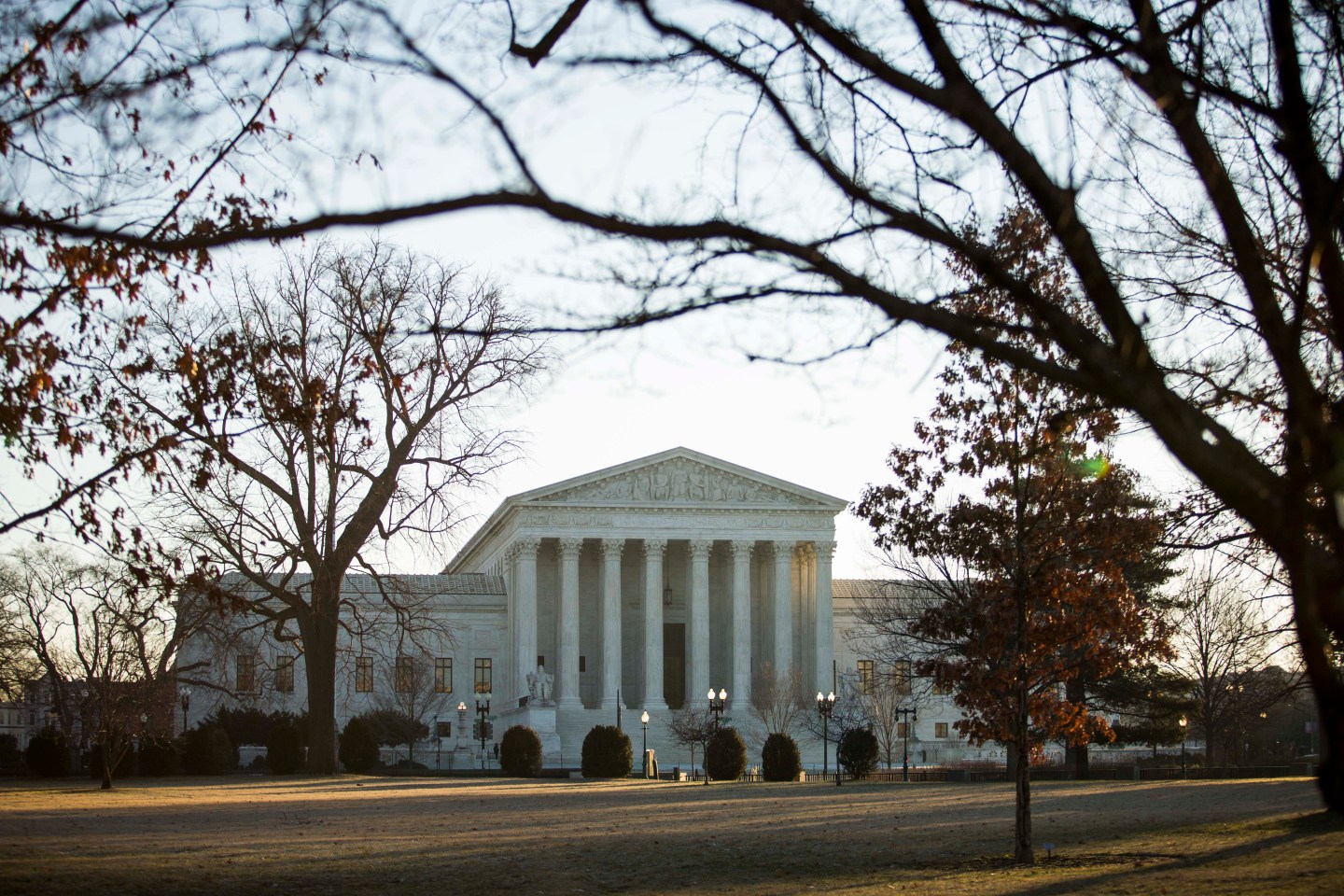
WASHINGTON, DC - JANUARY 16: A view of the Supreme Court, January 16, 2015 in Washington, DC. On Friday, the Supreme Court is meeting in closed conference to decide whether it will take up cases on the issues of same sex-marriage and marriage recognition from several states. (Drew Angerer/Getty Images)Drew Angerer Getty Images

Patents are meant to promote innovation but, in recent years, critics say a glut of bad ones has harmed the U.S. economy. These weak patents can result in undeserved monopolies, and allow so-called patent trolls to shake down retailers and other productive companies.

In recent years the Supreme Court has heard literally dozens of patent cases as part of an effort to sort out the mess. On Monday the Justices will be at it again in a major case that is being followed closely by the auto and tech industries and by intellectual property lawyers.

The case, which pits a company against the U.S. Patent and Trademark Office, will examine—and could weaken—an important new tool to challenge bad patents. Here’s a plain-English guide to today’s case, Cuozzo v. Lee, including expert opinion on how it could turn out.

What’s the case about?

A company called Cuozzo acquired a patent for speedometer displays and sued automakers, including Chrysler and Ford (F), as well as device makers. In response, a GPS manufacturer in 2013 turned to a new appeals board of the Patent Office and asked it to knock out the patent claims on the grounds they were obvious. The board agreed to do so.

The patent owner sued the Patent Office, asking the federal Circuit Court of Appeals to vacate the decision. In a closely divided ruling, the court sided with the Patent Office and left the decision untouched. The Supreme Court agreed to hear the case last year.

Why is the case so important?

The case matters because it is the first time the Supreme Court will take a close look at the Patent Trial and Appeals Board (aka the PTAB), which Congress created as part of a 2011 patent reform law. Since it opened shop in 2013, the PTAB has offered companies a new way to challenge bad patents in a cost-effective way. Prior to the PTAB, the only option in most cases was to fight bad patents in federal court—where a company can quickly rack up millions of dollars in legal fees.

Get Data Sheet, Fortune’s technology newsletter.

Since 2013, the PTAB has invalidated thousands of patent claims at the behest of tech companies, led by Apple (AAPL) and others. In response, some patent owners have complained the board has been overzealous in wiping out valuable intellectual property, while supporters say the PTAB is doing its job by eliminating patents that should never have been issued in the first place. (A recent study provides data that suggests only a tiny proportion of patents have been affected).

If the Supreme Court rules in favor of Cuozzo, the PTAB could gets its wings clipped, and more power will shift to patent owners.

What are the legal issues?

The most important issue concerns how PTAB judges (who are patent specialists) should examine the claims that come before them. Should they use the “broadest reasonable interpretation” or the “person having ordinary skill in the art” standard?

Yes, this sounds arcane, but it matters because use of the “broadest” standard makes it more likely a patent claim will be found to describe something that is obvious or not new, and therefore invalid. That’s why Cuozzo is arguing the PTAB should use the “ordinary skill” standard; it makes patents harder to attack.

For more on patents, watch:

To make its case, Cuozzo points out that federal courts use the “ordinary skill” standard. The company and its backers believe the PTAB’s approach should be consistent with that standard. On the other side, the U.S. government says the broad test makes sense because that is how patent examiners evaluate patent claims in the first place.

According to Thomas Makin, a patent lawyer at Shearman & Sterling in New York, patent owners like Cuozzo believe the current system lets accused infringers argue out of both sides of their mouth: They can argue for the broad standard at PTAB and then, if they lose, still claim the narrower standard in court so as to support a claim they didn’t infringe the patent in question. (Makin also added that, in practice, many would struggle to find much difference between the two standards.)

The case also involves two other very technical issues. One involves whether Cuozzo has standing to bring the case in the first place, and the other turns on when courts can review a decision by the PTAB to hear a review in the first place.

Are companies taking sides?

Yes. Apple, as well as trade associations representing the banking, tech, and retail sectors, are among those that have filed briefs in support of the U.S. government’s position. So has the consumer advocacy group Public Knowledge.

Meanwhile, biotech and pharma companies such as Eli Lilly, as well as Procter & Gamble and Caterpillar, have filed briefs in support of Cuozzo.

Who will win?

According to Makin of Shearman & Sterling, the Supreme Court is likely to side with the Patent Office on the issue of how to review the patent claims. He added it’s more of a toss-up in regard to the procedural issue of whether courts can review the PTAB’s ability to hear a challenge in the first place.

More broadly, the multiple issues and tricky procedural questions mean it’s possible the Supreme Court could decide the case on narrow technical grounds, and leave the claims construction issue for another day.


About the Author
Jeff John Roberts
By Jeff John RobertsEditor, Finance and Crypto
LinkedIn iconTwitter icon

Jeff John Roberts is the Finance and Crypto editor at Fortune, overseeing coverage of the blockchain and how technology is changing finance.

See full bioRight Arrow Button Icon

Latest in Tech

Finance
Lorem ipsum dolor sit amet, consectetur adipiscing elit, sed do eiusmod tempor incididunt ut labore et dolore magna aliqua. Ut enim ad minim veniam
By Fortune Editors
October 20, 2025
Finance
Lorem ipsum dolor sit amet, consectetur adipiscing elit, sed do eiusmod tempor incididunt ut labore et dolore magna aliqua. Ut enim ad minim veniam
By Fortune Editors
October 20, 2025
Finance
Lorem ipsum dolor sit amet, consectetur adipiscing elit, sed do eiusmod tempor incididunt ut labore et dolore magna aliqua. Ut enim ad minim veniam
By Fortune Editors
October 20, 2025
Finance
Lorem ipsum dolor sit amet, consectetur adipiscing elit, sed do eiusmod tempor incididunt ut labore et dolore magna aliqua. Ut enim ad minim veniam
By Fortune Editors
October 20, 2025
Finance
Lorem ipsum dolor sit amet, consectetur adipiscing elit, sed do eiusmod tempor incididunt ut labore et dolore magna aliqua. Ut enim ad minim veniam
By Fortune Editors
October 20, 2025
Finance
Lorem ipsum dolor sit amet, consectetur adipiscing elit, sed do eiusmod tempor incididunt ut labore et dolore magna aliqua. Ut enim ad minim veniam
By Fortune Editors
October 20, 2025

Most Popular

Finance
Lorem ipsum dolor sit amet, consectetur adipiscing elit, sed do eiusmod tempor incididunt ut labore et dolore magna aliqua. Ut enim ad minim veniam
By Fortune Editors
October 20, 2025
Finance
Lorem ipsum dolor sit amet, consectetur adipiscing elit, sed do eiusmod tempor incididunt ut labore et dolore magna aliqua. Ut enim ad minim veniam
By Fortune Editors
October 20, 2025
Finance
Lorem ipsum dolor sit amet, consectetur adipiscing elit, sed do eiusmod tempor incididunt ut labore et dolore magna aliqua. Ut enim ad minim veniam
By Fortune Editors
October 20, 2025
Finance
Lorem ipsum dolor sit amet, consectetur adipiscing elit, sed do eiusmod tempor incididunt ut labore et dolore magna aliqua. Ut enim ad minim veniam
By Fortune Editors
October 20, 2025
Finance
Lorem ipsum dolor sit amet, consectetur adipiscing elit, sed do eiusmod tempor incididunt ut labore et dolore magna aliqua. Ut enim ad minim veniam
By Fortune Editors
October 20, 2025
Finance
Lorem ipsum dolor sit amet, consectetur adipiscing elit, sed do eiusmod tempor incididunt ut labore et dolore magna aliqua. Ut enim ad minim veniam
By Fortune Editors
October 20, 2025
Fortune Secondary Logo
Rankings
  • 100 Best Companies
  • Fortune 500
  • Global 500
  • Fortune 500 Europe
  • Most Powerful Women
  • Future 50
  • World’s Most Admired Companies
  • See All Rankings
Sections
  • Finance
  • Fortune Crypto
  • Features
  • Leadership
  • Health
  • Commentary
  • Success
  • Retail
  • Mpw
  • Tech
  • Lifestyle
  • CEO Initiative
  • Asia
  • Politics
  • Conferences
  • Europe
  • Newsletters
  • Personal Finance
  • Environment
  • Magazine
  • Education
Customer Support
  • Frequently Asked Questions
  • Customer Service Portal
  • Privacy Policy
  • Terms Of Use
  • Single Issues For Purchase
  • International Print
Commercial Services
  • Advertising
  • Fortune Brand Studio
  • Fortune Analytics
  • Fortune Conferences
  • Business Development
  • Group Subscriptions
About Us
  • About Us
  • Editorial Calendar
  • Press Center
  • Work At Fortune
  • Diversity And Inclusion
  • Terms And Conditions
  • Site Map
  • About Us
  • Editorial Calendar
  • Press Center
  • Work At Fortune
  • Diversity And Inclusion
  • Terms And Conditions
  • Site Map
  • Facebook icon
  • Twitter icon
  • LinkedIn icon
  • Instagram icon
  • Pinterest icon

Latest in Tech

scott bessent
CybersecurityFederal Reserve
The AI that found 27-year-old vulnerabilities no human ever caught before just forced an emergency meeting with every major Wall Street CEO
By Jake AngeloApril 10, 2026
2 hours ago
Ukraine will have the most important defense industrial base in the free world, former CIA chief predicts
InnovationDefense
Ukraine will have the most important defense industrial base in the free world, former CIA chief predicts
By Jason MaApril 10, 2026
4 hours ago
A hacker in a dark hoodie and wearing a creepy white mask sits at a keyboard in front of multiple computer monitors in a dark, blue-shaded room.
CybersecurityAnthropic
Anthropic is limiting access to its latest AI model, Mythos. The real risks may already be out there
By Beatrice NolanApril 10, 2026
4 hours ago
‘Downward mobility is incredibly radicalizing’: The college bargain is broken. What comes next could reshape America
EconomyColleges and Universities
‘Downward mobility is incredibly radicalizing’: The college bargain is broken. What comes next could reshape America
By Nick LichtenbergApril 10, 2026
7 hours ago
Who’s really in control as AI and Big Tech race ahead?
MagazineEurope
Who’s really in control as AI and Big Tech race ahead?
By Francesca CassidyApril 10, 2026
9 hours ago
Photo: Donald Trump
EconomyMarkets
U.S. and Iran begin peace talks as Trump’s White House goes to war against the media, insider traders, and the Pope
By Jim EdwardsApril 10, 2026
9 hours ago

Most Popular

The U.S. government is spending $88 billion a month in interest on national debt—equal to spending on defense and education combined
Economy
The U.S. government is spending $88 billion a month in interest on national debt—equal to spending on defense and education combined
By Fortune EditorsApril 9, 2026
1 day ago
A Meta employee created a dashboard so coworkers can compete to be the company's No. 1 AI token user—and Zuckerberg doesn't even rank in the top 250
AI
A Meta employee created a dashboard so coworkers can compete to be the company's No. 1 AI token user—and Zuckerberg doesn't even rank in the top 250
By Fortune EditorsApril 9, 2026
1 day ago
Mark Cuban admits he made a mistake letting go of the Mavericks: 'I don't regret selling. I regret who I sold to'
Investing
Mark Cuban admits he made a mistake letting go of the Mavericks: 'I don't regret selling. I regret who I sold to'
By Fortune EditorsApril 9, 2026
1 day ago
'I hate working 5 days': Zoom CEO says traditional work schedules are becoming obsolete—and predicts a 3-day workweek by 2031
Success
'I hate working 5 days': Zoom CEO says traditional work schedules are becoming obsolete—and predicts a 3-day workweek by 2031
By Fortune EditorsApril 9, 2026
1 day ago
Gen Z doesn't want your full-time job. They want several part-time roles, and it's reshaping the entire workforce
Success
Gen Z doesn't want your full-time job. They want several part-time roles, and it's reshaping the entire workforce
By Fortune EditorsApril 9, 2026
1 day ago
Schools across America are quietly admitting that screens in classrooms made students worse off and are reversing years of tech-first policies
Innovation
Schools across America are quietly admitting that screens in classrooms made students worse off and are reversing years of tech-first policies
By Fortune EditorsApril 10, 2026
11 hours ago

© 2026 Fortune Media IP Limited. All Rights Reserved. Use of this site constitutes acceptance of our Terms of Use and Privacy Policy | CA Notice at Collection and Privacy Notice | Do Not Sell/Share My Personal Information
FORTUNE is a trademark of Fortune Media IP Limited, registered in the U.S. and other countries. FORTUNE may receive compensation for some links to products and services on this website. Offers may be subject to change without notice.