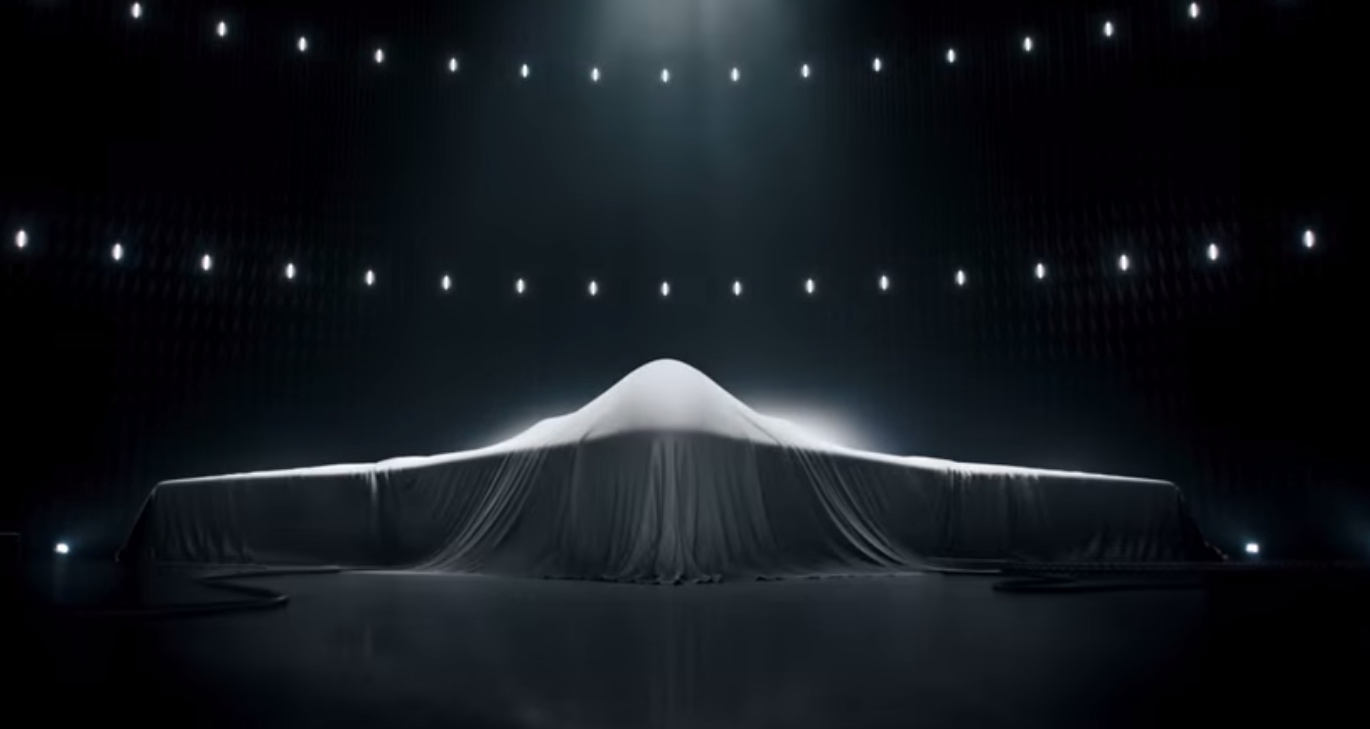
For the second time in four months, the U.S. government has given defense contractor Northrop Grumman (NOC) the go-ahead to begin work on an $80 billion contract to develop and build America’s next long-range stealth bomber. And for the second time in four months, Boeing (BA) is refusing to take that decision lying down.
On Tuesday, auditors at the Government Accountability Office upheld the U.S. Air Force’s October decision to award the Long Range Strike Bomber (LRS-B) program to Northrop Grumman, rejecting a formal protest filed by competitors Boeing and Lockheed Martin (LMT), the world’s two largest defense companies. That protest called the Air Force’s selection process “fundamentally flawed,” insisting that Air Force evaluators used the wrong kind of pricing information to make their final decision on the LRS-B program. The GAO has now respectfully and formally disagreed.
That’s a boon not only for Northrop Grumman but for Air Force weapons buyers who have poured vast resources into modernizing and improving the way the U.S. Department of Defense evaluates and awards contracts. For Boeing, the loss of LRS-B creates a good deal of uncertainty, underscored by the company’s refusal to accept defeat.
SIGN UP:Get Data Sheet, Fortune’s daily newsletter about the business of technology.
“We continue to believe that our offering represents the best solution for the Air Force and the Nation, and that the government’s selection process was fundamentally and irreparably flawed,” the company said in a statement Tuesday. “We will carefully review the GAO’s decision and decide upon our next steps with regard to the protest in the coming days.”
It’s not clear what those next steps might be.
“I don’t know what legitimate next steps Boeing could take to challenge this thing,” says Byron Callan, a defense and aerospace analyst at Capital Alpha Partners. “Maybe they can take it further, but I’m not sure what they would accomplish.”
With Lockheed Martin’s F-35 slated to replace fighter jets across U.S. military branches—including Navy F/A-18 Super Hornets and Air Force’s F-15s, both manufactured by Boeing—the LRS-B program was something of a “must-win” for the company. While other military aircraft like the Navy’s P-8 Poseidon submarine hunter, the Air Force’s KC-46 aerial refueling tanker, and a number of Army helicopters will keep Boeing’s defense unit busy for years to come, “F-15 and F/A-18 production will need lifelines from U.S. and foreign sales,” Guggenheim analyst Roman Schweizer wrote in a note to investors. Those lifelines have been slow in coming—so slow that Boeing is currently considering funding further F-18 production out of its own pocket while a potential sale to Kuwait remains stuck in bureaucratic limbo.
Without further sales to U.S. or foreign customers, production of both jets could cease by the end of the decade, leaving Boeing without a major combat jet program in its portfolio and no major new contracts on the horizon.
In protesting the LRS-B decision, Boeing hoped GAO auditors would agree that the Air Force’s evaluation of the competing bids was flawed. It’s not a particularly bad tactic, given the Air Force’s recent record managing its major aircraft contracts. In the last decade, the GAO has twice declared that Air Force acquisitions personnel made a mess of a major contract award, once over a $15 billion fleet of new search and rescue helicopters and again over a $35 billion contract for a new aerial refueling tanker.
WATCH: For more on Boeing, watch:
Both of those contracts were scrapped and rebid. In the case of the tanker, the Air Force originally awarded the contract to a partnership between Airbus and Northrop Grumman in 2008. Their competitor, Boeing, protested the award. After finding a series of flaws in the Air Force bidding process, the GAO upheld the protest and the contract was rebid. Boeing won the program on the rebound.
In auditing the LRS-B bidding process, the GAO found no such flaws. In that sense, Boeing’s failed protest amounts to a win for the Air Force and its acquisition officials. Secretary of Defense Ash Carter—himself once the Pentagon’s chief buyer—has made acquisition reform a priority during his tenure, and those efforts now seem to be bearing fruit for the Air Force.
“The Air Force was confident that the source selection team followed a deliberate, disciplined and impartial process to determine the best value for the warfighter and the taxpayer,” Air Force Secretary Deborah Lee James said in a statement yesterday, taking aim at Boeing’s criticisms of the Air Force’s cost evaluations. “It is important to ensure affordability in this program and the ability to leverage existing technology as we proceed forward.”
The loss of LRS-B places increased pressure on Boeing to find new customers that can sustain its existing combat jet production lines into the next decade, when the Pentagon will start shopping for a new sixth-generation fighter jet. Both Kuwait and Qatar are interested in purchasing F-18s and F-15s respectively, Callan says, though Israeli opposition to both deals has complicated efforts to finalize those deals.
Even so, Boeing’s defense business still has plenty of runway in front of it, Callan says. “They’re still by most measures going to be the second largest defense company in the world after Lockheed,” he says. “Even with this program loss.”