By Bob Nease
In an effort to explain a fundamental tenet of physics, Albert Einstein is quoted as saying, “Nothing happens until something moves.” A similar truth holds about our organizations: nothing happens until someone does something. And this is especially true when that someone is a customer and that something is buying your product or service.
Marketers, salespeople, leaders, and managers are all, either directly or indirectly, in the behavior-change business. And although we all belong to organizations that now sit firmly in the 21st century, most of our approaches to consumer-behavior change are stuck just as firmly in the past. When it comes to behavior, most of us are barking up the wrong tree. That’s because our efforts rest on a faulty assumption: that bad behaviors are the result of misplaced intentions, and that behavior change happens when we change intentions.
Nothing could be farther from the truth.
The new science of behavior change rests on a key insight about the way our brains are built. Each of our brains process about 10 million bits of information each second – a through-put on par with the original Ethernet cable. But the conscious, deliberate, decision-making part of our brains – our minds – run at a measly 50 bits per second. This means that our brains are pretty much wired for inattention and inertia. As a result, consumers point their scarce 50 bits at things that are either immediately pressing or pleasurable, and let the rest slide. Over time, this creates a gap between what they want to do were they to stop and think about it, and what they actually do.
This “intent / behavior gap” explains why our old attempts at change changing consumer behavior – fancier marketing campaigns and periodic price cuts – all too often lead to such modest results. Bad behaviors don’t stem from bad intentions that people act upon; instead, they result from good intentions that lay dormant. That’s why efforts at changing underlying intentions don’t work. Bad intentions aren’t the problem. Instead, we need to pursue strategies that activate the pre-existing good intentions that most of our customers already have.
In other words, there are a lot of potential customers out there who are interested in and willing to buy our products and services, but those desires simply don’t rise to the point of action. Their scant 50 bits are spread far too thin.
One organization that figured how to tap this latent demand is PetSmart Charities, the not-for-profit arm of PetSmart, the pet supply retailer. From 2007 to 2011, individual contributions nationwide sagged 3%. But during the same period, individual contributions to PetSmart Charities rocketed up by 85%. The secret to their success is found in their point-of-sale system. Smack dab in the middle of the checkout process, after the customer swipes their credit card but before they authorize the charges, the screen asks, “Donate to help save homeless pets?” And donate they do.
By requiring customers to say whether or not they wanted to donate, PetSmart Charities turned the old-school assumption of behavior change upside down: instead of seeking to change customers’ behaviors by educating them about the importance of caring for stray animals, fiddling with incentives (e.g., offering a discount to those making donations), or downright cajoling – approaches that are well-worn and familiar but rarely lead to breakthrough results – PetSmart designers simply stopped people and demanded their 50 bits long enough to bring customers’ good intentions to light.
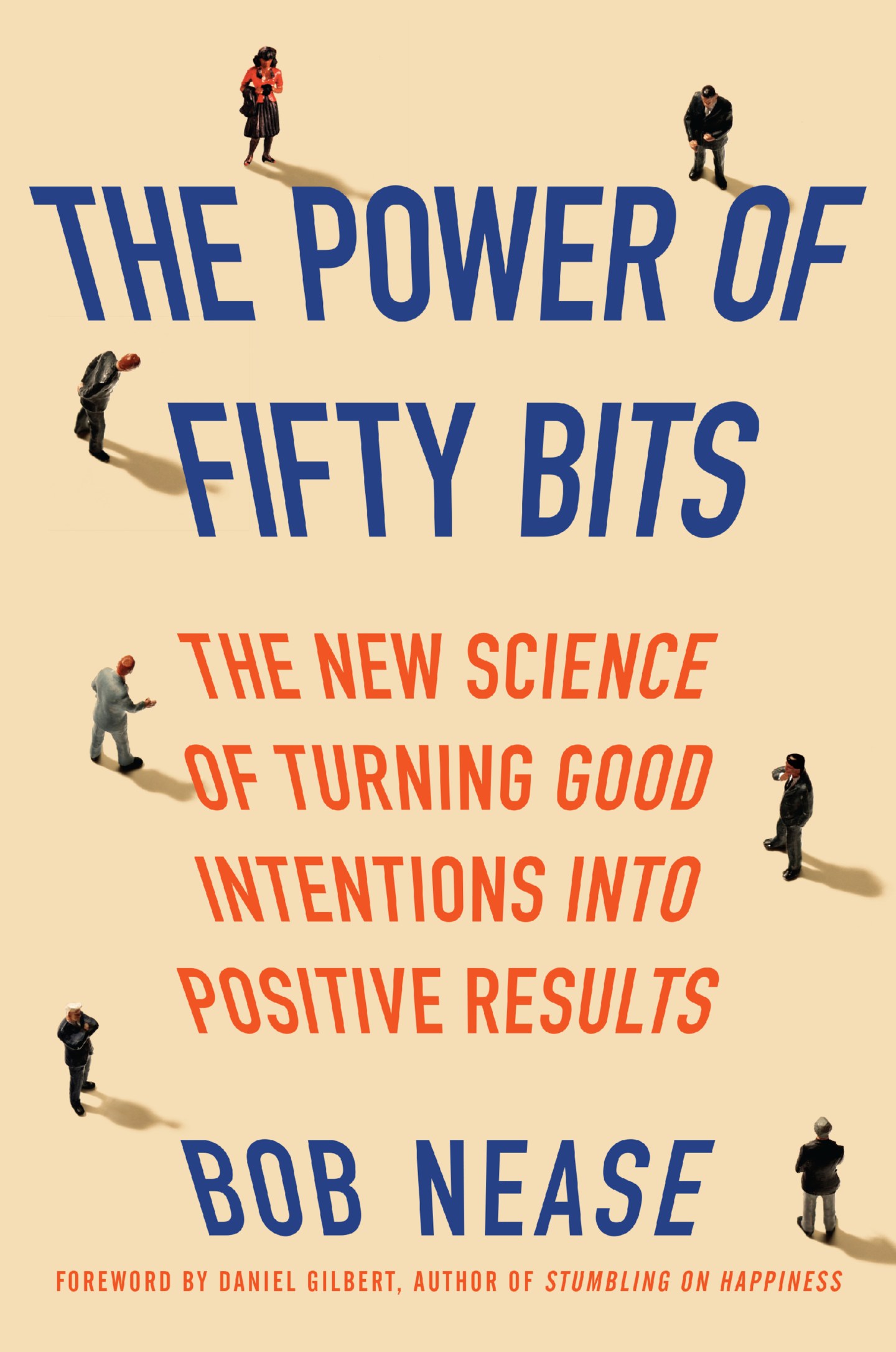
As I note in my book, The Power of Fifty Bits, requiring choice is one of seven proven strategies for activating the good intentions that most of us – including potential customers – already have. These approaches can be put to work today to overcome our 50-bits limitation and improve behavior.
If you’re serious about behavior change, it’s time to take a serious look at the approaches you’re using in your organization. Are you focusing on changing someone’s underlying intentions? If so, give it a rest – those intentions are probably already good. Instead, give the new science of turning good intentions into positive results a spin. You’ll be happily surprised at the outcome.
Bob Nease, PhD, is the former chief scientist of Express Scripts, and the author of The Power of Fifty Bits: The New Science of Turning Good Intentions into Positive Results (HarperCollins) as well as over 70 peer-reviewed papers.