Anheuser-Busch InBev and Molson Coors sought to assuage concerns that a “Mega Beer” merger in the global market would not hurt the vibrancy of smaller craft beers, battling against accusations from industry insiders that another big acquisition would be bad for consumers.
Two of the beer industry’s leading chief executives were challenged at a hearing held by the U.S. Senate’s subcommittee on Antitrust, Competition Policy and Consumer Rights on Tuesday. The main point of contention: how AB InBev’s (BUD) roughly $104 billion acquisition of SABMiller would affect the distribution of thousands of beer brands and styles across the U.S.
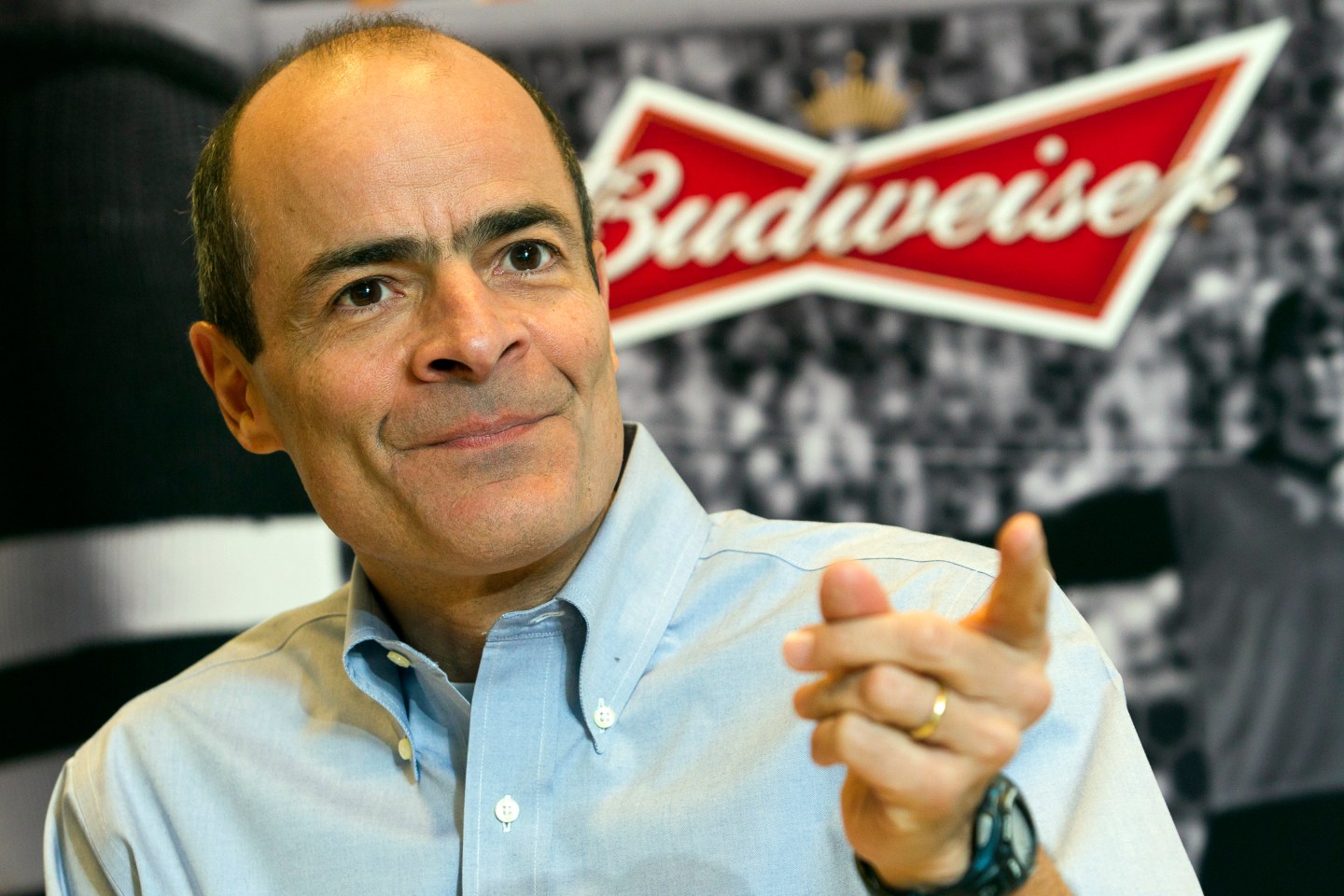
AB InBev CEO Carlos Brito sought to assure Congress that his company’s deal wouldn’t hurt competition. He pointed to a side deal that AB InBev preemptively inked with Molson Coors (TAP), agreeing to sell the MillerCoors joint venture in the U.S. in a deal valued at $12 billion. With that deal, Molson Coors will get full control of roughly 26% of the U.S. beer market – which it partly controlled through a joint venture with SABMiller. AB InBev, meanwhile, would maintain a market leadership position that would be unchanged at 45%.
“The purpose of this transaction is to enhance our ability to serve new markets, particularly in Africa, Asia and Central and South America,” Brito said during his testimony. “What this combination is not about is changing our competitive position in the U.S. beer market.”
Beer’s ‘golden age’
“America is in a golden age for beer,” said Craig Purser, president and CEO of National Beer Wholesalers Association, in a statement to the committee. “The true winner is the American consumer. But what makes this choice possible? A robust and competitive system of distribution.”
As Fortune reported last week, the nation now has more breweries than ever before: 4,144 in 2015, exceeding a historic high set in 1873. Craft beer volume represented just 1% of the overall beer industry in 1994 but stands at over 11% today.
Craft brewers have been the growth engine for the broader beer industry, a strong performance that has led to more mergers and acquisitions. Senators from several states lauded the vibrancy of the craft beer movement in their states, while also seeming cautious about how a big merger in the beer aisle could hinder growth.
Purser and other beer insiders testified that they were concerned that the combination of AB InBev-SABMiller, a company analysts often call “Mega Beer,” would pressure the “three tier” system utilized by brewers and other alcoholic beverage producers. Essentially, brewers brew the beer, wholesalers distribute it, and retailers sell it. Those parties are mainly supposed to remain separate.
“Nobody wants to sit at a bar and find that their only choice is between a Bud and a Miller,” said U.S. Senator Chris Coons of Delaware, summing up the concerns the committee had about distribution.
Distribution disruption
Purser asserted AB InBev has sought to disrupt that system by buying up more distributors and pressuring independent brewers via incentives to stock Budweiser and AB InBev beers first, and give less or no space to craft competitors. Some experts who testified before Congress requested conditions be considered for post-merger conduct if the U.S. government were to sign off on the deal. Most of the requests were related to distribution and capacity.
Though worries about hop purchasing and pricing floated throughout the hearing, distribution was by far the biggest concern. Major distributors often have exclusive deals with either AB InBev or MillerCoors, though they also distribute other beers like Corona and Sam Adams.
AB InBev has been accused of seeking to curb the distribution of craft beers. AB InBev also owns 21 wholesalers, though Brito said the company works with over 500 wholesalers in total and only controls roughly 8% of InBev’s distribution tier in the U.S. After some pointed questions, Brito said AB InBev would vow to only buy up “around 10%” of the wholesale channel.
Bob Pease, CEO of the Brewers Association, said that the more than 2,800 beer manufacturers he represents are required by law to go through distributors to get their beers on retail shelves today. He contends AB InBev has scooped up distributors to cut off rivals’ growth.
Connecticut U.S. Senator Richard Blumenthal grilled Brito, securing a verbal agreement by the executive that the merger wouldn’t result in the termination or re-negotiation of existing distribution deals today. Molson Coors CEO Mark Hunter said his company only owns one distributor—and had no plans to buy more.
Hunter aimed to assure Congress that the deal would maintain a strong No. 2 player in the market. He said the only change would be that MillerCoors beers, which include Miller Lite, Blue Moon, and Coors, would have one shareholder rather than two. And because 70% of profits at Molson Coors would be derived from the U.S. market, it can be expected to be a major priority at Molson.
“I am very clear about the independence of Molson Coors,” Hunter said. “Our transaction doesn’t injure competition, but enhances it.”