• Home
  • Latest
  • Fortune 500
  • Finance
  • Tech
  • Leadership
  • Lifestyle
  • Rankings
  • Multimedia
Commentary

Here’s What 6.5% Growth in China Could Look Like

By
He Weiping
He Weiping
,
The Conversation
The Conversation
, and
Bethany Cianciolo
Bethany Cianciolo
Down Arrow Button Icon
By
He Weiping
He Weiping
,
The Conversation
The Conversation
, and
Bethany Cianciolo
Bethany Cianciolo
Down Arrow Button Icon
November 4, 2015, 9:30 AM ET
CHINA-BEIJING-CPC-FIFTH PLENARY SESSION(CN)
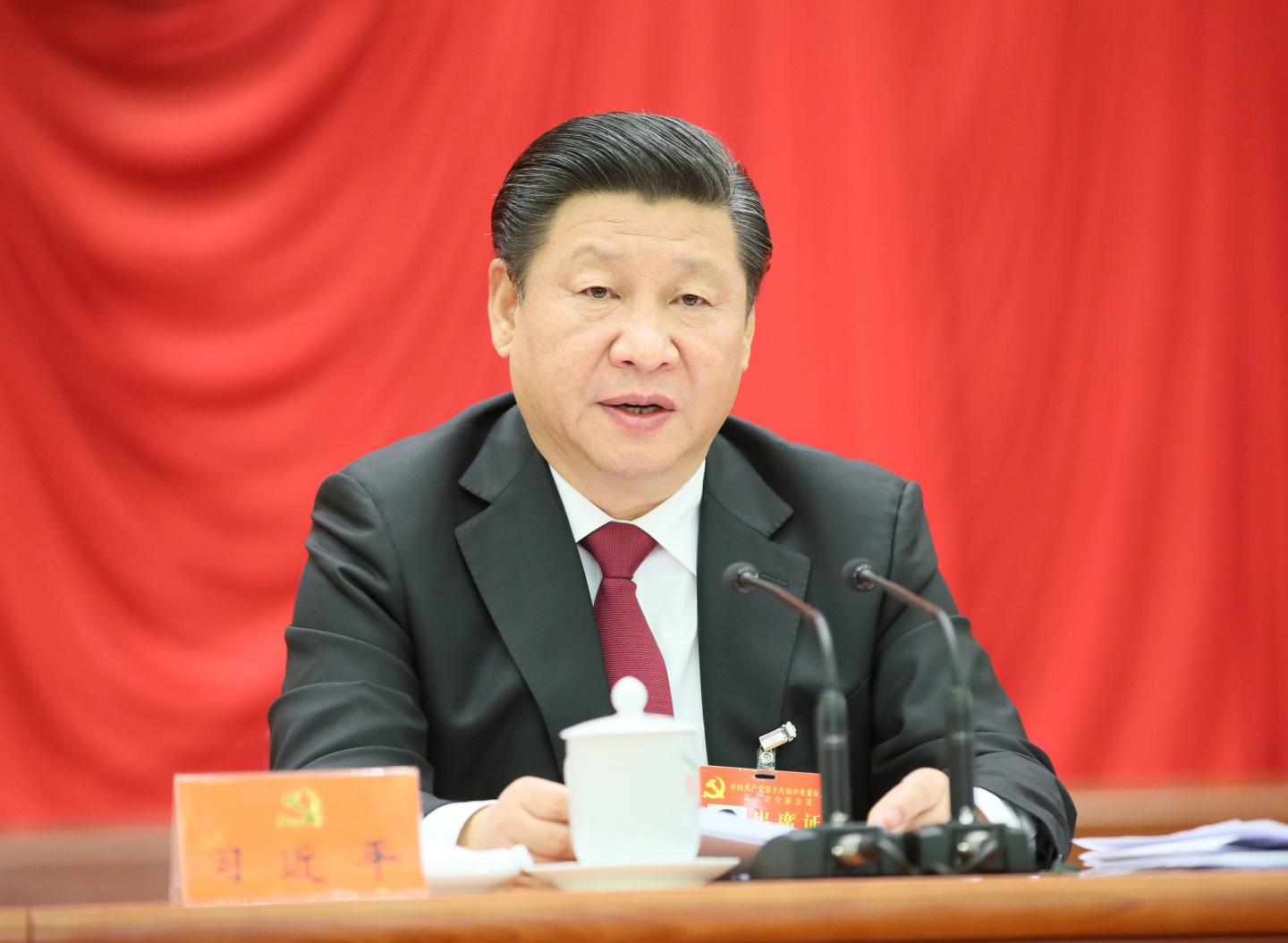
BEIJING- OCTOBER 29: Chinese President Xi Jinping, who is also general secretary of the Communist Party of China Central Committee, speaks at the Fifth Plenary Session of the 18th Communist Party of China Central Committee, in Beijing, capital of China. The meeting was held from Oct. 26 to 29 in Beijing. (Xinhua/Lan Hongguang via Getty Images)Photograph by Lan Hongguang — Xinhua News Agency via Getty Images

Overnight, Chinese President Xi Jinping gave the strongest indication yet the country will revise down its economic growth goal to 6.5%.

The official target will not be known until China releases its highly anticipated 13th five-year plan in March next year, but play has already been made on the idea of the “economic new norm.” This means lower percentage rates of economic growth (although rates still high in international terms) coupled with structural economic reform.

Undoubtedly, the primary goal is to keep the economy growing strongly. The latest interest rate cut on Oct. 30 was intended to stimulate the economy. As a result, the financial institution interest rate was reduced by 0.25% to 4.35%. This remains high by current international standards and leaves room for further significant cuts, a luxury not currently available in many economies.

The cut can hardly be considered a sign of economic desperation. It may have been prompted because last quarter’s GDP growth missed the 7% mark, but 6.5%, even allowing for the alleged suspect nature of Chinese economic statistics, is still a rate many economists consider consistent with the “transitioning” economy. Certainly percentage growth rates higher than these are unlikely to be seen again and growth is in fact sure to trend lower as China moves to become a developed economy.

The transition to a more consumer-based economy offers opportunities for private investors, especially given signs of official support for continuing economic liberalization.

The services sector has grown to 52% of the country’s GDP, as opposed to 44 % in 2011. China now accounts for 34% of the world’s smart phone market, 12% of the diamond and high end jewellery market, and 18% of the online games market. But poorly developed financial markets are an impediment to investment. Accordingly, financial market reform is a matter of government concern.

The path of reform in the financial sector has proven to be difficult. The government is encouraging private capital to enter the banking sector via the privately-funded banks, but the sector remains dominated by government controlled banks. Credit provided by banks still makes up 90% of all financing.

Of course, from the perspective of lenders, financing state-owned or controlled entities (SOEs) involves less risk than financing small to medium enterprises (SMEs). One perceived problem with the economy is this lack of funding for SMEs, and naturally a goal of reform is to provide adequate credit for smaller organizations. There has been an attempt to promote private finance companies as an alternative source of credit to the state controlled bank lending markets.

The government’s overarching goal is to establish a multi-layered capital markets system including shares, debt, futures, and private equity markets. The objective is to allow markets to play a decisive role. But the continuing influence and position of the SOEs and their structure, in which the main shareholders remain local or central government authorities who exercise managerial control, makes this difficult.

Listed companies mostly remain SOEs, which need to be supported for political and social reasons, and these capture most of the credit available from the state dominated banking system and capital from risk averse investors. The protected position of SOEs discourages lenders from investing in places other than the banking sector, and in particular from supporting SMEs. The protected position of SOEs inevitably distorts the capital markets.

There has so far been little success in making SOEs more market responsive. This means further development of financial markets in China depends on the growth of credit companies, privately funded banks, and also the “third board” market, which focuses on SME listings.

He Weiping is a lecturer in law at Monash University. This piece was originally published on The Conversation.

The Conversation

About the Authors
By He Weiping
See full bioRight Arrow Button Icon
By The Conversation
See full bioRight Arrow Button Icon
By Bethany Cianciolo
See full bioRight Arrow Button Icon

Latest in Commentary

Finance
Lorem ipsum dolor sit amet, consectetur adipiscing elit, sed do eiusmod tempor incididunt ut labore et dolore magna aliqua. Ut enim ad minim veniam
By Fortune Editors
October 20, 2025
Finance
Lorem ipsum dolor sit amet, consectetur adipiscing elit, sed do eiusmod tempor incididunt ut labore et dolore magna aliqua. Ut enim ad minim veniam
By Fortune Editors
October 20, 2025
Finance
Lorem ipsum dolor sit amet, consectetur adipiscing elit, sed do eiusmod tempor incididunt ut labore et dolore magna aliqua. Ut enim ad minim veniam
By Fortune Editors
October 20, 2025
Finance
Lorem ipsum dolor sit amet, consectetur adipiscing elit, sed do eiusmod tempor incididunt ut labore et dolore magna aliqua. Ut enim ad minim veniam
By Fortune Editors
October 20, 2025
Finance
Lorem ipsum dolor sit amet, consectetur adipiscing elit, sed do eiusmod tempor incididunt ut labore et dolore magna aliqua. Ut enim ad minim veniam
By Fortune Editors
October 20, 2025
Finance
Lorem ipsum dolor sit amet, consectetur adipiscing elit, sed do eiusmod tempor incididunt ut labore et dolore magna aliqua. Ut enim ad minim veniam
By Fortune Editors
October 20, 2025

Most Popular

Finance
Lorem ipsum dolor sit amet, consectetur adipiscing elit, sed do eiusmod tempor incididunt ut labore et dolore magna aliqua. Ut enim ad minim veniam
By Fortune Editors
October 20, 2025
Finance
Lorem ipsum dolor sit amet, consectetur adipiscing elit, sed do eiusmod tempor incididunt ut labore et dolore magna aliqua. Ut enim ad minim veniam
By Fortune Editors
October 20, 2025
Finance
Lorem ipsum dolor sit amet, consectetur adipiscing elit, sed do eiusmod tempor incididunt ut labore et dolore magna aliqua. Ut enim ad minim veniam
By Fortune Editors
October 20, 2025
Finance
Lorem ipsum dolor sit amet, consectetur adipiscing elit, sed do eiusmod tempor incididunt ut labore et dolore magna aliqua. Ut enim ad minim veniam
By Fortune Editors
October 20, 2025
Finance
Lorem ipsum dolor sit amet, consectetur adipiscing elit, sed do eiusmod tempor incididunt ut labore et dolore magna aliqua. Ut enim ad minim veniam
By Fortune Editors
October 20, 2025
Finance
Lorem ipsum dolor sit amet, consectetur adipiscing elit, sed do eiusmod tempor incididunt ut labore et dolore magna aliqua. Ut enim ad minim veniam
By Fortune Editors
October 20, 2025
Fortune Secondary Logo
Rankings
  • 100 Best Companies
  • Fortune 500
  • Global 500
  • Fortune 500 Europe
  • Most Powerful Women
  • Future 50
  • World’s Most Admired Companies
  • See All Rankings
Sections
  • Finance
  • Fortune Crypto
  • Features
  • Leadership
  • Health
  • Commentary
  • Success
  • Retail
  • Mpw
  • Tech
  • Lifestyle
  • CEO Initiative
  • Asia
  • Politics
  • Conferences
  • Europe
  • Newsletters
  • Personal Finance
  • Environment
  • Magazine
  • Education
Customer Support
  • Frequently Asked Questions
  • Customer Service Portal
  • Privacy Policy
  • Terms Of Use
  • Single Issues For Purchase
  • International Print
Commercial Services
  • Advertising
  • Fortune Brand Studio
  • Fortune Analytics
  • Fortune Conferences
  • Business Development
  • Group Subscriptions
About Us
  • About Us
  • Editorial Calendar
  • Press Center
  • Work At Fortune
  • Diversity And Inclusion
  • Terms And Conditions
  • Site Map
  • About Us
  • Editorial Calendar
  • Press Center
  • Work At Fortune
  • Diversity And Inclusion
  • Terms And Conditions
  • Site Map
  • Facebook icon
  • Twitter icon
  • LinkedIn icon
  • Instagram icon
  • Pinterest icon

Latest in Commentary

hormuz
CommentaryIran
With Hormuz under strain, a trade corridor built for resilience faces a real-world test
By Angela Chitkara and Samantha SuttonApril 17, 2026
15 hours ago
broker
CommentarySoftware
The 3 forces quietly dismantling the business model that made enterprise software fabulously profitable
By Michael Jacobides and Stefano PuntoniApril 17, 2026
17 hours ago
welti
CommentaryIran
Switzerland’s former ambassador to Iran: here’s how to end this war — and why Pakistan isn’t enough
By Philippe WeltiApril 17, 2026
22 hours ago
Anita Beveridge-Raffo is Head of Retail and Consumer Goods at Palantir Technologies
CommentaryAI agents
Palantir exec: the biggest mistake retailers are making with AI? Trying to do it all with one agent
By Anita Beveridge-RaffoApril 16, 2026
2 days ago
wyle
CommentaryHealth
‘The Pitt’ reveals why healthcare desperately needs a new front door
By Jeremy MorganApril 16, 2026
2 days ago
health
CommentaryHealth Care Service
Two physicians on ending the waiting-room era: bring care home
By Benjamin Kornitzer and Bill FristApril 16, 2026
2 days ago

Most Popular

Pope Leo warned the world is in ‘big trouble’ if Elon Musk becomes the first trillionaire
Success
Pope Leo warned the world is in ‘big trouble’ if Elon Musk becomes the first trillionaire
By Preston ForeApril 17, 2026
19 hours ago
A world going broke: IMF says America's $39 trillion national debt is actually a global problem—and AI may be the only rescue
Economy
A world going broke: IMF says America's $39 trillion national debt is actually a global problem—and AI may be the only rescue
By Nick LichtenbergApril 16, 2026
1 day ago
Jeff Bezos pledged $10 billion for climate change. With the 2030 clock ticking, his wife, Lauren Sánchez Bezos, is leading the charge to spend it
Environment
Jeff Bezos pledged $10 billion for climate change. With the 2030 clock ticking, his wife, Lauren Sánchez Bezos, is leading the charge to spend it
By Sydney LakeApril 15, 2026
3 days ago
Germany already told its workers to ditch four-day weeks and work-life balance. Now the government wants to cut their pay for calling in sick, too
Success
Germany already told its workers to ditch four-day weeks and work-life balance. Now the government wants to cut their pay for calling in sick, too
By Orianna Rosa RoyleApril 16, 2026
2 days ago
Iran has reopened the Strait of Hormuz—but experts say it now holds a card that works ‘almost like a nuclear deterrent’
Energy
Iran has reopened the Strait of Hormuz—but experts say it now holds a card that works ‘almost like a nuclear deterrent’
By Eva RoytburgApril 17, 2026
13 hours ago
Older millennials are starting to act like boomers in the housing market—and pulling away from the pack
Real Estate
Older millennials are starting to act like boomers in the housing market—and pulling away from the pack
By Nick LichtenbergApril 17, 2026
20 hours ago

© 2026 Fortune Media IP Limited. All Rights Reserved. Use of this site constitutes acceptance of our Terms of Use and Privacy Policy | CA Notice at Collection and Privacy Notice | Do Not Sell/Share My Personal Information
FORTUNE is a trademark of Fortune Media IP Limited, registered in the U.S. and other countries. FORTUNE may receive compensation for some links to products and services on this website. Offers may be subject to change without notice.