• Home
  • Latest
  • Fortune 500
  • Finance
  • Tech
  • Leadership
  • Lifestyle
  • Rankings
  • Multimedia
CommentaryIran
Asia

With Hormuz under strain, a trade corridor built for resilience faces a real-world test

By
Angela Chitkara
Angela Chitkara
and
Samantha Sutton
Samantha Sutton
Down Arrow Button Icon
By
Angela Chitkara
Angela Chitkara
and
Samantha Sutton
Samantha Sutton
Down Arrow Button Icon
April 17, 2026, 9:56 AM ET
hormuz
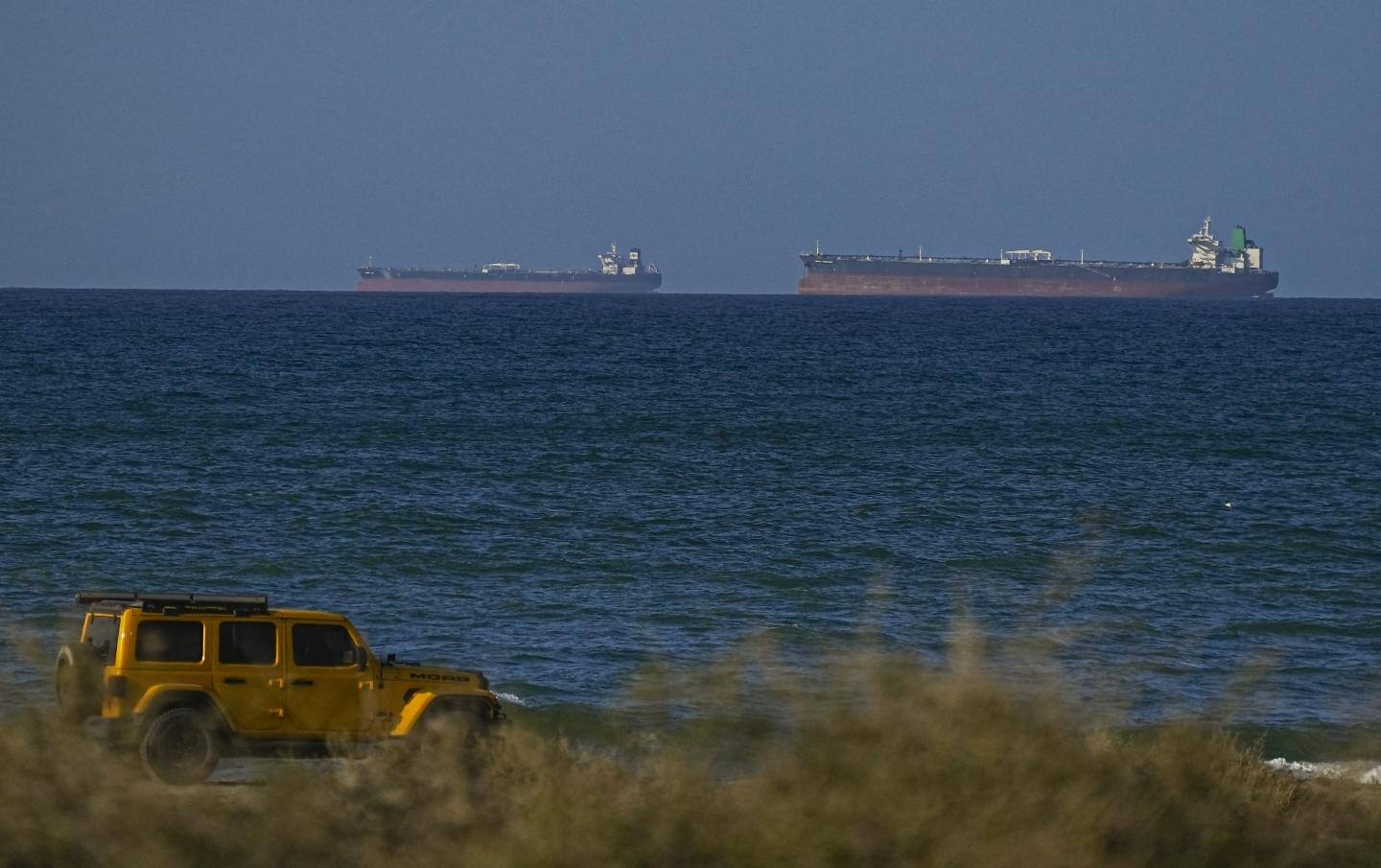
A view of the vessels heading towards the Strait of Hormuz following the two-week temporary ceasefire reached between the United States and Iran on the condition that the strait be reopened, seen in Oman on April 08, 2026. Shady Alassar/Anadolu via Getty Images

The India–Middle East–Europe Corridor, known as IMEC, is no longer just a concept on paper. It is being tested in real time.

Recommended Video

As policymakers place increasing pressure on securing critical routes such as the Strait of Hormuz, IMEC is emerging as a resilience framework. It sits at the intersection of infrastructure, geopolitics, and global markets.

Often described as an economic corridor, IMEC is better understood as a multimodal system. It links ports, rail, energy, and digital infrastructure across India, the Gulf, and Europe. It moves goods, data, and energy across regions that do not always align politically. It connects India to Europe through the Gulf and onward to the Eastern Mediterranean.

This did not emerge in isolation.

Within the U.S. government, there was a sense that something new was emerging. The Abraham Accords demonstrated that long-frozen regional relationships could shift, opening channels for cooperation. I2U2 built on that momentum by aligning partners across key sectors. IMEC was conceived within this trajectory, extending that cooperation into physical and digital infrastructure linking regions. At the time, there was real optimism that these frameworks could reshape connectivity, investment, and regional integration.

The momentum of IMEC stalled with the war in Gaza shortly after it was announced at the G20 meetings in India in 2023, underscoring the challenges of implementing transnational projects amid conflict and uncertainty.

By mid-2025, regional discussions resumed with a focus on feasibility. Now, escalating tensions over Iran are stress-testing whether such a system can function under pressure.

In his recent book, West Asia, Mohammed Soliman, senior fellow at the Middle East Institute  argues that what has long been described as the “Middle East” is better understood  as “West Asia,” a renaming that reflects a broader system shaped by trade, energy, and technology flows. He reframes the region not as a collection of conflicts, but as a connected system. 

West Asia sits at the western edge of the world’s largest landmass. It is connected to cities like Mumbai and Jakarta through networks that predate the nation-state and continue to shape the region’s role in the global economy.  At its core, IMEC is about whether trust can be built across borders through infrastructure. It is being built through public-private partnerships. It requires coordination across governments, investors, and operators. 

Recent tensions have slowed progress but increased the sense of urgency. 

Coordination across physical and digital public infrastructure (DPI) is now under pressure as national priorities take precedence.

 In India’s case, this is not reactive. Self-reliance and global integration have been advancing in parallel. 

This is not theoretical. India anchored IMEC through a multilateral agreement. It is now advancing through bilateral frameworks, most notably with the UAE, alongside coordination with the United States and Saudi Arabia across infrastructure, energy, and logistics.

India has also been in active discussions with IMEC signatories such as the United States, Saudi Arabia and Italy, and non-signatories such as Israel, Jordan and Egypt. Disruptions to trade routes, energy flows, and investment are already shaping how this corridor is being evaluated.

India is diversifying and derisking its supply chains. It is expanding manufacturing capacity and attracting global investment through public-private partnerships and Make in India. These efforts are positioning the country as a key node in global supply chains. Afaq Hussain, a nonresident fellow at the Atlantic Council, has emphasized the importance of manufacturing competitiveness and supply chain integration, a point he underscored in a recent Atlantic Council discussion.

India is building relationships across regions that do not always align politically. It engages across geopolitical divides, maintaining ties with partners such as the United States while continuing to work with countries like Iran and China. This reflects a flexible approach to diplomacy and economic engagement.

India is also shifting its energy strategy. Agreements with partners such as Saudi Arabia include collaboration on green hydrogen. At the same time, it maintains ties with Russia and continues purchasing Russian oil despite U.S. pressure, underscoring its approach to energy security.

For the United States, this moment matters.

The U.S.–India relationship is becoming more important as post-World War II structures no longer fully serve a world reorganizing around regions and interdependence. India’s expanded economic role, combined with Washington’s strategic decoupling from China, is reshaping how the two countries engage.

India operates across differences. It maintains long-standing diplomatic relationships across the Global South while engaging with partners that do not always align with U.S. interests. Recent engagements with both Israel and Iran underscore how India navigates complex geopolitical lines.

Trust is no longer assumed. It must be built across systems that were not designed to work together. Digital public infrastructure (DPI), developed and tested at scale in India, offers a model for cross-border systems such as IMEC. It enables flows of data, services, and capital across borders.

But questions around data governance remain. Even between the United States and Europe, data-sharing frameworks have faced repeated challenges. Extending trust across the U.S.–India corridor will require alignment on standards and safeguards. DPI may provide the rails, but trust will depend on how those systems are governed.

IMEC must operate across political systems, security conditions, and regulatory frameworks, without a central authority coordinating all actors. 

In recent meetings with business and policy leaders in India, including engagements through our Columbia SIPA capstone in collaboration with the Vishwamitra Research Foundation (VRF), one point stood out to our students: the technical components can be built. Aligning political interests is the harder challenge. This is where sustained policy coordination becomes critical. Relationships — and trust — matter.

Critical chokepoints such as the Strait of Hormuz highlight the realities these systems must navigate. Disruptions in and around these routes explain why IMEC is being tested now. Countries and companies are looking for pathways that can function under pressure.

IMEC will not be defined by infrastructure alone. It will depend on how it is governed across jurisdictions, how risk is managed in real time, and whether it can function under pressure.

What has been less discussed is how companies are responding. Global multinationals are increasingly playing a leadership role. They operate across markets that are economically connected but not always politically aligned. Their decisions shape supply chains, workforce integration, and local engagement.

This is where the concept of the license to operate becomes real.

Trust sits at the center of all of this. It underpins public-private partnerships, shapes alignment between countries, and determines whether companies can operate credibly in local markets.

Without it, infrastructure does not translate into cooperation.As the United States approaches its 250th year, maintaining that trust will require sustained engagement and consistency across partners. Trust is shaped by the histories and relationships countries carry with them.

The opinions expressed in Fortune.com commentary pieces are solely the views of their authors and do not necessarily reflect the opinions and beliefs of Fortune.

Join us at the Fortune Workplace Innovation Summit May 19–20, 2026, in Atlanta. The next era of workplace innovation is here—and the old playbook is being rewritten. At this exclusive, high-energy event, the world’s most innovative leaders will convene to explore how AI, humanity, and strategy converge to redefine, again, the future of work. Register now.
About the Authors
By Angela Chitkara
See full bioRight Arrow Button Icon
By Samantha Sutton
See full bioRight Arrow Button Icon

Latest in Commentary

Finance
Lorem ipsum dolor sit amet, consectetur adipiscing elit, sed do eiusmod tempor incididunt ut labore et dolore magna aliqua. Ut enim ad minim veniam
By Fortune Editors
October 20, 2025
Finance
Lorem ipsum dolor sit amet, consectetur adipiscing elit, sed do eiusmod tempor incididunt ut labore et dolore magna aliqua. Ut enim ad minim veniam
By Fortune Editors
October 20, 2025
Finance
Lorem ipsum dolor sit amet, consectetur adipiscing elit, sed do eiusmod tempor incididunt ut labore et dolore magna aliqua. Ut enim ad minim veniam
By Fortune Editors
October 20, 2025
Finance
Lorem ipsum dolor sit amet, consectetur adipiscing elit, sed do eiusmod tempor incididunt ut labore et dolore magna aliqua. Ut enim ad minim veniam
By Fortune Editors
October 20, 2025
Finance
Lorem ipsum dolor sit amet, consectetur adipiscing elit, sed do eiusmod tempor incididunt ut labore et dolore magna aliqua. Ut enim ad minim veniam
By Fortune Editors
October 20, 2025
Finance
Lorem ipsum dolor sit amet, consectetur adipiscing elit, sed do eiusmod tempor incididunt ut labore et dolore magna aliqua. Ut enim ad minim veniam
By Fortune Editors
October 20, 2025

Most Popular

Finance
Lorem ipsum dolor sit amet, consectetur adipiscing elit, sed do eiusmod tempor incididunt ut labore et dolore magna aliqua. Ut enim ad minim veniam
By Fortune Editors
October 20, 2025
Finance
Lorem ipsum dolor sit amet, consectetur adipiscing elit, sed do eiusmod tempor incididunt ut labore et dolore magna aliqua. Ut enim ad minim veniam
By Fortune Editors
October 20, 2025
Finance
Lorem ipsum dolor sit amet, consectetur adipiscing elit, sed do eiusmod tempor incididunt ut labore et dolore magna aliqua. Ut enim ad minim veniam
By Fortune Editors
October 20, 2025
Finance
Lorem ipsum dolor sit amet, consectetur adipiscing elit, sed do eiusmod tempor incididunt ut labore et dolore magna aliqua. Ut enim ad minim veniam
By Fortune Editors
October 20, 2025
Finance
Lorem ipsum dolor sit amet, consectetur adipiscing elit, sed do eiusmod tempor incididunt ut labore et dolore magna aliqua. Ut enim ad minim veniam
By Fortune Editors
October 20, 2025
Finance
Lorem ipsum dolor sit amet, consectetur adipiscing elit, sed do eiusmod tempor incididunt ut labore et dolore magna aliqua. Ut enim ad minim veniam
By Fortune Editors
October 20, 2025
Fortune Secondary Logo
Rankings
  • 100 Best Companies
  • Fortune 500
  • Global 500
  • Fortune 500 Europe
  • Most Powerful Women
  • World's Most Admired Companies
  • See All Rankings
  • Lists Calendar
Sections
  • Finance
  • Fortune Crypto
  • Features
  • Leadership
  • Health
  • Commentary
  • Success
  • Retail
  • Mpw
  • Tech
  • Lifestyle
  • CEO Initiative
  • Asia
  • Politics
  • Conferences
  • Europe
  • Newsletters
  • Personal Finance
  • Environment
  • Magazine
  • Education
Customer Support
  • Frequently Asked Questions
  • Customer Service Portal
  • Privacy Policy
  • Terms Of Use
  • Single Issues For Purchase
  • International Print
Commercial Services
  • Advertising
  • Fortune Brand Studio
  • Fortune Analytics
  • Fortune Conferences
  • Business Development
  • Group Subscriptions
About Us
  • About Us
  • Press Center
  • Work At Fortune
  • Terms And Conditions
  • Site Map
  • About Us
  • Press Center
  • Work At Fortune
  • Terms And Conditions
  • Site Map
  • Facebook icon
  • Twitter icon
  • LinkedIn icon
  • Instagram icon
  • Pinterest icon
Angela Chitkara is Founder and CEO of US–India Corridor, a cross-border advisory firm she founded in 2007, focused on governance, risk, and resilience across global markets. Samantha Sutton is Associate Director of Policy at Columbia University’s Institute of Global Politics (IGP) and a former National Security Council official, where she served in the White House as Director for Israel and Palestinian Affairs. They co-teach a graduate-level capstone on the India–Middle East–Europe Corridor (IMEC) at Columbia University’s School of International and Public Affairs (SIPA) in New York City.

Latest in Commentary

amanda
Commentarybatteries
Why energy storage is moving beyond the capex debate
By Amanda SimonianMay 7, 2026
20 hours ago
trump
CommentaryMedicare
Auto-enrollment in Medicare Advantage isn’t a nudge. It’s a trap
By Brian KeyserMay 7, 2026
22 hours ago
nyse
CommentaryAI agents
Your trusted advocate or your rebellious Frankenstein: how you deploy agentic AI determines which one you get
By Jeffrey Sonnenfeld, Stephen Henriques, Yevheniia Podurets and Jasmine GarryMay 7, 2026
22 hours ago
moore
CommentaryAntitrust
I litigated the JetBlue-Spirit merger. A few thoughts on the future of antitrust in the airline industry
By James "Jimmy" MooreMay 7, 2026
1 day ago
ben
CommentaryFood and drink
Magnum owns Ben & Jerry’s. Now it’s destroying what made the brand worth buying
By David Bronner, Michael Bronner and Ryan GellertMay 7, 2026
1 day ago
anis
CommentaryVenture Capital
AI, robotics, climate tech: How VCaaS helps corporations enter deep tech safely
By Anis UzzamanMay 6, 2026
2 days ago

Most Popular

U.S. Treasury will have to borrow $2 trillion this year just to continue functioning—more than $166 billion every month
Economy
U.S. Treasury will have to borrow $2 trillion this year just to continue functioning—more than $166 billion every month
By Eleanor PringleMay 7, 2026
23 hours ago
California farmers must destroy 420,000 peach trees after Del Monte closes its canneries and cancels more than $550 million in long-term contracts
North America
California farmers must destroy 420,000 peach trees after Del Monte closes its canneries and cancels more than $550 million in long-term contracts
By Sasha RogelbergMay 7, 2026
14 hours ago
Tokyo is throwing out its strict office dress code and asking workers to wear shorts amid the war in Iran energy crisis
Success
Tokyo is throwing out its strict office dress code and asking workers to wear shorts amid the war in Iran energy crisis
By Emma BurleighMay 5, 2026
3 days ago
A Michigan farm town voted down plans for a giant OpenAI-Oracle data center. Weeks later, construction began
Magazine
A Michigan farm town voted down plans for a giant OpenAI-Oracle data center. Weeks later, construction began
By Sharon GoldmanMay 6, 2026
2 days ago
The IRS may owe COVID-era refunds to tens of millions of taxpayers. Here’s who could qualify
Personal Finance
The IRS may owe COVID-era refunds to tens of millions of taxpayers. Here’s who could qualify
By Sydney LakeMay 6, 2026
2 days ago
Current price of oil as of May 7, 2026
Personal Finance
Current price of oil as of May 7, 2026
By Joseph HostetlerMay 7, 2026
21 hours ago

© 2026 Fortune Media IP Limited. All Rights Reserved. Use of this site constitutes acceptance of our Terms of Use and Privacy Policy | CA Notice at Collection and Privacy Notice | Do Not Sell/Share My Personal Information
FORTUNE is a trademark of Fortune Media IP Limited, registered in the U.S. and other countries. FORTUNE may receive compensation for some links to products and services on this website. Offers may be subject to change without notice.