• Home
  • Latest
  • Fortune 500
  • Finance
  • Tech
  • Leadership
  • Lifestyle
  • Rankings
  • Multimedia
CommentaryIran

Switzerland’s former ambassador to Iran: here’s how to end this war — and why Pakistan isn’t enough

By
Philippe Welti
Philippe Welti
Down Arrow Button Icon
By
Philippe Welti
Philippe Welti
Down Arrow Button Icon
April 17, 2026, 3:00 AM ET

Philippe Welti served as Ambassador of Switzerland to Iran and, as protecting power, represented U.S. interests in Tehran. He is co-founder of Share-an-Ambassador, a geopolitical consultancy.

welti
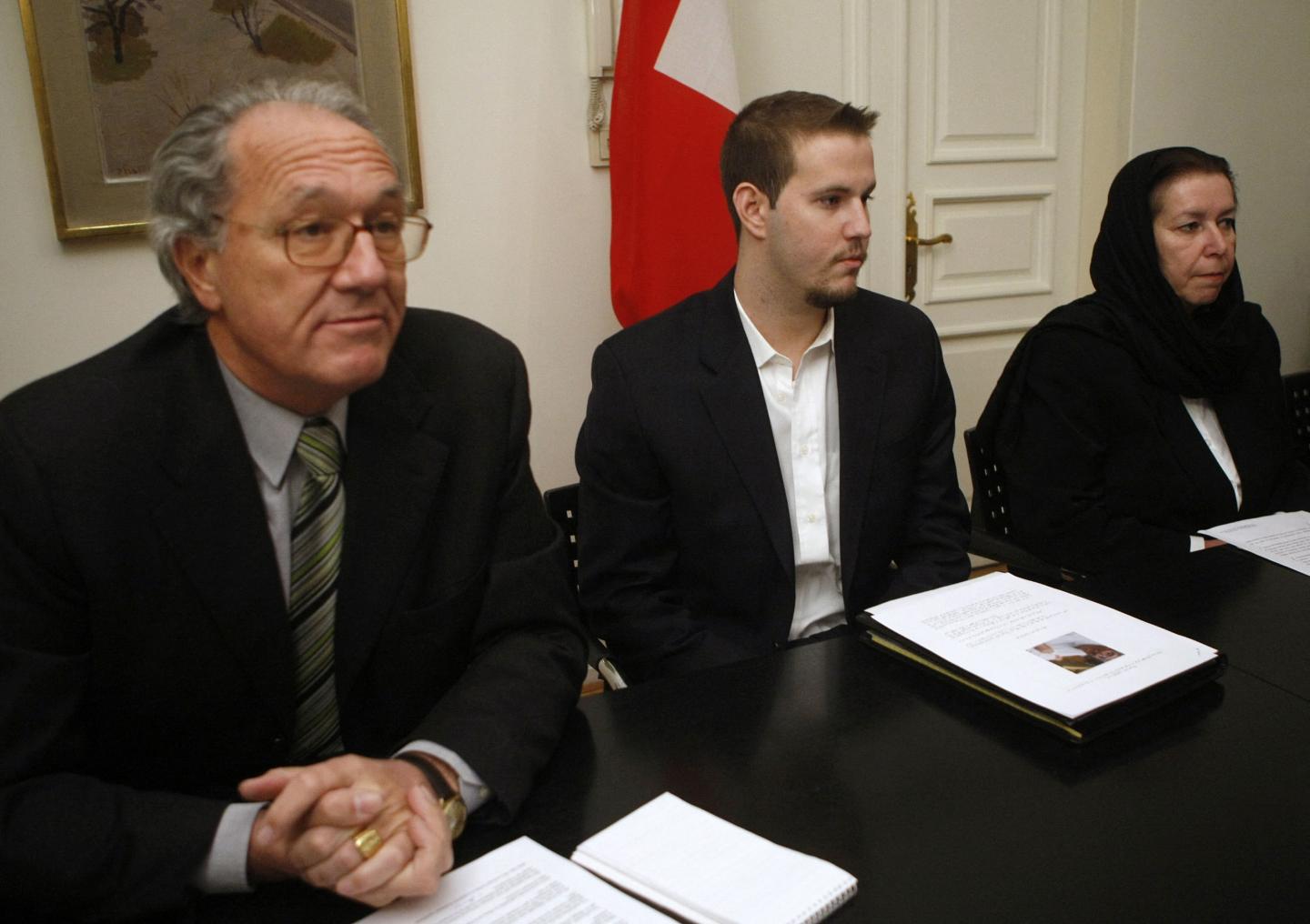
US Christine Levinson, the wife of ex-FBI agent Robert Levinson, holds a press conference with her son Daniel (C) and Swiss ambassador to Tehran, Philippe Welti (L), at the Swiss embassy in Tehran, 22 December 2007. The wife of the former agent missing in Iran since March said today she has received "no answers" about his fate at the end of her trip to the Islamic republic in search of her husband, who Washington says went missing on a visit to the Iranian island of Kish. The Tehran government reiterated earlier it has no information that Levinson had disappeared on its territory.BEHROUZ MEHRI/AFP via Getty Images

Given the failure of this weekend’s peace talks and President Trump’s blockade of Iranian ports, it seems increasingly likely that America and Iran may once again wage war in the skies above Tehran and Isfahan, on the waters of the Persian Gulf, and potentially on the ground too.

Recommended Video

But this conflict will ultimately be ended not by bullets or bombs, but by backchannel diplomacy. And as Switzerland’s former ambassador to Iran — where I officially represented Washington’s interests in Tehran — I know what it’ll take for both nations to ink a peace deal.

For more than 150 years, Switzerland has served as a trusted go-between for countries without diplomatic ties, often acting as a “protecting power” and mediating between hostile governments. We first took on this responsibility during the Franco-Prussian War of 1870 — the period from which the modern institution of protecting power originates. Since then, we’ve carried it into some of the world’s greatest conflicts, representing as many as 35 countries during World War II.

That depth of experience explains why Washington has consistently turned to Switzerland for diplomatic assistance. When the United States broke off relations with Cuba in 1961, Switzerland stepped in as protecting power and maintained that role until President Obama restored relations between Washington and Havana in 2015 — and continues to represent Cuba’s interests in the U.S. to this day.

We’ve likewise served as the United States’ protecting power in Iran. After Iranian students took over the U.S. embassy in Tehran in 1979 and held Americans hostage, the United States cut diplomatic ties with Iran in April 1980 and asked Switzerland to represent its interests; Switzerland formally accepted the mandate in May 1980. Since then, Switzerland has facilitated talks and served as a diplomatic backchannel between the United States and Iran, even hosting negotiations for agreements like the 2015 JCPOA nuclear agreement.

Our decades spent navigating the complex relationship between the United States and Iran have taught us a few important lessons about ending conflicts like this one.

First, it’s essential to keep back channels like ours open — even during active conflict, someone must be able to speak to both sides. Time and again, these communication channels have prevented greater escalation.

After the United States killed Iranian General Qassem Soleimani in January 2020, for example, the Trump administration relied on a Swiss back channel to communicate with Iran and contain the situation.

Having been in charge of such cases of secret communications, I can only assume, that encrypted messages were brought to the attention of the Iranian Foreign Ministry via Switzerland’s embassy in Tehran. Even as Iran’s supreme leader publicly warned of “harsh retaliation” and President Trump threatened new targets, both countries must have been sending more measured messages through Swiss channels to avoid a broader conflict.

Only a country with relatively independent foreign policies, one that’s viewed as a widely trusted third party, can facilitate this sort of dialogue. Right now, Pakistan — which serves as Iran’s protecting power in Washington — has stepped forward to host those negotiations. It’s a welcome, well-intentioned effort, even if Pakistani mediators struggled to align both parties on the precise terms of the recent ceasefire, including the scope of Israel’s military operations in Lebanon.

But both Iran and America sometimes struggle to fully trust Pakistan, which launched retaliatory airstrikes on Iranian territory in January 2024 — killing at least nine people — and also provided assistance to the Afghan Taliban against American troops.

Switzerland, by contrast, isn’t exactly known for its bombing campaigns or support for proxy militias.

Second, it’s important to remember that peace agreements only last when all parties can claim at least a partial victory. A lopsided settlement tends to trigger lasting resentment and renewed war.

The Treaty of Versailles, for example, marked the end of World War I, but historians commonly cite it as a major contributor to the Nazi Party’s rise and the outbreak of World War II.

Of course, that doesn’t mean that any eventual peace deal will perfectly balance the victors’ and vanquished’s demands. But the terms — whatever they may be — must be flexible enough that the losing party can at least save face.

Iran, for instance, has demanded reparations for the damage caused by U.S. airstrikes. The White House, meanwhile, has offered to lift sanctions and unfreeze assets in return for various concessions. If the cash flows, both sides can frame it as they see fit for their domestic audiences.

Switzerland has always prided itself on keeping doors open when others are closing them. Now, as the conflict escalates and the global economic pain compounds, Switzerland stands ready to assist the United States and Iran, just as we’ve done for decades.

The opinions expressed in Fortune.com commentary pieces are solely the views of their authors and do not necessarily reflect the opinions and beliefs of Fortune.

Join us at the Fortune Workplace Innovation Summit May 19–20, 2026, in Atlanta. The next era of workplace innovation is here—and the old playbook is being rewritten. At this exclusive, high-energy event, the world’s most innovative leaders will convene to explore how AI, humanity, and strategy converge to redefine, again, the future of work. Register now.
About the Author
By Philippe Welti
See full bioRight Arrow Button Icon

Latest in Commentary

Finance
Lorem ipsum dolor sit amet, consectetur adipiscing elit, sed do eiusmod tempor incididunt ut labore et dolore magna aliqua. Ut enim ad minim veniam
By Fortune Editors
October 20, 2025
Finance
Lorem ipsum dolor sit amet, consectetur adipiscing elit, sed do eiusmod tempor incididunt ut labore et dolore magna aliqua. Ut enim ad minim veniam
By Fortune Editors
October 20, 2025
Finance
Lorem ipsum dolor sit amet, consectetur adipiscing elit, sed do eiusmod tempor incididunt ut labore et dolore magna aliqua. Ut enim ad minim veniam
By Fortune Editors
October 20, 2025
Finance
Lorem ipsum dolor sit amet, consectetur adipiscing elit, sed do eiusmod tempor incididunt ut labore et dolore magna aliqua. Ut enim ad minim veniam
By Fortune Editors
October 20, 2025
Finance
Lorem ipsum dolor sit amet, consectetur adipiscing elit, sed do eiusmod tempor incididunt ut labore et dolore magna aliqua. Ut enim ad minim veniam
By Fortune Editors
October 20, 2025
Finance
Lorem ipsum dolor sit amet, consectetur adipiscing elit, sed do eiusmod tempor incididunt ut labore et dolore magna aliqua. Ut enim ad minim veniam
By Fortune Editors
October 20, 2025

Most Popular

Finance
Lorem ipsum dolor sit amet, consectetur adipiscing elit, sed do eiusmod tempor incididunt ut labore et dolore magna aliqua. Ut enim ad minim veniam
By Fortune Editors
October 20, 2025
Finance
Lorem ipsum dolor sit amet, consectetur adipiscing elit, sed do eiusmod tempor incididunt ut labore et dolore magna aliqua. Ut enim ad minim veniam
By Fortune Editors
October 20, 2025
Finance
Lorem ipsum dolor sit amet, consectetur adipiscing elit, sed do eiusmod tempor incididunt ut labore et dolore magna aliqua. Ut enim ad minim veniam
By Fortune Editors
October 20, 2025
Finance
Lorem ipsum dolor sit amet, consectetur adipiscing elit, sed do eiusmod tempor incididunt ut labore et dolore magna aliqua. Ut enim ad minim veniam
By Fortune Editors
October 20, 2025
Finance
Lorem ipsum dolor sit amet, consectetur adipiscing elit, sed do eiusmod tempor incididunt ut labore et dolore magna aliqua. Ut enim ad minim veniam
By Fortune Editors
October 20, 2025
Finance
Lorem ipsum dolor sit amet, consectetur adipiscing elit, sed do eiusmod tempor incididunt ut labore et dolore magna aliqua. Ut enim ad minim veniam
By Fortune Editors
October 20, 2025
Fortune Secondary Logo
Rankings
  • 100 Best Companies
  • Fortune 500
  • Global 500
  • Fortune 500 Europe
  • Most Powerful Women
  • World's Most Admired Companies
  • See All Rankings
  • Lists Calendar
Sections
  • Finance
  • Fortune Crypto
  • Features
  • Leadership
  • Health
  • Commentary
  • Success
  • Retail
  • Mpw
  • Tech
  • Lifestyle
  • CEO Initiative
  • Asia
  • Politics
  • Conferences
  • Europe
  • Newsletters
  • Personal Finance
  • Environment
  • Magazine
  • Education
Customer Support
  • Frequently Asked Questions
  • Customer Service Portal
  • Privacy Policy
  • Terms Of Use
  • Single Issues For Purchase
  • International Print
Commercial Services
  • Advertising
  • Fortune Brand Studio
  • Fortune Analytics
  • Fortune Conferences
  • Business Development
  • Group Subscriptions
About Us
  • About Us
  • Press Center
  • Work At Fortune
  • Terms And Conditions
  • Site Map
  • About Us
  • Press Center
  • Work At Fortune
  • Terms And Conditions
  • Site Map
  • Facebook icon
  • Twitter icon
  • LinkedIn icon
  • Instagram icon
  • Pinterest icon

Latest in Commentary

amanda
Commentarybatteries
Why energy storage is moving beyond the capex debate
By Amanda SimonianMay 7, 2026
5 hours ago
trump
CommentaryMedicare
Auto-enrollment in Medicare Advantage isn’t a nudge. It’s a trap
By Brian KeyserMay 7, 2026
6 hours ago
nyse
CommentaryAI agents
Your trusted advocate or your rebellious Frankenstein: how you deploy agentic AI determines which one you get
By Jeffrey Sonnenfeld, Stephen Henriques, Yevheniia Podurets and Jasmine GarryMay 7, 2026
6 hours ago
moore
CommentaryAntitrust
I litigated the JetBlue-Spirit merger. A few thoughts on the future of antitrust in the airline industry
By James "Jimmy" MooreMay 7, 2026
10 hours ago
ben
CommentaryFood and drink
Magnum owns Ben & Jerry’s. Now it’s destroying what made the brand worth buying
By David Bronner, Michael Bronner and Ryan GellertMay 7, 2026
11 hours ago
anis
CommentaryVenture Capital
AI, robotics, climate tech: How VCaaS helps corporations enter deep tech safely
By Anis UzzamanMay 6, 2026
1 day ago

Most Popular

A Michigan farm town voted down plans for a giant OpenAI-Oracle data center. Weeks later, construction began
Magazine
A Michigan farm town voted down plans for a giant OpenAI-Oracle data center. Weeks later, construction began
By Sharon GoldmanMay 6, 2026
1 day ago
Tokyo is throwing out its strict office dress code and asking workers to wear shorts amid the war in Iran energy crisis
Success
Tokyo is throwing out its strict office dress code and asking workers to wear shorts amid the war in Iran energy crisis
By Emma BurleighMay 5, 2026
2 days ago
Mark Zuckerberg once gave a Facebook engineer startup advice at 2 a.m. while 'hanging out with all the interns'—she quit and raised millions after
Success
Mark Zuckerberg once gave a Facebook engineer startup advice at 2 a.m. while 'hanging out with all the interns'—she quit and raised millions after
By Orianna Rosa RoyleMay 6, 2026
1 day ago
U.S. Treasury will have to borrow $2 trillion this year just to continue functioning—more than $166 billion every month
Economy
U.S. Treasury will have to borrow $2 trillion this year just to continue functioning—more than $166 billion every month
By Eleanor PringleMay 7, 2026
7 hours ago
Economists have found an answer to slowing cognitive decline: avoid retiring early, study finds
Economy
Economists have found an answer to slowing cognitive decline: avoid retiring early, study finds
By Sasha RogelbergMay 5, 2026
2 days ago
AI could solve America's $39 trillion debt crisis—but only if Washington abandons displaced workers, Yale Budget Lab warns
Economy
AI could solve America's $39 trillion debt crisis—but only if Washington abandons displaced workers, Yale Budget Lab warns
By Jake AngeloMay 6, 2026
1 day ago

© 2026 Fortune Media IP Limited. All Rights Reserved. Use of this site constitutes acceptance of our Terms of Use and Privacy Policy | CA Notice at Collection and Privacy Notice | Do Not Sell/Share My Personal Information
FORTUNE is a trademark of Fortune Media IP Limited, registered in the U.S. and other countries. FORTUNE may receive compensation for some links to products and services on this website. Offers may be subject to change without notice.