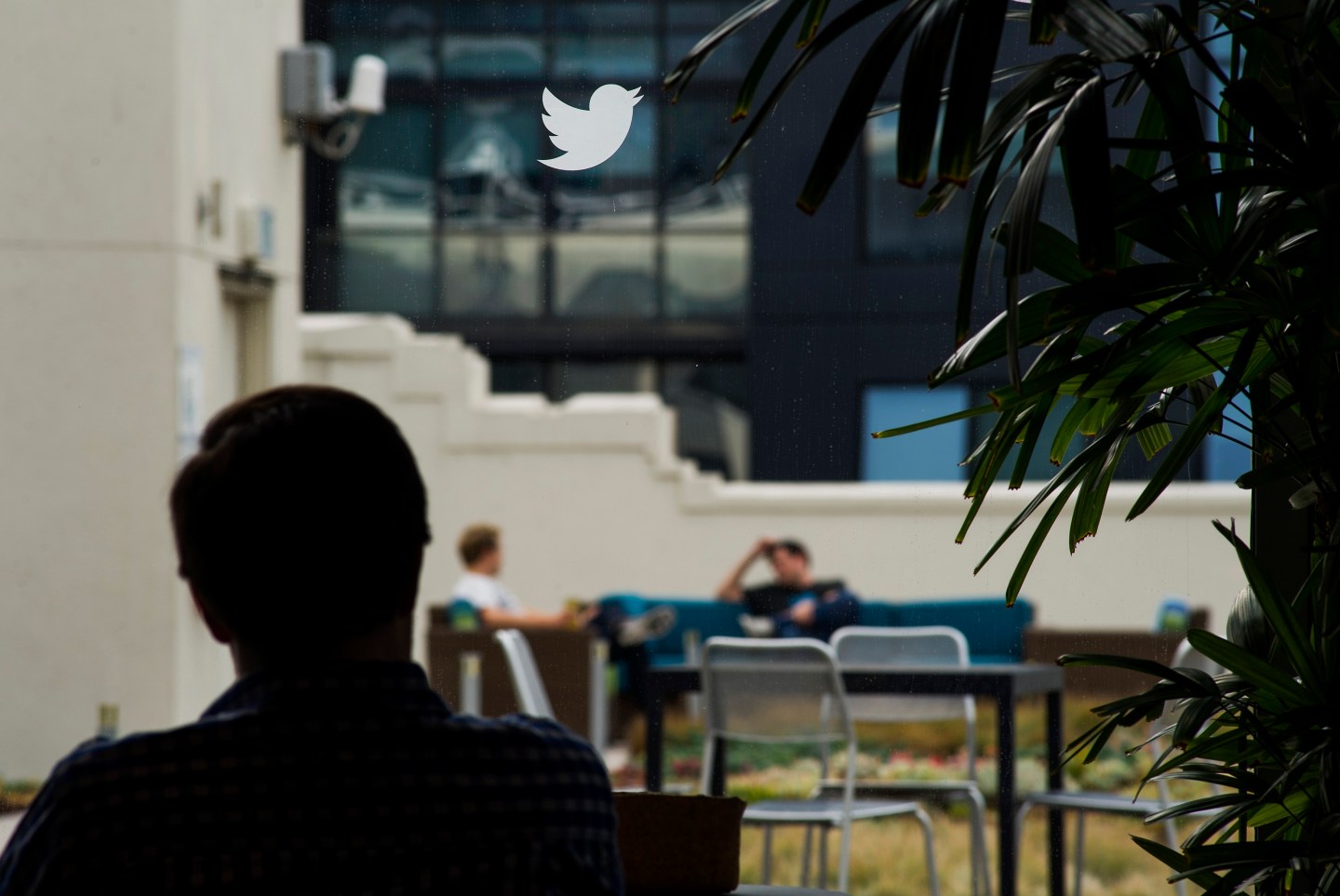
Earlier this month, Twitter launched a new feature called Moments, which offers a curated and frequently updated collection of tweets that the company describes as the “best of what’s happening on Twitter.”
Under the headings “Today,” “News,” “Sports,” “Entertainment” and “Fun,” Moments showcases a series of text, video and photo tweets on topics ranging from the latest developments in the US presidential race to cute pets.
Moments has attracted a great deal of attention, both for the fact that it represents a major effort by Twitter to reverse sluggish user growth, and for the fact that it relies on human curators. This reliance on human expertise raises important questions over the value of people in tech-driven information services and the limits of today’s cutting-edge software.
Why does Twitter need Moments now?
The main driver behind the development of Moments is Twitter’s stagnating user growth.
Twitter, which launched in 2006, has struggled to achieve mass penetration of the U.S. market. According to data from the Pew Research Center, only 20% of the U.S. adult population uses Twitter, compared to 62% who use Facebook, 26% who use Pinterest, 24% who use Instagram and 22% who use LinkedIn.
Furthermore, Twitter’s user growth has been slowing over the last three years, falling from 18% in the first quarter of 2012 to just 3% during the second quarter of this year.
Freshly reinstated Twitter CEO Jack Dorsey has diagnosed slowing user growth as a symptom of a confusing platform that’s difficult to navigate. Moments is intended to help solve these twin problems.
First, Moments is designed to highlight the key function of Twitter. Data from GlobalWebIndex’s Social report indicate that Twitter (TWTR) is most widely used as a news service. As the chart shows, 41% of Twitter users report having read a news story on Twitter in the last 30 days, and 35% report having logged in to see what’s happening (without posting), or to look at trending topics.
Moments facilitates this sort of passive monitoring by providing a one-stop look at the news of the day. It highlights what users find most attractive about Twitter: access to interesting, current information. For new users, Moments can be an easy introduction that helps explain what the platform does.
Second, Moments makes it easier to navigate Twitter. Instead of the disorganized, reverse chronological timeline that the platform’s experienced users are familiar with, Moments provides a stable and structured collection of content. For new users who find the Twitter interface confusing, Moments offers clarity and ease.
If Dorsey’s diagnosis is correct, Moments may help increase user growth for Twitter. However, not all observers agree that user confusion is the key culprit of stagnant growth.
For example, Harvard Business Review contributor Umair Haque posits an alternative theory — namely, that Twitter’s growth has slowed because of the abusive interactions that often occur on the platform. So it remains to be seen whether or not Moments is the correct medicine for Twitter’s ailment of an only slightly growing user base.
How does Moments work?
Perhaps the more interesting aspect of Moments is the technology behind it — because it can’t even really be called technology.
The content in Moments is not selected by algorithm; it’s entirely selected by human beings at Twitter, with help from news organizations like The New York Times and the Washington Post. In other words, rather than looking for software-based solutions to its user-growth problem, Twitter has turned to human beings. For Twitter, this means higher-quality content and less risk of embarrassing errors (which the company experienced with earlier, algorithm-based attempts at aggregation).
For news organizations, involvement with features like Moments represents an opportunity to attract traffic to their sites as they struggle to adapt to the impact that social media is having on the news business.
Twitter’s decision to use human curators comes at a time when the threat of sophisticated robotics and software to human employees in industries ranging from food service to journalism has become a prominent news topic. But as concern over this issue mounts, a growing number of technology companies are replacing algorithms and software with human beings.
Examples abound beyond Twitter’s human-curated Moments. At YouTube, an Alphabet (GOOG) (formerly Google) subsidiary, the company recently announced that it would partner with the humans at news agency Storyful to curate a video news feed. Similarly, Apple (AAPL) has invested in expert human curators for both its news app and its music service.
These examples are a marked contrast to the use of algorithms that often shapes feeds. Facebook’s (FB) news feed, for example, uses an algorithm that takes into account who you follow, what you “like” and which of your connections you interact with most frequently to determine what content to show.
One possible reading of these announcements is that they herald the return of the human being, that they represent an acknowledgment that there’s some value to human judgment that cannot be replicated by mere software. However, a more realistic interpretation may be that these decisions by tech companies merely reflect their recognition of the limitations of the current generations of software.
In an interview with Note to Self, Yoshua Bengio, a professor of computer science at the University of Montreal, emphasized how underdeveloped current machine learning or artificial intelligence systems are. Comparing such systems to human infants, Bengio explained, “They are even younger than babies; they are proto-babies, they are not nearly as smart as babies.”
This proto-infancy in machine learning was highlighted by an incident earlier this year, when Google’s photo recognition software mistakenly labeled an African-American couple as gorillas. Google apologized for the error, and took immediate steps to prevent any similar problems, but the inherent issue remains: Current software is just too stupid to make the calls that adult humans would make intuitively. And companies like Apple, Alphabet and Twitter have too much at stake to bet their businesses on software that is at the “proto-baby stage.”
So it’s likely a mistake to proclaim we’re entering a new era of human beings at places like Apple and Twitter. Instead, these developments may represent a pause in the march of mechanization. Once the algorithms grow up, human curators may go the way of human auto workers.
Felicity Duncan is an assistant professor of digital communication and social media at Cabrini College. This piece was originally published on The Conversation.