• Home
  • Latest
  • Fortune 500
  • Finance
  • Tech
  • Leadership
  • Lifestyle
  • Rankings
  • Multimedia
RetailCalifornia

California, where less costs more

By
Joe Mathews
Joe Mathews
and
Zocalo Public Square
Down Arrow Button Icon
By
Joe Mathews
Joe Mathews
and
Zocalo Public Square
Down Arrow Button Icon
October 23, 2015, 4:29 PM ET
US-HOLIDAY-TRAVEL
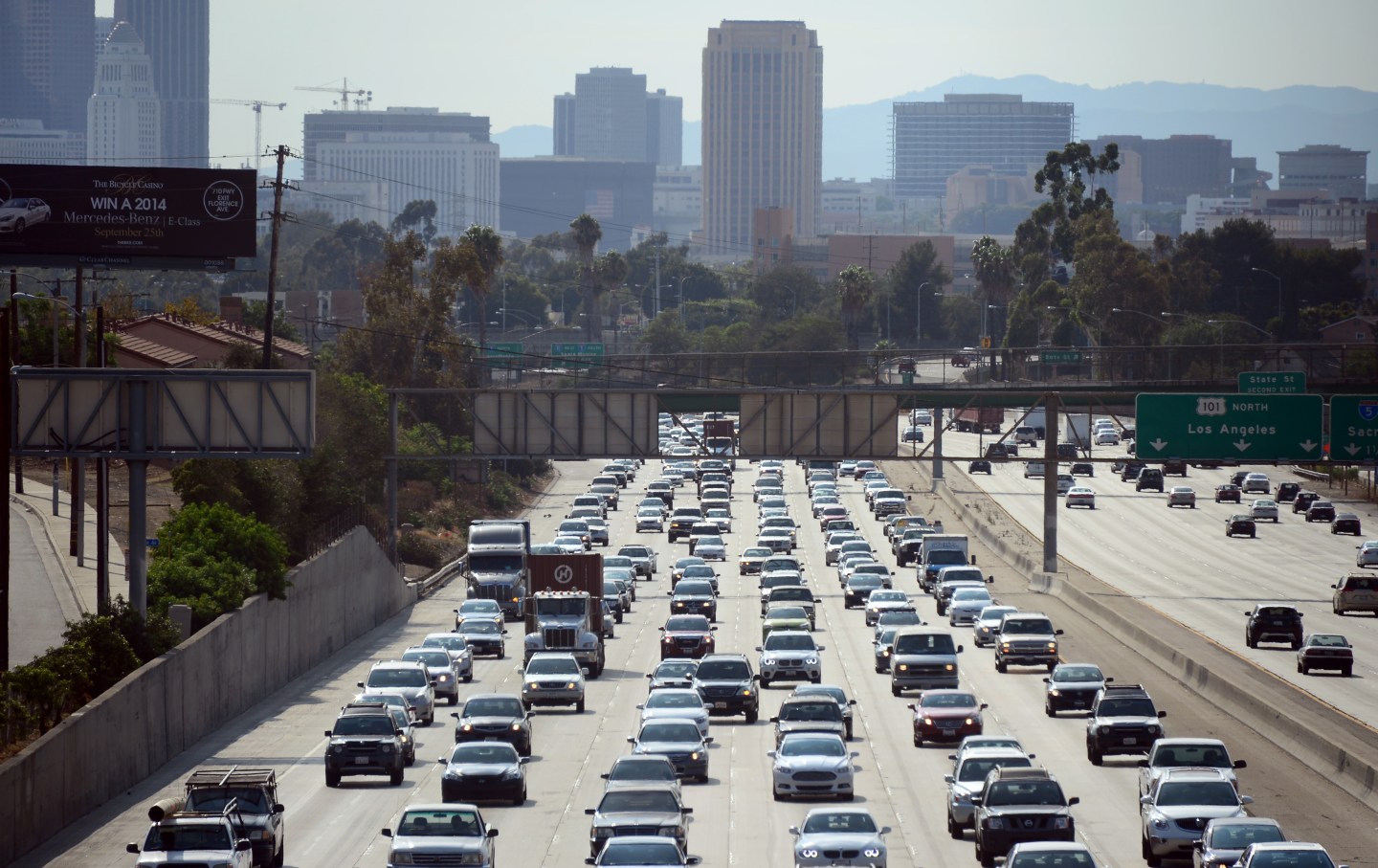
Motorists make their way out of downtown Los Angeles headed east on the Interstate 10 freeway on August 30, 2013 in California, where more Southern California residents are taking Labor Day weekend trips this year compared to in 2012, according to the Automobile Club of Southern California. Some 2.44 million residents have plans for a trip of at least 50 miles from home this Labour Day weekend, with about 1.93 million expected to drive, up 6.2 percent from 1.82 million last year, according to the Auto Club. AFP PHOTO/Frederic J. BROWN (Photo credit should read FREDERIC J. BROWN/AFP/Getty Images)Photograph by Frederic J. Brown — AFP/Getty Images

Pay more and get less.

That’s the bad new California deal that underpins so many daily transactions. The price of life’s fundamentals keeps going up, even as our money buys less of them.

Watch your water bill rise even as you take shorter showers and let the lawn die. Pay more for electricity even as you switch to energy efficient light bulbs and appliances. Borrow twice as much for tuition at a state university even as you struggle to find enough classes to graduate in four years.

More for less defines our collective spending. We raise local taxes so that the cuts in library hours or the police force won’t be as bad as originally planned. The state is paying more to house fewer criminals in its prisons. We pay more in tolls to cross the same decaying bridges.

And don’t get me started on California schools. We raised state taxes in 2012 to help education, but you’d be hard-pressed to see that money in more classes or instruction time at your kid’s school. Public schools constantly demand more money from parents to compensate for budget cuts or cover costs. At this fall’s Back to School night at our local elementary, parents were pressed to donate $125 for classroom supplies.

“More for less” in California is the consequence of long-term trends and public policies. The gist: Generations of frugality and underinvestment have created scarcity in public services. The response to that scarcity is conservation, which is expensive in two ways. For one, higher prices can force people to use less of something. For another, successful conservation can force prices up.

The drought provides the most prominent example. The state asked us to conserve water, so we buy less water from the agencies that provide it. But that means less money for water providers, who raise rates to make up the difference.

There has been too little pushback against this “more for less” reality. And our politicians have been skillful at selling higher payment and lower service as forms of civic virtue. Gov. Jerry Brown said at a June event on water that “you have to find a more elegant way of relating to material things. You have to use them with greater sensitivity and sophistication.”

That’s beautiful bunk. There is nothing sensitive about charging someone more for less of the same thing. At the risk of being inelegant, I must say it isn’t fair to be adding new minimum costs for life’s basics in a state with the nation’s highest poverty rate.

We need a clear, collective stand: When we must pay more, we must get more.

The right time to establish a firm “More for More” public ethic would be next year, as Californians consider several ballot measures to raise taxes. Ask yourself about each tax: Will this new levy really produce more revenues that can be tapped to pay for the schools, health and other programs we all depend on? Or will it merely take money from our pockets and siphon it to the narrow causes of the initiative sponsors—as so many of our measures do?

Such more-for-less schemes inspire cynicism—and make it harder to get people to pay for expensive new investments California actually needs.
About the Authors
By Joe Mathews
See full bioRight Arrow Button Icon
By Zocalo Public Square
See full bioRight Arrow Button Icon

Latest in Retail

millennial
CommentaryConsumer Spending
Meet the 2025 holiday white whale: the millennial dad spending $500+ per kid
By Phillip GoerickeDecember 12, 2025
2 days ago
McDonald
RetailRetail
Lululemon CEO Calvin McDonald to step down as quarterly profit dips 13%
By Anne D'Innocenzio and The Associated PressDecember 12, 2025
2 days ago
Sarandos
CommentaryAntitrust
Netflix, Warner, Paramount and antitrust: Entertainment megadeal’s outcome must follow the evidence, not politics or fear of integration
By Satya MararDecember 12, 2025
2 days ago
InvestingMarkets
Retail investors drive stocks to a pre-Christmas all-time high—and Wall Street sees a moment to sell
By Jim EdwardsDecember 12, 2025
2 days ago
Five panelists seated; two women and five men.
AIBrainstorm AI
The race to deploy an AI workforce faces one important trust gap: What happens when an agent goes rogue?
By Amanda GerutDecember 11, 2025
2 days ago
Oreo
RetailFood and drink
Zero-sugar Oreos headed to America for first time
By Dee-Ann Durbin and The Associated PressDecember 11, 2025
3 days ago

Most Popular

placeholder alt text
Success
Apple cofounder Ronald Wayne sold his 10% stake for $800 in 1976—today it’d be worth up to $400 billion
By Preston ForeDecember 12, 2025
2 days ago
placeholder alt text
Economy
Tariffs are taxes and they were used to finance the federal government until the 1913 income tax. A top economist breaks it down
By Kent JonesDecember 12, 2025
2 days ago
placeholder alt text
Success
40% of Stanford undergrads receive disability accommodations—but it’s become a college-wide phenomenon as Gen Z try to succeed in the current climate
By Preston ForeDecember 12, 2025
2 days ago
placeholder alt text
Economy
The Fed just ‘Trump-proofed’ itself with a unanimous move to preempt a potential leadership shake-up
By Jason MaDecember 12, 2025
1 day ago
placeholder alt text
Success
Apple CEO Tim Cook out-earns the average American’s salary in just 7 hours—to put that into context, he could buy a new $439,000 home in just 2 days
By Emma BurleighDecember 12, 2025
2 days ago
placeholder alt text
Economy
For the first time since Trump’s tariff rollout, import tax revenue has fallen, threatening his lofty plans to slash the $38 trillion national debt
By Sasha RogelbergDecember 12, 2025
2 days ago
Rankings
  • 100 Best Companies
  • Fortune 500
  • Global 500
  • Fortune 500 Europe
  • Most Powerful Women
  • Future 50
  • World’s Most Admired Companies
  • See All Rankings
Sections
  • Finance
  • Leadership
  • Success
  • Tech
  • Asia
  • Europe
  • Environment
  • Fortune Crypto
  • Health
  • Retail
  • Lifestyle
  • Politics
  • Newsletters
  • Magazine
  • Features
  • Commentary
  • Mpw
  • CEO Initiative
  • Conferences
  • Personal Finance
  • Education
Customer Support
  • Frequently Asked Questions
  • Customer Service Portal
  • Privacy Policy
  • Terms Of Use
  • Single Issues For Purchase
  • International Print
Commercial Services
  • Advertising
  • Fortune Brand Studio
  • Fortune Analytics
  • Fortune Conferences
  • Business Development
About Us
  • About Us
  • Editorial Calendar
  • Press Center
  • Work At Fortune
  • Diversity And Inclusion
  • Terms And Conditions
  • Site Map

© 2025 Fortune Media IP Limited. All Rights Reserved. Use of this site constitutes acceptance of our Terms of Use and Privacy Policy | CA Notice at Collection and Privacy Notice | Do Not Sell/Share My Personal Information
FORTUNE is a trademark of Fortune Media IP Limited, registered in the U.S. and other countries. FORTUNE may receive compensation for some links to products and services on this website. Offers may be subject to change without notice.