• Home
  • News
  • Fortune 500
  • Tech
  • Finance
  • Leadership
  • Lifestyle
  • Rankings
  • Multimedia
Commentary

Why investors should stop worrying about higher interest rates

By
S. Kumar
S. Kumar
Down Arrow Button Icon
By
S. Kumar
S. Kumar
Down Arrow Button Icon
September 8, 2015, 5:00 AM ET
Vincent Surace
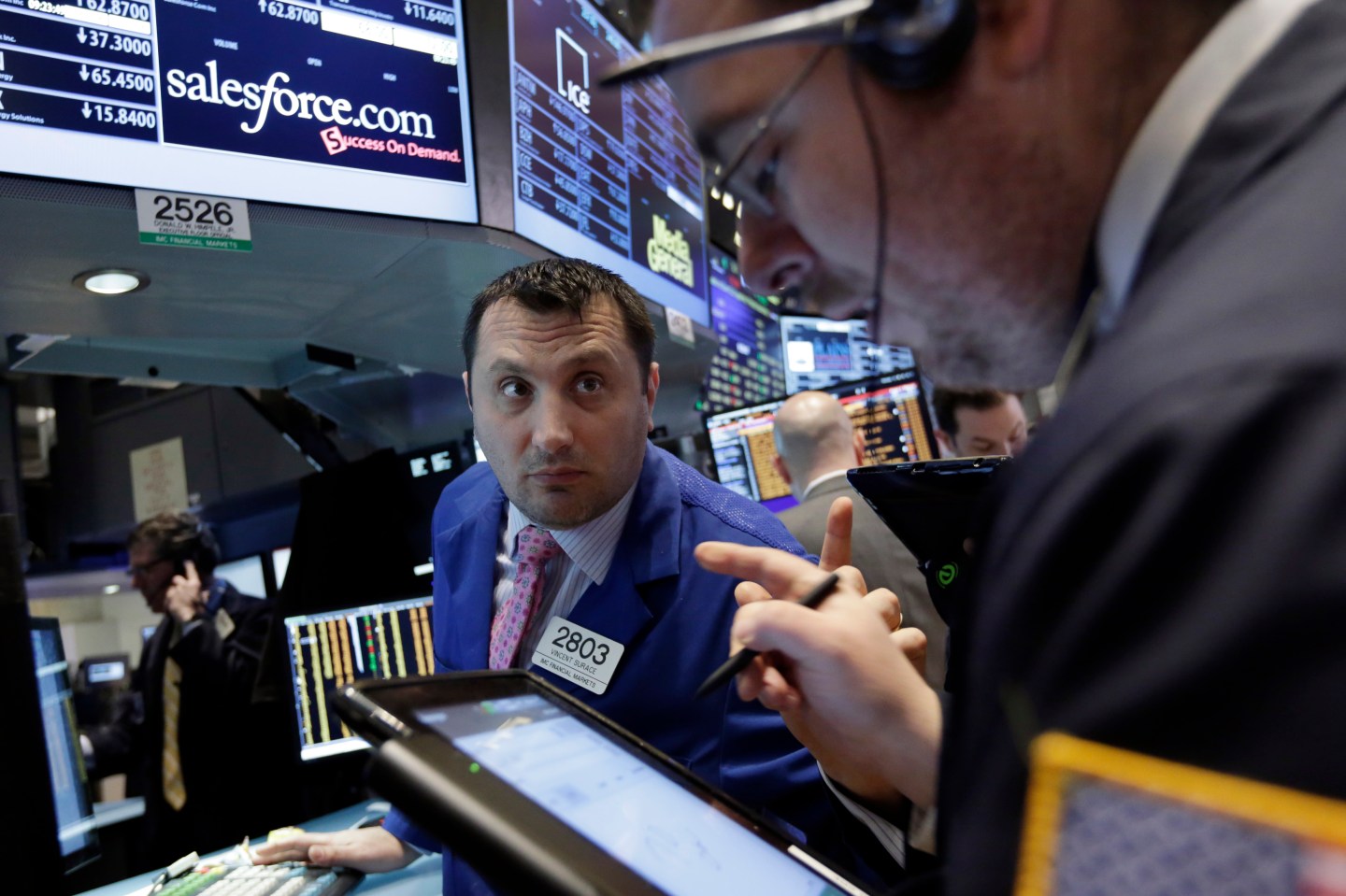
Specialist Vincent Surace, left, directs trades in Salesforce Inc. on the floor of the New York Stock Exchange, Thursday, Feb. 26, 2015. U.S. financial markets drifted in morning trading Thursday, with energy stocks among the biggest decliners as crude oil prices fell. Investors were weighing new economic data on unemployment benefit claims, consumer prices and orders for long-lasting manufactured goods. (AP Photo/Richard Drew)Photograph by Richard Drew — AP

Uncertainty over when and if the Federal Reserve will raise interest rates heightened last week when August’s jobs report showed the economy added 50,000 fewer jobs than expected even while the unemployment rate fell to 5.1%. The economy seems to be improving and worsening at the same time, which has complicated investor’s expectations for what the Fed might do next.

But worried as the market is about higher rates, the fact is it really doesn’t matter.

The fear of higher interest rates is rooted primarily in its contractionary effect on lending and money supply. An increase in the cost of capital can hamper both consumption and manufacturing.

But even if that happens, it would simply be right-sizing the economy to current demand. After all, a small increase in borrowing costs shouldn’t prevent consumers from spending or deter a business that can sell more goods from increasing its capacity. The point is that at near zero interest rates, the U.S. has a lot of buffer on this front, so if there is a reduction in the economy, it will be because of a substantial disconnect between supply and demand.

Higher interest rates would simply help the U.S. avoid the trap of overproduction and asset bubbles fueled by excessive cheap debt. If that sounds familiar, it should. Those are precisely the challenges plaguing another large world economy: China.

Ironically, the selloff of U.S. stocks began a few weeks ago because of weakness in the Chinese economy, the devaluation of the yuan, and stock market turmoil in the Asian nation, which led to serious concerns about a global economic slowdown. So if the market believes that China’s problems are unlikely to be fixed soon, then it should welcome an increase in U.S. interest rates. It might hurt a little now but will bring the U.S. economy in line with global demand and prevent the creation of an asset bubble whose bursting could cause a lot more pain in the future.

On the other hand, if the Fed decides to delay raising rates, as the stock market is clearly hoping for, then it will give U.S. investors a chance to assess China’s moves to solve its economic problems over the next few months, and respond accordingly later on. That does have the benefit of propping up the U.S. stock market in the near future and enabling the Fed to navigate a soft landing for the U.S. taking into account rapidly changing global conditions.

In any case, no matter what decision the Fed makes in the coming weeks, the reality is that the U.S. economy will continue on its trajectory of growth (or not). The ‘bad’ scenario, namely the raising of interest rates this month, isn’t really bad at all. If anything, it’s the stock market’s knee-jerk reaction to it that’s the problem.

Then again, the more the market falls on the fear of an interest rate hike, the less likely it becomes that the Fed will pull the trigger on it in the near future, which will then push prices back up. So maybe there is a point to the market’s tantrum. It’s just creating its own reality.

S. Kumar is a tech and business commentator. He has worked in technology, media, and telecom investment banking.


About the Author
By S. Kumar
See full bioRight Arrow Button Icon

Latest in Commentary

Alex Amouyel is the President and CEO of Newman’s Own Foundation
Commentaryphilanthropy
Following in Paul Newman and Yvon Chouinard’s footsteps: There are more ways for leaders to give it away in ‘the Great Boomer Fire Sale’ than ever
By Alex AmouyelDecember 7, 2025
20 hours ago
Amit Walia
CommentaryM&A
Why the timing was right for Salesforce’s $8 billion acquisition of Informatica — and for the opportunities ahead
By Amit WaliaDecember 6, 2025
2 days ago
Steve Milton is the CEO of Chain, a culinary-led pop-culture experience company founded by B.J. Novak and backed by Studio Ramsay Global.
CommentaryFood and drink
Affordability isn’t enough. Fast-casual restaurants need a fandom-first approach
By Steve MiltonDecember 5, 2025
3 days ago
Paul Atkins
CommentaryCorporate Governance
Turning public companies into private companies: the SEC’s retreat from transparency and accountability
By Andrew BeharDecember 5, 2025
3 days ago
Matt Rogers
CommentaryInfrastructure
I built the first iPhone with Steve Jobs. The AI industry is at risk of repeating an early smartphone mistake
By Matt RogersDecember 4, 2025
4 days ago
Jerome Powell
CommentaryFederal Reserve
Fed officials like the mystique of being seen as financial technocrats, but it’s time to demystify the central bank
By Alexander William SalterDecember 4, 2025
4 days ago

Most Popular

placeholder alt text
Real Estate
The 'Great Housing Reset' is coming: Income growth will outpace home-price growth in 2026, Redfin forecasts
By Nino PaoliDecember 6, 2025
2 days ago
placeholder alt text
AI
Nvidia CEO says data centers take about 3 years to construct in the U.S., while in China 'they can build a hospital in a weekend'
By Nino PaoliDecember 6, 2025
2 days ago
placeholder alt text
Economy
The most likely solution to the U.S. debt crisis is severe austerity triggered by a fiscal calamity, former White House economic adviser says
By Jason MaDecember 6, 2025
1 day ago
placeholder alt text
Economy
JPMorgan CEO Jamie Dimon says Europe has a 'real problem’
By Katherine Chiglinsky and BloombergDecember 6, 2025
1 day ago
placeholder alt text
Politics
Supreme Court to reconsider a 90-year-old unanimous ruling that limits presidential power on removing heads of independent agencies
By Mark Sherman and The Associated PressDecember 7, 2025
17 hours ago
placeholder alt text
Big Tech
Mark Zuckerberg rebranded Facebook for the metaverse. Four years and $70 billion in losses later, he’s moving on
By Eva RoytburgDecember 5, 2025
3 days ago
Rankings
  • 100 Best Companies
  • Fortune 500
  • Global 500
  • Fortune 500 Europe
  • Most Powerful Women
  • Future 50
  • World’s Most Admired Companies
  • See All Rankings
Sections
  • Finance
  • Leadership
  • Success
  • Tech
  • Asia
  • Europe
  • Environment
  • Fortune Crypto
  • Health
  • Retail
  • Lifestyle
  • Politics
  • Newsletters
  • Magazine
  • Features
  • Commentary
  • Mpw
  • CEO Initiative
  • Conferences
  • Personal Finance
  • Education
Customer Support
  • Frequently Asked Questions
  • Customer Service Portal
  • Privacy Policy
  • Terms Of Use
  • Single Issues For Purchase
  • International Print
Commercial Services
  • Advertising
  • Fortune Brand Studio
  • Fortune Analytics
  • Fortune Conferences
  • Business Development
About Us
  • About Us
  • Editorial Calendar
  • Press Center
  • Work At Fortune
  • Diversity And Inclusion
  • Terms And Conditions
  • Site Map

© 2025 Fortune Media IP Limited. All Rights Reserved. Use of this site constitutes acceptance of our Terms of Use and Privacy Policy | CA Notice at Collection and Privacy Notice | Do Not Sell/Share My Personal Information
FORTUNE is a trademark of Fortune Media IP Limited, registered in the U.S. and other countries. FORTUNE may receive compensation for some links to products and services on this website. Offers may be subject to change without notice.