• Home
  • News
  • Fortune 500
  • Tech
  • Finance
  • Leadership
  • Lifestyle
  • Rankings
  • Multimedia
TechNASA

NASA is teaming up with this startup to develop hover engines for space

By
David Z. Morris
David Z. Morris
Down Arrow Button Icon
By
David Z. Morris
David Z. Morris
Down Arrow Button Icon
September 2, 2015, 3:34 PM ET
Courtesy of NASA

Arx Pax, which last year brought a Back to the Future-style hoverboard to life, today announced a partnership with NASA to develop applications for its magnetic levitation technology. The partnership is early validation of the startup’s fairly grand ambitions.

“It’s a big milestone for Arx Pax,” says co-founder and CEO Greg Henderson. “It goes way beyond the hoverboard. Hover engines have applications in space, in transportation, in industrial automation, in structural isolation. NASA, by their nature, has to innovate to solve the problems they solve. And they get it.”

Arx Pax’s hover engines—a technology it calls magnetic field architecture—generate controllable directional thrust between an electric engine and a passive conductive surface such as copper or aluminum.

“And conveniently,” says Henderson, “spaceships and satellites typically have aluminum skins.”

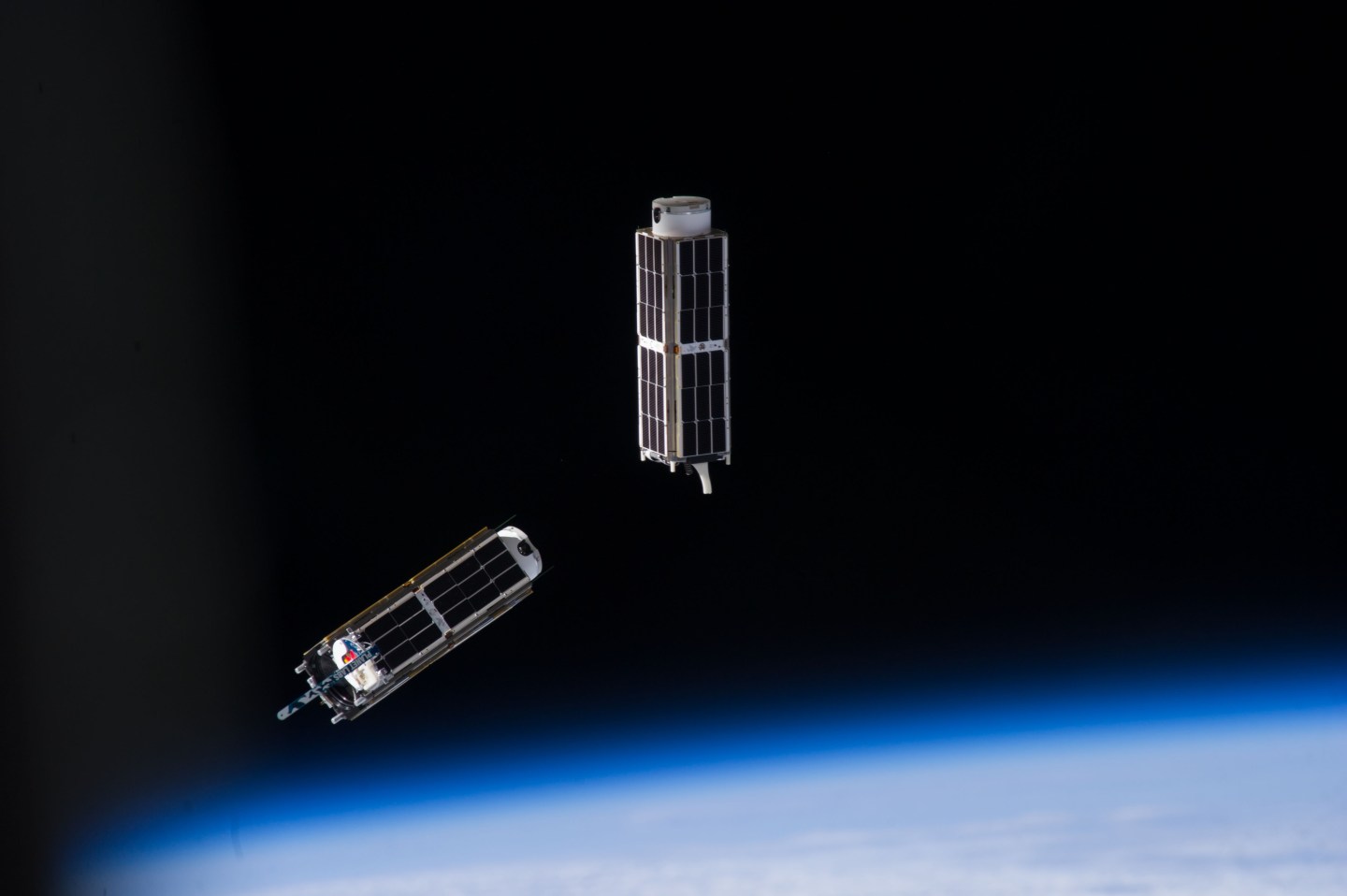
One near-term space application would be the coordination of tiny satellites, known variously as CubeSats, nanosatellites, or picosatellites. These satellites, as little as 10 centimeters square, can be inexpensively piggybacked on NASA missions or launched in large batches commercially, and are often constructed with mass-market components. Their lower cost makes them accessible for companies, nonprofits, and universities, who have developed small satellites for everything from weather observation to equipment testing to earth imaging.

Arx Pax’s technology could allow these tiny satellites to fly in controlled formation, forming what’s known as a distributed satellite system. Formation flying allows for more flexible and durable systems, and applications that require distance between sensors for tracking purposes. For instance, a formation of small satellites could better pinpoint the source of a radio signal, or more precisely determine the location of objects on Earth’s surface. That information could feed into big data applications from weather tracking to economic forecasting.

Magnetic field architecture could also be useful for solving the growing problem of space debris, which threatens satellites and space flights. NASA has proposed deploying a physical net to collect debris, but a magnetic approach might be more streamlined.

Arx Pax’s hover technology is scalable down to very small sizes, and would require relatively little power when operating over short distances in a low-gravity environment.

Henderson says NASA may also explore earthbound uses of the technology, including low-gravity simulation and mobility solutions for clean laboratories, where hover engines could replace comparatively fault-intolerant air bearings.

Randi Feigin, Arx Pax’s chief commercial and investment officer, says that the initial deal with NASA involves little direct revenue for Arx Pax—mostly the acquisition of some test equipment. But Henderson says Arx Pax and NASA will share rights to any technology developed through the collaboration, allowing Arx Pax to potentially license the technology to commercial space projects. And Henderson says that further developments of the hover engine technology will also feed into applications in other markets.

Arx Pax was initially funded by Henderson and his wife Jill Henderson, and raised more than $500,000 with its hoverboard Kickstarter. But it has since successfully attracted more traditional outside investment. Feigin says the company will be closing its third outside funding round this coming Friday.

Sign up for Data Sheet, Fortune’s daily newsletter about the business of technology.

For more Fortune coverage of NASA, watch this video:

About the Author
By David Z. Morris
See full bioRight Arrow Button Icon

Latest in Tech

Two men sit and smile in front of a building
Cryptostablecoins
Exclusive: Former Citadel employees raise $17 million for Fin, a global stablecoin app ‘without all the complexity’
By Carlos GarciaDecember 3, 2025
1 hour ago
CybersecuritySmall Business
Main Street’s make-or-break upgrade: Why small businesses are racing to modernize their tech
By Ashley LutzDecember 3, 2025
2 hours ago
MagazineMarkets
Why an AI bubble could mean chaos for stock markets—and how smart investors are protecting their portfolios
By Alyson ShontellDecember 3, 2025
2 hours ago
Rakesh Kumar
CommentarySemiconductors
China does not need Nvidia chips in the AI war — export controls only pushed it to build its own AI machine
By Rakesh KumarDecember 3, 2025
3 hours ago
Rochelle Witharana is Chief Financial and Investment Officer for The California Wellness Foundation
Commentarydiversity and inclusion
Fund managers from diverse backgrounds are delivering standout returns and the smart money is slowly starting to pay attention
By Rochelle WitharanaDecember 3, 2025
3 hours ago
CryptoCryptocurrency
Exclusive: Harvard grads raise $20 million for Ostium, a platform focused on a derivative popular with crypto traders
By Ben WeissDecember 3, 2025
3 hours ago

Most Popular

placeholder alt text
Economy
Ford workers told their CEO 'none of the young people want to work here.' So Jim Farley took a page out of the founder's playbook
By Sasha RogelbergNovember 28, 2025
5 days ago
placeholder alt text
North America
Jeff Bezos and Lauren Sánchez Bezos commit $102.5 million to organizations combating homelessness across the U.S.: ‘This is just the beginning’
By Sydney LakeDecember 2, 2025
1 day ago
placeholder alt text
Success
Warren Buffett used to give his family $10,000 each at Christmas—but when he saw how fast they were spending it, he started buying them shares instead
By Eleanor PringleDecember 2, 2025
1 day ago
placeholder alt text
Economy
Elon Musk says he warned Trump against tariffs, which U.S. manufacturers blame for a turn to more offshoring and diminishing American factory jobs
By Sasha RogelbergDecember 2, 2025
24 hours ago
placeholder alt text
North America
Anonymous $50 million donation helps cover the next 50 years of tuition for medical lab science students at University of Washington
By The Associated PressDecember 2, 2025
1 day ago
placeholder alt text
C-Suite
MacKenzie Scott's $19 billion donations have turned philanthropy on its head—why her style of giving actually works
By Sydney LakeDecember 2, 2025
1 day ago
Rankings
  • 100 Best Companies
  • Fortune 500
  • Global 500
  • Fortune 500 Europe
  • Most Powerful Women
  • Future 50
  • World’s Most Admired Companies
  • See All Rankings
Sections
  • Finance
  • Leadership
  • Success
  • Tech
  • Asia
  • Europe
  • Environment
  • Fortune Crypto
  • Health
  • Retail
  • Lifestyle
  • Politics
  • Newsletters
  • Magazine
  • Features
  • Commentary
  • Mpw
  • CEO Initiative
  • Conferences
  • Personal Finance
  • Education
Customer Support
  • Frequently Asked Questions
  • Customer Service Portal
  • Privacy Policy
  • Terms Of Use
  • Single Issues For Purchase
  • International Print
Commercial Services
  • Advertising
  • Fortune Brand Studio
  • Fortune Analytics
  • Fortune Conferences
  • Business Development
About Us
  • About Us
  • Editorial Calendar
  • Press Center
  • Work At Fortune
  • Diversity And Inclusion
  • Terms And Conditions
  • Site Map

© 2025 Fortune Media IP Limited. All Rights Reserved. Use of this site constitutes acceptance of our Terms of Use and Privacy Policy | CA Notice at Collection and Privacy Notice | Do Not Sell/Share My Personal Information
FORTUNE is a trademark of Fortune Media IP Limited, registered in the U.S. and other countries. FORTUNE may receive compensation for some links to products and services on this website. Offers may be subject to change without notice.