• Home
  • Latest
  • Fortune 500
  • Finance
  • Tech
  • Leadership
  • Lifestyle
  • Rankings
  • Multimedia
TechMedia

Media companies just closed the web gap, and now there’s a mobile chasm

By
Mathew Ingram
Mathew Ingram
Down Arrow Button Icon
By
Mathew Ingram
Mathew Ingram
Down Arrow Button Icon
August 25, 2015, 2:38 PM ET
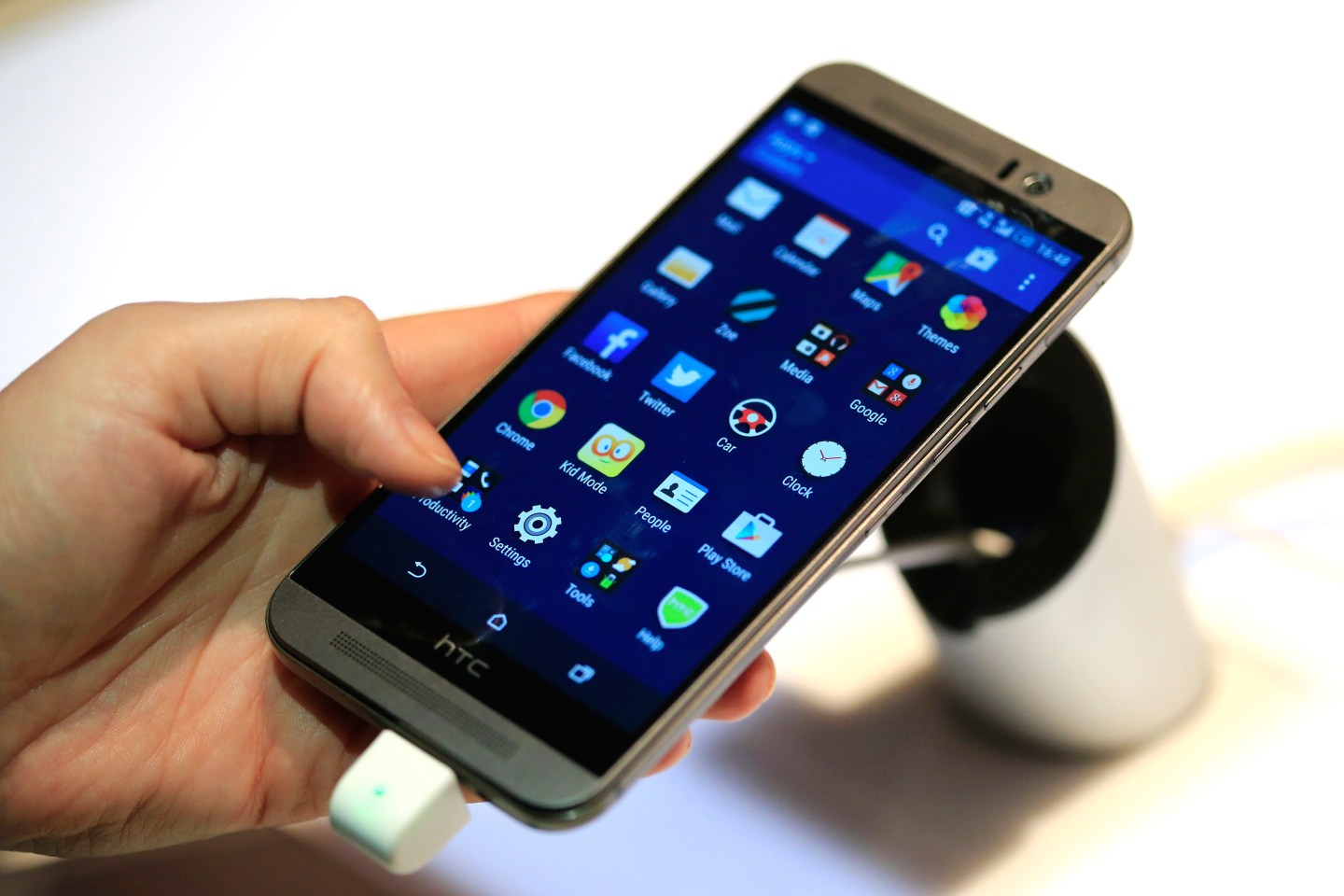
Photograph by Bloomberg via Getty Images

Newspaper publishers and leaders of other media companies might be forgiven for thinking that the universe is conspiring against them. Many have only just managed to get their digital operations to the point where they are generating at least some revenue—although not nearly as much as print used to—and now they find themselves behind another eight ball. In this case, it’s mobile, where they are looking at another massive reduction in revenue, even if they do manage to build a sustainable business.

It’s not like the growth of mobile should come as a big surprise to anyone. It’s been happening for the past several years: More and more web users are spending larger and larger amounts of their time on a mobile device, to the point where it has become the preferred way of getting news and other media content. But that doesn’t mean anyone is actually paying for it.

According to the most recent State of the News Media report from the Pew Research Center, using data from online measurement firm comScore, mobile devices account for more than half of the digital traffic to 39 of the top 50 media sites. Unfortunately for most of those companies, however, mobile users don’t stay as long as desktop users — in part because most news sites are poorly optimized for mobile devices, and as a result take forever to load — and they also tend not to click on ads. And consequently, those ads aren’t worth as much.

Mobile news traffic


For years, media companies have talked about how the rise of the web forced them to exchange “analog dollars for digital dimes.” Thanks to the nature of the internet, where the next web page is just a click away and banner ads are seen as irritating wallpaper rather than a call to action, digital advertising has generated orders of magnitude less revenue per user than print publishing did. So for every print reader, newspaper and magazine companies have had to come up with at least 20 online readers.

Now, mobile threatens to compound that problem. As a recent Wall Street Journal story explains, mobile advertising is even harder to pull off than web advertising was, and is likely to generate even less revenue. That’s because mobile devices have small screens — making traditional display advertising all but useless — and user behavior on a mobile device is even less conducive to interruptive ads than desktop browsing was.

“The problem is that for many publishers, mobile revenue isn’t keeping pace—by a long shot—creating what industry executives are calling a ‘mobile gap.’ Selling advertising on mobile devices is proving difficult: It is hard to show mobile users enough ads, traditional ad formats like ‘banners’ perform miserably, and publishers can’t easily do sophisticated tracking and targeting of ads.”

To take just one example of the mobile gap, the New York Times is one of the publications that gets more than half of its traffic from mobile devices—and yet, according to an NYT executive who spoke with the Journal, the company gets just 15% of its digital ad revenue from mobile. Somehow the phrase “mobile gap” doesn’t quite capture it. “Chasm” might be more accurate.

So who is making all the money from mobile users? Facebook and Google, mostly. Facebook (FB) made $3.5 billion from mobile display advertising in 2014 — an increase of more than 130% from the previous year — and accounted for almost 40% of all digital display advertising in the U.S.


One of the main reasons why Facebook and Google (GOOG) (and to a lesser extent, Twitter) are pulling in so much advertising revenue is that they can target potential consumers in a way that no media company can even hope to match. Facebook knows so much about its users that it can offer advertisers the ability to micro-target their audiences, based on gender, income, profession, interests and a host of other variables. Most newspaper and magazine publishers know comparatively little about their readers.

That’s just part of the problem. In an attempt to generate as much revenue as possible, most media companies have bolted so many popup ads and tracking cookies and display modules onto their webpages that they take forever to load on a mobile device, and offer a horrible user experience even when they do.

Graphic evidence of this problem appears in a piece at The Next Web, which looked at how much more quickly mobile sites load when an ad-blocking software program has been installed. The difference is mind-boggling in many cases. And that is going to become an even bigger issue once Apple releases the next version of its Safari browser, which reportedly has ad-blocking features built in.

Mobile load times


All of this, meanwhile, helps play into Facebook’s desire to have media companies host their content directly on the social network, instead of just posting links. One of the main selling points of the “Instant Articles” project — where partners like the NYT and Guardian publish stories directly to the network — is that it will allow mobile articles to load faster, and look better. The second big selling point is that publishers will get more ad revenue.

Is piggy-backing on Facebook’s platform the only way publishers can make mobile work? Perhaps. Entering into that kind of relationship also involves a significant transfer of power from the media outlet to the giant social network, something that has long-term risks. But for most publishers—and even for the New York Times—subscriptions aren’t generating enough revenue, and few people are paying for their apps.

For many companies that are watching the mobile chasm grow ever larger, in other words, there may be no other option. Their revenues are already so anemic that they can’t afford to build or buy anything that is going to move the needle. They can either play ball with Facebook and hope that will get them where they need to be, or they can stay on the sidelines and ultimately fade away.

About the Author
By Mathew Ingram
See full bioRight Arrow Button Icon

Latest in Tech

Finance
Lorem ipsum dolor sit amet, consectetur adipiscing elit, sed do eiusmod tempor incididunt ut labore et dolore magna aliqua. Ut enim ad minim veniam
By Fortune Editors
October 20, 2025
Finance
Lorem ipsum dolor sit amet, consectetur adipiscing elit, sed do eiusmod tempor incididunt ut labore et dolore magna aliqua. Ut enim ad minim veniam
By Fortune Editors
October 20, 2025
Finance
Lorem ipsum dolor sit amet, consectetur adipiscing elit, sed do eiusmod tempor incididunt ut labore et dolore magna aliqua. Ut enim ad minim veniam
By Fortune Editors
October 20, 2025
Finance
Lorem ipsum dolor sit amet, consectetur adipiscing elit, sed do eiusmod tempor incididunt ut labore et dolore magna aliqua. Ut enim ad minim veniam
By Fortune Editors
October 20, 2025
Finance
Lorem ipsum dolor sit amet, consectetur adipiscing elit, sed do eiusmod tempor incididunt ut labore et dolore magna aliqua. Ut enim ad minim veniam
By Fortune Editors
October 20, 2025
Finance
Lorem ipsum dolor sit amet, consectetur adipiscing elit, sed do eiusmod tempor incididunt ut labore et dolore magna aliqua. Ut enim ad minim veniam
By Fortune Editors
October 20, 2025

Most Popular

Finance
Lorem ipsum dolor sit amet, consectetur adipiscing elit, sed do eiusmod tempor incididunt ut labore et dolore magna aliqua. Ut enim ad minim veniam
By Fortune Editors
October 20, 2025
Finance
Lorem ipsum dolor sit amet, consectetur adipiscing elit, sed do eiusmod tempor incididunt ut labore et dolore magna aliqua. Ut enim ad minim veniam
By Fortune Editors
October 20, 2025
Finance
Lorem ipsum dolor sit amet, consectetur adipiscing elit, sed do eiusmod tempor incididunt ut labore et dolore magna aliqua. Ut enim ad minim veniam
By Fortune Editors
October 20, 2025
Finance
Lorem ipsum dolor sit amet, consectetur adipiscing elit, sed do eiusmod tempor incididunt ut labore et dolore magna aliqua. Ut enim ad minim veniam
By Fortune Editors
October 20, 2025
Finance
Lorem ipsum dolor sit amet, consectetur adipiscing elit, sed do eiusmod tempor incididunt ut labore et dolore magna aliqua. Ut enim ad minim veniam
By Fortune Editors
October 20, 2025
Finance
Lorem ipsum dolor sit amet, consectetur adipiscing elit, sed do eiusmod tempor incididunt ut labore et dolore magna aliqua. Ut enim ad minim veniam
By Fortune Editors
October 20, 2025
Fortune Secondary Logo
Rankings
  • 100 Best Companies
  • Fortune 500
  • Global 500
  • Fortune 500 Europe
  • Most Powerful Women
  • Future 50
  • World’s Most Admired Companies
  • See All Rankings
Sections
  • Finance
  • Fortune Crypto
  • Features
  • Leadership
  • Health
  • Commentary
  • Success
  • Retail
  • Mpw
  • Tech
  • Lifestyle
  • CEO Initiative
  • Asia
  • Politics
  • Conferences
  • Europe
  • Newsletters
  • Personal Finance
  • Environment
  • Magazine
  • Education
Customer Support
  • Frequently Asked Questions
  • Customer Service Portal
  • Privacy Policy
  • Terms Of Use
  • Single Issues For Purchase
  • International Print
Commercial Services
  • Advertising
  • Fortune Brand Studio
  • Fortune Analytics
  • Fortune Conferences
  • Business Development
About Us
  • About Us
  • Editorial Calendar
  • Press Center
  • Work At Fortune
  • Diversity And Inclusion
  • Terms And Conditions
  • Site Map
Fortune Secondary Logo
  • About Us
  • Editorial Calendar
  • Press Center
  • Work At Fortune
  • Diversity And Inclusion
  • Terms And Conditions
  • Site Map
  • Facebook icon
  • Twitter icon
  • LinkedIn icon
  • Instagram icon
  • Pinterest icon

Latest in Tech

Bankinginvestment banking
DBS, Southeast Asia’s largest bank, partners with VC giant Granite Asia to counter the region’s lack of capital
By Angelica Ang and Andrew StaplesFebruary 22, 2026
2 hours ago
daron acemoglu
AILayoffs
The Nobel laureate who co-wrote ‘Why Nations Fail’ warns U.S. democracy won’t survive unless these two things change
By Jake AngeloFebruary 22, 2026
16 hours ago
jesse
CommentaryDEI
A decade ago, I had a front row seat as Jesse Jackson held big tech firms accountable for being overwhelmingly white and male
By Brennan Nevada JohnsonFebruary 22, 2026
16 hours ago
Man wearing a suit awkwardly takes a video call on a laptop
Future of WorkInterview
Recruiter reveals broken Zoom interview etiquette: bathrobes, yoga, and outsourcing thinking to AI
By Nick LichtenbergFebruary 22, 2026
17 hours ago
werfel
CommentaryTaxes
Former IRS Commissioner: Here’s how we used AI to create immediate value when taxpayers scrutinized every dollar
By Danny WerfelFebruary 22, 2026
18 hours ago
LawMedia
DOJ probes Netflix’s power over filmmakers in Warner deal review
By Josh Sisco and BloombergFebruary 21, 2026
1 day ago

Most Popular

placeholder alt text
Innovation
The U.S. spent $30 billion to ditch textbooks for laptops and tablets: The result is the first generation less cognitively capable than their parents
By Sasha RogelbergFebruary 21, 2026
2 days ago
placeholder alt text
Economy
New Fed report proves Milton Friedman and Joe Biden understood something vital about immigration—and explains why growth may sputter under Trump
By Shawn TullyFebruary 22, 2026
18 hours ago
placeholder alt text
Big Tech
Peter Thiel and other tech billionaires are publicly shielding their children from the products that made them rich
By Marco Quiroz-GutierrezFebruary 21, 2026
2 days ago
placeholder alt text
Startups & Venture
'I have a chip on my shoulder.' Phoebe Gates wants her $185 million AI startup Phia to succeed with 'no ties to my privilege or my last name'
By Sydney LakeFebruary 21, 2026
2 days ago
placeholder alt text
Success
40% of Stanford undergrads receive disability accommodations—but it's become a college-wide phenomenon as Gen Z try to succeed in the current climate
By Preston ForeFebruary 21, 2026
2 days ago
placeholder alt text
AI
The Nobel laureate who co-wrote 'Why Nations Fail' warns U.S. democracy won't survive unless these two things change
By Jake AngeloFebruary 22, 2026
16 hours ago

© 2026 Fortune Media IP Limited. All Rights Reserved. Use of this site constitutes acceptance of our Terms of Use and Privacy Policy | CA Notice at Collection and Privacy Notice | Do Not Sell/Share My Personal Information
FORTUNE is a trademark of Fortune Media IP Limited, registered in the U.S. and other countries. FORTUNE may receive compensation for some links to products and services on this website. Offers may be subject to change without notice.