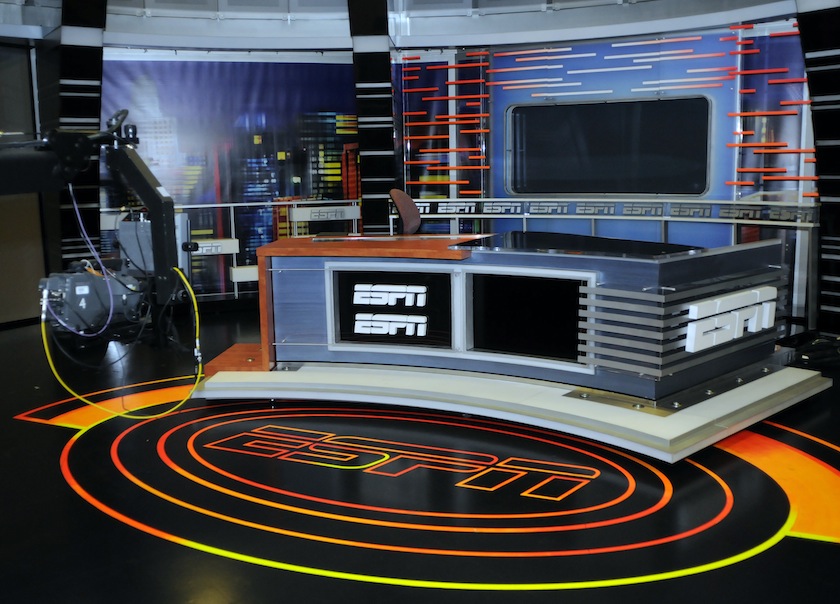
If you imagine the world of traditional television as a fortress on a mountaintop, one whose walls are crumbling due to heavy fire from players like Netflix (NFLX) and HBO and Amazon Prime, then the seemingly impregnable tower at the center of the fortress would have to be ESPN. Why? Because the Disney-owned channel has the one thing that has managed to maintain its value while everything else gets completely obliterated: Namely, exclusive rights to a world of sports content. But is that enough—and if so, for how long?
You can tell that this kind of concern is weighing on the minds of Disney (DIS) investors, because the stock dropped by close to 10% following the release of the company’s quarterly financial report, despite the fact that the overall numbers for the entertainment conglomerate were pretty good. Almost every question on the earnings conference call was about ESPN and the ongoing loss of both subscribers and profits.
In a nutshell, the big fear is that the network’s lucrative stranglehold on sports is disintegrating, pulled apart by a combination of cord cutting, streaming via digital services and competitive pressures from all sides. There have already been rumors of cost-cutting and the channel has shed a number of high-profile (and expensive) personalities such as Grantland founder Bill Simmons, now at HBO.
Disney CEO Bob Iger spent much of his time on the earnings call talking about ESPN, and about how he doesn’t see much impact from cord cutting for at least the next five years or so—an estimate that at least some analysts think is absurdly optimistic. Iger also reiterated comments he has made in the past to the effect that if ESPN wanted to, it could come up with its own over-the-top service similar to HBO Now, and that a substantial number of subscribers would likely pay for it.
https://twitter.com/carlquintanilla/status/628918113216634880
The Disney CEO also noted that 83% of all multichannel households turned to ESPN in the first quarter of this year, and that 96% of all sports programming is watched live, which he called “particularly valuable in today’s rapidly changing advertising marketplace.” And here are some media-industry analysts who agree with Iger that the existing “moat” around ESPN’s content is still pretty wide.
Ben Thompson, an analyst who writes the subscription newsletter Stratechery, said in a recent update that “ESPN is far better positioned for a world where they must go over the top to consumers than people give them credit for.” Even if ESPN was to charge more than $30 a month per subscriber—as a recent analysis said they would, in order to maintain their existing revenue — Thompson called that “a very realistic target.”
Not everyone is quite as sanguine, however. Analyst Eric Jackson said the channel might be able to engineer a transition to an over-the-top digital version of its existing service, but there are still some large question marks associated with that transition. As he put it:
“What if OTT and any new digital format is one-tenth as profitable as the Euro-socialist cable bundle? If you trade analog dollars for digital dimes, how do you wave your hands and chance basic economics?”
One of the things that makes ESPN very different from other streaming success stories such as HBO and Netflix is that the sports broadcaster’s content has an extremely short half-life. Netflix may not mind paying hundreds of millions of dollars for a TV show because it knows it can rebroadcast and license that content forever, but ESPN’s library consists of things that only have value for a few hours.
On the one hand, this short life-span is the channel’s biggest strength: When a major sporting event is taking place, people want to see it right away, and they are willing to pay handsomely for that ability. But if competitive pressure continues to increase, that life-span could become a serious weakness.
[tweet 628919583127269376 hide_thread=”true”]
One potential source of competition for ESPN, ironically, is the very sports leagues and franchises that it relies on for its livelihood. Major League Baseball’s internal streaming and mobile technology operation, known as BAM, has quietly become a powerhouse in that part of the market, and now it has signed a deal to do all of the broadcasting for the NHL as well. Thompson argues that most leagues will opt for the broader reach of ESPN rather than go direct, but it’s unclear how many will feel that way, or for how long.
ESPN has signed expensive long-term contracts with most of the leagues it deals with, but if more and more of them start to pursue their own over-the-top deals via providers like BAM or even Yahoo and other outlets, then ESPN’s iron grip on live sports could continue to weaken.
If you’re an investor in Disney because of its ESPN stake, these are some of the questions you probably want to ask yourself: How much value do those existing contracts have as the TV market continues to implode? What could potential competitors, including the leagues themselves, do to ESPN’s margins? And if it decides to (or is compelled to) offer its own over-the-top service, how many people would likely subscribe to it directly, and how much would they be willing to pay?