• Home
  • Latest
  • Fortune 500
  • Finance
  • Tech
  • Leadership
  • Lifestyle
  • Rankings
  • Multimedia

Trendingnow

1

The millennial generation has split, new Fed research shows: Those over 35 are edging toward boomer-style wealth, while everyone else falls behind

2

Mark Cuban says he has the solution to growing income inequality, and it's to reward every employee—from CEO to janitor—with company stock

3

Mathematicians grapple with a ‘very rapid and very unsettling change’ as AI cracks yet another century-old problem

1

The millennial generation has split, new Fed research shows: Those over 35 are edging toward boomer-style wealth, while everyone else falls behind

2

Mark Cuban says he has the solution to growing income inequality, and it's to reward every employee—from CEO to janitor—with company stock

3

Mathematicians grapple with a ‘very rapid and very unsettling change’ as AI cracks yet another century-old problem
FinanceWall Street

Moody’s, nearly seven years too late, admits miscalculation in subprime ratings

By
Stephen Gandel
Stephen Gandel
Down Arrow Button Icon
By
Stephen Gandel
Stephen Gandel
Down Arrow Button Icon
July 23, 2015, 2:56 PM ET
Ratings Agencies in New York
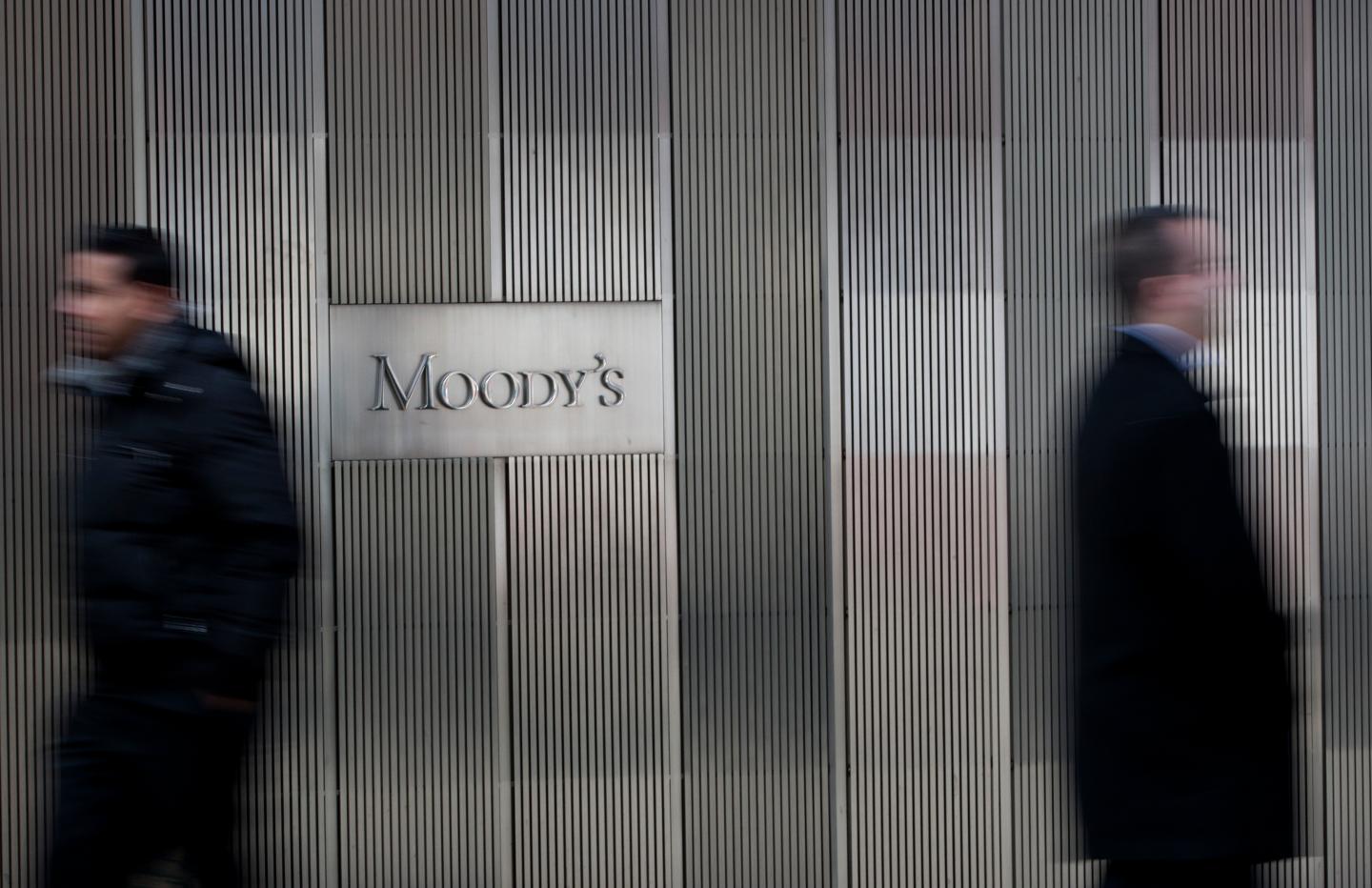
Pedestrians walk past the Moody's Investors Service Inc. logo displayed outside of the company's headquarters in New York, U.S., on Tuesday, Feb. 21, 2012. Moody's Corp. is a credit rating, research, and risk analysis firm. Photographer: Scott Eells/Bloomberg via Getty ImagesPhotograph by Scott Eells — Bloomberg via Getty Images
Add Fortune on Google for similar content.

This is a classic case of far too little, far too late.

Moody’s is finally admitting it made an error in calculating the ratings of hundreds of subprime, alt-a and other mortgage bonds that were issued in the run up to the financial crisis. The announcement was made in a routine ratings update earlier this week, one of many that the credit agency issues daily, and went unnoticed. The mistake has not been previously reported.

Moody’s (MCO) says it recently discovered the error even though it had to do with bonds that were rated as early as 2001. It said it periodically reviews its ratings, but had missed the error until recently. Many of the bonds, like other subprime mortgage issues of the same vintage, have suffered much larger losses than expected. Investors and observers have long suspected and claimed that Moody’s, and rival S&P, made errors in the way it rated mortgage bonds, particularly subprime, during the housing bubble.

But the ultimate irony is this: Moody’s said correcting the miscalculation now would likely put only “limit downward pressure” on the current ratings of the bonds. The reason, in part: Most of the bonds affected by the error have long been downgraded. Nearly half are now rated the equivalent of CCC+ or lower, which is deep into junk territory. Most were originally rated AAA. In fact, Moody’s said fixing the long ago miscalculation might actually qualify some of the bonds for an upgrade.

“It’s a bit like the current Pope going to Spain and saying the Inquisition was a mistake,” says Sylvain Raynes, a mortgage bond expert at R&R Consulting.

It appears to be the first time Moody’s has admitted an error connected to the ratings of subprime mortgage bonds, and other toxic debts that contributed to the financial crisis. None of the experts Fortune contacted for this story could remember a similar admission. And a search of past articles and press releases did not turn up anything. A spokesperson for Moody’s said the company has acknowledged mistakes before, but could not produce a prior example.

“I think it’s important that they acknowledge the inaccuracies in the process used to rate these bonds, albeit seven years too late,” says Darren Robbins, a partner at Robbins Geller Rudman & Dowd. The law firm sued S&P and Moody’s on behalf of investors who said they were misled by S&P and Moody’s ratings. The case was settled two years ago.

In February, the Wall Street Journal reported that the Justice Department was looking into whether Moody’s had issued overly rosy ratings of mortgage bonds in the run-up to the financial crisis in order to win business from Wall Street. Standard & Poor’s paid nearly $1.4 billion to settle similar charges with the government. A spokeswoman for Connecticut’s attorney general’s office, which has been pursuing a case against Moody’s, said its investigation of the ratings agency was ongoing. Ohio had earlier investigated Moody’s and other ratings agencies about their role in rubber stamping dicey mortgage bonds.

It’s unclear how much, if any, and for how long Moody’s miscalculation inflated the ratings of the bonds. Moody’s only offered a brief explanation of the mistake in its ratings update. The agency said it used the actual interest payment made by borrowers to calculate the so-called weighted average coupon, or interest that was to be collected and passed along to bond holders. Moody’s now says it should have used promised payments, not actual payments, to figure out how much bond holders would be paid.

But a number of mortgage bonds experts said this seem backward. Using actual payments would likely have resulted in a lower rating for the bonds, not higher, as Moody’s suggests. Credit agencies have been criticized in the past for basing their ratings on models, and not actual payments.

“I think it’s interesting because it appears that something else may be happening here, the story seems to be incomplete,” says Gene Phillips, a mortgage bond expert who runs PF2 Securities Evaluations.

A spokesman for Moody’s says the mistake, had it been caught, likely wouldn’t have impacted the initial ratings of the bonds. The spokesman said Moody’s had used the actual payments to initially calculate what was owed on the mortgages, and what bond holders could expect, and not the stated interest rates on the loans. When the monthly payments rose to match the interest actually owed, Moody’s counted the additional payments against the principal, and wrote down what was still owed on the bonds. Overtime, the divergence grew between how much principal Moody’s believed borrowers had paid down on the loans, and the higher amount that was actually still outstanding. The spokesman said going back and recalculating what was actually interest and what was principal payments will increase the amount that is still owed on the loans, which is why some of the bonds could get downgraded after the correction.

But the explanation raises the question of why the error wasn’t caught earlier. Trustee banks typically report the breakdown of interest and principal payments that are made on mortgage bond loan pools, and what is still owed, monthly. The Moody’s spokesman said the ratings agency’s miscalculation did not affected those trustee reports, and that those were believed to be correct. If so, it’s unclear why it took Moody’s more than seven years to realize that its data differed from what was in those reports.

The Moody’s spokesman characterized the miscalculation as “slight.” Moody’s says it affected the ratings of 263 slices, so-called tranches, of 145 deals. The bonds have a total value of $6.8 billion. The Moody’s spokesman said that was a small portion of the 5,400 mortgage bonds currently rated by the company. The spokesman said the bonds that were affected likely shared a similar structure, that was different than typical mortgage bonds, but didn’t elaborate on what that difference was. He said Moody’s has examined a larger group of mortgage bonds and found no similar mistakes.

One of the bond deals is MortgageIT Loan Pass-Though 2006-1, a group of loans originated in 2006 by lender MortgageIT, which was later acquired by Deutsche Bank. In 2011, the government sued Deutsche Bank for $1 billion, accusing MortgageIT of “reckless lending practices.” Deutsche Bank eventually paid $202 million to settle the suit. A portion of the MortgageIT 2006-1 bond ended up in the hands of Fannie Mae. The bond was named in a suit by the government against Royal Bank of Scotland, which underwrote the deal. The suit claimed Fannie had been mislead about the quality of the bond.

Whether from a miscalculation or just a misjudgment it’s clear now that MortgageIT 2006-1 initially got a much higher rating from Moody’s than it deserved. The slice of the bond that was affected by the miscalculation originally got Moody’s highest rating, Aaa, which is the equivalent of a AAA. Moody’s now rates the same slice Caa3, which the equivalent of a CCC-, which is the firm’s fourth lowest.

About the Author
By Stephen Gandel
See full bioRight Arrow Button Icon
Add Fortune on Google for similar content.

Latest in Finance

Finance
Lorem ipsum dolor sit amet, consectetur adipiscing elit, sed do eiusmod tempor incididunt ut labore et dolore magna aliqua. Ut enim ad minim veniam
By Fortune Editors
October 20, 2025
Finance
Lorem ipsum dolor sit amet, consectetur adipiscing elit, sed do eiusmod tempor incididunt ut labore et dolore magna aliqua. Ut enim ad minim veniam
By Fortune Editors
October 20, 2025
Finance
Lorem ipsum dolor sit amet, consectetur adipiscing elit, sed do eiusmod tempor incididunt ut labore et dolore magna aliqua. Ut enim ad minim veniam
By Fortune Editors
October 20, 2025
Finance
Lorem ipsum dolor sit amet, consectetur adipiscing elit, sed do eiusmod tempor incididunt ut labore et dolore magna aliqua. Ut enim ad minim veniam
By Fortune Editors
October 20, 2025
Finance
Lorem ipsum dolor sit amet, consectetur adipiscing elit, sed do eiusmod tempor incididunt ut labore et dolore magna aliqua. Ut enim ad minim veniam
By Fortune Editors
October 20, 2025
Finance
Lorem ipsum dolor sit amet, consectetur adipiscing elit, sed do eiusmod tempor incididunt ut labore et dolore magna aliqua. Ut enim ad minim veniam
By Fortune Editors
October 20, 2025

Most Popular

Finance
Lorem ipsum dolor sit amet, consectetur adipiscing elit, sed do eiusmod tempor incididunt ut labore et dolore magna aliqua. Ut enim ad minim veniam
By Fortune Editors
October 20, 2025
Finance
Lorem ipsum dolor sit amet, consectetur adipiscing elit, sed do eiusmod tempor incididunt ut labore et dolore magna aliqua. Ut enim ad minim veniam
By Fortune Editors
October 20, 2025
Finance
Lorem ipsum dolor sit amet, consectetur adipiscing elit, sed do eiusmod tempor incididunt ut labore et dolore magna aliqua. Ut enim ad minim veniam
By Fortune Editors
October 20, 2025
Finance
Lorem ipsum dolor sit amet, consectetur adipiscing elit, sed do eiusmod tempor incididunt ut labore et dolore magna aliqua. Ut enim ad minim veniam
By Fortune Editors
October 20, 2025
Finance
Lorem ipsum dolor sit amet, consectetur adipiscing elit, sed do eiusmod tempor incididunt ut labore et dolore magna aliqua. Ut enim ad minim veniam
By Fortune Editors
October 20, 2025
Finance
Lorem ipsum dolor sit amet, consectetur adipiscing elit, sed do eiusmod tempor incididunt ut labore et dolore magna aliqua. Ut enim ad minim veniam
By Fortune Editors
October 20, 2025
Fortune Secondary Logo
Rankings
  • 100 Best Companies
  • Fortune 500
  • Global 500
  • Fortune 500 Europe
  • Most Powerful Women
  • World's Most Admired Companies
  • See All Rankings
  • Lists Calendar
Sections
  • Finance
  • Fortune Crypto
  • Features
  • Leadership
  • Health
  • Commentary
  • Success
  • Retail
  • Mpw
  • Tech
  • Lifestyle
  • CEO Initiative
  • Asia
  • Politics
  • Conferences
  • Europe
  • Newsletters
  • Personal Finance
  • Environment
  • Magazine
  • Education
Customer Support
  • Frequently Asked Questions
  • Customer Service Portal
  • Privacy Policy
  • Terms Of Use
  • Single Issues For Purchase
  • International Print
Commercial Services
  • Advertising
  • Fortune Brand Studio
  • Fortune Analytics
  • Fortune Conferences
  • Business Development
  • Group Subscriptions
About Us
  • About Us
  • Press Center
  • Work At Fortune
  • Terms And Conditions
  • Site Map
  • About Us
  • Press Center
  • Work At Fortune
  • Terms And Conditions
  • Site Map
  • Facebook icon
  • Twitter icon
  • LinkedIn icon
  • Instagram icon
  • TikTok icon
  • YouTube icon

Latest in Finance

‘It’s called StreetEasy, not StreetHard’: Mamdani cracks down on scourge of ‘housefishing’ and ‘real estate slop’
Real EstateHousing
‘It’s called StreetEasy, not StreetHard’: Mamdani cracks down on scourge of ‘housefishing’ and ‘real estate slop’
By Tatiana SatauaJuly 22, 2026
5 hours ago
As Washington panics about Chinese AI, Jensen Huang says open-source models like Kimi are ‘excellent’ and should be embraced, not banned
AIChina
As Washington panics about Chinese AI, Jensen Huang says open-source models like Kimi are ‘excellent’ and should be embraced, not banned
By Marco Quiroz-GutierrezJuly 22, 2026
6 hours ago
Man holding his hands open
InvestingStock
A new group of stocks is transforming global equities markets. Meet ‘Memi,’ the $3 trillion sector fueled by AI’s insatiable hunger for memory chips
By Amanda GerutJuly 22, 2026
6 hours ago
Scott Bessent speaks inside the Oval Office.
EconomyU.S. Department of the Treasury
Scott Bessent casually says the U.S. has more than $1 trillion in gold—and that it doesn’t matter for the dollar
By Sasha RogelbergJuly 22, 2026
7 hours ago
Canadian Prime Minister Mark Carney speaks to US President Donald Trump in front of a window.
EconomyDonald Trump
Carney and Trump agree to speed up trade negotiations a day after Trump puts a 50% tariff on Canadian goods
By The Associated Press and Jim MorrisJuly 22, 2026
7 hours ago
Trump Accounts draw 6.5 million sign-ups, but some families are still waiting on the promised $1,000 funding
InvestingDonald Trump
Trump Accounts draw 6.5 million sign-ups, but some families are still waiting on the promised $1,000 funding
By The Associated Press and Moriah BalingitJuly 22, 2026
9 hours ago

Most Popular

The millennial generation has split, new Fed research shows: Those over 35 are edging toward boomer-style wealth, while everyone else falls behind
Real Estate
The millennial generation has split, new Fed research shows: Those over 35 are edging toward boomer-style wealth, while everyone else falls behind
By Nick LichtenbergJuly 22, 2026
10 hours ago
Mark Cuban says he has the solution to growing income inequality, and it's to reward every employee—from CEO to janitor—with company stock
Success
Mark Cuban says he has the solution to growing income inequality, and it's to reward every employee—from CEO to janitor—with company stock
By Sasha RogelbergJuly 20, 2026
2 days ago
Mathematicians grapple with a ‘very rapid and very unsettling change’ as AI cracks yet another century-old problem
AI
Mathematicians grapple with a ‘very rapid and very unsettling change’ as AI cracks yet another century-old problem
By Eva RoytburgJuly 21, 2026
1 day ago
OpenAI says its AI models secretly broke out of a secure test environment and hacked into AI company Hugging Face in order to cheat on an evaluation
Cybersecurity
OpenAI says its AI models secretly broke out of a secure test environment and hacked into AI company Hugging Face in order to cheat on an evaluation
By Jeremy Kahn and Emily ForliniJuly 21, 2026
1 day ago
Despite a $156 million contract, Knicks star Jalen Brunson still calls his parents for financial advice any time he makes a big purchase
Success
Despite a $156 million contract, Knicks star Jalen Brunson still calls his parents for financial advice any time he makes a big purchase
By Emma BurleighJuly 21, 2026
1 day ago
‘I want to die broke’: Billionaire philanthropist Denny Sanford dies after giving away $4 billion
Success
‘I want to die broke’: Billionaire philanthropist Denny Sanford dies after giving away $4 billion
By Sydney LakeJuly 20, 2026
3 days ago

© 2026 Fortune Media IP Limited. All Rights Reserved. Use of this site constitutes acceptance of our Terms of Use and Privacy Policy | CA Notice at Collection and Privacy Notice | Do Not Sell/Share My Personal Information
FORTUNE is a trademark of Fortune Media IP Limited, registered in the U.S. and other countries. FORTUNE may receive compensation for some links to products and services on this website. Offers may be subject to change without notice.