Manufacturing may conjure up images of smokestacks and smelters, but two former industrial towns are seeking to change what it means—and what it looks like—to make things. By locating large companies near small entrepreneurs, research scientists, and young apprentices, Fremont, Calif. and the Sheffield urban area in the U.K. are embracing the innovation district—new industrial neighborhoods that harness the latest ideas in technology and place-making. The result is smarter products for the global market and the ability to keep and grow manufacturing close to home.
Innovation districts mix corporations, start-up ventures, and advanced research institutions in dense urban areas rich with housing, public transit, and amenities. Think Kendall Square in Cambridge, Mass., University City in Philadelphia, or the new urban vision for Research Triangle Park outside Raleigh-Durham, N.C. Innovation districts cater to high-value research as well as creative endeavors such as industrial design and architecture. Companies benefit from their close proximity to universities and the talented workers and research ideas these anchor institutions generate.
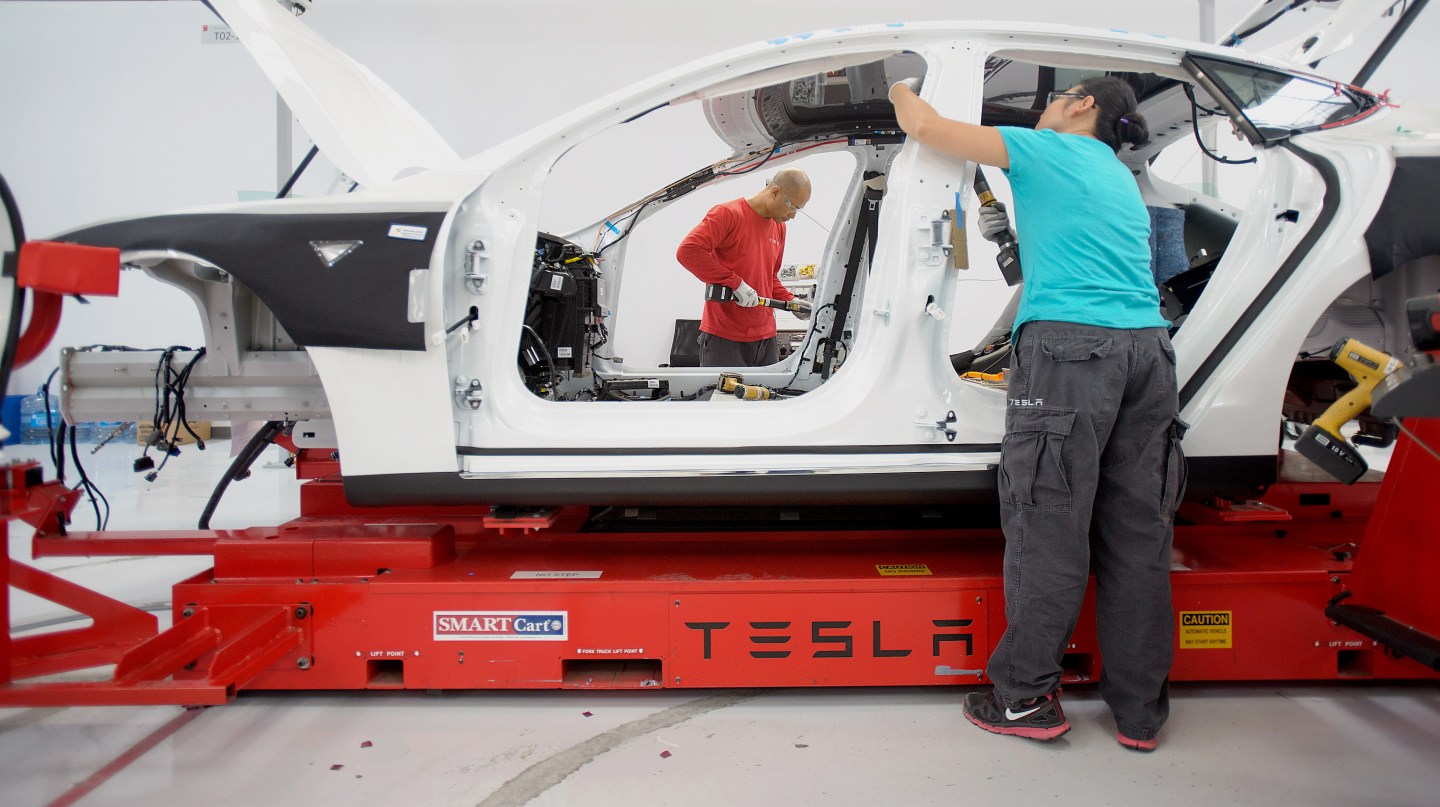
But can these dynamics exist when overlaid on former industrial centers? Two mid-sized cities Fremont and Sheffield are in different parts of the world but share long legacies in manufacturing. In Fremont, a former General Motors (GM) plant is now home to electric car manufacturer Tesla (TSLA), a company that embodies the shift to advanced manufacturing processes and connections between hardware and software. The factory is steps away from a new Bay Area Rapid Transit station and hundreds of acres of land on which there are plans to develop a more urban, amenity-rich environment.
In Sheffield’s neighboring town of Rotherham, a former coal mine now houses the Advanced Manufacturing Research Park, where the University of Sheffield collaborates with over 100 leading research and development (R&D) and production companies including Boeing (BA), Rolls-Royce, BAE Systems, Hitachi, and Tata. Sheffield and Rotherham show how R&D benefits from concentrated districts that take advantage of open, networked innovation.
Fremont and Sheffield are two cities to watch as they transform their historic production hubs into integrated innovation districts. These cities are challenging the idea that industry should be isolated from other uses and are working to end the bifurcation between idea development and product delivery. In response to the demands of a corporate mix of companies like Seagate, Western Digital, and Lam Research, Fremont is adding a high-density residential neighborhood to its innovation district. Sheffield is bringing production and technological problem-solving closer together with early research efforts that will ultimately influence the factory floor. Because their urbanization is nascent, these cities are perfectly positioned to capitalize on this convergence. It is easier for industrial cities to embrace software companies than for white-collar cities to incorporate new industrial uses.
A lot is riding on the success of hardware-software hubs like Fremont and the Sheffield urban area because advanced manufacturing and services are vitally important to modern economies. A recent Brookings report shows that the sector produced 17% ($2.7 trillion) of U.S. GDP and indirectly supported 27 million jobs even though it directly employed just 9% (12.3 million) of U.S. workers. Advanced industry jobs are also high paying—an average salary of $90,000, nearly twice as much as the average in other industries)—and broadly accessible—the average worker has less than a bachelor’s degree.
[fortune-brightcove videoid=4124740502001]
The common thread for Fremont and Sheffield is the opportunity to leverage new growth opportunities fueled by the “Internet of things” (IOT)—the integration of hardware and software. The efficiencies that come from the mingling of industries is perhaps most pronounced in manufacturing, where closely aligned design and production processes are improving cost, quality, and overall competitiveness. In Fremont, Tesla’s electric vehicle supply chain orbits its factory, allowing changes to be made on a dime. And a related but much smaller company called Gridscape Solutions is demonstrating the value of microgrids for critical infrastructure through partnerships with local companies, including Delta Electronics.
Already, best practices are emerging from Sheffield and Fremont that can guide other cities with an advanced manufacturing focus. As with all innovation districts, there are several critical characteristics: local government support, education and research anchors, corporate investment, and skills development. Both cities note the need for high-profile champions, a solid development plan, and a commitment to foster a real mix of uses and a lively atmosphere.
Sheffield and Fremont are changing perceptions about what a factory town looks like and what it can be. Ironically, it may not mean fully shedding their outdated blue-collar, “Full Monty” image but rather, embracing the new maker movement. Advanced manufacturing, it turns out, is the vanguard of the innovative economy.
Bruce Katz is vice president at the Brookings Institution and director of its Metropolitan Policy Program. Katz is author of The Metropolitan Revolution: How Cities and Metros Are Fixing Our Broken Politics and Fragile Economy. Kelly Kline is the economic development director for the City of Fremont and a frequent contributor to the blog, “Takes From Silicon Valley East.”