
• Home
  • Latest
  • Fortune 500
  • Finance
  • Tech
  • Leadership
  • Lifestyle
  • Rankings
  • Multimedia
Tech

Russian cyberwar advances military interests in Ukraine, report says

Robert Hackett
By
Robert Hackett
Robert Hackett
Down Arrow Button Icon
Robert Hackett
By
Robert Hackett
Robert Hackett
Down Arrow Button Icon
April 29, 2015, 6:45 AM ET
APTOPIX Russia Victory Day
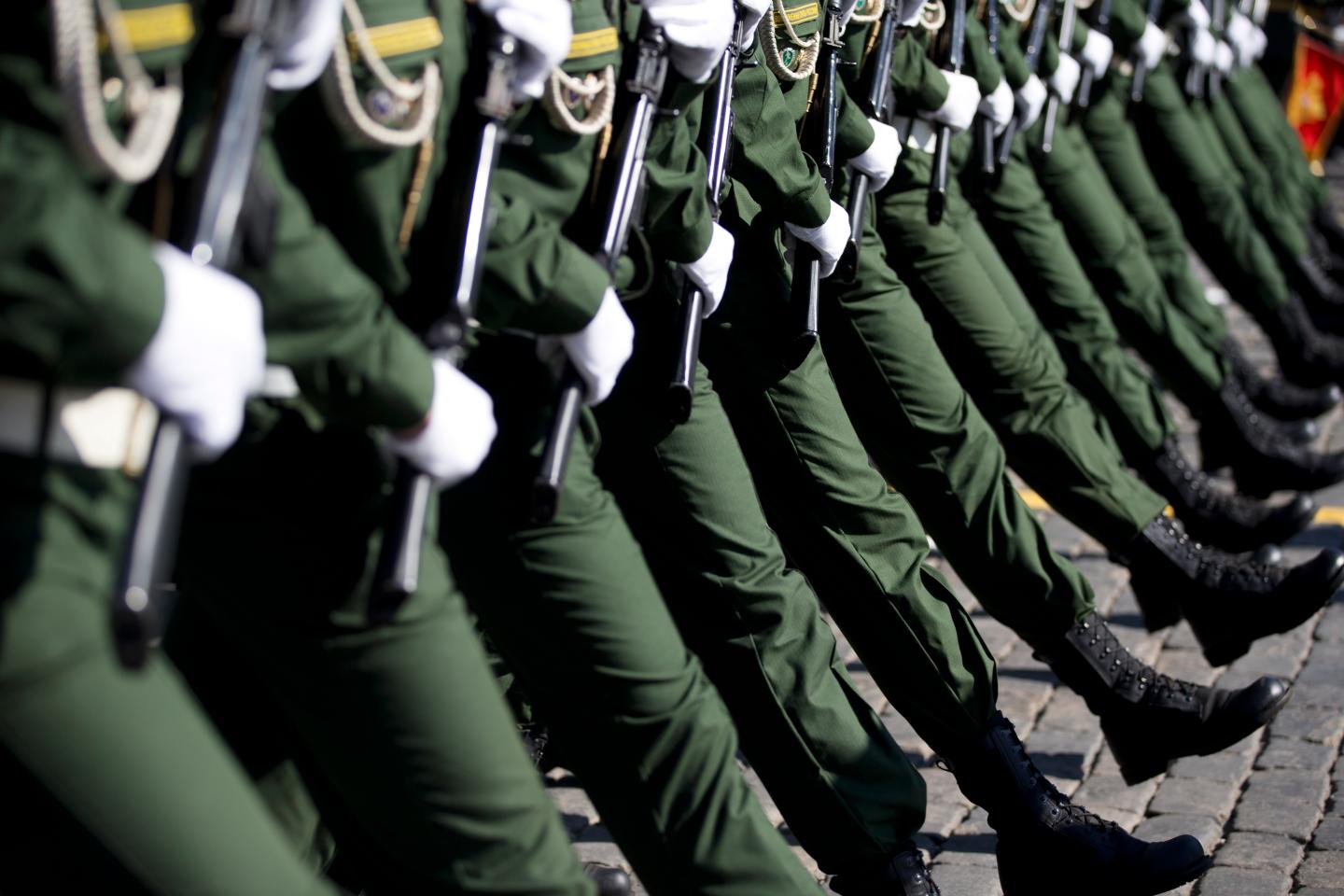
Russian troops march during the Victory Day Parade in Red Square in Moscow, Russia, Friday, May 9, 2014. Thousands of Russian troops marched on Red Square in the annual Victory Day parade in a proud display of the nation's military might amid escalating tensions over Ukraine. (AP Photo/Pavel Golovkin)Photograph by Pavel Golovkin — AP

Cyberwar does not take place in vacuum. When a geopolitical showdown is underway, nation states have every incentive to advance their interests using digital means.

One of the latest examples? Russia hacking Ukrainian systems.

A report out of Arlington, Va.-based cyber security firm Lookingglass reveals a cyber campaign, allegedly Russian, waged against Ukrainian targets, such as the government, law enforcement, and military. The purpose of the state-sponsored espionage has apparently been to gather intelligence on its adversary, bolstering Russian war efforts.

The researchers dubbed the campaign “Operation Armageddon” after the nom de guerre of an author (according to file metadata) of the Microsoft Word documents used in the attacks. (Misspelled “Armagedon” in the “last saved by” field.) The attackers sent the documents to victims as attachments in targeted spear phishing emails.

“For the most part the technologies were not advanced,” says Jason Lewis, chief collection and intelligence office at Lookingglass. “It’s not super sophisticated, but it’s certainly persistent.”

The campaign has been active since the middle of 2013, according to the report. And it may have been catalyzed by trade talks between Ukraine and the European Union, which Russia condemned.

Lookingglass researchers worked with neither Ukraine nor Russia in its investigation, sourcing its materials rather from proprietary methods and through sites like VirusTotal, a public database where people can upload and scan files for known viruses. The firm’s researchers obtained 11 “lure” documents, files that serve to trick their recipients into clicking a malicious link or opening a malicious email attachment, that way.

Often, the researchers found, the hackers stole documents relevant to the outside conflict from victims’ machines, and then used those files to compromise future targets.

The crux of the report ties Russia’s kinetic tactics to its digital intrusions. When the researchers compared the timestamps on modified documents and malware to roughly 300 news events pertaining to Russo-Ukrainian relations, they noticed a correlation. When troops were preparing to move, cyber activity flared.

Once Ukraine’s interim President announced the start of an “anti-terrorist operation” against pro-Russian separatists in mid-April 2014, the conflict’s cyber activities significantly increased. From this point onwards, waves of cyber attacks from the Russians directly correlated with the timing of military events and were geared towards gathering intelligence to empower themselves on the physical battlefield – a digital method of espionage in its truest of forms.

A damning, though inconclusive, timeline of the attacks can be found in the report. (See page 5, available here.)

The Lookingglass researchers, convinced that Russia is the culprit, agree with the Security Service of Ukraine (SBU) that the Russian Federal Security Service (FSB, descendant of the KGB) is to blame. (SBU, too, has called out FSB as being responsible for recent phishing attacks.) “We’re highly confident that the claims the SBU made are accurate,” Lewis says. “We didn’t find any evidence to the contrary to dispute those claims.”

He admits, however: “A lot of it is circumstantial evidence—but this is a pattern that continues to occur throughout the campaign.” Lewis believes the timing of attacks and motivations are more than just a coincidence.

That nation states are using cyber attacks to achieve geopolitical ends should come as no surprise.

Last year, CrowdStrike associated Chinese cyber espionage campaigns with China’s movement into disputed territory in the South Pacific as well as with an ISIS-led takeover of an Iraqi oil refinery. The security firm FireEye (FEYE) found state actors using attack methods similar to those outlined above to target rebel forces during conflict in Syria. The security firm Cylance recently implicated Iran as having probed critical U.S. energy infrastructure, just prior to nuclear negotiations. And then, of course, there are the claims about Sony Pictures Entertainment and North Korea.

Espionage and cyber attacks can give countries that engage in the practice an upper hand in international affairs. “Nation states need to be able to asses how seriously people will take their threats and what they’ll do as result of a threat,” says Adam Meyers, vice president of intelligence at the security firm CrowdStrike, presenting a rationale for digital incursions. “It puts them in a better position to make a credible threat if they know what the response is going to be.”

(Although Meyers had not had time to assess the quality of the Lookingglass report’s attribution claims, he offered: “Russians are definitely known for making spelling errors for English words in their code.” He added, “spear phishing is certainly a favorite of nation state hackers.”)

Now that the report is public, Lewis hopes to exchange information with Ukrainian authorities next, he says. Though his team had earlier reached out to the Ukrainian computer emergency response team, known as CERT-UA, he says Lookingglass found it difficult to collaborate.

“Part of the problem is that the Russians are not interested in cooperating with anybody,” he says. “And in Ukraine finding a contact that’s trustworthy seems to be a challenge.”

“There are rumors of infiltration by Russian agents,” he clarifies, “so it’s hard to know if who you’re dealing with is actually Ukrainian.”

Indeed, recent reports suggest that Russian spies have penetrated deep inside Ukraine’s intelligence apparatus.

When Fortune spoke with Lewis on Tuesday afternoon, he had no updates as yet on the operation, which remains ongoing (although he did mention that his team has discovered more “lure” documents since releasing the report). He expects the attackers will change their tactics soon.

“There may be parts we haven’t uncovered yet,” Lewis says. “We hope by releasing indicators, other people can have a look.”

About the Author
Robert Hackett
By Robert Hackett
Instagram iconLinkedIn iconTwitter icon
See full bioRight Arrow Button Icon

Latest in Tech

Finance
Lorem ipsum dolor sit amet, consectetur adipiscing elit, sed do eiusmod tempor incididunt ut labore et dolore magna aliqua. Ut enim ad minim veniam
By Fortune Editors
October 20, 2025
Finance
Lorem ipsum dolor sit amet, consectetur adipiscing elit, sed do eiusmod tempor incididunt ut labore et dolore magna aliqua. Ut enim ad minim veniam
By Fortune Editors
October 20, 2025
Finance
Lorem ipsum dolor sit amet, consectetur adipiscing elit, sed do eiusmod tempor incididunt ut labore et dolore magna aliqua. Ut enim ad minim veniam
By Fortune Editors
October 20, 2025
Finance
Lorem ipsum dolor sit amet, consectetur adipiscing elit, sed do eiusmod tempor incididunt ut labore et dolore magna aliqua. Ut enim ad minim veniam
By Fortune Editors
October 20, 2025
Finance
Lorem ipsum dolor sit amet, consectetur adipiscing elit, sed do eiusmod tempor incididunt ut labore et dolore magna aliqua. Ut enim ad minim veniam
By Fortune Editors
October 20, 2025
Finance
Lorem ipsum dolor sit amet, consectetur adipiscing elit, sed do eiusmod tempor incididunt ut labore et dolore magna aliqua. Ut enim ad minim veniam
By Fortune Editors
October 20, 2025

Most Popular

Finance
Lorem ipsum dolor sit amet, consectetur adipiscing elit, sed do eiusmod tempor incididunt ut labore et dolore magna aliqua. Ut enim ad minim veniam
By Fortune Editors
October 20, 2025
Finance
Lorem ipsum dolor sit amet, consectetur adipiscing elit, sed do eiusmod tempor incididunt ut labore et dolore magna aliqua. Ut enim ad minim veniam
By Fortune Editors
October 20, 2025
Finance
Lorem ipsum dolor sit amet, consectetur adipiscing elit, sed do eiusmod tempor incididunt ut labore et dolore magna aliqua. Ut enim ad minim veniam
By Fortune Editors
October 20, 2025
Finance
Lorem ipsum dolor sit amet, consectetur adipiscing elit, sed do eiusmod tempor incididunt ut labore et dolore magna aliqua. Ut enim ad minim veniam
By Fortune Editors
October 20, 2025
Finance
Lorem ipsum dolor sit amet, consectetur adipiscing elit, sed do eiusmod tempor incididunt ut labore et dolore magna aliqua. Ut enim ad minim veniam
By Fortune Editors
October 20, 2025
Finance
Lorem ipsum dolor sit amet, consectetur adipiscing elit, sed do eiusmod tempor incididunt ut labore et dolore magna aliqua. Ut enim ad minim veniam
By Fortune Editors
October 20, 2025
Fortune Secondary Logo
Rankings
  • 100 Best Companies
  • Fortune 500
  • Global 500
  • Fortune 500 Europe
  • Most Powerful Women
  • World's Most Admired Companies
  • See All Rankings
  • Lists Calendar
Sections
  • Finance
  • Fortune Crypto
  • Features
  • Leadership
  • Health
  • Commentary
  • Success
  • Retail
  • Mpw
  • Tech
  • Lifestyle
  • CEO Initiative
  • Asia
  • Politics
  • Conferences
  • Europe
  • Newsletters
  • Personal Finance
  • Environment
  • Magazine
  • Education
Customer Support
  • Frequently Asked Questions
  • Customer Service Portal
  • Privacy Policy
  • Terms Of Use
  • Single Issues For Purchase
  • International Print
Commercial Services
  • Advertising
  • Fortune Brand Studio
  • Fortune Analytics
  • Fortune Conferences
  • Business Development
  • Group Subscriptions
About Us
  • About Us
  • Press Center
  • Work At Fortune
  • Terms And Conditions
  • Site Map
  • About Us
  • Press Center
  • Work At Fortune
  • Terms And Conditions
  • Site Map
  • Facebook icon
  • Twitter icon
  • LinkedIn icon
  • Instagram icon
  • Pinterest icon

Latest in Tech

Tim Cook reveals the advice he gave Apple’s next CEO: The most important decision he’ll make is ‘where he spends his time’
Big TechApple
Tim Cook reveals the advice he gave Apple’s next CEO: The most important decision he’ll make is ‘where he spends his time’
By Alexei OreskovicApril 30, 2026
6 hours ago
Meta’s threat to quit New Mexico ‘is showing the world how little it cares about child safety,’ AG says
LawMeta
Meta’s threat to quit New Mexico ‘is showing the world how little it cares about child safety,’ AG says
By Catherina GioinoApril 30, 2026
8 hours ago
Meta's Hyperion data-center site in Northeastern Louisiana.
NewslettersEye on AI
Big Tech will spend nearly $700 billion on AI this year. No one knows where the buildout ends
By Sharon GoldmanApril 30, 2026
12 hours ago
Financial analyst working at a computer
Personal FinancePersonal Finance Evergreen
AI’s entry-level hiring nightmare is another gift to boomers’ retirement plans
By Catherina GioinoApril 30, 2026
13 hours ago
TOPSHOT - Alphabet Inc. and Google CEO Sundar Pichai speaks during the inauguration of a Google Artificial Intelligence (AI) hub in Paris on February 15, 2024. (Photo by ALAIN JOCARD / AFP via Getty Images)
AIGoogle
Google and Amazon’s biggest profit driver last quarter was their Anthropic stakes—which they haven’t sold
By Eva RoytburgApril 30, 2026
14 hours ago
Elon Musk arrives at the courthouse during his trial against OpenAI
CryptoElon Musk
Elon Musk likes Bitcoin—but he just told a jury most crypto coins are scams
By Jack KubinecApril 30, 2026
15 hours ago

Most Popular

Apple cofounder Ronald Wayne—whose stake would be worth up to $400 billion had he not sold it in 1976—says that at 91, he has no regrets
Success
Apple cofounder Ronald Wayne—whose stake would be worth up to $400 billion had he not sold it in 1976—says that at 91, he has no regrets
By Preston ForeApril 27, 2026
4 days ago
Google Cloud revenue is now 18% of Alphabet's business. Is this the beginning of the end of Google's search identity?
Big Tech
Google Cloud revenue is now 18% of Alphabet's business. Is this the beginning of the end of Google's search identity?
By Alexei OreskovicApril 29, 2026
1 day ago
China dominates the world's lithium supply. The U.S. just found 328 years' worth in its own backyard
North America
China dominates the world's lithium supply. The U.S. just found 328 years' worth in its own backyard
By Jake AngeloApril 30, 2026
12 hours ago
With no end in sight, Trump considers new options in Iran war—including the ‘Dark Eagle’ hypersonic missile
Big Tech
With no end in sight, Trump considers new options in Iran war—including the ‘Dark Eagle’ hypersonic missile
By Jim EdwardsApril 30, 2026
20 hours ago
‘The cost of compute is far beyond the costs of the employees’: Nvidia executive says right now AI is more expensive than paying human workers
AI
‘The cost of compute is far beyond the costs of the employees’: Nvidia executive says right now AI is more expensive than paying human workers
By Sasha RogelbergApril 28, 2026
3 days ago
Accenture's Julie Sweet blew up 50 years of company history. She says the hardest part is still ahead
Conferences
Accenture's Julie Sweet blew up 50 years of company history. She says the hardest part is still ahead
By Nick LichtenbergApril 29, 2026
2 days ago

© 2026 Fortune Media IP Limited. All Rights Reserved. Use of this site constitutes acceptance of our Terms of Use and Privacy Policy | CA Notice at Collection and Privacy Notice | Do Not Sell/Share My Personal Information
FORTUNE is a trademark of Fortune Media IP Limited, registered in the U.S. and other countries. FORTUNE may receive compensation for some links to products and services on this website. Offers may be subject to change without notice.