• Home
  • News
  • Fortune 500
  • Tech
  • Finance
  • Leadership
  • Lifestyle
  • Rankings
  • Multimedia

5 Reasons Apple Pay will have it tough in China

By
Scott Cendrowski
Scott Cendrowski
Down Arrow Button Icon
By
Scott Cendrowski
Scott Cendrowski
Down Arrow Button Icon
October 28, 2014, 8:14 AM ET
U.S. Lodges WTO Complaint On China's Payment-Processing
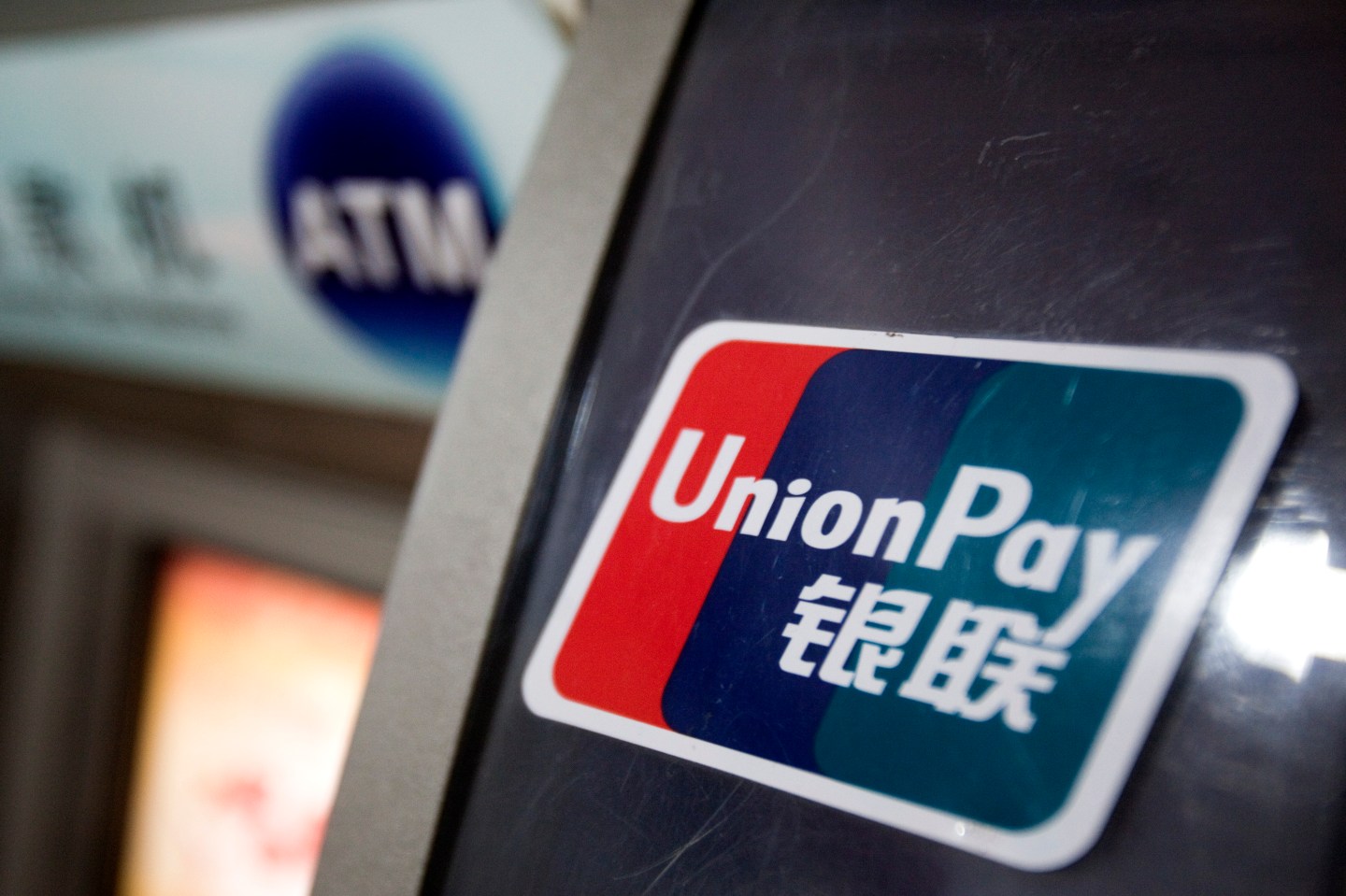
The China UnionPay Data Co. logo is displayed on an automated teller machine (ATM) in Beijing, China, on Thursday, Sept. 16, 2010. The U.S. filed two complaints against China at the World Trade Organization, concerned that curbs on payment-processing companies put payment-processing companies such as MasterCard Inc. and Visa Inc. at a disadvantage because China favors a monopoly provider, China UnionPay Data Co. The second complaint is over dumping duties on more than $200 million of U.S.-made steel products. Photographer: Nelson Ching/Bloomberg via Getty ImagesPhotograph by Nelson Ching — Bloomberg via Getty Images

When the iPhone 6 arrived in China 11 days ago, Apple Pay was disabled. Caixin, the country’s top business magazine, which reported a month ago that Apple Inc (AAPL) had reached an agreement with UnionPay, the state-owned payment processing system, to activate Apple Pay in the country, now says Apple Pay isn’t expected until March.

Even if it arrives by the spring, Apple Pay has a tough road ahead in China. Why?

1. China’s use of credit and debit cards is far below that of Western countries. For now the country remains a cash-based society, something that Apple can’t quickly change. Here’s a list of cash-only sellers in Beijing: taxis, McDonalds, small markets and shops, lunch stalls and cafeterias, many restaurants, even tourist ticket stalls. Electronic swipes just aren’t as popular yet.

2. Electronics transfers are, though, and that’s why Tim Cook was reciprocating some love for Alibaba’s (BABA) Jack Ma yesterday. Ma owns Alipay, a separate company from Alibaba that handles almost all the transactions on Alibaba’s marketplaces. Alipay’s QR code technology lets consumers pay at stores with the setup. Because of Alipay’s ubiquity—almost everyone in China’s big cities uses it—Apple Pay might have to share profits with Alibaba in order to get a foothold in China. Hence, again, Cook and Ma’s marriage talk.

3. The precedent isn’t on Apple’s side here. Visa, Mastercard, and American Express fought China for years to follow World Trade Organization rules and open its card system to foreign companies. Nothing happened. China has already discriminated against foreign processing companies, so why would it treat Apple much different?

4. China is still concerned about cyber security. Apple has come under fire from state media in the country over user security. Analysts believe China would rather use homegrown technologies in many areas of tech for security reasons, and payments is one. With Alipay’s success, Apple faces a strong competitor, or a possible dominant partner.

5. UnionPay, the card processing monopoly in China, holds the keys for Apple Pay and will almost surely play tough. While Apple isn’t trying to compete directly with Unionpay, the monopoly controls transactions in China and likely won’t give Apple the same slice of revenues the company may receive elsewhere where Mastercard, Visa, American Express, and Discover compete against each other.

About the Author
By Scott Cendrowski
See full bioRight Arrow Button Icon
0

Most Popular

placeholder alt text
Big Tech
Mark Zuckerberg rebranded Facebook for the metaverse. Four years and $70 billion in losses later, he’s moving on
By Eva RoytburgDecember 5, 2025
1 day ago
placeholder alt text
Economy
Two months into the new fiscal year and the U.S. government is already spending more than $10 billion a week servicing national debt
By Eleanor PringleDecember 4, 2025
3 days ago
placeholder alt text
Success
Nvidia CEO Jensen Huang admits he works 7 days a week, including holidays, in a constant 'state of anxiety' out of fear of going bankrupt
By Jessica CoacciDecember 4, 2025
2 days ago
placeholder alt text
Success
‘Godfather of AI’ says Bill Gates and Elon Musk are right about the future of work—but he predicts mass unemployment is on its way
By Preston ForeDecember 4, 2025
2 days ago
placeholder alt text
AI
Nvidia CEO says data centers take about 3 years to construct in the U.S., while in China 'they can build a hospital in a weekend'
By Nino PaoliDecember 6, 2025
8 hours ago
placeholder alt text
Asia
Despite their ‘no limits’ friendship, Russia is paying a nearly 90% markup on sanctioned goods from China—compared with 9% from other countries
By Jason MaNovember 29, 2025
7 days ago
Rankings
  • 100 Best Companies
  • Fortune 500
  • Global 500
  • Fortune 500 Europe
  • Most Powerful Women
  • Future 50
  • World’s Most Admired Companies
  • See All Rankings
Sections
  • Finance
  • Leadership
  • Success
  • Tech
  • Asia
  • Europe
  • Environment
  • Fortune Crypto
  • Health
  • Retail
  • Lifestyle
  • Politics
  • Newsletters
  • Magazine
  • Features
  • Commentary
  • Mpw
  • CEO Initiative
  • Conferences
  • Personal Finance
  • Education
Customer Support
  • Frequently Asked Questions
  • Customer Service Portal
  • Privacy Policy
  • Terms Of Use
  • Single Issues For Purchase
  • International Print
Commercial Services
  • Advertising
  • Fortune Brand Studio
  • Fortune Analytics
  • Fortune Conferences
  • Business Development
About Us
  • About Us
  • Editorial Calendar
  • Press Center
  • Work At Fortune
  • Diversity And Inclusion
  • Terms And Conditions
  • Site Map

© 2025 Fortune Media IP Limited. All Rights Reserved. Use of this site constitutes acceptance of our Terms of Use and Privacy Policy | CA Notice at Collection and Privacy Notice | Do Not Sell/Share My Personal Information
FORTUNE is a trademark of Fortune Media IP Limited, registered in the U.S. and other countries. FORTUNE may receive compensation for some links to products and services on this website. Offers may be subject to change without notice.