• Home
  • Latest
  • Fortune 500
  • Finance
  • Tech
  • Leadership
  • Lifestyle
  • Rankings
  • Multimedia
FeaturesEditor's Desk

Global (Dis)Integration

By
Charles Lyons
Charles Lyons
and
Alan Murray
Alan Murray
Down Arrow Button Icon
By
Charles Lyons
Charles Lyons
and
Alan Murray
Alan Murray
Down Arrow Button Icon
October 9, 2014, 6:59 AM ET
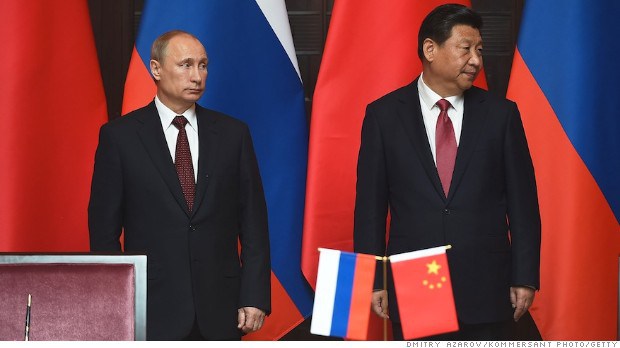
CHINA, SHANGHAI - MAY 20: (L to R) Meeting of the president of Russia Vladimir Putin and the Chinese President Xi Jinping at the Expo Center at the fourth Conference on Interaction and Confidence Building Measures in Asia (CICA) summit on May 20, 2014 in Shanghai, China. Russia and China signed the thirty-year contract for supply of gas. (Photo by Dmitry Azarov/Kommersant Photo via Getty Images) *** Local Caption *** Vladimir Putin;Xi Jinping
CHINA, SHANGHAI - MAY 20: (L to R) Meeting of the president of Russia Vladimir Putin and the Chinese President Xi Jinping at the Expo Center at the fourth Conference on Interaction and Confidence Building Measures in Asia (CICA) summit on May 20, 2014 in Shanghai, China. Russia and China signed the thirty-year contract for supply of gas. (Photo by Dmitry Azarov/Kommersant Photo via Getty Images) *** Local Caption *** Vladimir Putin;Xi JinpingDmitry Azarov/Kommersant Photo/Getty

Last month’s launch of Alibaba on the New York Stock Exchange was feted at a lavish party at New York’s Cipriani restaurant, where CEO Jack Ma told newly enriched investment bankers he was “the luckiest person in this world.” The New Yorker’s John Cassidy—also a columnist for this magazine—wrote that the “mega-IPO confirms that globalization, and the integration of the world economy, continue apace.”

I’m not so sure. The fact that Alibaba now has a market value exceeding Amazon’s and eBay’s combined, even though it has never really competed head-to-head with either company, is not a sign of integration. It is a sign of the opposite. And the implications for every company with global ambitions are profound (see “The New Cold War on Business”).

The end of the Cold War brought gauzy hopes of a world united by commerce. There was an explosion of global trade, followed by the greatest alleviation of poverty in human history. Capitalism seemed to have triumphed. I visited the McDonald’s in Pushkin Square—the largest in the world at the time—soon after it opened in 1990. Russians were instinctively drawn to the cash registers with the longest lines, assuming after decades of socialism that those led to the good stuff. The restaurant had to hire door tenders to inform customers they had entered a new era.

In China, accession to the World Trade Organization in 2001 further advanced the dream of a global trading system built on accepted rules of commercial behavior. Sure, the rip-off of movies and software remained rampant in China. And yes, stories of Western companies whose Chinese partners opened up competing shops down the road were legion. But Western businessmen, besotted with the promise of a billion-plus consumers, flooded into China in the belief that as the economy developed, commercial rules would follow.

Since the financial crisis of 2007–08, however, optimism has faded. In Russia the McDonald’s at Pushkin Square has been shuttered—a victim of the growing battle between President Putin and the West over Ukraine. In China the story is more subtle but also more disturbing, if only because of China’s outsize role in the global economy. President Xi Jinping has promised to pursue economic reforms and further open China’s economy. But the nation’s cynical attacks on Western companies—
accusing Microsoft of monopoly, for instance, when the company sells only one of every 10 copies of its software used in China—suggest otherwise.

Most Western businessmen are reluctant to criticize the Chinese government, fearing retribution. (The same companies criticize Western governments with abandon, proving the difference between the two.) But one who hasn’t hesitated to blow the whistle is Fred Smith, CEO of FedEx. The delivery company was an early entrant into China, and as chairman of the U.S.-China Business Council, Smith was an ardent advocate of China’s admission into the WTO. In the past few years, however, FedEx operating permits were held up by Chinese regulators, while permits for thousands of small competitors got the green light. In a speech at Tsinghua University earlier this year, Smith said foreign firms had “grave concerns about China’s ‘indigenous innovation’ policies.” While encouraging domestic innovation is a laudable goal, he said, the actual effect has been a system of “subsidies, incentives, and preferential access” that is “inherently protectionist.”

China’s defenders argue that protectionism is hardly unique to China. And they are optimistic that as China becomes more invested in the global trading system, it will have more reason to abide by the system’s rules. But we may be learning the limits of capitalism without democracy. If Xi isn’t willing to protect the rights of his own people or give them the benefit of the rule of law, why should anyone expect him to do the same for global companies?

This story is from the October 27, 2014 issue of Fortune.

About the Authors
By Charles Lyons
See full bioRight Arrow Button Icon
Alan Murray
By Alan Murray
LinkedIn iconTwitter icon
See full bioRight Arrow Button Icon

Latest in Features

FeaturesThe Boring Company
Two firefighters suffered chemical burns in a Boring Co. tunnel. Then the Nevada Governor’s office got involved, and the penalties disappeared
By Jessica Mathews and Leo SchwartzNovember 12, 2025
1 month ago
CoreWeave executives pose in front of the Nasdaq building on the day of the company's IPO.
AIData centers
Data-center operator CoreWeave is a stock-market darling. Bears see its finances as emblematic of an AI infrastructure bubble
By Jeremy Kahn and Leo SchwartzNovember 8, 2025
1 month ago
Libery Energy's hydraulic fracturing, or frac, spreads are increasingly electrified with natural gas power, a technology now translating to powering data centers.
Energy
AI’s insatiable need for power is driving an unexpected boom in oil-fracking company stocks 
By Jordan BlumOctober 23, 2025
2 months ago
Politics
Huge AI data centers are turning local elections into fights over the future of energy
By Sharon GoldmanOctober 22, 2025
2 months ago
A plane carrying Donald Trump Jr. arrives in January in Nuuk, Greenland, where he is making a short private visit after his father, President Trump, suggested Washington annex the autonomous Danish territory.
EnergyGreenland
A Texas company plans to drill for oil in Greenland despite a climate change ban and Trump’s desire to annex the territory
By Jordan BlumOctober 22, 2025
2 months ago
Three of the founders of Multiverse Computing.
AIChange the World
From WhatsApp friends to a $500 million–plus valuation: These founders argue their tiny AI models are better for customers and the planet
By Vivienne WaltOctober 9, 2025
2 months ago

Most Popular

placeholder alt text
Economy
Tariffs are taxes and they were used to finance the federal government until the 1913 income tax. A top economist breaks it down
By Kent JonesDecember 12, 2025
1 day ago
placeholder alt text
Success
Apple cofounder Ronald Wayne sold his 10% stake for $800 in 1976—today it’d be worth up to $400 billion
By Preston ForeDecember 12, 2025
1 day ago
placeholder alt text
Success
40% of Stanford undergrads receive disability accommodations—but it’s become a college-wide phenomenon as Gen Z try to succeed in the current climate
By Preston ForeDecember 12, 2025
1 day ago
placeholder alt text
Economy
The Fed just ‘Trump-proofed’ itself with a unanimous move to preempt a potential leadership shake-up
By Jason MaDecember 12, 2025
1 day ago
placeholder alt text
Economy
For the first time since Trump’s tariff rollout, import tax revenue has fallen, threatening his lofty plans to slash the $38 trillion national debt
By Sasha RogelbergDecember 12, 2025
1 day ago
placeholder alt text
Success
Apple CEO Tim Cook out-earns the average American’s salary in just 7 hours—to put that into context, he could buy a new $439,000 home in just 2 days
By Emma BurleighDecember 12, 2025
1 day ago
Rankings
  • 100 Best Companies
  • Fortune 500
  • Global 500
  • Fortune 500 Europe
  • Most Powerful Women
  • Future 50
  • World’s Most Admired Companies
  • See All Rankings
Sections
  • Finance
  • Leadership
  • Success
  • Tech
  • Asia
  • Europe
  • Environment
  • Fortune Crypto
  • Health
  • Retail
  • Lifestyle
  • Politics
  • Newsletters
  • Magazine
  • Features
  • Commentary
  • Mpw
  • CEO Initiative
  • Conferences
  • Personal Finance
  • Education
Customer Support
  • Frequently Asked Questions
  • Customer Service Portal
  • Privacy Policy
  • Terms Of Use
  • Single Issues For Purchase
  • International Print
Commercial Services
  • Advertising
  • Fortune Brand Studio
  • Fortune Analytics
  • Fortune Conferences
  • Business Development
About Us
  • About Us
  • Editorial Calendar
  • Press Center
  • Work At Fortune
  • Diversity And Inclusion
  • Terms And Conditions
  • Site Map

© 2025 Fortune Media IP Limited. All Rights Reserved. Use of this site constitutes acceptance of our Terms of Use and Privacy Policy | CA Notice at Collection and Privacy Notice | Do Not Sell/Share My Personal Information
FORTUNE is a trademark of Fortune Media IP Limited, registered in the U.S. and other countries. FORTUNE may receive compensation for some links to products and services on this website. Offers may be subject to change without notice.