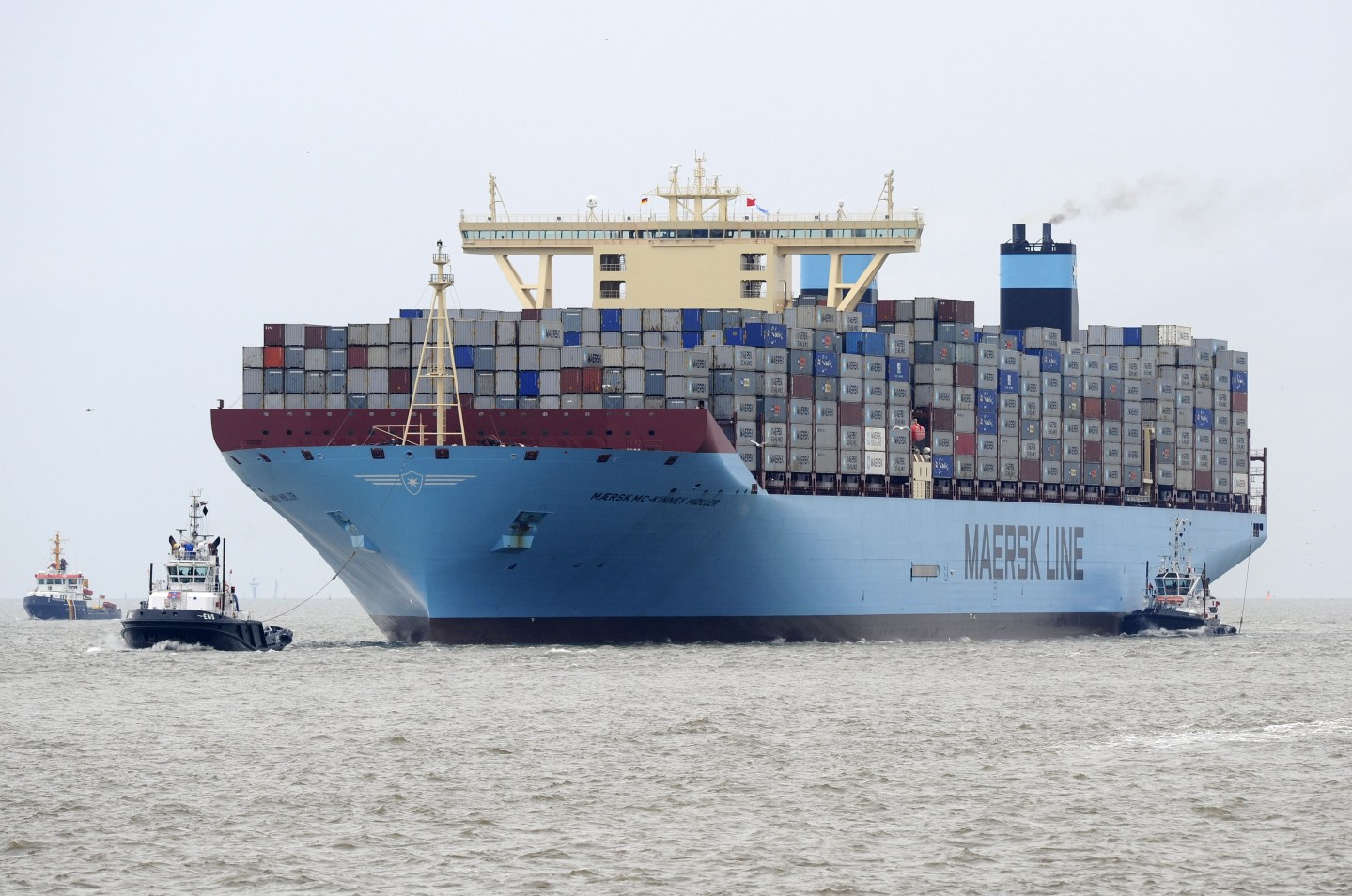
There is a fleet of almost 55,000 ships navigating the world’s oceans to bring 9 billion tons of cargo—from crude oil to coffee—from one place to another, according to the International Maritime Organization. Hundreds of thousands of seafarers, more than half of them age 19 years or younger, keep things moving in an industry that Douglas-Westwood Limited estimates to be worth $2 trillion between 2005 and 2009.
In sum: A lot of teenagers on a lot of large ships carrying a lot of goods worth a lot of money.
So if a ship or its sailors need something, well, you give it to them. In the 21st century, perhaps the most critical thing needed (beyond a ship, food and drink, of course) is broadband Internet access. When you’re at sea, information comes at a premium. But why that connectivity is needed may surprise you.
1.) To give sailors a way to keep in touch with their families
A Deloitte report on the Maritime Industry, “Challenge to the Industry: Securing Skilled Crews in Today’s Marketplace,” calls the hiring and retention of skilled crews one of the most pressing challenges facing the Industry. In a context where the new crop of young workers expects to be connected all the time, going to sea for weeks or months at a time can be trying. According to The Telegraph, in late 2013, only 12% of sailors on cargo ships had freely available Internet access and two-thirds had none at all.
This is particularly true as the nature of shipping changes. Sailors used to be able to look forward to time on land when they reached port, but time in port has become dramatically shorter than it used to be. In some cases, commercial ships never actually dock. Oil tankers, for example, may connect to a pipeline somewhere off shore. So that exchange of separation from friends and family for a chance to see places all over the world no longer pays off nearly so well. (For more, read our story from the June 30, 2014 issue of Fortune magazine: “Internet at sea, a life for me.”)
2.) To monitor fuel usage
Bob Kunkel of Alternative Marine Technologies says that another advantage of Internet access at sea is getting at problems in fuel consumption as quickly as possible. Fuel costs about $1,000 per ton and ships burn anywhere from 20 to 70 tons per day, depending on an array of variables. Despite the complexity, engineers can determine how much a ship should be burning, and the sooner they notice that a ship is inching up over its expected fuel usage, the sooner they can take action. (Kunkel says the variance is usually between two and five tons, or between $2,000 to $5,000 in wasted money each day.)
In a low-margin industry, it’s critical to address the issue as quickly as possible, but ships seldom have that kind of technical expertise on board. Internet access allows ships to alert engineers on shore of a problem, accelerating the pace at which they address it. And it’s not just for fuel, either: any mechanical or electronic issue can be remedied more quickly with Internet connectivity.
3.) To enable telemedicine
Most ships just carry seamen, which means if a serious medical condition comes up on board—not unusual for an industry considered one of the world’s most dangerous according to the I.M.O.—there aren’t doctors ready to treat it. With access to the Internet, it’s possible for seafarers to consult physicians on land and provide more advanced treatment than what might be possible aboard a ship. It also means that sailors may not have to wait for landfall to address a medical issue.
4.) To bolster security against pirates and other threats
With Internet access, ships can be equipped with surveillance cameras that transmit footage back to land. That capability allows law enforcement or naval agencies to have more robust information about a potential pirate threat: its size, sophistication, and weaponry. Even if the monitors are destroyed once pirates come aboard the victimized ship, whatever footage they are able to capture before destroying it can be used to inform a response. Today’s surveillance systems are able to detect the approach of fast-moving ships, shortening the time for law enforcement or ships in the area to respond.
5.) To navigate more effectively
Perhaps the most obvious reason a ship would need broadband Internet access? Up-to-the-minute, precise routing and weather information. Though seafarers have been able to locate themselves at sea using the sextant for nearly three centuries, today’s technology allows them to determine where they are with astonishing detail—then transmit that information back to land so everyone else knows where they are, too. (Try it for yourself: Here’s the latest GPS reading for the Hellespont Progress, the ship we mention in the recent magazine article about this topic.)