• Home
  • Latest
  • Fortune 500
  • Finance
  • Tech
  • Leadership
  • Lifestyle
  • Rankings
  • Multimedia
FinanceTerm Sheet

Madoff redux: Would a red flag from JPMorgan really mattered?

By
Nin-Hai Tseng
Nin-Hai Tseng
Down Arrow Button Icon
By
Nin-Hai Tseng
Nin-Hai Tseng
Down Arrow Button Icon
December 13, 2013, 5:01 PM ET
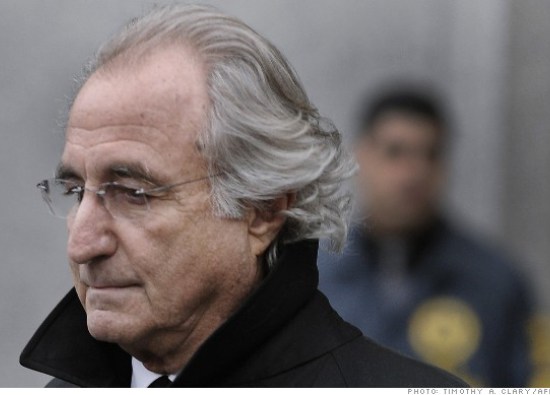
2009 AFP

JPMorgan Chase (JPM) faces the prospect of yet another multibillion dollar fine. This time, it involves Bernard Madoff, who scammed investors in one of the biggest Ponzi schemes in history.

The bank is expected to pay nearly $2 billion to end a criminal investigation into whether it adequately warned U.S. authorities about Madoff’s massive scheme. A settlement deal with the Justice Department could come as early as next week, five years after Madoff’s arrest.

The fraudster initially claimed he acted alone. Needles to say, that was hard for most anyone to believe, and we now know that was all a lie. What’s worth noting is that Madoff eventually ratted out JPMorgan — his bank for more than two decades. In a 2011 interview with the Financial Times, more than two years after his arrest, Madoff claimed “JPMorgan doesn’t have a chance in hell of not coming up with a big settlement.” He claimed “there were people at the bank who knew what was going on,” although JPMorgan has repeatedly denied this claim.

MORE: 4 fast-growing health care careers, without a 4-year degree

In 2008, the bank filed a “suspicious activity” report with U.K. authorities, but it didn’t file such a report in the U.S. Why?

Looking back, it’s hard to say whether that would have mattered, at least in terms of putting the former Nasdaq chief behind bars. Recall a damning 2009 report by the Securities Exchange Commission, which found that the agency responsible for regulating the finance world missed numerous red flags regarding Madoff’s business dating back to as early as 1992.

The report detailed six substantial complaints it received against Madoff. Three investigations and two examinations followed, but the agency missed the warnings because, as the report found, it was hobbled by inexperience and incompetence. What’s more, investigators were intimidated by Madoff, known at the time as a big fish on Wall Street, the report found. Many questioned Madoff’s consistently big returns and the volume of his purported options trades, but the SEC didn’t realize it was all a big Ponzi scheme because it never verified the trading activities through a third party.

“A simple inquiry to one of several parties could have immediately revealed the fact that Madoff was not trading in the volume he was claiming,” the report said.

In the end, it was Madoff’s two sons who turned him in. The SEC has received plenty of flak for missing the boat on Madoff, and the agency has promised to correct its failing. During her confirmation hearing, SEC Chairwoman Mary Schapiro repeatedly pledged there would be no more “sacred cows,” a reference to Madoff.

MORE: Addressing economic inequality in 2014

Maybe alarms coming from the nation’s biggest bank would have made a difference. Maybe not. Regardless, the Madoff settlement represents federal regulators’ effort to try to correct much of what was wrong with JPMorgan; it follows the bank’s record $13 billion settlement last month over the sale of toxic securities to investors before the financial crisis. JPMorgan did not immediately respond to a request for comment.

And whether justice is served depends on how you look at it. The Madoff-related settlement is expected to include a so-called deferred-prosecution agreement, which would list all of the bank’s alleged criminal wrongdoing. However, such an agreement stops short of an indictment so long as the bank pays the fines and acknowledges its wrongdoing — similar to the $13 billion settlement deal JPMorgan struck over bad mortgages.

You can see this piece of the settlement as justice, as admitting wrongdoing has been viewed on Wall Street as potentially spawning more shareholder lawsuits. But if you see jail time as justice, don’t hold your breath.

About the Author
By Nin-Hai Tseng
See full bioRight Arrow Button Icon

Latest in Finance

Julian Braithwaite is the Director General of the International Alliance for Responsible Drinking
CommentaryProductivity
Gen Z is drinking 20% less than Millennials. Productivity is rising. Coincidence? Not quite
By Julian BraithwaiteDecember 13, 2025
1 hour ago
carbon
Commentaryclimate change
Banking on carbon markets 2.0: why financial institutions should engage with carbon credits
By Usha Rao-MonariDecember 13, 2025
2 hours ago
Oracle chairman of the board and chief technology officer Larry Ellison delivers a keynote address during the 2019 Oracle OpenWorld on September 16, 2019 in San Francisco, California.
AIOracle
Oracle’s collapsing stock shows the AI boom is running into two hard limits: physics and debt markets
By Eva RoytburgDecember 13, 2025
5 hours ago
EconomyFederal Reserve
Trump names Warsh, Hassett as top Fed contenders, WSJ says
By Jennifer A. Dlouhy and BloombergDecember 12, 2025
15 hours ago
EconomyFederal Reserve
The Fed just ‘Trump-proofed’ itself with a unanimous move to preempt a potential leadership shake-up
By Jason MaDecember 12, 2025
18 hours ago
robots
InnovationRobots
‘The question is really just how long it will take’: Over 2,000 gather at Humanoids Summit to meet the robots who may take their jobs someday
By Matt O'Brien and The Associated PressDecember 12, 2025
19 hours ago

Most Popular

placeholder alt text
Economy
Tariffs are taxes and they were used to finance the federal government until the 1913 income tax. A top economist breaks it down
By Kent JonesDecember 12, 2025
1 day ago
placeholder alt text
Success
Apple cofounder Ronald Wayne sold his 10% stake for $800 in 1976—today it’d be worth up to $400 billion
By Preston ForeDecember 12, 2025
1 day ago
placeholder alt text
Success
40% of Stanford undergrads receive disability accommodations—but it’s become a college-wide phenomenon as Gen Z try to succeed in the current climate
By Preston ForeDecember 12, 2025
24 hours ago
placeholder alt text
Economy
For the first time since Trump’s tariff rollout, import tax revenue has fallen, threatening his lofty plans to slash the $38 trillion national debt
By Sasha RogelbergDecember 12, 2025
20 hours ago
placeholder alt text
Economy
The Fed just ‘Trump-proofed’ itself with a unanimous move to preempt a potential leadership shake-up
By Jason MaDecember 12, 2025
18 hours ago
placeholder alt text
Success
At 18, doctors gave him three hours to live. He played video games from his hospital bed—and now, he’s built a $10 million-a-year video game studio
By Preston ForeDecember 10, 2025
3 days ago
Rankings
  • 100 Best Companies
  • Fortune 500
  • Global 500
  • Fortune 500 Europe
  • Most Powerful Women
  • Future 50
  • World’s Most Admired Companies
  • See All Rankings
Sections
  • Finance
  • Leadership
  • Success
  • Tech
  • Asia
  • Europe
  • Environment
  • Fortune Crypto
  • Health
  • Retail
  • Lifestyle
  • Politics
  • Newsletters
  • Magazine
  • Features
  • Commentary
  • Mpw
  • CEO Initiative
  • Conferences
  • Personal Finance
  • Education
Customer Support
  • Frequently Asked Questions
  • Customer Service Portal
  • Privacy Policy
  • Terms Of Use
  • Single Issues For Purchase
  • International Print
Commercial Services
  • Advertising
  • Fortune Brand Studio
  • Fortune Analytics
  • Fortune Conferences
  • Business Development
About Us
  • About Us
  • Editorial Calendar
  • Press Center
  • Work At Fortune
  • Diversity And Inclusion
  • Terms And Conditions
  • Site Map

© 2025 Fortune Media IP Limited. All Rights Reserved. Use of this site constitutes acceptance of our Terms of Use and Privacy Policy | CA Notice at Collection and Privacy Notice | Do Not Sell/Share My Personal Information
FORTUNE is a trademark of Fortune Media IP Limited, registered in the U.S. and other countries. FORTUNE may receive compensation for some links to products and services on this website. Offers may be subject to change without notice.