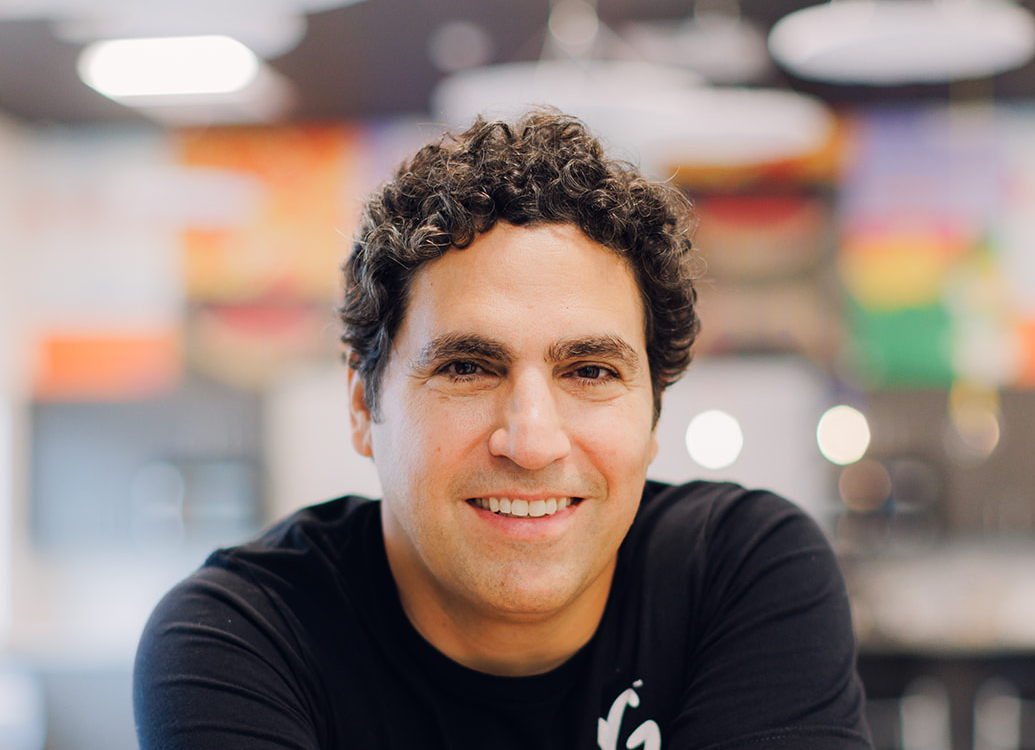
Will your cellphone soon become a proxy for your credit card? Zong and others are betting on it.
If there’s one thing online merchants want, it’s to make it quicker and easier for you to buy what they’re selling. This is the case whether you’re buying a novel from Amazon or an iPod nano. But it’s especially true for micropayment impulse buys like a new handbag for your avatar or virtual fuel for your tractor in an online world or game.
One way purveyors of such virtual goods are streamlining the process for you to pony up is by partnering with payment services that allow you to pay using your mobile phone. Instead of taking the time to get your credit card and enter the number—during which you might change your mind about that virtual cupcake—you type in your mobile number instead.
Mobile payments have been hyped for years, and although they’re embraced overseas, where fewer people have credit cards, they’ve been slow to catch on in the U.S. In the past, purchases were tallied on your mobile phone bill, and you paid your carrier.
Now, one startup in the nascent world of mobile payments has moved to lower the barrier for merchants to offer mobile payments. Last week, Palo Alto, Calif.-based Zong announced that users would be able to link their mobile number to a credit card, instead of paying through their mobile carrier.
Zong claims to have processed payments for more than 10 million unique users in 2009 in virtual worlds like Gaia and IMVU and in games that are played on social networks like MySpace and Facebook. It also boasts the ability to convert shoppers to buyers at rates up to 10 times greater than traditional methods like credit cards.
Their new service, called Zong Plus, requires a one-time registration for users to link their credit card and Zong accounts. As an incentive, Zong offers to double the number of virtual goods a user gets for their purchase when they sign up, with a follow-on rewards program for Zong purchases.
Traditionally mobile payments are linked to the user’s cell-phone bill (and therefore, had to go through the subscriber’s mobile operator.) Here’s how mobile payments work: When you’re ready to make a purchase, the merchant prompts you to type your mobile phone number onscreen. The payment partner then texts a PIN to your phone, and to confirm the purchase you either type the PIN onscreen, or text back “Y” on your phone.
But because the carriers take a cut along with the payment provider, the cost of transactions is sometimes prohibitive for merchants. Few can tolerate such deep cuts into their margins. Those that could? Sellers of virtual goods, which cost almost nothing to reproduce. Their wares currently account for 80% of mobile payments.
As more users sign up for Zong-like services, the hope is that more merchants will too. But the greater draw for merchants is that they’re no longer paying a cut to the mobile carriers.
“By reducing the cost of transaction we can address an additional 10 billion transactions,” says Zong CEO David Marcus. “For a typical merchant, even if only 15% of customers become Zong Plus users, then that merchant will double their pay out rate.”
Another benefit is that Zong will now be available to merchants who were unable to participate due to restrictions imposed by carriers on the size and number of transactions (carriers limit users to $9.99 per transaction for a total of $100 per monthly bill). So a wider selection of goods will be available for purchase through Zong.
Zong even claims that although mobile carriers are being cut out of the loop when users sign up for Zong Plus, the carriers will benefit. As more merchants sign up, more transactions will occur for both Zong Plus and for the basic service that bills to the mobile carriers.
With its new offering, Zong may jump ahead of its startup competitors, like Obopay and Boku. The company already has a strong foundation that includes direct relationships with 107 carriers in 25 countries, and partnerships with the major card networks. (Obopay also recently began offering the ability to link your mobile number and credit card but its focus has been on mobile phone person-to-person transfers of funds.)
As for the primary risk for payment providers—fraud—Zong CEO Marcus says the mobile aspect of the service provides a reliable safeguard. “The beauty of mobile payments is you have the additional ID factor—you get a pin code on your cellphone—so you’ll be notified immediately if someone tries to user your number to pay.”
The bigger question for Zong is whether it stands a chance against payment and ecommerce giants like eBay’s Paypal and Amazon. At Fortune’s Brainstorm Tech conference this summer, eBay (EBAY) CEO John Donahoe made Paypal’s strategy clear: “Payments is a winner-take-all business.”
On Tuesday, PayPal opened its platform to outside developers to be able to embed its payment code directly into websites and apps. The result is that after a one time set up process for each site, to connect their paypal account, users can complete the transaction within the site using a PIN, much like Zong.
“We’re opening up the platform for all types of innovation and we expect it will happen on a number of devices and that includes mobile,” says PayPal President Scott Thompson.
And last week Amazon launched PayPhrase, which allows consumers to simply enter a username and PIN that can also be used on outside merchant sites like DKNY.com and Buy.com, which use Amazon’s checkout service.
Meanwhile Marcus is already thinking about moving beyond purely digital goods to content like music and movies, or any online services that have a cost of goods sold. After all, he says, “Paypal started small with eBay before taking on the world of ecommerce.”