It was the summer of 2017, and Prince Blue wasn’t feeling so hot. But he had no clue as to why. The 34-year-old police officer and father of three saw his doctor annually for check-ups, and his labs were always fine.
“I was urinating a lot, dizzy,” he recalls. “I would lose weight without working out, even when I knew I’d been eating bad.”
Frequent trips to the bathroom put a damper on his dream vacation to Mexico. On a walk to find a restaurant he and his wife were looking for, he realized he could no longer read street signs.
“Up until that point, it didn’t dawn on me that I could have diabetes,” Blue, a former Army human resources specialist now studying for a doctoral degree in criminal justice, tells Fortune.
Back home in North Carolina and on patrol one night, he received a call for service only to realize, again, that he couldn’t read street signs. Embarrassed and frightened, he asked a coworker to let him tail their car all night—and promised that the next day, he would figure out what was going on.
That morning he was diagnosed with type 2 diabetes, a condition in which cells don’t respond normally to insulin. With the help of an endocrinologist, insulin, other medications, diet, exercise, and a continuous glucose monitor, he now has better control of his blood sugar, blood pressure level, and weight. But keeping all three in check is a daily battle, he admits.
While his since vision recovered, his neuropathy—or nerve damage, a common diabetic complication—appears to be permanent.
“I can’t even feel the zipper on my kids’ clothes when I’m trying to get them dressed, struggling to tie their shoes,” he says. “My grip strength is gone, being able to feel surfaces is gone. I drop stuff constantly. Everything feels like I’m running my hand through a cheese grater sometimes.”
Blue’s doctors had warned him that his weight and high blood pressure, coupled with his family history of type 2 diabetes, could mean the condition was in his future. But his labs were never explained to him. And they were apparently never alarming enough to warrant a diagnosis before 2017, when his blood glucose level spiked into the 700s—roughly seven times a safe, normal level.
“If anybody dropped the ball, it was me, because I was constantly told to do these things” like lose weight and get my blood pressure under control, “and I just ignored them until it got worse,” Blue says.
But his doctors never diagnosed him an increasingly common condition called pre-diabetes, in which blood glucose levels are elevated, but not high enough to warrant an official diagnosis of diabetes.
“I just think they weren’t looking for it,” Blue says.
‘Like ticking time bombs’
Nearly 40% of Americans have pre-diabetes, according to the U.S. Centers for Disease Control and Prevention. When it comes to diabetes itself, slightly more than 10% of the U.S. population has it—either type 2, the most common, or type 1, an autoimmune condition in which the body mistakenly destroys insulin-producing cells.
All told, roughly half of the U.S. population has diabetes or its predecessor. It’s turning us into a nation burdened with illness, experts say—driving up the country’s health care infrastructure and staffing needs and the cost of health care, and harming the economy in a way never seen before in U.S. history.

The figures are stunning, but they no longer shock Dr. Disha Narang, an endocrinologist and obesity medicine doctor at Northwestern Medicine Lake Forest Hospital in Lake Forest, Ill. Nor do they surprise Dr. Nisha Patel, an obesity medicine doctor in San Francisco, Calif., who often teams up on projects with Narang.
Obesity is a leading risk factor for metabolic diseases like pre-diabetes and type 2 diabetes—and statistics on Americans with obesity nearly mirror those on people with diabetes. Nearly 42% of the U.S. population was obese as of March 2020. And around half of all Americans will be obese by 2030, researchers predict.
While not unexpected, the figures are “incredibly concerning,” Patel says—not just because of diabetes’ potential to wreak havoc on the body, but because of the other diseases that may eventually accompany it. Pre-diabetes and diabetes are a major risk factor for conditions like fatty liver disease, metabolic associated cyanotic liver disease, and other chronic conditions—many of which, like diabetes, can also be fatal.
Diagnosed or not, diabetes can cause complications, like the eye problems Blue experienced, and his neuropathy, which persists despite his improved glycemic control. Countless Americans have pre-diabetes or diabetes and, like Blue was, are oblivious. More than 80% of those who have prediabetes aren’t aware of it, according to the U.S. Centers for Disease Control and Prevention. And nearly a quarter of those who have diabetes are also unaware.
They’re walking around “like ticking time bombs,” Patel says.
How we got here
That the U.S. is grappling with an epidemic of obesity is no surprise to experts Fortune spoke with. But because obesity so often begets pre-diabetes and type 2 diabetes, the nation is struggling with—or virtually ignoring—a cardiometabolic health crisis as well.
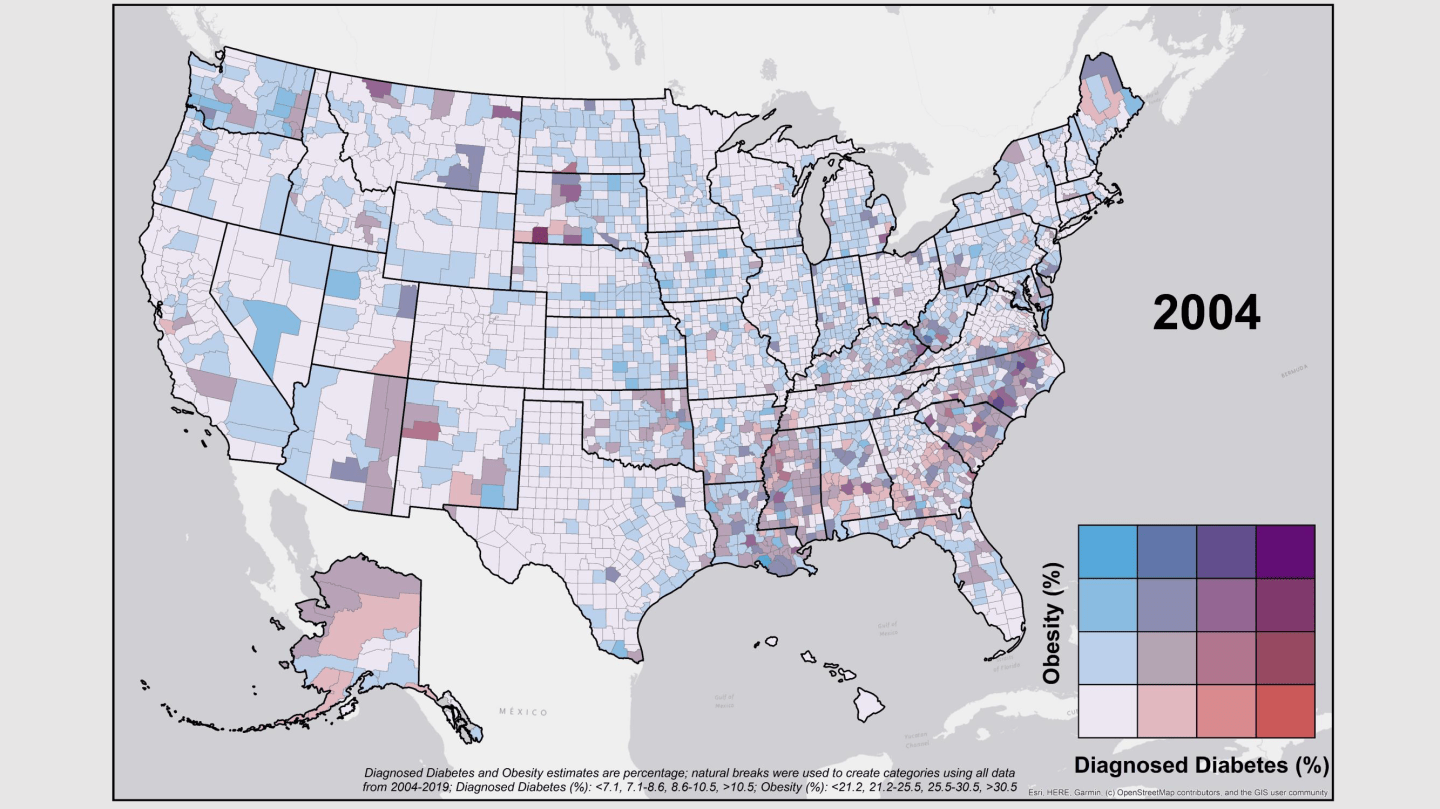
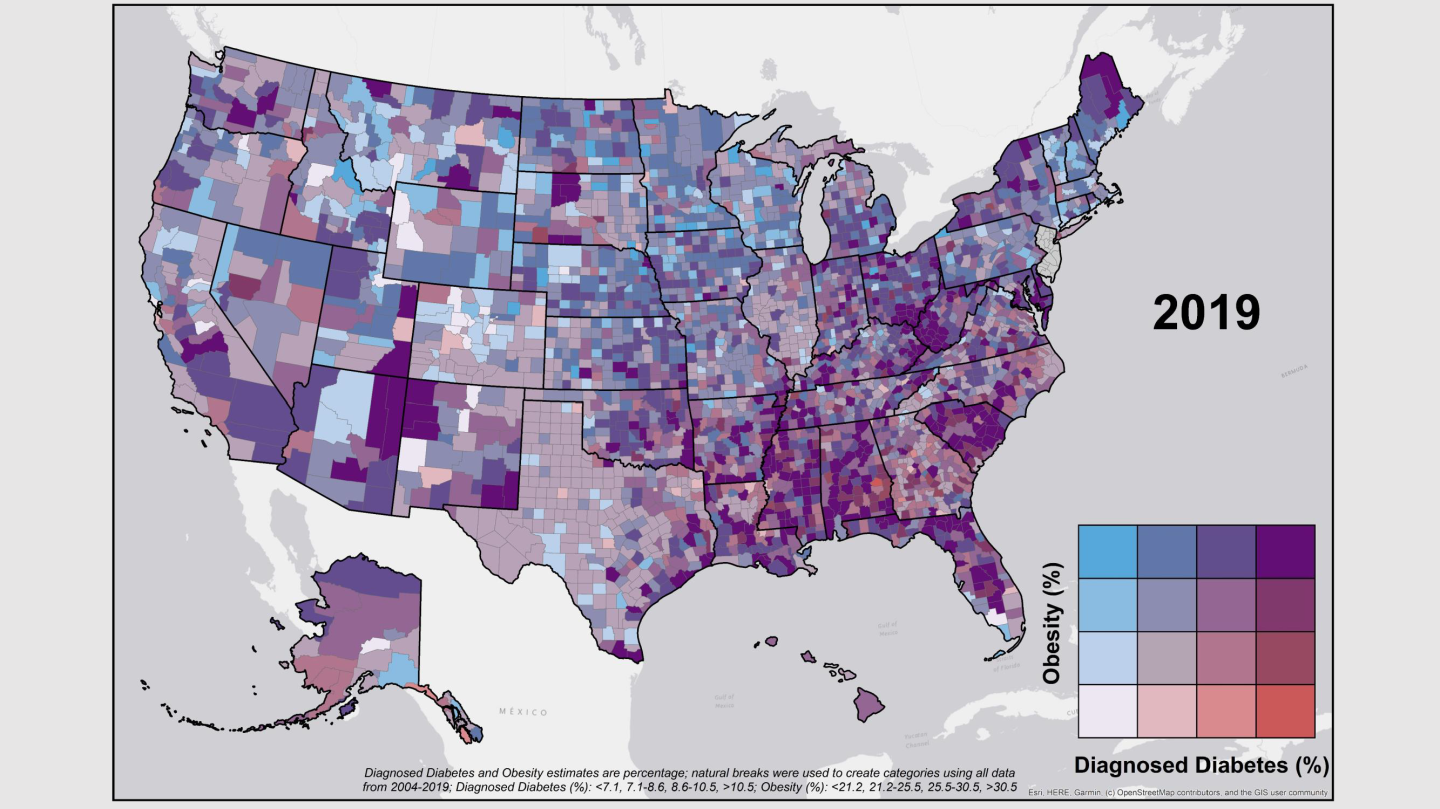
From 1999 through March 2020, U.S. obesity rates rose 11%—from 31% to 42%—and the rate of severe obesity nearly doubled, to 9%, according to the CDC. The number of Americans diagnosed with diabetes more than doubled, from nearly 11 million to 23.4 million.
The situation was bleak—and about to get worse. In the spring of 2020, the COVID-19 pandemic hit, derailing the normal exercise plans of active Americans and ushering the nation into a mental health crisis.
“I hear stories all the time that things were stable, then 2020 hit and ‘I gained 50 pounds after that,’” Narang says. “People’s activity changed a lot. The stressors were a lot different. The way we responded to stressors was a lot different. People often turned to food in times of stress—all of that combined.”
It’s a pattern that has permanently changed the American lifestyle, with app-based deliveries of fast food and groceries still up, and daily step counts still down—perhaps permanently. Increased calorie consumption and decreased exertion aside, experts believe that COVID inadvertently led to an increase in diabetes diagnoses through inflammation, stress, cell death during cytokine storm, or other mechanisms that aren’t yet fully understood—an atypical manifestation of long COVID, if you will.
New type 2 diabetes diagnoses among American youth climbed 62%—and type 1 diabetes diagnoses 17%—after the pandemic began, according to a 2023 study published in JAMA Network Open. While the jury is still out as to how—and how much—COVID contributed to diabetes diagnoses, studies have estimated that roughly 1%-4% of those who’ve contracted the virus were diagnosed with diabetes in the months after acute infection. And with virtually everyone in the U.S. having contracted COVID at least once, 1% is no small figure—when considering the U.S. population, it’s more than 3 million people.
Devastation ahead
The nation’s cardiometabolic crisis is sure to come with an ever-mounting death toll, as well as reduced lifespans and quality years of life. Prevention must start early, because diabetes is starting earlier too. While type 2 diabetes was traditionally considered to develop in those over age 45, it’s increasingly being diagnosed in teens and children, due to overnutrition, obesity, and low levels of physical activity.
“It’s really quite disturbing, because that’s an even longer time of exposure their body has to deal with,” Patel says of the rising number of young Americans being diagnosed. It means more people with more complications, at younger ages. “The domino effect it creates is huge. It’s astronomical what the consequences can be.”
But there’s an economic price tag too, Patel says. Because nearly one in two Americans has diabetes or prediabetes, employers are dealing with an increasingly sicker workforce.
“When you look at the health care costs associated with patients with diabetes, we’re looking at billions of indirect costs,” Patel says. That’s because diabetics are more likely to be absent from work, resulting in a loss of productivity, and have higher health care costs that burden both themselves and their employers.
Economics aside, America’s healthcare system isn’t prepared for an influx of diabetic patients, who, more often than not, come with additional health care needs. Aside from a nationwide shortage of hospital beds, the country is seeing a health care staffing crisis, too.
“Who is going to be around to take care of this aging, ailing, sick population?” Patel asks. “There are huge implications if we cannot get a hold of this or find solutions.”
How to fix the problem
When it comes to tackling the epidemic of diabetes and obesity, there’s no silver bullet, experts tell Fortune.
“I just don’t see a one-size-fits-all solution,” Patel says. “There’s no end I can see.”
While undernutrition is undoubtedly still a problem in the U.S., overnutrition is a greater problem, experts contend. Ironically, the two problems are often related. A person can suffer from both malnutrition and obesity if they’re unable to find and/or purchase healthy food.
The key to tackling both problems: making nutrient-dense foods—like fruits, vegetables, protein from plant-based sources, seafood, and low- or no-fat dairy products—available to the masses. But roughly 10% of Americans wrestle with food security, many of them living in food deserts—areas where food is inaccessible, either due to proximity or price. In these areas, most of the food available—at gas stations, dollar stores, and the like—is highly processed and far from fresh.
Even if nutrient-dense foods are made available en masse—through a food pantry or otherwise—busy Americans struggle with finding the time to cook, and sometimes the knowledge of how to.
“You give somebody a box of veggies and they have no idea what to do with it,” Patel says. “They’re not going to eat it, enjoy it.”
Middle- and high-income Americans may not have trouble accessing nutrient-dense foods. But convenience is promoted—often at the expense of nutrition.
“This country has more processed food than any other country in the world,” Narang said. Patel questions why food manufacturers aren’t making it easier for everyday Americans to make healthier choices. “I don’t see widespread efforts,” she says.
Demand for injectable weight-loss “miracle drugs” like Wegovy sky-rocketed this year, and Narang worries that manufacturers won’t be able to keep up. Disparities already exist among who is able to obtain the drug. It’s led to shortages of the drug among diabetic patients who require it. What’s more, many worldwide could benefit from the so-called “miracle drug” but lack access due to poverty.
But such drugs “are just another resource for weight loss,” Narang cautions. They’re not the be-all and end-all of diabetes care or even the solution to obesity. Production and access issues aside, users of injectables like Wegovy must still diet and exercise for the medication to work. What’s more, they often gain back the weight they lost if they discontinue use, potentially turning a nation of obese workers into a nation of workers indefinitely dependent on a drug to help keep their weight in check.
“People are touting this as the next coming of Christ or something, and it’s just not the case,” Narang says. “I think it’s been severely hyped on social media. We’ve been using GLP1s for over a decade at this point.”
While such drugs can be a game-changer for diabetics, they’re “not the long-term answer to permanent weight-loss” for those who are merely looking to tackle their weight, Narang said.
Perhaps the biggest hurdle to tackling obesity: the thought that it’s a moral failure.
“We need to see obesity as a chronic disease that is deserving of long-term treatment like anything else—like diabetes, like high blood pressure, high cholesterol, all of those things,” Narang said. “It’s a neurohormonal process that’s actually treatable.”
“Right now there’s a stigma around weight, that it’s someone’s fault, and that needs to change.”