
• Home
  • Latest
  • Fortune 500
  • Finance
  • Tech
  • Leadership
  • Lifestyle
  • Rankings
  • Multimedia
Healthpregnancy

800 mothers die giving birth every day. The Bill & Melinda Gates Foundation says this is what could save them

Jennifer Fields
By
Jennifer Fields
Jennifer Fields
Editor, Fortune Well
Down Arrow Button Icon
Jennifer Fields
By
Jennifer Fields
Jennifer Fields
Editor, Fortune Well
Down Arrow Button Icon
September 12, 2023, 12:02 AM ET
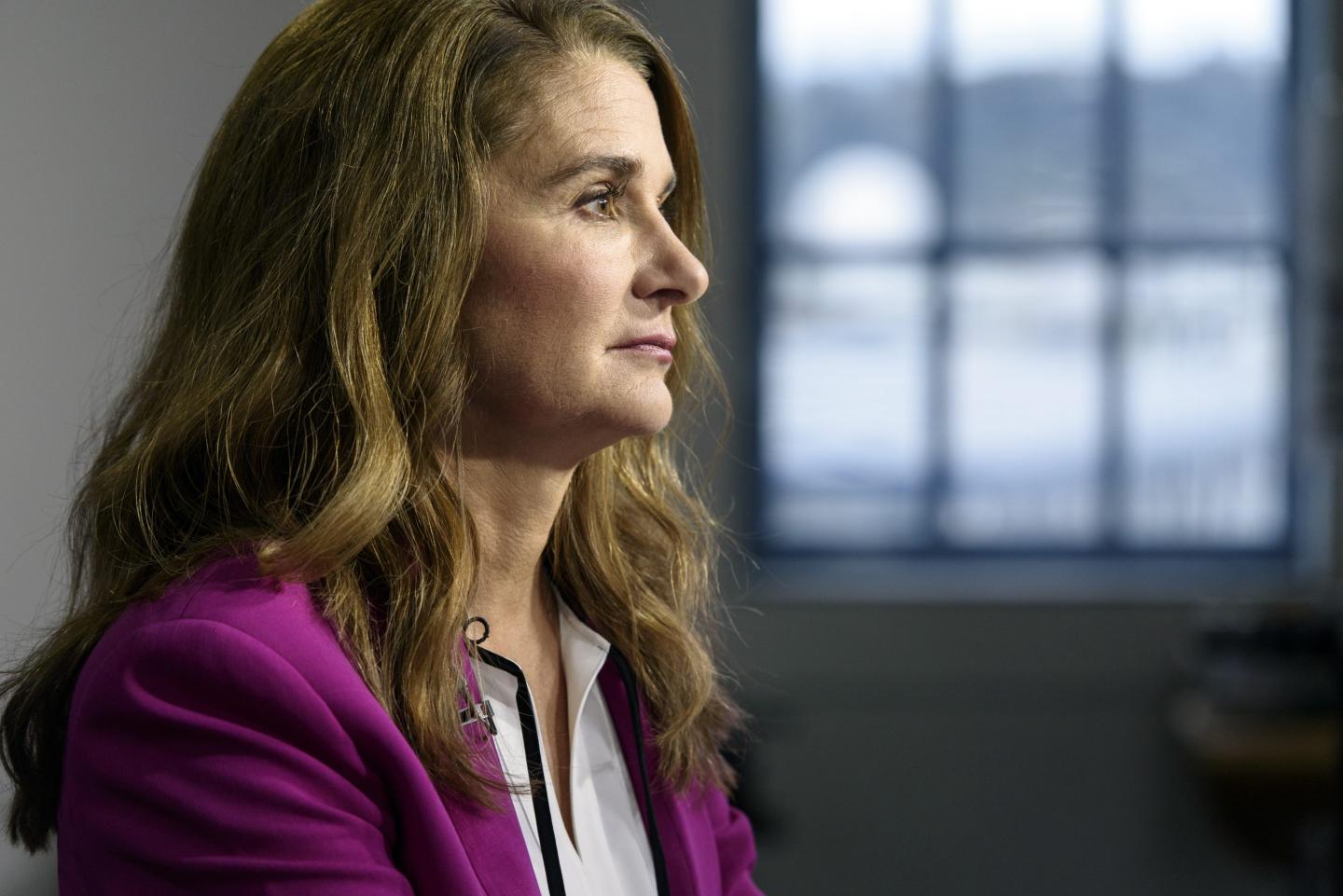
Melinda French Gates is the founder of Pivotal Ventures.
Melinda French Gates is the founder of Pivotal Ventures.Michael Short/Bloomberg—Getty Images

In 2020, scientists around the world banded together to develop and test a highly effective vaccine against a daunting new virus, turning the tide in the global COVID-19 pandemic and saving untold lives. 

Recommended Video

Yet in the same span of time, a staggering 287,000 women worldwide died during and following pregnancy and childbirth—almost entirely from preventable causes. And yet very few rushed in to stop the proverbial bleeding. 

Maternal mortality is an urgent and pervasive problem robbing the world’s children of their mothers. Melinda French Gates, co-chair of the Bill & Melinda Gates Foundation, says this doesn’t have to be the case. 

“In this day and age, 800 women should not die every day of maternal mortality,” she tells Fortune. 

In its annual Goalkeepers report released Tuesday, the Gates Foundation lays out the staggering numbers surrounding maternal mortality and offers several interventions it says have the potential to save thousands of lives in low- and middle-income countries (LMICs) around the world by 2030.

Coauthored by French Gates and Bill Gates, the report tracks progress on the United Nations’ sustainable development goals, which aim to, among other things, reduce the global maternal mortality rate by more than half—from nearly 160 deaths out of every 100,000 live births to less than 70.

But as French Gates notes in the report, “we are far off track.” 

Inexpensive life-saving interventions

Every two minutes, a woman dies during pregnancy or childbirth. The majority of those deaths occur in low- and middle-income countries, where progress in the fight against maternal mortality has stalled. At the same time, maternal death rates have worsened in higher income countries like the United States. 

“There are things we can do about it and ways we can intervene—we wanted to show people what’s possible,” French Gates says. “It’s still a very dangerous day when a woman goes in to deliver a baby”—regardless of what part of the world she lives in.

The report highlights tools experts consider to be the most impactful in curbing deaths of new moms—many of them inexpensive or already widely used to treat other conditions.

Among them: a simple, inexpensive plastic sheet.

About 70,000 women worldwide experience postpartum hemorrhage, or excessive blood loss following delivery, according to the World Health Organization. That makes bleeding to death the leading cause of maternal mortality. A $1-$2 plastic sheet hung at the edge of a bed could save a life each time it’s used, according to the report.

The drape measures the amount of blood lost and provides a quick and objective visual cue to hospital workers that a patient is in danger. When healthcare workers used the drapes in a trial and performed treatments to stop bleeding simultaneously, rather than sequentially, the number of severe cases of bleeding dropped by 60%.

Other novel treatments include a 15-minute intravenous iron infusion that can prevent or treat severe anemia in pregnancy—a common cause of postpartum hemorrhage—and administering azithromycin, an antibiotic widely used to treat eye and respiratory infections. When given to mothers, azithromycin can cut the incidence of maternal infections, which can lead to sepsis—a life threatening inflammatory response. During a trial across Sub-Saharan Africa, the inexpensive medication reduced maternal sepsis cases by one-third.

“These interventions have the potential to avert about 1.9 million cumulative deaths in low- and-middle income countries by 2030,” said Laura Lamberti, PhD, deputy director of Maternal, Newborn, & Child Health Discovery & Tools for the Gates Foundation, in a recent press briefing.

Utilizing these simple interventions 60% of the time could save nearly 6.5 million mothers’ lives by 2040, she added. 

‘Abysmal’ trend in maternal mortality

Despite the availability of several low-cost interventions, mothers continue to die at an appalling rate. “I can say that, generally, the trends for maternal mortality are quite abysmal and quite challenging,” Lamberti said at the briefing.  

Several hurdles prevent access to and adoption of these lifesaving measures. Chief among them: investment, scale, and quality control. 

Countries riddled with conflict are incredibly difficult places to give birth. It may be impossible for a woman to get to a medical facility—and if she does, it might lack basic equipment.

It takes “focus and goals” and “more outside government investment” for countries to turn that trend around, French Gates says. 

What’s more, “we need to have the right regulations and policies so that these interventions can be scaled up quickly,” she adds.

While the interventions themselves may be cheap, distribution is not. Distributing them widely requires both philanthropic and government money. “And quite often,” she adds, “government funding will go to health innovations for men, not necessarily for women.”

French Gates points to another critical roadblock in leveling maternal mortality rates: societal attitudes towards women and the devaluing of their care. 

“The fact that the global community tolerates this lower quality, substandard approach to women’s health is completely a gendered issue,” Dr. Rasa Izadnegahdar, director of Maternal, Newborn, & Child Health Discovery & Tools for the Gates Foundation, said at the briefing.

Maternal mortality in the U.S. 

While the primary focus of the report is maternal mortality in LMICs, the authors note that the same approaches that work in the developing world can help reduce the climbing maternal mortality rates in the U.S., where Black and Indigenous women are three times more likely to die in childbirth than white women, according to the U.S. National Institutes for Health.

Tennis great Serena Williams is a prominent example of how dangerous it can be for Black women to give birth in America. Williams’ doctors ignored her pleas, and she nearly died from blood clots after giving birth. 

“The fact that Serena Williams went in the system and had to try and convince people and they wouldn’t listen to her—are you kidding me?” French Gates says.

Standardizing care is key, Izadnegahdar notes. When providers use a routine approach to care based on “defined triggers” rather than “subjective assessments,” disparities decrease, he said. 

Philanthropy and pressure 

The foundation is offering more than thoughts and prayers when it comes to combating maternal mortality, French Gates maintains.

“We can step up with funding ourselves to demonstrate we walk the walk,” she says. “We can call on other philanthropists to step up the funding, and we can call on governments to step up their funding and put pressure on them.”

For those who think that the maternal mortality crisis is for lawmakers and medical professionals to sort out, French Gates insists that it’s up to all of us to take action.  

“We need citizens to step up and push their own governments, to use their voice to say we care about moms, we care about babies. If there’s something that’s not very political—or shouldn’t be—it’s moms and babies surviving.”

Join us at the Fortune Workplace Innovation Summit May 19–20, 2026, in Atlanta. The next era of workplace innovation is here—and the old playbook is being rewritten. At this exclusive, high-energy event, the world’s most innovative leaders will convene to explore how AI, humanity, and strategy converge to redefine, again, the future of work. Register now.
About the Author
Jennifer Fields
By Jennifer FieldsEditor, Fortune Well
LinkedIn iconTwitter icon

Jennifer Fields is the editor of Fortune Well, overseeing lifestyle, aging, and mental and physical health.

See full bioRight Arrow Button Icon

Latest in Health

Finance
Lorem ipsum dolor sit amet, consectetur adipiscing elit, sed do eiusmod tempor incididunt ut labore et dolore magna aliqua. Ut enim ad minim veniam
By Fortune Editors
October 20, 2025
Finance
Lorem ipsum dolor sit amet, consectetur adipiscing elit, sed do eiusmod tempor incididunt ut labore et dolore magna aliqua. Ut enim ad minim veniam
By Fortune Editors
October 20, 2025
Finance
Lorem ipsum dolor sit amet, consectetur adipiscing elit, sed do eiusmod tempor incididunt ut labore et dolore magna aliqua. Ut enim ad minim veniam
By Fortune Editors
October 20, 2025
Finance
Lorem ipsum dolor sit amet, consectetur adipiscing elit, sed do eiusmod tempor incididunt ut labore et dolore magna aliqua. Ut enim ad minim veniam
By Fortune Editors
October 20, 2025
Finance
Lorem ipsum dolor sit amet, consectetur adipiscing elit, sed do eiusmod tempor incididunt ut labore et dolore magna aliqua. Ut enim ad minim veniam
By Fortune Editors
October 20, 2025
Finance
Lorem ipsum dolor sit amet, consectetur adipiscing elit, sed do eiusmod tempor incididunt ut labore et dolore magna aliqua. Ut enim ad minim veniam
By Fortune Editors
October 20, 2025

Most Popular

Finance
Lorem ipsum dolor sit amet, consectetur adipiscing elit, sed do eiusmod tempor incididunt ut labore et dolore magna aliqua. Ut enim ad minim veniam
By Fortune Editors
October 20, 2025
Finance
Lorem ipsum dolor sit amet, consectetur adipiscing elit, sed do eiusmod tempor incididunt ut labore et dolore magna aliqua. Ut enim ad minim veniam
By Fortune Editors
October 20, 2025
Finance
Lorem ipsum dolor sit amet, consectetur adipiscing elit, sed do eiusmod tempor incididunt ut labore et dolore magna aliqua. Ut enim ad minim veniam
By Fortune Editors
October 20, 2025
Finance
Lorem ipsum dolor sit amet, consectetur adipiscing elit, sed do eiusmod tempor incididunt ut labore et dolore magna aliqua. Ut enim ad minim veniam
By Fortune Editors
October 20, 2025
Finance
Lorem ipsum dolor sit amet, consectetur adipiscing elit, sed do eiusmod tempor incididunt ut labore et dolore magna aliqua. Ut enim ad minim veniam
By Fortune Editors
October 20, 2025
Finance
Lorem ipsum dolor sit amet, consectetur adipiscing elit, sed do eiusmod tempor incididunt ut labore et dolore magna aliqua. Ut enim ad minim veniam
By Fortune Editors
October 20, 2025
Rankings
  • 100 Best Companies
  • Fortune 500
  • Global 500
  • Fortune 500 Europe
  • Most Powerful Women
  • Future 50
  • World’s Most Admired Companies
  • See All Rankings
Sections
  • Finance
  • Leadership
  • Success
  • Tech
  • Asia
  • Europe
  • Environment
  • Fortune Crypto
  • Health
  • Retail
  • Lifestyle
  • Politics
  • Newsletters
  • Magazine
  • Features
  • Commentary
  • Mpw
  • CEO Initiative
  • Conferences
  • Personal Finance
  • Education
Customer Support
  • Frequently Asked Questions
  • Customer Service Portal
  • Privacy Policy
  • Terms Of Use
  • Single Issues For Purchase
  • International Print
Commercial Services
  • Advertising
  • Fortune Brand Studio
  • Fortune Analytics
  • Fortune Conferences
  • Business Development
About Us
  • About Us
  • Editorial Calendar
  • Press Center
  • Work At Fortune
  • Diversity And Inclusion
  • Terms And Conditions
  • Site Map
  • Facebook icon
  • Twitter icon
  • LinkedIn icon
  • Instagram icon
  • Pinterest icon

Latest in Health

PoliticsModerna
FDA backtracks and agrees to review Moderna mRNA flu vaccine after initial rejection
By Lauran Neergaard and The Associated PressFebruary 18, 2026
21 hours ago
Healthsleep
The 4 Best Bed Frames of 2026: Expert Tested
By Christina SnyderFebruary 18, 2026
24 hours ago
Successthe future of work
As boomer and Gen X bosses retire, working from home will make a major comeback, new research predicts—and you have work-life balance loving Gen Z to thank
By Orianna Rosa RoyleFebruary 17, 2026
2 days ago
HealthHealth
Confronting Asia’s growing rate of chronic conditions means tackling cultural issues as much as medical ones
By Stuart A. SpencerFebruary 15, 2026
4 days ago
Susan Blumenthal
AICancer
Meet the American spies who helped mammograms save more lives
By Erik GermanFebruary 15, 2026
4 days ago
HealthDietary Supplements
5 Best Nootropics of 2026: Expert Reviewed Supplements
By Christina SnyderFebruary 13, 2026
6 days ago

Most Popular

placeholder alt text
Asia
Bill Gates pulls out of India's AI summit at the last minute, in the latest blow to an event dogged by organizational chaos
By Beatrice NolanFebruary 19, 2026
9 hours ago
placeholder alt text
AI
Thousands of CEOs just admitted AI had no impact on employment or productivity—and it has economists resurrecting a paradox from 40 years ago
By Sasha RogelbergFebruary 17, 2026
2 days ago
placeholder alt text
Personal Finance
You need $2 million to retire and 'almost no one is close,' BlackRock CEO warns, a problem that Gen X will make 'harder and nastier'
By Sydney LakeFebruary 17, 2026
2 days ago
placeholder alt text
Economy
Top Trump advisor furious about true cost of tariffs being revealed, vows to punish New York Fed for ‘worst paper’ ever in history
By Jake AngeloFebruary 18, 2026
21 hours ago
placeholder alt text
Personal Finance
Current price of silver as of Wednesday, February 18, 2026
By Joseph HostetlerFebruary 18, 2026
1 day ago
placeholder alt text
AI
Deutsche Bank asked AI how it was planning to destroy jobs. And the robot answered
By Nick LichtenbergFebruary 18, 2026
21 hours ago

© 2026 Fortune Media IP Limited. All Rights Reserved. Use of this site constitutes acceptance of our Terms of Use and Privacy Policy | CA Notice at Collection and Privacy Notice | Do Not Sell/Share My Personal Information
FORTUNE is a trademark of Fortune Media IP Limited, registered in the U.S. and other countries. FORTUNE may receive compensation for some links to products and services on this website. Offers may be subject to change without notice.