Dozens of legal scholars and economists have issued stark warnings over attempts by the European Commission (EC) to weaken corporate accountability laws, saying the action will wreck corporate accountability commitments, slash human rights and environmental protections, and lead to higher costs for companies and society.
Under pressure from corporate lobbyists, the EC has been discussing reshaping rules that govern how companies monitor and report their activity. Last month, both French President Emmanuel Macron and German Chancellor Friedrich Merz escalated their campaign against the EU’s Corporate Sustainability Due Diligence Directive (CSDDD), which covers firms’ supply chains, claiming that the regulations threatened to make European businesses uncompetitive. In a speech, Macron told business executives the CSDDD should be “put off the table” entirely, expressing support for an EC “Omnibus Simplification Package” that would eliminate requirements for companies to monitor their supply chains for violations, remove mandatory climate transition plans, and significantly weaken enforcement mechanisms including civil liability provisions.
But legal and economics scholars, environmental organizations and businesses, along with countries such as Sweden and Denmark, have united to defend the regulations.
“The members of the European Parliament shouldn’t be fooled into thinking that if they remove this article that that’s going to somehow amount to a reduction in regulatory burden,” said Thom Wetzer, associate professor of law and finance at the University of Oxford, and the founding director of the Oxford Sustainable Law Programme. “What will come in its place is a very litigious landscape and differential implementation of national requirements. You will have replaced a nicely uniform obligation with a patchwork of a variety of different and uncertain obligations.”
In May, Wetzer and more than 30 other legal scholars sent a letter to the EC warning that, far from reducing costs, scrapping the regulations would create a range of new financial and legal risks for companies, as well as making it harder for them to achieve their sustainability and climate goals. The scholars warn that, “Without guiding regulations, corporate climate transitions will be more disorderly and costly.”
Furthermore, Wetzer notes, many European companies have already taken steps to comply with the regulations. Indeed, towards the beginning of the year, 11 major brands, including the likes of IKEA [F500E #85, as Ingka], Maersk [F500E #70] and Unilever [F500E #49] came out in support of the CSDDD, signing an open letter that stated: “Investment and competitiveness are founded on policy certainty and legal predictability. The announcement that the European Commission will bring forward an ‘omnibus’ initiative that could include revisiting existing legislation risks undermining both of these.”
“Businesses have already started to put in place reporting frameworks to be able to align with the regulatory package,” Wetzer told Fortune. “There has been a lot of investment in the regulatory architecture on the assumption that this would stay in place for a long time. If you change this regulation and you go beyond simplification, you run the risk that all of those investments go down the drain.”
Legal scholars aren’t the only experts to have sounded the alarm on the EC’s plans. Also in May, more than 90 prominent economists criticized Omnibus proposals, strongly refuting claims that the sustainability regulations harm European competitiveness. Instead, they point to other factors behind Europe’s economic challenges, including the energy price crisis following Russia’s invasion of Ukraine, declining global demand, wage stagnation, and chronic underinvestment in public infrastructure.
The economists’ statement emphasizes that implementation costs for sustainability regulations are minimal, citing a London School of Economics study that estimated compliance costs for large companies at just 0.009% of revenue. They argue that the benefits of the regulations far outweigh such modest expenses, and further note that, with an estimated €750 billion investment gap in sustainable initiatives, the weakening of sustainability reporting requirements could undermine crucial programs like the Clean Industrial Deal and discourage private investment in sustainable projects.
“Economic choices are political choices,” said Johannes Jäger, a professor at the University of Applied Sciences BFi Vienna. “With the Omnibus proposal, the European Commission is choosing to reward short-sighted corporate lobbying at the expense of people, planet, and long-term economic resilience.”
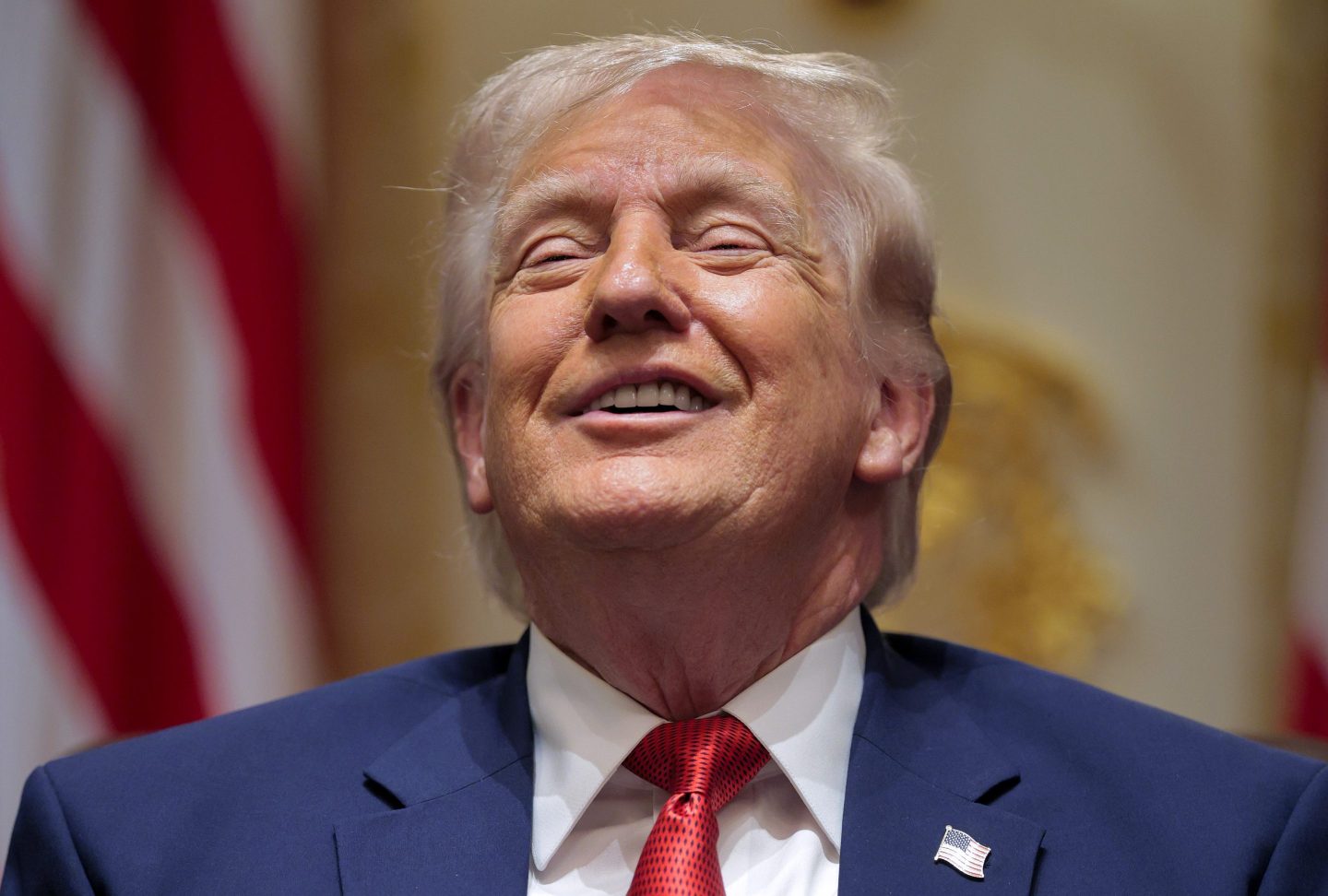
To this point, many critics of the Omnibus package have framed it as opportunistic, saying it is an attempt to both mimic and placate U.S. President Donald Trump who, whilst threatening Europe with tariffs, is carrying out a program of sweeping deregulation across America. U.S. companies have been at the forefront of lobbying efforts to undermine the CSDDD, with watchdogs claiming that investment giant BlackRock helped carve out exemptions from the directive for large financial firms.
“With the Omnibus proposal, the European Commission is choosing to reward short-sighted corporate lobbying at the expense of people, planet, and long-term economic resilience.”
Johannes Jäger, professor, University of Applied Sciences BFi Vienna
Such actions have motivated other European finance leaders to rally around the CSDDD. In February, more than 200 financial institutions, representing $7.6 trillion in assets under management, urged the EC to maintain strong sustainability standards. Aleksandra Palinska, executive director at the European Sustainable Investment Forum, warned that the Omnibus would “limit investor access to comparable and reliable sustainability data and impair their ability to scale-up investments for industrial decarbonisation.”
Rather than following Trump and doubling down on deregulation, European finance experts have urged the EU to maintain its resolve, along with its reputation for probity. In January, François Gemenne, a professor at HEC Paris and a lead author of the Intergovernmental Panel on Climate Change’s sixth assessment report, said that “the best response to the policies implemented in the U.S. is to beef up the EU green agenda, not to weaken it. Rather than follow Trump’s way, we should design our own path.”
Wetzer agreed, saying that the Omnibus proposals harm the European Union’s standing as a rational actor. “The European Union is proving itself not to be a reliable regulator because they’re flip-flopping in the face of changing political winds,” he said. In turbulent times, he suggested, a strong stabilizing influence is required. “We should chart our own course based on our assessment of the fundamentals.”
But beyond the legal and economic impacts, it is the environmental and human rights implications of the EC’s proposed changes that have drawn the most fire. In March, more than 360 global NGOs and civil society groups issued a joint statement against the Omnibus, stating that EC President Ursula von der Leyen was “deprioritizing human rights, workers’ rights and environmental protections for the sake of dangerous deregulation.”
“The European Union is proving itself not to be a reliable regulator because they’re flip-flopping in the face of changing political winds…”
Thom Wetzer, associate professor of law and finance, University of Oxford and founding director of the Oxford Sustainable Law Programme
In comments accompanying the letter, Marion Lupin, policy officer for the European Coalition for Corporate Justice, said: “The message from Brussels couldn’t be clearer: industry interests come first, while people and the planet are left behind … hundreds of civil society organisations around the world are standing up—no to deregulation, no to greenwashing, and no to this reckless rollback of corporate accountability.”
As the Omnibus proposal moves through the European Parliament, the key question is whether EU institutions will preserve their original ambition to guide Europe through its sustainability transition, or acquiesce to corporate lobbying power. The outcome will likely have far-reaching implications for corporate accountability, human rights, and the fight against climate change.