2024 was a good year for travel. UN Travel reports that in the first three quarters of 2024, global tourism was back to 98% of pre-pandemic levels. Statista reported that the UN Tourism Confidence Index recorded 120 points for the September/December period this year, with 100 being the baseline expectation.
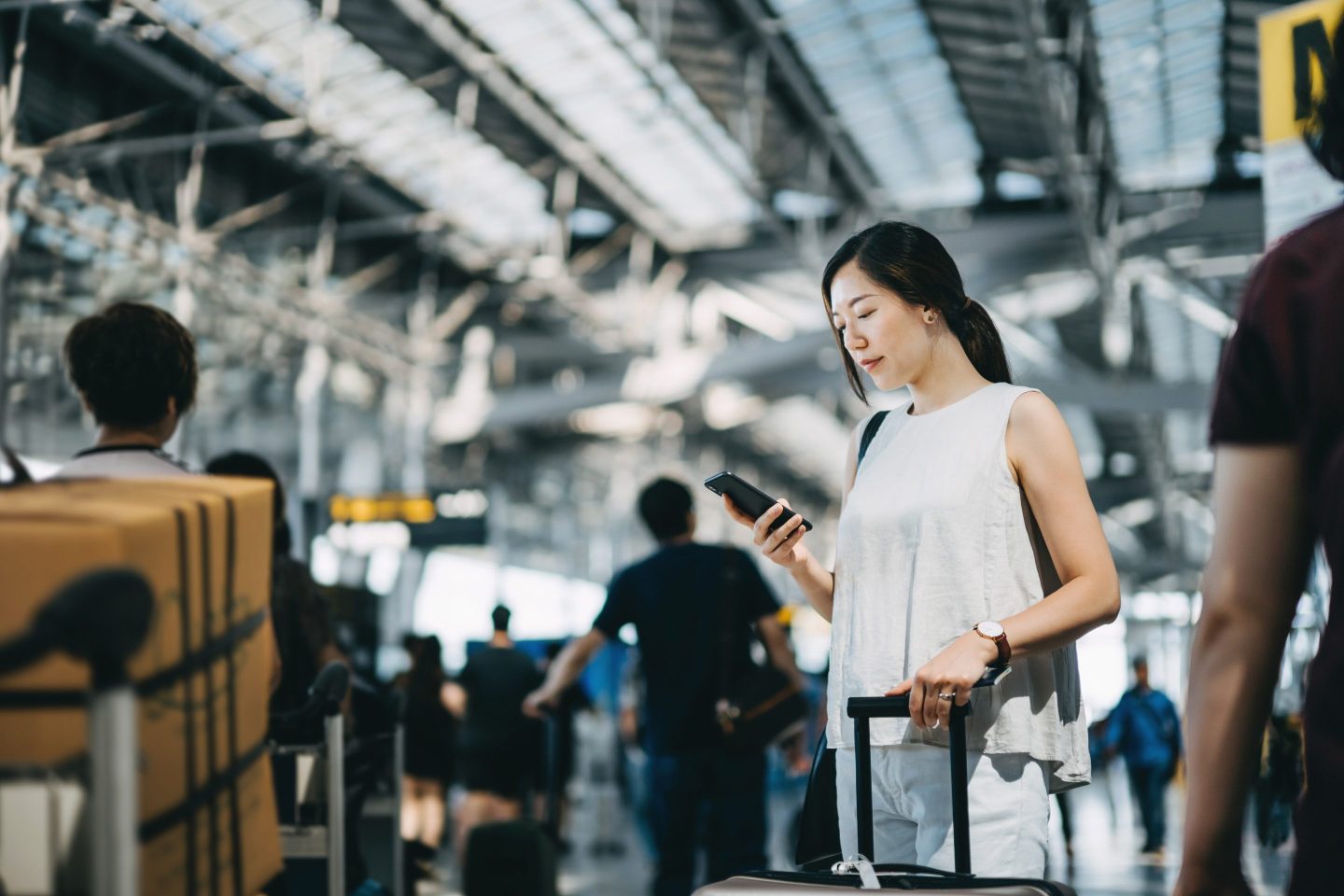
The prognosis for 2025 is even better. The International Air Transport Association (IATA) predicts that in 2025, airlines will transport 5.2 billion passengers, the first time figures have surpassed 5 billion, a 6.7% rise compared to 2024. Likewise, cargo volumes will rise by 5.8% from 2024. For the first time, total industry revenues will likely be over the $1 trillion mark, up 4.4% from 2024.
Why? Well, every year, aside from the pandemic, there are just more of us traveling. Between 2009 and 2019, the world’s ppopulation grew from 6.9 to 7.8 billion. And we all spent more on travel during this time: Each traveler laid out $536 in hotels, restaurants, and transport per trip in 2009, but by 2019, this was up to $672. Plus, airfares are down by 44% since 2014.
In 2025, airlines will transport 5.2 billion passengers, the first time figures have surpassed 5 billion, a 6.7% rise compared to 2024,
the International Air Transport Association (IATA) predicts.
For the airlines, profit per passenger will likely be $7 on average in 2025, when 18 months ago, this per-passenger figure was $2.25. Middle Eastern airlines expect the highest profit per passenger at $24. In contrast, U.S. airlines expect $12 and European ones $9: Africa, Latin America, and the Asia-Pacific region are generally less profitable than the industry average.
EasyJet’s share price is now at a high because it predicts a 3% increase in capacity in 2025. Reuters also reported increased operating profit for the airline due to a recovery from disruptions caused by the Middle East conflict. Lufthansa is unveiling new routes that are predominantly intra-European and across the Atlantic. IAG, the owner of British Airways, is one of City Bank’s top airline share picks for 2025 because of plans to improve its operational performance.
According to Le Monde, it’s a welcome return for airlines that lost $183 billion in the pandemic between 2020 and 2022.
A lack of new aircraft is painful
Despite the good news, with the expected increase in travelers, thin margins will still force airlines to search for lower costs. Plus, air travel is increasingly impacted by the climate crisis, extreme weather events at prime tourist destinations, and geopolitical uncertainty. Plus, with a backdrop of inflation and the rising cost of living, many residents are tightening their belts because of the economic uncertainty about the coming impacts of new government administrations, as is the case in France and the U.S.
Global instability also increases costs because airspace is off limits for commercial flights, meaning they have to fly around, which takes longer, leading to delays—an increase in the number of flights will likely compound this issue.
The biggest issue, however, is that airline manufacturers, predominantly Airbus and Boeing, cannot keep up with demand, and ordered aircraft are late, meaning airlines must continue to rely on aging stock. In 1990, the average age of a fleet was 12.3 years, but this year, it is 14.8 years.
Airbus and Boeing are working on 17,000 new aircraft orders, but only 1,254 will have been delivered under current projections (30% less than forecast for 2024). In 2018, for example, airlines received 1,813 new planes. Willie Walsh, director general of IATA, says it would take 14 years to deliver all ordered aircraft at the current rate.
Airline manufacturers, predominantly Airbus and Boeing, cannot keep up with demand, and ordered aircraft are late, meaning airlines must continue to rely on aging stock.
There is also a global shortage of spare parts, which means that planes need more downtime for maintenance, and some of the new-generation aircraft have reliability issues. Both issues mean more costs for airlines because they need to lease available aircraft to keep flying, and spare parts have risen in price more than inflation.
This means enormous repercussions for the climate crisis because old fleets are inefficient and emitting more significant carbon volumes. It’s causing many airlines to rescind their plans to reach carbon neutrality by 2050 because old aircraft use more kerosene and cannot use sustainable aviation fuel (SAF). SAF still costs 3.4 times more than kerosene, and only about 1% of aircraft can use SAF right now.
Aviation accounts for 2.5% of worldwide carbon emissions; tourist emissions account for 9% of the global total, and they’ve grown by 3.5% per year between 2009 and 2019. Increased demand means increased emissions, eliminating some efficiencies in using newer planes and technological advances.
Three countries are responsible for 39% of tourist emissions: the U.S. (19%), China (15%), and India (6%). These three are also responsible for 60% of the growth over the past decade, primarily due to travel within their countries rather than internationally.
The change of president in the U.S. also makes it unclear if U.S. airlines will delay the move toward net zero. Currently, the Biden administration provides tax breaks for producing SAF, for example, under the Inflation Reduction Act.
This means 2025 may be a complicated year for airlines to meet a reduction in carbon reductions and the expected demand from travelers when new aircraft are not arriving fast enough.
On the upside for airlines, however, airfreight is also up and growing, and fuel prices have dropped from $91.2 to $72.5 per barrel, where anything below $80 is considered favorable for airline costs; this is expected to continue into 2025.