America’s life expectancy is falling annually–and improper or inadequate nutrition is a major cause. A study in The Lancet from The Institute of Health and Metrics concludes that as many as 11 million deaths worldwide are attributable to a poor diet. That’s more than the 8 million deaths caused by tobacco use.
The chief culprit? Primarily, it’s processed foods filled with salt, sugar, fats, and other additives. Those formulations may alter the taste or extend shelf life, but those foods lack the necessary whole grains, fiber, nutrients, and fruits that experts recommend. What’s more, the lower fiber content decreases satiety and contributes to the secretion of hormones that trigger hunger. It’s a formula for long-term health risks and complications.
How can we turn this situation around? It starts with an informed consumer, a shopper who can properly assess a food product’s ingredients and their impact on health. Honesty is the best policy, and consumers want clearer nutritional information about the foods they–and their families–are eating.
They also want to know that additives may be lurking in their food–which is why improved FDA labeling is key. Too often, food manufacturers “greenwash” their products by hiding the true composition of the product, for example, by using green-colored packaging that implies a product is natural/organic when it is absolutely not or is even highly processed.
FMI-Nielsen found that an overwhelming 72% of shoppers report that more transparent product information and labeling are important to them. They want complete ingredient listings in plain English and more complete nutritional information than current labeling provides. And those consumers will speak with their wallets: FMI-Nielsen’s study also found that 64% of buyers would switch to a new brand that provides more and clearer nutritional information.
That transparency leads to greater trust from consumers as well as purchasing decisions that can improve population health. That’s why the FDA must redouble its efforts to improve the clarity and completeness of food labeling.
A new food labeling framework
Unfortunately, food labeling initiatives in the U.S. have stagnated. For 30 years, the U.S. Food & Drug Administration (FDA) has required food manufacturers to provide ingredient and product information on packaging using the Standard Ingredient Label. But it’s becoming increasingly clear that this standard format needs to be reformatted to make it easier to read about the health effects of food. Is there too much salt or sugar? Are there additives that could be bad for my physical or mental health? Today’s consumers want direct, clear, readable labels to guide their purchasing decisions. The FDA must implement a more intuitive system that helps consumers identify healthier food options.
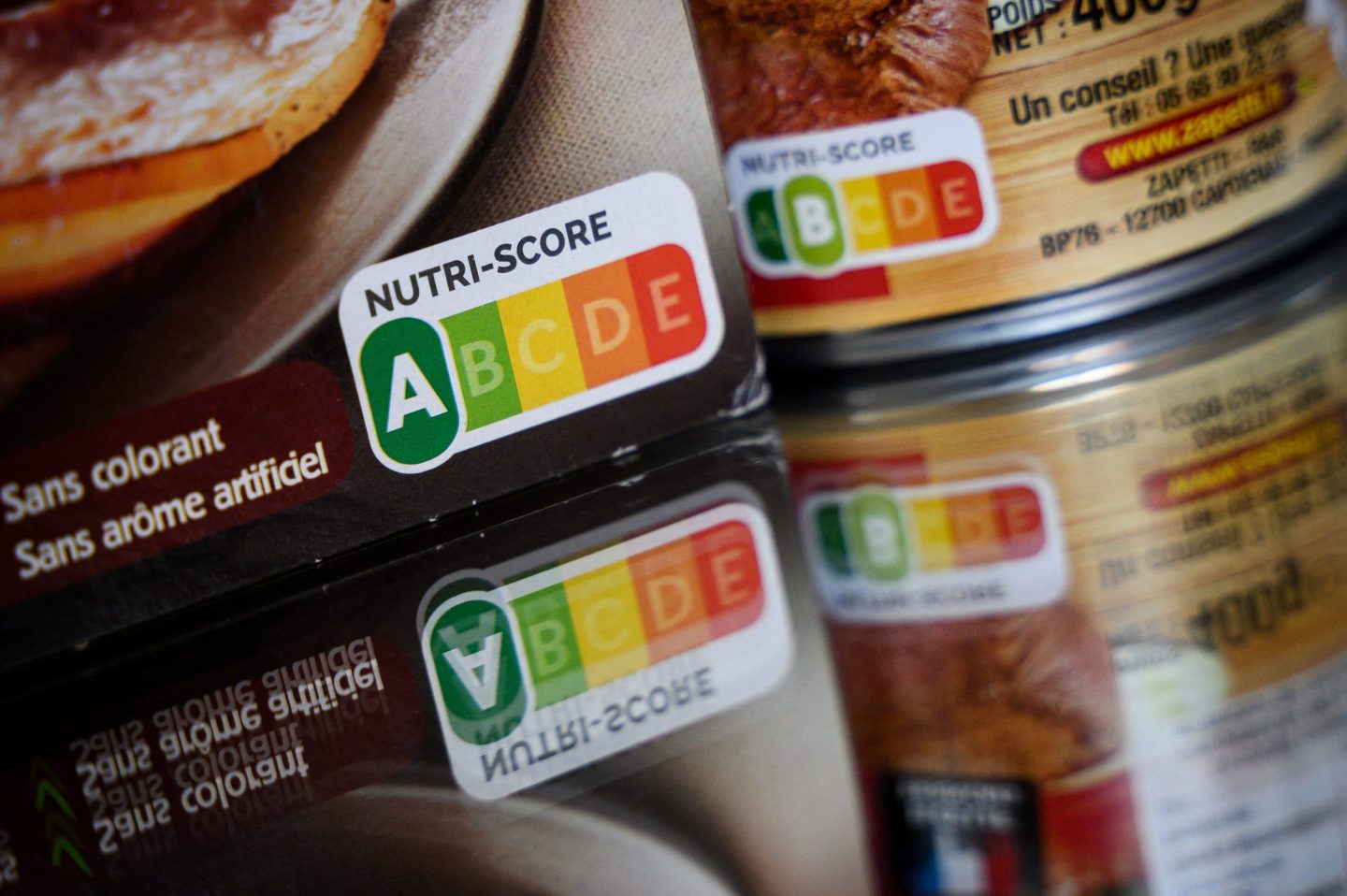
What would new and improved labels look like? U.S. regulators can draw inspiration for a new and improved labeling framework from Europe’s Nutri-Score system to give buyers a more comprehensive view of nutrition. The Nutri-Score (also known as the “5-Colour Nutrition Label” or 5-CNL) was first implemented in France in 2017 to simplify the descriptions of the overall nutritional value of food products. It rates foods using a letter from A (best) to E (worst) as well as colors from green to red. This sort of scoring regimen would be an ideal complementary extension to the FDA’s Nutrition Facts labels, improving both public health and consumer satisfaction.
The Nutri-Score factors in components such as calories, saturated fat, sugars, and salt, as well as fiber, proteins, nuts, fruit, and vegetables. Each food product earns color and letter based on the resulting score (calculated per 100g or 100ml).
Fortunately, frameworks such as Nutri-Score and similar front-of-package labeling (FoPL) can make a meaningful difference. According to The International Journal of Behavioral Nutrition and Physical Activity, “approximately 3.4% of all deaths from diet-related non-communicable diseases was estimated to be avoidable when the Nutri-Score FoPL was used.” That’s more than 8,000 avoidable deaths.
What’s more, the presence of stronger and clearer FoPLs can have a direct impact on the quality of foods as it encourages manufacturers to reformulate their products and switch up their ingredients and recipes to achieve higher scores and fend off competitors who rank higher. That’s because, among consumers who are familiar with the logo, more than 33% said they had already changed their purchasing habits by opting instead for products with a better score. What’s more, nearly 90% believe the Nutri-Score should appear on all packaging, and 70% believe the improved labeling has a positive impact on the brand.
Good food is good business
Some food processors will predictably resist with lobbying efforts to minimize labeling changes and seek loopholes and exceptions. However, forward-thinking manufacturers will recognize that enhanced labeling presents a business opportunity. Market research firm IRI found that products with Nutri-Score rankings of A and B saw their cumulative market share increase by 0.7 points over the period (+0.3 for A and +0.4 for B). Conversely, at the bottom of the scale, products with E ratings saw their market share decline by -0.5 points.
It’s clear: Enhanced food labeling that provides more nutritional understanding can promote healthier eating habits, extend lifespans, improve health outcomes, reduce healthcare costs, and improve the quality of life for all demographic segments. In the U.S., regulators and public health advocates would be wise to explore the development and adoption of a FoPL strategy.
Julie Chapon is a co-founder of Yuka.
More must-read commentary published by Fortune:
- Here’s how the U.S., Europe, and China are faring in the post-pandemic race for economic growth
- Global trade is at a critical juncture–and we can’t take it for granted, WTO meeting chair warns
- Boeing is shaking up its ‘good ole boys’ culture–but the company still has a long way to go before it gets its production and financials right
- The anti-DEI movement has gone from fringe to mainstream. Here’s what that means for corporate America
The opinions expressed in Fortune.com commentary pieces are solely the views of their authors and do not necessarily reflect the opinions and beliefs of Fortune.