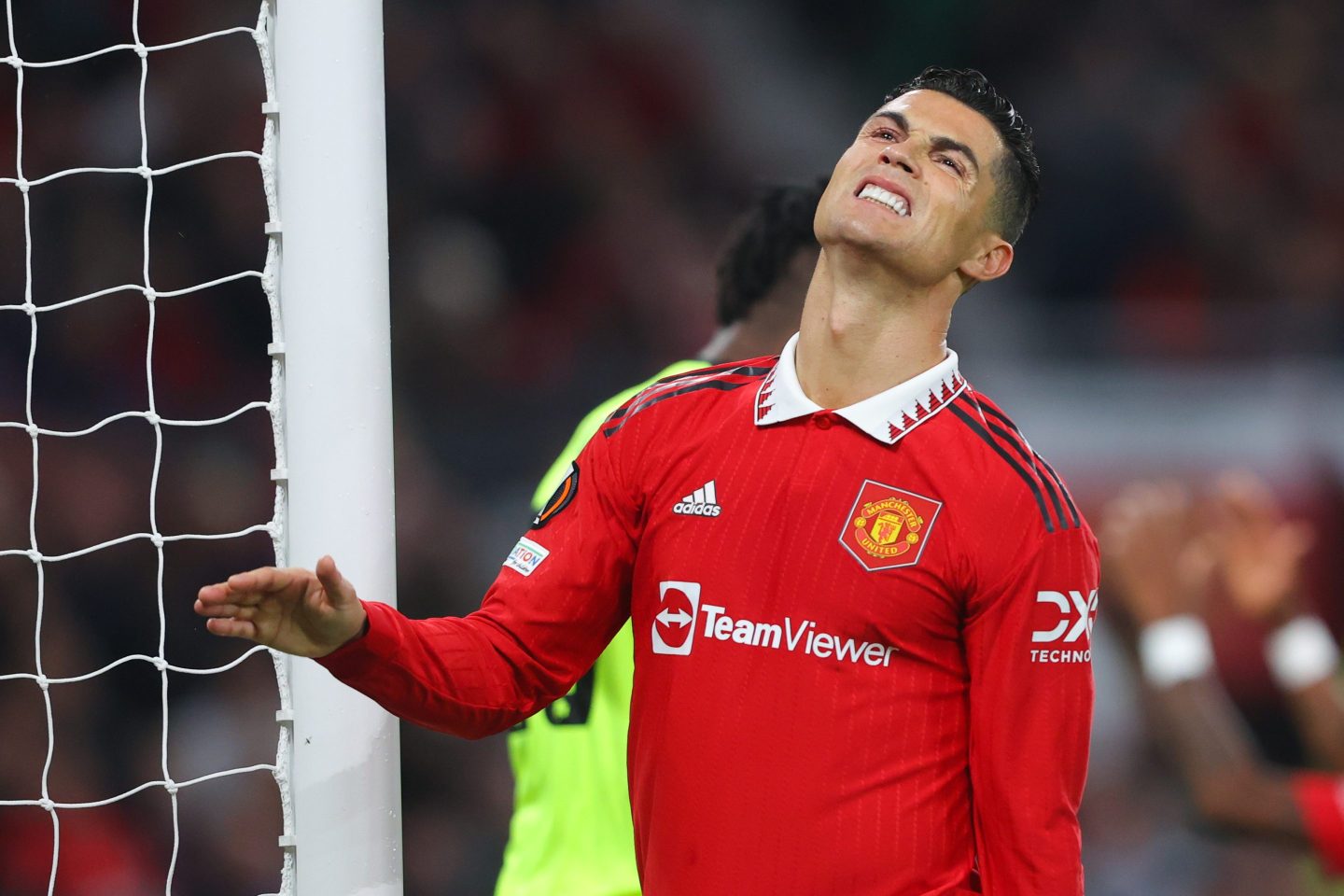
Manchester United is England’s most successful team in the modern era, but the club where David Beckham and Cristiano Ronaldo announced themselves on the world stage and won the biggest trophies has fallen short of fans’ lofty expectations for over a decade.
On the pitch, the team’s success has dried up since the departure of former manager Sir Alex Ferguson in 2013 after a hugely successful 26-year tenure at the club.
What followed has been five “permanent” managers, a six-year trophy drought, and several broken records, mostly for the wrong reasons. This period has also seen the meteoric rise of its biggest rivals Manchester City and Liverpool F.C.
But that hasn’t dented the financial fortunes of the club, who are majority owned by the U.S. billionaire Glazer family, who also control the Tampa Bay Buccaneers NFL franchise.
Last year’s £648.4 million revenue figure was a Premier League record at the time, even as the club was forced to issue a profit warning following its exit from the Champions League—Europe’s premier club competition.
United remains the second most valuable soccer club in the world behind Spanish giant Real Madrid, according to Forbes’ latest ranking. That’s despite United ranking a lowly 29th based on on-pitch performance, according to Opta Power Rankings.
Now U.K. billionaire Sir Jim Ratcliffe’s INEOS has taken a 25% stake in United with a promise to take over the club’s sporting operations and return it to former glories.
But for the club’s new minority owners, led by Ratcliffe’s $17.9 billion net worth, there is growing concern that repeated disappointment on the pitch and changing demographics could set United on a path of long-term decline.
“Whilst the commercial success of the Club has ensured there have always been available funds to win trophies at the highest level, this potential has not been fully unlocked in recent times,” Ratcliffe said in a pointed statement toward the Glazer family after INEOS acquired its sizeable minority stake in the club.
“Our shared ambition is clear: we all want to see Manchester United back where we belong, at the very top of English, European and world football.”
How does Manchester United remain a money-making machine?
James Kirkham, CEO and Founder of ICONIC and former chief business officer at COPA90, explains that Manchester United is an “anomaly brand” that defies sporting economics.
“Manchester United is a brand comparable with Disney, Ferrari, and Apple all rolled into one. The club ready-makes storylines, history, even mythology—driving its brand value and its financial potential to a whole new level,” Kirkham told Fortune.
While on-field success can garner revenue through prize money and ticket sales, the real money for Europe’s biggest teams is won off the pitch.
This comes through broadcast and commercial agreements, and it’s here where United has led its rivals for decades.
Commercial deals make up 32% of revenue for English teams, according to Deloitte’s latest Annual Review of Football Finance report. For Manchester United, that figure is around 47%.
“Some of their shirt sponsorship deals for example have led the market in terms of valuations over a number of years, and that’s where they’ve really differentiated themselves,” says Richard Davies, a partner at law firm Charles Russell Speechlys LLP.
“That comes down to the value of their brand and all the markets they’re able to sell into because of their global fan base. And maximizing that revenue has been something which has been very successful over the last 20 years.”
A representative for Manchester United didn’t respond to Fortune’s request for comment.
Manchester United’s brand loyalty is strong—but it has limits
While brand loyalty is usually difficult to win and easy to lose, in sports that quality can be stretched to breaking point far before most fans even think about switching allegiances—and in most cases they never will.
The bond is so strong that Charles Russell Speechlys’ Davies says soccer clubs will often tout the loyalty of their fans as an almost tangible asset when pitching to prospective investors or buyers.
Man United’s former vice chairman Ed Woodward even once publicly dispelled the theory that a strong season for the club had played a part in boosting its finances.
“Playing performance doesn’t really have a meaningful impact on what we can do on the commercial side of the business,” he told shareholders in 2018.
Kieran Maguire, a professor at the University of Liverpool and co-host of The Price of Football podcast, argues that Woodward was right, even if his comments were ill-judged.
“United does not have to win football matches to maintain its global fan base,” Maguire said.
“It’s a lifelong relationship through good and bad. If men were as faithful to their wives as they are to their football teams, we’d have no divorce.”
But while existing supporters may never turn their backs on the club, Manchester United faces a battle to win the hearts and minds of younger fans who are unaccustomed to United’s past success.
Neill Wood, who runs Football Finance Professionals (FFP) and lives in Manchester, says he notices a growing tide of younger fans increasingly choosing to support Manchester City as the team consistently outperforms United.
A new CEO could hold the key to a resurgence
When it comes to footballing operations, the team increasingly looks like an expensive distraction to the Manchester United brand.
The club’s net spend on player transfers hit a record £1.19 billion ($1.52 billion) between 2014 and 2023, according to the CIES Football Observatory—quadruple that of successful rivals Liverpool F.C.
But most followers of the club struggle to point to more than a handful of those players who could be regarded as successful since joining. The club’s average points tally in the league in that time has been well below its Ferguson-era figure.
But with fresh investment comes hope for change, perhaps the biggest coming from a four-mile journey across town.
United appointed Omar Berrada as its CEO last week, snatching him from his role as chief football operations officer at hometown rivals Manchester City.
It’s been regarded in soccer circles as a major coup, not just because of where he’s coming from.
“United overpaid for talent in recent years, so somebody who has a better indication as to market value will prevent Manchester United from falling into that trap,” The Price of Football podcast host Maguire told Fortune.
Last year, United decided not to pay shareholders their regular dividend, something Maguire views as another symbolic shift in the way the club operates.
Other pledges, including a $300 million commitment from Ratcliffe to invest in the club, are giving fans hope that the team really may one day compete for the biggest prizes again.
Once the acquisition is ratified by the Premier League, the race is on for INEOS to turn the tide around at United, and save a decaying brand from eroding those record-breaking revenues the club has come to rely on.
A representative for INEOS Group didn’t respond to a request for comment.