Amid the explosion of artificial intelligence, investors have searched for projects that bridge the buzzy sector with crypto. One company, the decentralized AI marketplace Bittensor, has emerged as a magnet for prominent venture capital firms—Polychain, Digital Currency Group, and dao5 have bought up hundreds of millions of dollars worth of the project’s token, TAO, which powers an array of AI-related services offered by the network such as model training and data storage.
While Bittensor’s token was previously available only through mining, midtier exchanges, and over-the-counter markets, Binance and Crypto.com both listed TAO for trading last week, a major step forward for the little-known project, which is currently hovering near a market cap of $3.7 billion.
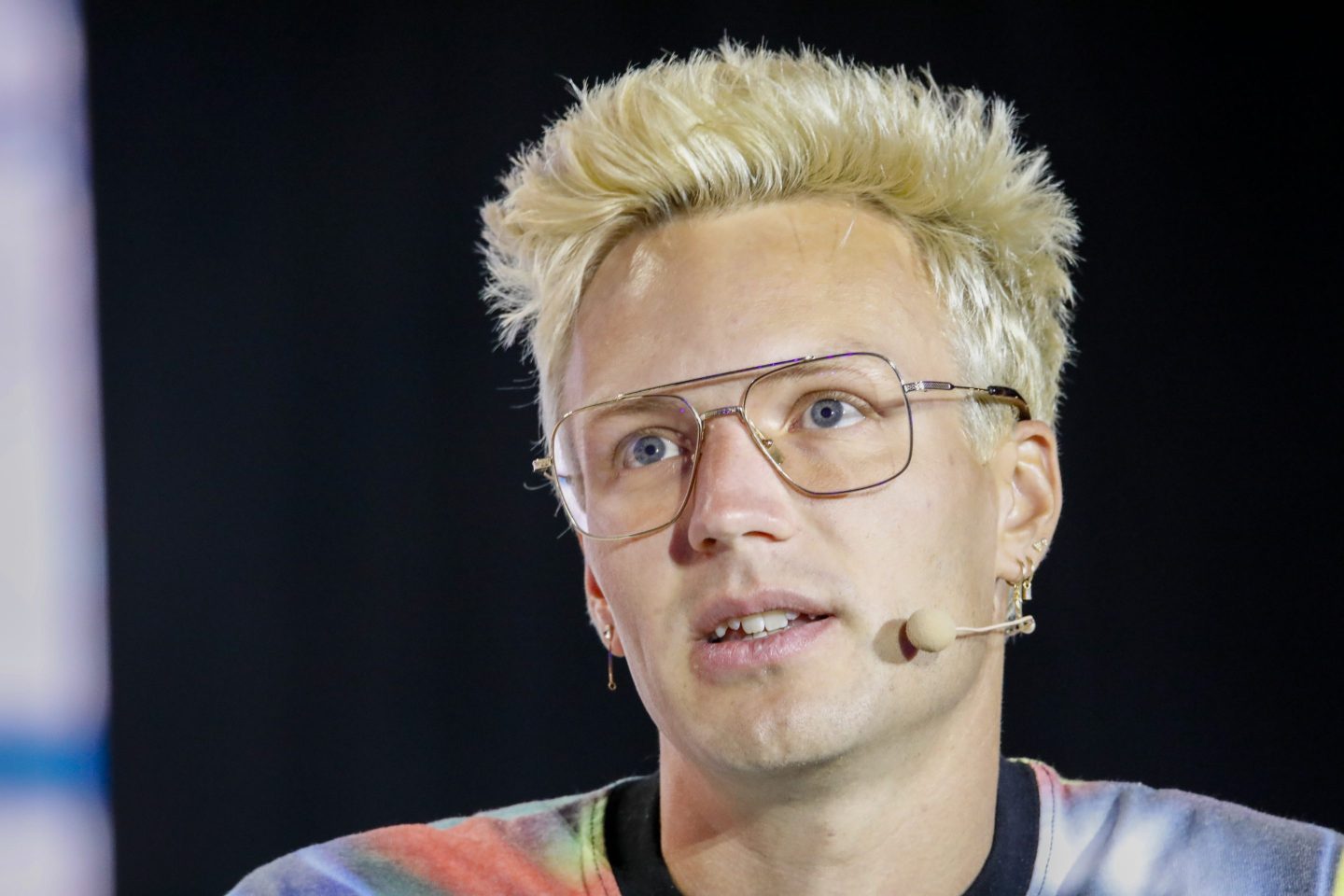
In an interview with Fortune, Bittensor founder Jacob Steeves said that the rise of centralized tools out of OpenAI, Google, and Meta has validated his project, which he began working on in 2015, even as Bittensor fights off accusations of capitalizing on the AI craze. “It’s the most amazing feeling as a builder,” Steeves said. “Frankenstein—it’s alive.”
VC backing
Bittensor doesn't have the mainstream cachet of crypto projects like the Sam Altman–backed Worldcoin, which seeks to mitigate the effects of AI by creating a crypto-enabled eyeball-scanning protocol for verifying people's humanity—and which has raised over $200 million in venture funding.
Still, Bittensor has quietly attracted investors. The VC firm Polychain, founded by early Coinbase employee Olaf Carlson-Wee, incubated Bittensor in 2019 and holds around $200 million in Bittensor's token, according to people familiar with the investment.
"Bittensor uses an incentive system conceptually similar to Bitcoin mining, but instead of building a payment network, it builds an open-source and public artificial intelligence," Carlson-Wee said in a statement shared with Fortune, though he declined to provide specifics on Polychain's investment. "It is a radical new use case for blockchains that is unprecedented."
Dao5, an investment fund founded by Polychain alum Tekin Salimi, holds a stake in TAO around $50 million and was an early supporter of Bittensor's ecosystem, according to a person familiar with the investment.
Digital Currency Group, the influential and beleaguered crypto empire founded by Barry Silbert, is another backer and holds around $100 million of TAO, according to a person familiar with the investment. A spokesperson for DCG declined to comment. In a Business Insider article from 2021, DCG investor Matthew Beck recommended Bittensor as one of the 53 most promising crypto startups.
The flood of investor support demonstrates the unheralded ascent of Bittensor, which was founded years before the November 2022 debut of ChatGPT drove public awareness of generative AI. Bittensor's network launched in 2021.
Today, the intersection of crypto and AI is one of the hottest areas for speculation, with tokens such as Worldcoin fluctuating in price against news cycles around artificial intelligence. In late March, three of the biggest crypto AI projects announced they would create a collective and merge their tokens.
While some on X have referred to Bittensor's TAO token as a memecoin riding the wave of hype around AI, with its price increasing more than 1,000% in less than a year, Steeves told Fortune that Bittensor's track record demonstrates it is building a viable competitor to OpenAI and Google, where he previously worked as an engineer.
"People will come and they will go, and if they buy it because it's a memecoin, they won't be here later," he said. "That's fine, because we want people that actually know what we're doing."
Decentralized AI
Steeves said that he first got the idea for Bittensor looking at the Bitcoin network in 2015. Created by the pseudonymous Satoshi Nakamoto, Bitcoin leverages an innovation called mining to record and process transactions, creating an alternative to payment platforms without a single person or institution at the core. Instead, the system relies on code and a complex array of players from developers to validators who determine the direction of the protocol. "How did we create a supercomputer that is bigger than any government or corporation can create with a centralized entity?" Steeves said. "The answer is Bitcoin used incentive mechanisms."
Bittensor arose as an attempt to repurpose the mechanics around Bitcoin for the vast assembly of functions needed for the emergent field of AI, from data storage to training machine learning models. Many crypto projects "pre-mine" tokens, or create coins before the project is released, or otherwise allocate holdings to early backers through investment vehicles like SAFTs, or Simple Agreements for Future Tokens. Steeves chose the pure Bitcoin route, with participants only able to earn TAO tokens through mining, similar to Nakamoto's design.
Despite sharing Bitcoin's DNA, Bittensor's underlying system is far more complicated, with the network providing different types of functions than Bitcoin's simple transaction model, and miners engaging in different types of competitions depending on which function they are providing and incentivized by earning TAO. These different tools are split across 32 "subnets," or specialized networks, that offer services like data storage, access to other AI-powered chatbots, scraping, and pricing oracles.
If you think that seems excessively esoteric, you're not alone—Bittensor's convoluted design is a function of its growing pains, and its struggle to explain itself to the public has helped stoke fears of its "memecoin" status. Still, the project has an impassioned community of stakeholders, ranging from miners and validators to projects building on Bittensor. Steeves highlighted Corcel, an AI company that has created products including a chatbot powered by Bittensor, as an example of early real-world applications emerging from the protocol.
Aside from the backing of VC firms like Polychain, other prominent companies are also supporting Bittensor by acting as validators, which help guide the development of subnets through their TAO holdings. Foundry, the DCG-owned Bitcoin mining giant, runs a subnet that incentives miners to predict the S&P 500 price index during trading hours.
Can Bittensor compete?
As Bittensor races forward, its biggest breakthrough to date may have been its listing on Binance last week, which finally opened the TAO token to large-scale trading. Steeves noted that the annualized trading volume of TAO during its first day on Binance would have exceeded the GDP of Peru, where he has been based for the past four years.
Still, Steeves insists that the project's ambitions are far greater than the price movements of its cryptocurrency. Thanks to its byzantine system of subnets and associated projects, the network will constantly evolve depending on demand, as well as the push-and-pull dynamic between miners and validators as they fight to create an equilibrium with the incentive mechanisms.
"It's this constant churn—a battle between the light and the dark," Steeves told Fortune. "That's a lot of why we like Taoist symbolism."
With companies like OpenAI continuing their dominance, Steeves said that Bittensor will provide an answer to what he views as the real existential threat in artificial intelligence. "The real issue is not that the AIs are going to take over the world—that's what they'd like to sell," he said. "It's not the iRobot outcome, it's the Elysium outcome, where humanity and the world is so centralized in terms of power, metastasized by artificial intelligence, that all of us are just but slaves effectively to these massive companies."