
• Home
  • Latest
  • Fortune 500
  • Finance
  • Tech
  • Leadership
  • Lifestyle
  • Rankings
  • Multimedia
EconomyChina
Asia

China’s economic data is famously unreliable—and could be a warning if Trump meddles with the Bureau of Labor Statistics

Nicholas Gordon
By
Nicholas Gordon
Nicholas Gordon
Asia Editor
Down Arrow Button Icon
Nicholas Gordon
By
Nicholas Gordon
Nicholas Gordon
Asia Editor
Down Arrow Button Icon
August 22, 2025, 9:30 AM ET
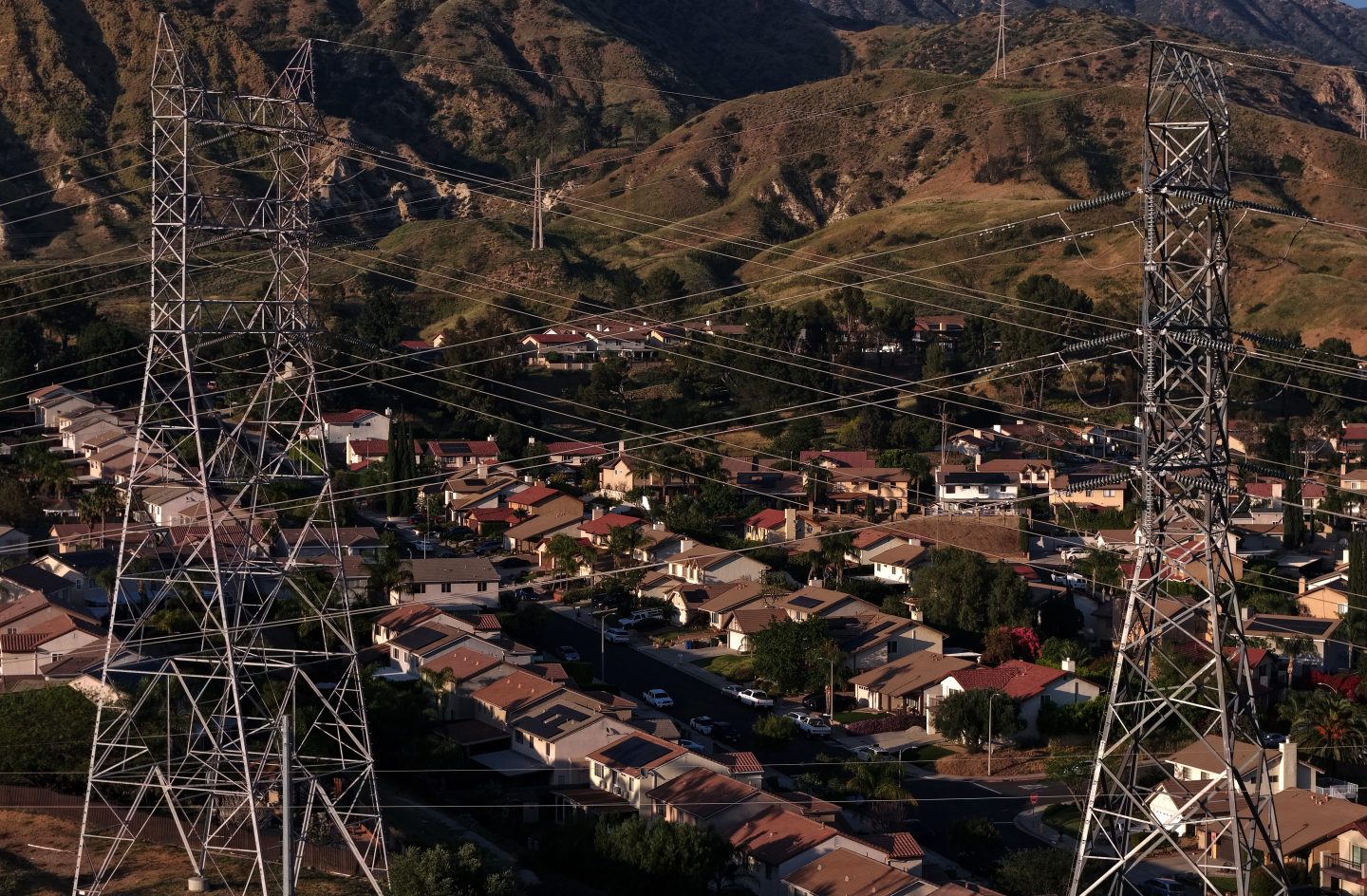
How do you make business decisions with unreliable economic data?
How do you make business decisions with unreliable economic data?Kevin Frayer—Getty Images

U.S. President Donald Trump’s decision to fire the federal government’s lead statistician after a disappointing jobs report spurred warnings over the potential fallout if the country’s economic data—considered the gold standard in measurement—can no longer be trusted. There are other examples of countries with unreliable and politicized economic data—and some point to China as a cautionary tale.

Recommended Video

Officially, China’s economy grew by 5% last year, according to the country’s National Bureau of Statistics. Some independent estimates, like those of Goldman Sachs and Citigroup, match China’s official figure. Other estimates are significantly lower, like the 2.8% GDP growth calculated by the Rhodium Group, a China-focused research firm. 

Statistical measures can change or disappear without explanation. In 2023, after a surge in youth unemployment to a high of 21.3%, China’s statistics bureau abruptly stopped publishing the data, citing a need to tweak the measurement. A few months later, the number returned, several percentage points lower after excluding students from the measurement. (Youth unemployment stayed high, despite the change: Just under 18% of 16- to 24-year-olds were unemployed in July.)

Then there’s pressure to follow the official narrative on the economy. During the depths of China’s recent economic slowdown, economists and analysts reportedly faced pressure to tone down their negative analysis. “The party is really intolerant of economic instability, and so everything gets smoothed,” says Derek Scissors, a senior fellow at the American Enterprise Institute (AEI). 

But why is China’s economic data collection so problematic? What do economists and investors use instead? 

China’s data struggles

Collecting economic data is really hard, particularly for a large and emerging economy like China. “The quality and breadth of U.S. economic statistics is simply on another planet compared to China’s data,” laments Christopher Beddor, deputy China research director at Gavekal. “It’s striking how little progress there has been in some areas over the past 20 years,” particularly in measuring services and household consumption. 

China’s data collection also doesn’t match how other countries measure economic data, in part owing to its history as a centrally planned economy. Scissors, who is also chief economist at research firm China Beige Book, suggests that many transactions within state-owned companies, such as between parents and subsidiaries, are done on a “nonmarket” basis. 

“In terms of the surveys, sometimes they refuse to ask the right questions. They don’t have an unemployment survey that asks about unemployment,” he adds. 

Dan Wang, China director for the Eurasia Group, points out that there are incentives to manipulate the data that goes into national surveys. “Businesses underreport to avoid taxes, local officials overreport to get promotions,” she notes. “This problem has been aggravated in this economic downturn.”

Top officials recognize that there’s a problem. Late last year, China approved legislation that would hold local governments accountable for statistical fraud. 

So how do investors make decisions?

China’s unreliable numbers have created a “cottage industry of alternative measures of GDP growth for investors,” says Beddor of Gavekal. “But none have really earned an industry consensus as superior or truly reliable.”

In 2010 The Economist formulated what it called the “Li Keqiang index,” named after China’s former premier, which tracked railway cargo volume, electricity consumption, and bank loans. The index was based on a leaked U.S. State Department memo which claimed the premier—then a provincial government official—used those indicators as a better way to track China’s economy than more unreliable official data, particularly at the provincial level. 

“I used to rely on electricity,” says Alicia García-Herrero, the chief Asia-Pacific economist at investment bank Natixis, though she adds that there’s now more data available. Analysts today look to data points like sales of consumer durables or the popularity of luxury goods to measure things like consumption. 

For Beddor, the answer is to “look at as many data series as you can and try to form a narrative of what’s happening in the economy.” 

Some data points can be cross-checked with other sources, including those outside China, when it comes to trade statistics. And China’s private sector can also be a source of insight into how the economy is doing, even if those conclusions don’t come with a hard number. “If you talk to many businesses, you get a very good sense of what’s going on,” says García-Herrero.

Unreliable data can also be valuable as a signal of what Beijing is thinking, Wang says. “Even if governments overreport GDP growth, markets will take it as anticipating policy support to reach the target,” she explains. 

“Making decisions on China is about policy signals. It’s not a market-driven economy. State decisions on policies are the most important thing to follow,” Wang says.

What about the U.S.?

If U.S. economic data starts to look a little more unreliable, that’s likely to make businesses more unwilling to make large spending decisions. “When you’re facing that kind of uncertainty, it’s harder to make major economic decisions,” Scissors of AEI says. Companies may hold back on committing to new investments if they’re not confident that “conditions are ripe,” he warns. “You will get less economic activity.”

That’s certainly been the case in China. Both domestic and foreign businesses held back on investing in China owing to concerns that the country’s economy was worse than official numbers suggested, with some analysts even calling the country “uninvestable.” 

Beijing’s promise to stimulate the economy and a DeepSeek–fueled AI boom have reversed sentiment this year—and Chinese market indexes like the Hang Seng have outperformed the S&P 500.

But the country’s economy is still struggling. Retail sales in July rose by 3.7%, below consensus expectations. Industrial production also rose at its slowest rate—5.7%—since last November. “We expect added policy support to lift domestic demand to be rolled out soon, and faster implementation of announced policies will also be needed to help stabilize the growth in H2,” HSBC economists wrote earlier this week.


Join us at the Fortune Workplace Innovation Summit May 19–20, 2026, in Atlanta. The next era of workplace innovation is here—and the old playbook is being rewritten. At this exclusive, high-energy event, the world’s most innovative leaders will convene to explore how AI, humanity, and strategy converge to redefine, again, the future of work. Register now.
About the Author
Nicholas Gordon
By Nicholas GordonAsia Editor
LinkedIn iconTwitter icon

Nicholas Gordon is an Asia editor based in Hong Kong, where he helps to drive Fortune’s coverage of Asian business and economics news.

See full bioRight Arrow Button Icon

Latest in Economy

Finance
Lorem ipsum dolor sit amet, consectetur adipiscing elit, sed do eiusmod tempor incididunt ut labore et dolore magna aliqua. Ut enim ad minim veniam
By Fortune Editors
October 20, 2025
Finance
Lorem ipsum dolor sit amet, consectetur adipiscing elit, sed do eiusmod tempor incididunt ut labore et dolore magna aliqua. Ut enim ad minim veniam
By Fortune Editors
October 20, 2025
Finance
Lorem ipsum dolor sit amet, consectetur adipiscing elit, sed do eiusmod tempor incididunt ut labore et dolore magna aliqua. Ut enim ad minim veniam
By Fortune Editors
October 20, 2025
Finance
Lorem ipsum dolor sit amet, consectetur adipiscing elit, sed do eiusmod tempor incididunt ut labore et dolore magna aliqua. Ut enim ad minim veniam
By Fortune Editors
October 20, 2025
Finance
Lorem ipsum dolor sit amet, consectetur adipiscing elit, sed do eiusmod tempor incididunt ut labore et dolore magna aliqua. Ut enim ad minim veniam
By Fortune Editors
October 20, 2025
Finance
Lorem ipsum dolor sit amet, consectetur adipiscing elit, sed do eiusmod tempor incididunt ut labore et dolore magna aliqua. Ut enim ad minim veniam
By Fortune Editors
October 20, 2025

Most Popular

Finance
Lorem ipsum dolor sit amet, consectetur adipiscing elit, sed do eiusmod tempor incididunt ut labore et dolore magna aliqua. Ut enim ad minim veniam
By Fortune Editors
October 20, 2025
Finance
Lorem ipsum dolor sit amet, consectetur adipiscing elit, sed do eiusmod tempor incididunt ut labore et dolore magna aliqua. Ut enim ad minim veniam
By Fortune Editors
October 20, 2025
Finance
Lorem ipsum dolor sit amet, consectetur adipiscing elit, sed do eiusmod tempor incididunt ut labore et dolore magna aliqua. Ut enim ad minim veniam
By Fortune Editors
October 20, 2025
Finance
Lorem ipsum dolor sit amet, consectetur adipiscing elit, sed do eiusmod tempor incididunt ut labore et dolore magna aliqua. Ut enim ad minim veniam
By Fortune Editors
October 20, 2025
Finance
Lorem ipsum dolor sit amet, consectetur adipiscing elit, sed do eiusmod tempor incididunt ut labore et dolore magna aliqua. Ut enim ad minim veniam
By Fortune Editors
October 20, 2025
Finance
Lorem ipsum dolor sit amet, consectetur adipiscing elit, sed do eiusmod tempor incididunt ut labore et dolore magna aliqua. Ut enim ad minim veniam
By Fortune Editors
October 20, 2025
Rankings
  • 100 Best Companies
  • Fortune 500
  • Global 500
  • Fortune 500 Europe
  • Most Powerful Women
  • Future 50
  • World’s Most Admired Companies
  • See All Rankings
Sections
  • Finance
  • Leadership
  • Success
  • Tech
  • Asia
  • Europe
  • Environment
  • Fortune Crypto
  • Health
  • Retail
  • Lifestyle
  • Politics
  • Newsletters
  • Magazine
  • Features
  • Commentary
  • Mpw
  • CEO Initiative
  • Conferences
  • Personal Finance
  • Education
Customer Support
  • Frequently Asked Questions
  • Customer Service Portal
  • Privacy Policy
  • Terms Of Use
  • Single Issues For Purchase
  • International Print
Commercial Services
  • Advertising
  • Fortune Brand Studio
  • Fortune Analytics
  • Fortune Conferences
  • Business Development
About Us
  • About Us
  • Editorial Calendar
  • Press Center
  • Work At Fortune
  • Diversity And Inclusion
  • Terms And Conditions
  • Site Map
  • Facebook icon
  • Twitter icon
  • LinkedIn icon
  • Instagram icon
  • Pinterest icon

Latest in Economy

CommentaryLetter from London
I have been coming to Davos for 16 years. I have never seen such a crisis in U.S./European relations 
By Kamal AhmedJanuary 19, 2026
8 hours ago
posnett
Commentaryinvestment banking
Goldman investment banking co-head Kim Posnett on the year ahead, from an IPO ‘mega-cycle’ to another big year for M&A to AI’s ‘horizontal disruption’
By Nick LichtenbergJanuary 19, 2026
9 hours ago
dusek
CommentaryDavos
Geoeconomics is the new geopolitics: Playing offense in the new economy
By Mirek DusekJanuary 19, 2026
9 hours ago
Asiademographics
China birth rate hits lowest since 1949 in blow to baby drive
By BloombergJanuary 19, 2026
9 hours ago
EconomyDebt
Dollar sinks as Trump’s new tariffs raise fears about U.S. debt and reserve currency status. ‘When it’s lost, economic collapse will follow’
By Jason MaJanuary 18, 2026
18 hours ago
PoliticsRussia
Moscow cheers NATO crisis as the Ukraine war stifles Russia’s economy, forcing companies to use 4-day weeks and lay off workers
By Jason MaJanuary 18, 2026
21 hours ago

Most Popular

placeholder alt text
Investing
Stocks sell off globally as traders digest Trump message saying he wants Greenland because ‘your Country decided not to give me the Nobel’ 
By Jim EdwardsJanuary 19, 2026
7 hours ago
placeholder alt text
Economy
Making billionaires illegal by taxing their wealth wouldn’t even fund the government for a year, budget expert says
By Nick LichtenbergJanuary 17, 2026
2 days ago
placeholder alt text
Economy
3 things Trump did in 24 hours to show that he's in control of American business
By Eva RoytburgJanuary 8, 2026
11 days ago
placeholder alt text
Politics
Army readies 1,500 paratroopers specializing in arctic operations for possible deployment to Minnesota if Trump invokes Insurrection Act
By Konstantin Toropin and The Associated PressJanuary 18, 2026
23 hours ago
placeholder alt text
AI
Ford CEO warns there's a dearth of blue-collar workers able to construct AI data centers and operate factories: 'Nothing to backfill the ambition'
By Sasha RogelbergJanuary 18, 2026
1 day ago
placeholder alt text
Economy
National debt is already killing the American Dream, says top economist—and it might push the U.S. into an outright depression
By Eleanor PringleJanuary 18, 2026
1 day ago

© 2025 Fortune Media IP Limited. All Rights Reserved. Use of this site constitutes acceptance of our Terms of Use and Privacy Policy | CA Notice at Collection and Privacy Notice | Do Not Sell/Share My Personal Information
FORTUNE is a trademark of Fortune Media IP Limited, registered in the U.S. and other countries. FORTUNE may receive compensation for some links to products and services on this website. Offers may be subject to change without notice.