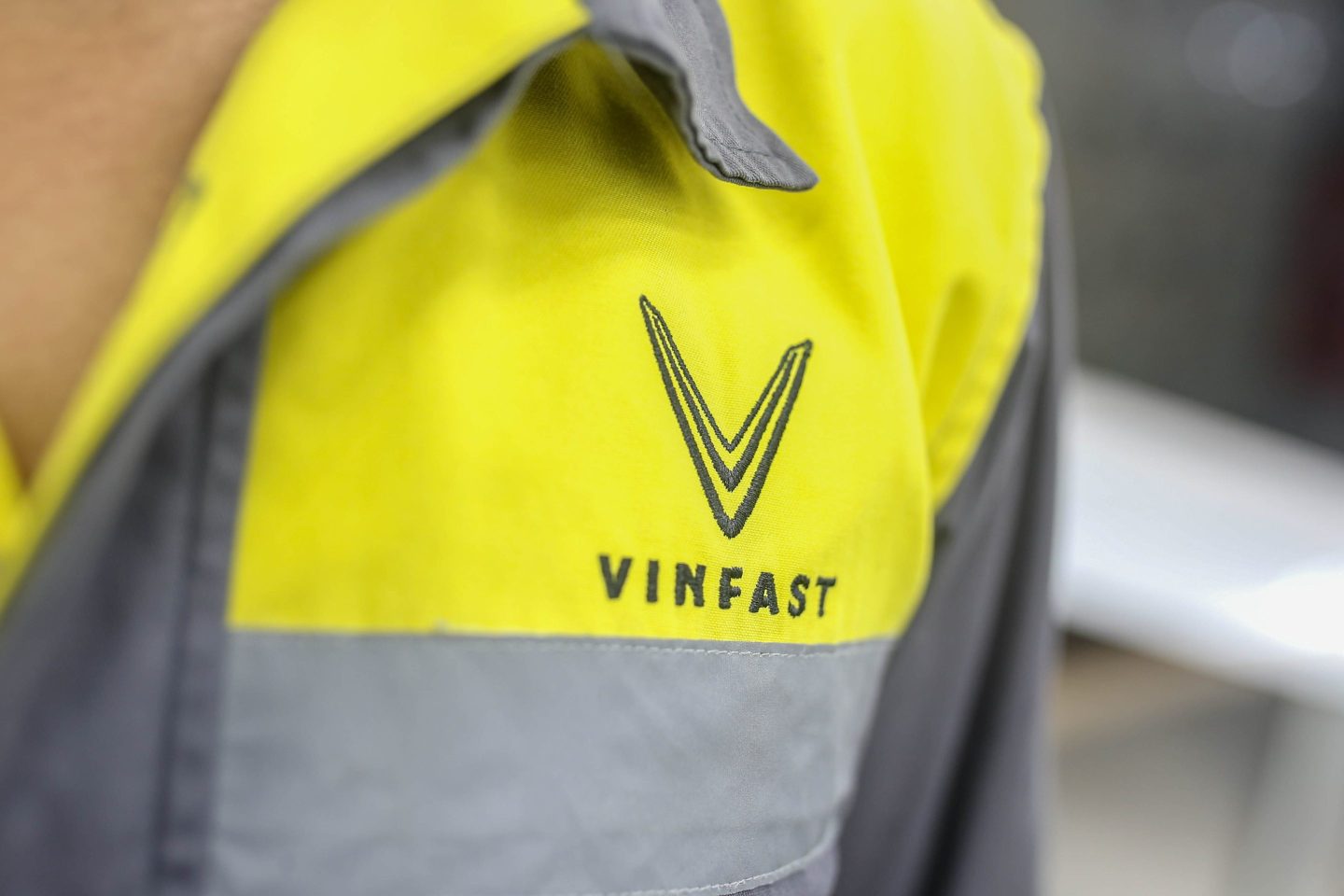
Vietnam’s Vinfast began production at a $500 million electric vehicle plant in southern India’s Tamil Nadu state on Monday, part of a planned $2 billion investment in India and a broader expansion across Asia.
The factory in Thoothukudi will initially make 50,000 electric vehicles annually, with room to triple output to 150,000 cars. Given its proximity to a major port in one of India’s most industrialized states, Vinfast hopes it will be a hub for future exports to the region. It says the factory will create more than 3,000 local jobs.
The Vietnamese company says it scouted 15 locations across six Indian states before choosing Tamil Nadu. It’s the center of India’s auto industry, with strong manufacturing, skilled workers, good infrastructure, and a reliable supply chain, according to Tamil Nadu’s Industries Minister T.R.B. Raaja.
“This investment will lead to an entirely new industrial cluster in south Tamil Nadu, and more clusters is what India needs to emerge as a global manufacturing hub,” he said.
VinFast Asia CEO Pham Sanh Chau said the company has aspirations to export cars across the region and it hopes to turn the new factory into an export hub.
The new factory could also mark the start of an effort to bring other parts of the Vingroup empire to India. The sprawling conglomerate, founded by Vietnam’s richest man Pham Nhat Vuong, began as an instant noodle company in Ukraine in the 1990s and now spans real estate, hospitals, schools and more.
Chau said Tamil Nadu Chief Minister M.K. Stalin had invited the company to “invest in a big way” across sectors like green energy, smart cities and tourism, and said that the chief minister had “promised he will do all what is necessary for us to move the whole ecosystem here.”
A strategic pivot to Asia
Vinfast’s foray into India reflects a broader shift in strategy.
The company increasingly is focusing on Asian markets after struggling to gain traction in the U.S. and Europe. It broke ground last year on a $200 million EV assembly plant in Indonesia, where it plans to make 50,000 cars annually. It’s also expanding in Thailand and the Philippines.
Vinfast sold nearly 97,000 vehicles in 2024. That’s triple what it sold the year before, but only about 10% of those sales were outside Vietnam. As it eyes markets in Asia, it hopes the factory in India will be a base for exports to South Asian countries like Nepal and Sri Lanka and also to countries in the Middle East and Africa.
India is the world’s third-largest car market by number of vehicles sold. It presents an enticing mix: A fast growing economy, rising adoption of EVs, supportive government policies and a rare market where players have yet to completely dominate EV sales.
“It is a market that no automaker in the world can ignore,” said Ishan Raghav, managing editor of the Indian car magazine autoX.
A growing EV market in India
EV growth in India has been led by two and three-wheelers that accounted for 86% of the over six million EVs sold last year.
Sales of four wheel passenger EVs made up only 2.5% of all car sales in India last year, but they have been surging, jumping to more than 110,000 in 2024 from just 1,841 in 2019. The government aims to have EVs account for a third of all passenger vehicle sales by 2030.
“The electric car story has started (in India) only three or four years ago,” said Charith Konda, an energy specialist who looks at India’s transport and clean energy sectors for the think-tank Institute for Energy Economics and Financial Analysis or IEEFA. New cars that “look great on the road,” with better batteries, quick charging and longer driving ranges are driving the sector’s rapid growth, he said.
The shift to EVs is mostly powered by Indian automakers, but Vinfast plans to break into the market later this year with its VF6 and VF7 SUV models, which are designed for India.
The company chose the VF7 for its India launch—unlike the models introduced in the U.S., Canada, the EU, or Southeast Asia—to position itself as a premium global brand while keeping the price affordable, added Chau, the Vinfast Asia CEO.
Can Vinfast succeed where Chinese EVs faltered?
Chinese EV brands that dominate in countries like Thailand and Brazil have found India more challenging.
After border clashes with China in 2020, India blocked companies like BYD from building their own factories. Some then turned to partnerships. China’s SAIC, owner of MG Motor, has joined with India’s JSW Group. Their MG Windsor, a five-seater, sold 30,000 units in just nine months, nibbling Tata Motors’ 70% EV market share down to about 50%.
Tata was the first local automaker to court mass-market consumers with EVs. Its 2020 launch of the electric Nexon, a small SUV, became India’s first major EV car success.
Vinfast lacks the geopolitical baggage of its larger Chinese rivals and will also benefit from incentives like lower land prices and tax breaks for building locally in India. That’s part of India’s policy of discouraging imports with high import duties to help encourage local manufacturing and create more jobs.
The push for onshore manufacturing is a concern also for Tesla, which launched its Model Y in India last month at a price of nearly $80,000, compared to about $44,990 in the U.S without a federal tax credit.
“India’s stand is very clear. We do not want to import manufactured cars, even Teslas. Whether it’s Tesla or Chinese cars, they are taxed heavily,” added Konda.
An uphill battle in a tough market
The road ahead remains daunting. India’s EV market is crowded with well-entrenched players like Tata Motors and Mahindra, which dominate the more affordable segment, while Hyundai, MG Motors and luxury brands like Mercedes-Benz and Audi compete at high price points.
Indians tend to purchase EVs as second cars used for driving within the city, since the infrastructure for charging elsewhere can be undependable. Vinfast will need to win over India’s cost-sensitive and conservative drivers with a reputation for quality batteries and services while keeping prices low, said Vivek Gulia, co-founder of JMK Research.
“Initially, people will be apprehensive,” he said.
Vinfast says it plans to set up showrooms and service centers across India, working with local companies for charging and repairs, and cutting costs by recycling batteries and making key parts like powertrains and battery packs in the country.
Chau added that after a customer clinic in September 2024 and input from top engineers in Vietnam, the company upgraded its feature list to better match Indian customer expectations.
Scale will be key. VinFast has signed agreements to establish 32 dealerships across 27 Indian cities. Hyundai has 1,300 places for Indians to buy their cars. Building a brand in India takes time—Hyundai, for instance, pulled it off over decades, helped by an early endorsement from Bollywood superstar Shah Rukh Khan.
VinFast can succeed if it can get its pricing right and earn the trust of customers, Gulia said, “Then they can actually do really good.”