• Home
  • Latest
  • Fortune 500
  • Finance
  • Tech
  • Leadership
  • Lifestyle
  • Rankings
  • Multimedia
PoliticsTariffs and trade
Asia

Who will Trump’s trade war hit next? Fears of a ‘tariff cascade’ threaten global trade as U.S. allies gripe about ‘economic self-harm’

Nicholas Gordon
By
Nicholas Gordon
Nicholas Gordon
Asia Editor
Down Arrow Button Icon
Nicholas Gordon
By
Nicholas Gordon
Nicholas Gordon
Asia Editor
Down Arrow Button Icon
March 12, 2025, 9:30 AM ET
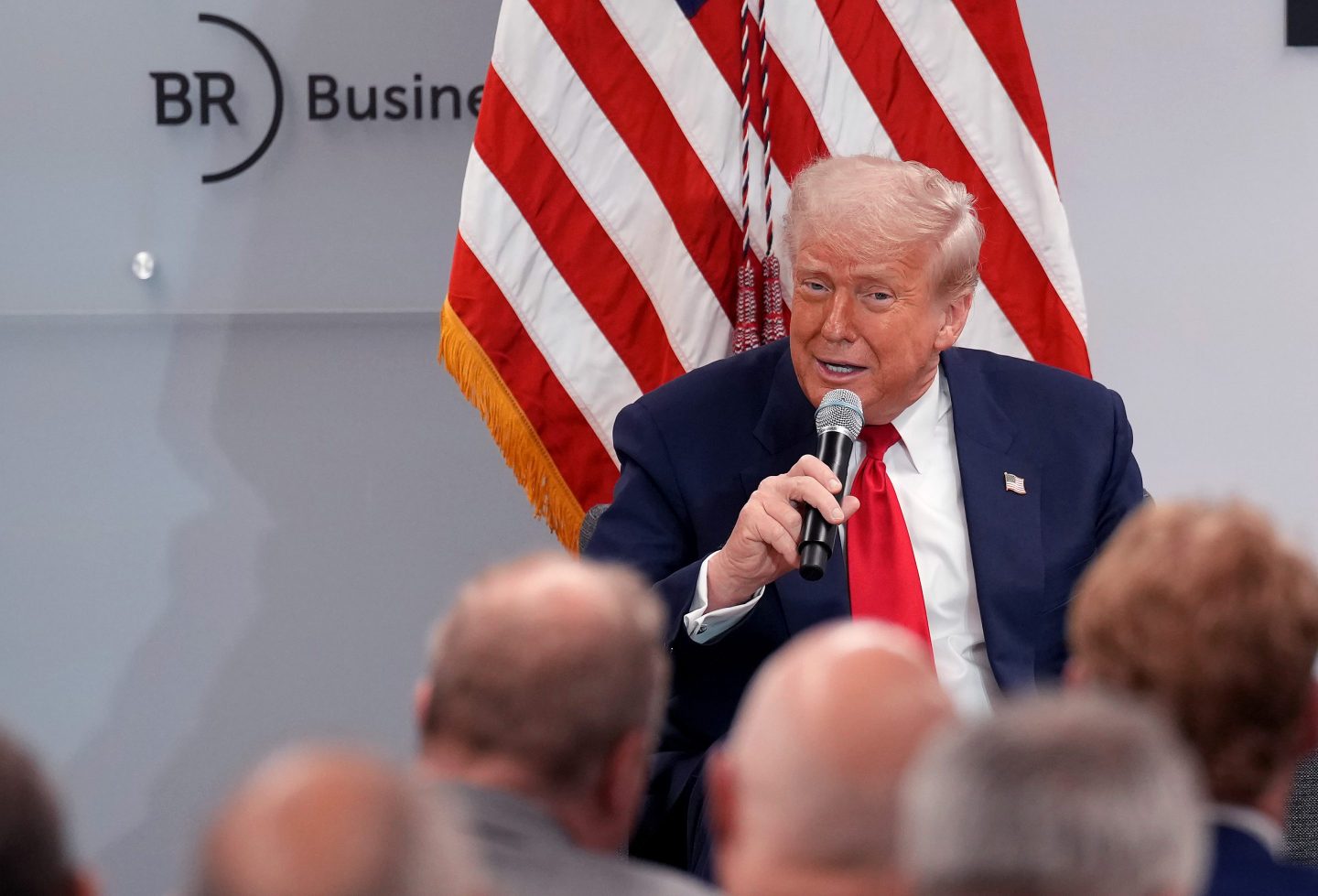
The Trump administration still plans to impose reciprocal tariffs on a country-by-country basis in April.
The Trump administration still plans to impose reciprocal tariffs on a country-by-country basis in April.Andrew Harnik—Getty Images

U.S. President Donald Trump’s new tariffs on steel and aluminum came into effect today, the latest front in a growing trade war that’s rocked markets and disappointed allies.

Recommended Video

U.S. steel and aluminum imports are now subject to a 25% tariff, and allies like Australia, which had hoped to get exemptions, were disappointed. Australian Prime Minister Anthony Albanese blasted the tariffs as “a form of economic self-harm” and “against the spirit of our two nations’ enduring friendship.”

The White House’s response? If Australian steelmakers “want to be exempted, they should consider moving steel manufacturing here,” press secretary Karoline Leavitt told Australian media. 

That’s leaving governments around the world to wonder what else is coming—and which country might get hit next with a White House tariff broadside. The Trump administration still plans to impose reciprocal tariffs on a country-by-country basis in April, based on what officials deem to be tariff- and non-tariff barriers to U.S. trade.
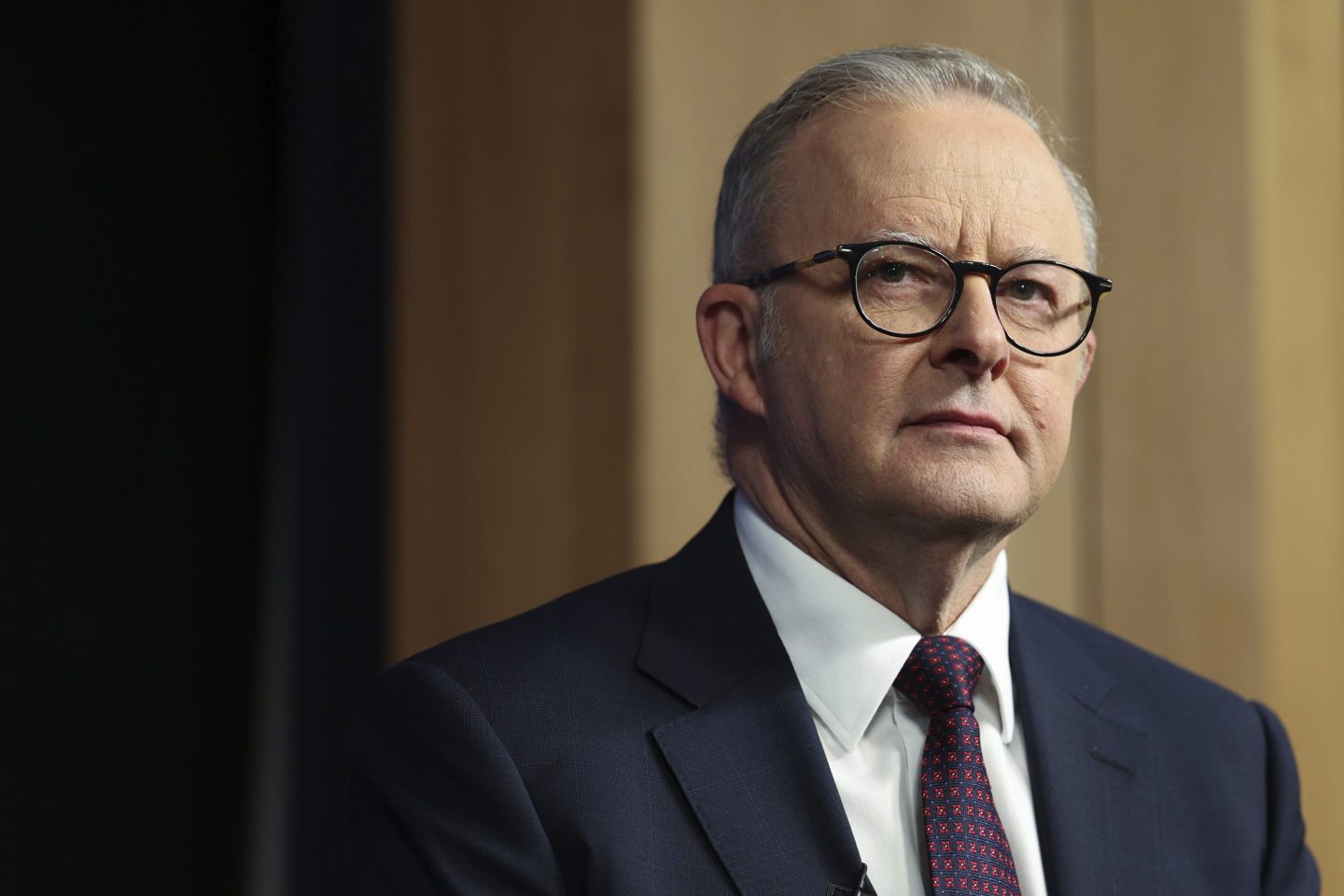
Australian Prime Minister Anthony Albanese blasted Trump’s steel tariffs as “economic self-harm”—after his country failed to get an exemption.
Alex Ellinghausen—Sydney Morning Herald/Getty Images

“Many of us here in Asia watch with anxiety President Donald Trump’s tariffs on the U.S.’s largest trading partners, and his plans for more,” Singapore Deputy Prime Minister Gan Kim Yong told the audience at CNBC’s Converge Live event on Wednesday. A revived trade war, with countries slapping tariffs and retaliatory measures back and forth, will “significantly set back the growth of the global economy,” he said. 

U.S. markets have been battered since Trump started to roll out his tariff plans. The S&P 500 is down 5.1% for the year, and erased all its gains from the past six months.

Markets in Asian U.S. allies have also been hit. Japan’s Nikkei 225 is down 6% since the beginning of the year, while Australia’s S&P/ASX 200 is down 5.1%. Indexes in India—once seen as a potential beneficiary of U.S.-China conflict—are also down more than 5% for the year.

Stocks in one Asian market are rallying, however. Hong Kong’s Hang Seng Index is up over 20% for the year, as investors reassess China’s growth prospects in the wake of DeepSeek’s AI models and the promise of more government economic support.

What tariffs has Trump imposed so far?

In addition to the new taxes on steel and aluminum, the U.S. has also imposed tariffs of 25% on imports from Canada and Mexico, as well as an additional 20% tariff on imports from China. 

On Tuesday, Trump angrily proposed raising steel and aluminum tariffs on Canada to 50%, only to rescind the threat hours later. 

Canada, China, Mexico, and the European Union have all imposed, or promised to impose, retaliatory tariffs on the U.S. 

China’s retaliatory tariffs on U.S. farm products—which can reach up to 15% on goods like cotton, soybeans, and chicken—went into effect on Monday. Beijing has also imposed retaliatory tariffs on U.S. oil, gas, and agricultural machinery. 

Who’s next?

In a Tuesday press conference, the White House pointed to several instances of countries that impose relatively higher tariffs, alleging that India charges a 150% tariff on U.S. alcohol, and that Japan imposes a 700% tariff on imported rice. (Kenichi Kawasaki, a professor at Japan’s National Graduate Institute for Policy Studies, suggested to Bloomberg that the country’s rice tariffs were closer to 200%.)

“All [Trump] is asking for at the end of the day are fair and balanced trade practices,” Leavitt told reporters. 

Economists worry that countries that maintain large trade surpluses with the U.S. could get hit next. Several countries benefited from Trump’s first trade war during his previous term when Chinese manufacturing shifted their supply chains to avoid the U.S. president’s tariffs. 

Vietnam, which derives almost a quarter of its GDP from U.S. exports, is high on economists’ list of countries at risk from Trump tariffs. The Southeast Asian country, now a hub for electronics manufacturing, had the fourth-largest trade surplus with the U.S., behind China, Mexico, and the European Union. 

What about China?

The Trump trade war poses a challenge to Beijing, which is trying to bolster a struggling domestic economy. China’s economy grew by 5% last year, thanks primarily to booming exports. But tariffs could upend that growth engine, and force Beijing to look inward for growth.

Still, China doesn’t rely quite as much on the U.S. as it used to. Writing on Feb. 21, HSBC chief Asia economist Frederic Neumann argued that U.S. tariffs would prove “a nuisance, to be sure, but hardly an existential issue.” U.S. exports, including reexports through other markets, only contribute about 2.5% of China’s GDP.

The real risk is if other countries follow suit, and impose their own tariffs on China. HSBC’s Neumann noted that exports to the “rest of the world” make up 12.5% of GDP.
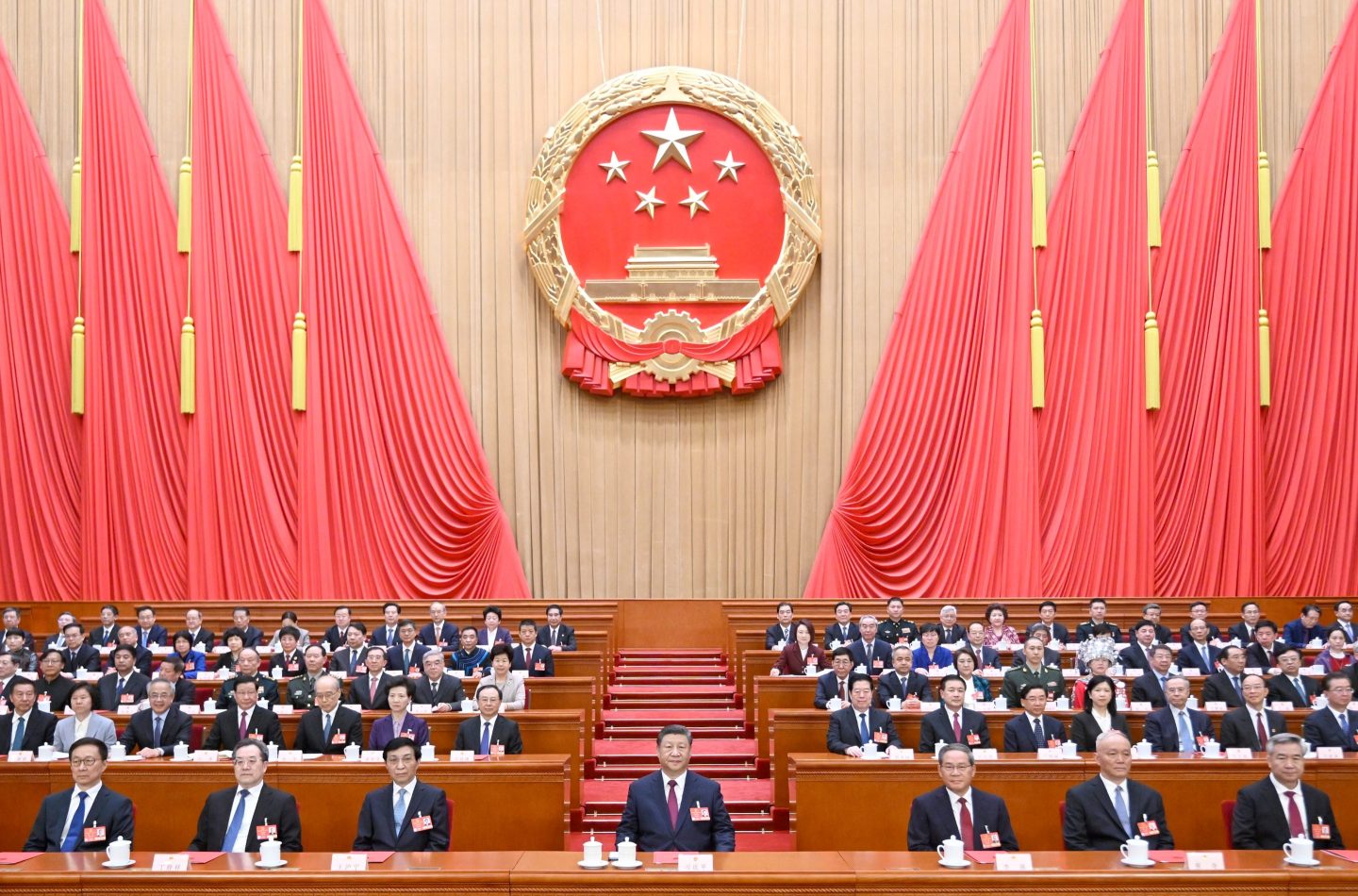
Chinese President Xi Jinping and other leaders attend the 14th National People’s Congress in Beijing, March 11, 2025.
Li Xueren—Xinhua/Getty Images

Even if they might not go as far as the U.S.’s blanket tariffs on Chinese imports, governments are already considering barriers to hold off a flood of Chinese goods.

Last August, Indonesia reintroduced tariffs to protect its textile sector from cheap foreign clothes, particularly from China. A few months later, Brazil imposed tariffs on a range of Chinese imports, including iron and fiber-optic cables. The European Union and Canada also slapped tariffs on Chinese EVs. 

Tariffs on China have kept rolling in since Trump took office. Vietnam and South Korea both imposed provisional tariffs on Chinese steel in late February. And last week, Mexico President Claudia Sheinbaum also agreed to review tariffs on Chinese imports.

“Against the backdrop of the extraordinary competitiveness of Chinese producers—arguably far more so than during the prior episode of U.S.-China tensions—the risk of a tariff cascade cannot be ignored,” HSBC’s Neumann wrote in February. 

Join us at the Fortune Workplace Innovation Summit May 19–20, 2026, in Atlanta. The next era of workplace innovation is here—and the old playbook is being rewritten. At this exclusive, high-energy event, the world’s most innovative leaders will convene to explore how AI, humanity, and strategy converge to redefine, again, the future of work. Register now.
About the Author
Nicholas Gordon
By Nicholas GordonAsia Editor
LinkedIn iconTwitter icon

Nicholas Gordon is an Asia editor based in Hong Kong, where he helps to drive Fortune’s coverage of Asian business and economics news.

See full bioRight Arrow Button Icon

Latest in Politics

Danish military forces participate in an exercise with hundreds of troops from several European NATO members in the Arctic Ocean in Nuuk, Greenland, Monday, Sept. 15, 2025.
PoliticsDonald Trump
Danish intelligence report warns of U.S. economic leverage and military threat under Trump
By The Associated PressDecember 13, 2025
60 minutes ago
Ukrainian President Volodymyr Zelensky gives a joint press conference in Kyiv, Ukraine in 2023 as European leaders visit the country 18 months after the start of Russia's invasion.
EuropeUkraine invasion
EU indefinitely freezes Russian assets to prevent Hungary and Slovakia from vetoing billions of euros being sent to support Ukraine
By Lorne Cook and The Associated PressDecember 13, 2025
1 hour ago
Spanish Prime Minister Pedro Sánchez often praises the financial and social benefits that immigrants bring to the country.
EuropeSpain
In a continent cracking down on immigration and berated by Trump’s warnings of ‘civilizational erasure,’ Spain embraces migrants
By Suman Naishadham and The Associated PressDecember 13, 2025
1 hour ago
Politicsdavid sacks
Can there be competency without conflict in Washington?
By Alyson ShontellDecember 13, 2025
6 hours ago
PoliticsAffordable Care Act (ACA)
With just days to go before ACA subsidies expire, Congress is about to wrap up its work with no consensus solution in sight
By Kevin Freking, Lisa Mascaro and The Associated PressDecember 13, 2025
7 hours ago
PoliticsDonald Trump
Trump couldn’t insult his way to victory in Indiana redistricting battle. ‘Folks in our state don’t react well to being bullied’
By Thomas Beaumont, Isabella Volmert and The Associated PressDecember 13, 2025
7 hours ago

Most Popular

placeholder alt text
Economy
Tariffs are taxes and they were used to finance the federal government until the 1913 income tax. A top economist breaks it down
By Kent JonesDecember 12, 2025
2 days ago
placeholder alt text
Success
Apple cofounder Ronald Wayne sold his 10% stake for $800 in 1976—today it’d be worth up to $400 billion
By Preston ForeDecember 12, 2025
1 day ago
placeholder alt text
Success
40% of Stanford undergrads receive disability accommodations—but it’s become a college-wide phenomenon as Gen Z try to succeed in the current climate
By Preston ForeDecember 12, 2025
1 day ago
placeholder alt text
Economy
The Fed just ‘Trump-proofed’ itself with a unanimous move to preempt a potential leadership shake-up
By Jason MaDecember 12, 2025
1 day ago
placeholder alt text
Economy
For the first time since Trump’s tariff rollout, import tax revenue has fallen, threatening his lofty plans to slash the $38 trillion national debt
By Sasha RogelbergDecember 12, 2025
1 day ago
placeholder alt text
Success
Apple CEO Tim Cook out-earns the average American’s salary in just 7 hours—to put that into context, he could buy a new $439,000 home in just 2 days
By Emma BurleighDecember 12, 2025
1 day ago
Rankings
  • 100 Best Companies
  • Fortune 500
  • Global 500
  • Fortune 500 Europe
  • Most Powerful Women
  • Future 50
  • World’s Most Admired Companies
  • See All Rankings
Sections
  • Finance
  • Leadership
  • Success
  • Tech
  • Asia
  • Europe
  • Environment
  • Fortune Crypto
  • Health
  • Retail
  • Lifestyle
  • Politics
  • Newsletters
  • Magazine
  • Features
  • Commentary
  • Mpw
  • CEO Initiative
  • Conferences
  • Personal Finance
  • Education
Customer Support
  • Frequently Asked Questions
  • Customer Service Portal
  • Privacy Policy
  • Terms Of Use
  • Single Issues For Purchase
  • International Print
Commercial Services
  • Advertising
  • Fortune Brand Studio
  • Fortune Analytics
  • Fortune Conferences
  • Business Development
About Us
  • About Us
  • Editorial Calendar
  • Press Center
  • Work At Fortune
  • Diversity And Inclusion
  • Terms And Conditions
  • Site Map

© 2025 Fortune Media IP Limited. All Rights Reserved. Use of this site constitutes acceptance of our Terms of Use and Privacy Policy | CA Notice at Collection and Privacy Notice | Do Not Sell/Share My Personal Information
FORTUNE is a trademark of Fortune Media IP Limited, registered in the U.S. and other countries. FORTUNE may receive compensation for some links to products and services on this website. Offers may be subject to change without notice.