• Home
  • Latest
  • Fortune 500
  • Finance
  • Tech
  • Leadership
  • Lifestyle
  • Rankings
  • Multimedia
LeadershipAsia
Asia

What is ASEAN and why is it popping up in Trump cabinet nominee hearings?

By
Lionel Lim
Lionel Lim
Asia Reporter
Down Arrow Button Icon
By
Lionel Lim
Lionel Lim
Asia Reporter
Down Arrow Button Icon
January 16, 2025, 3:41 AM ET
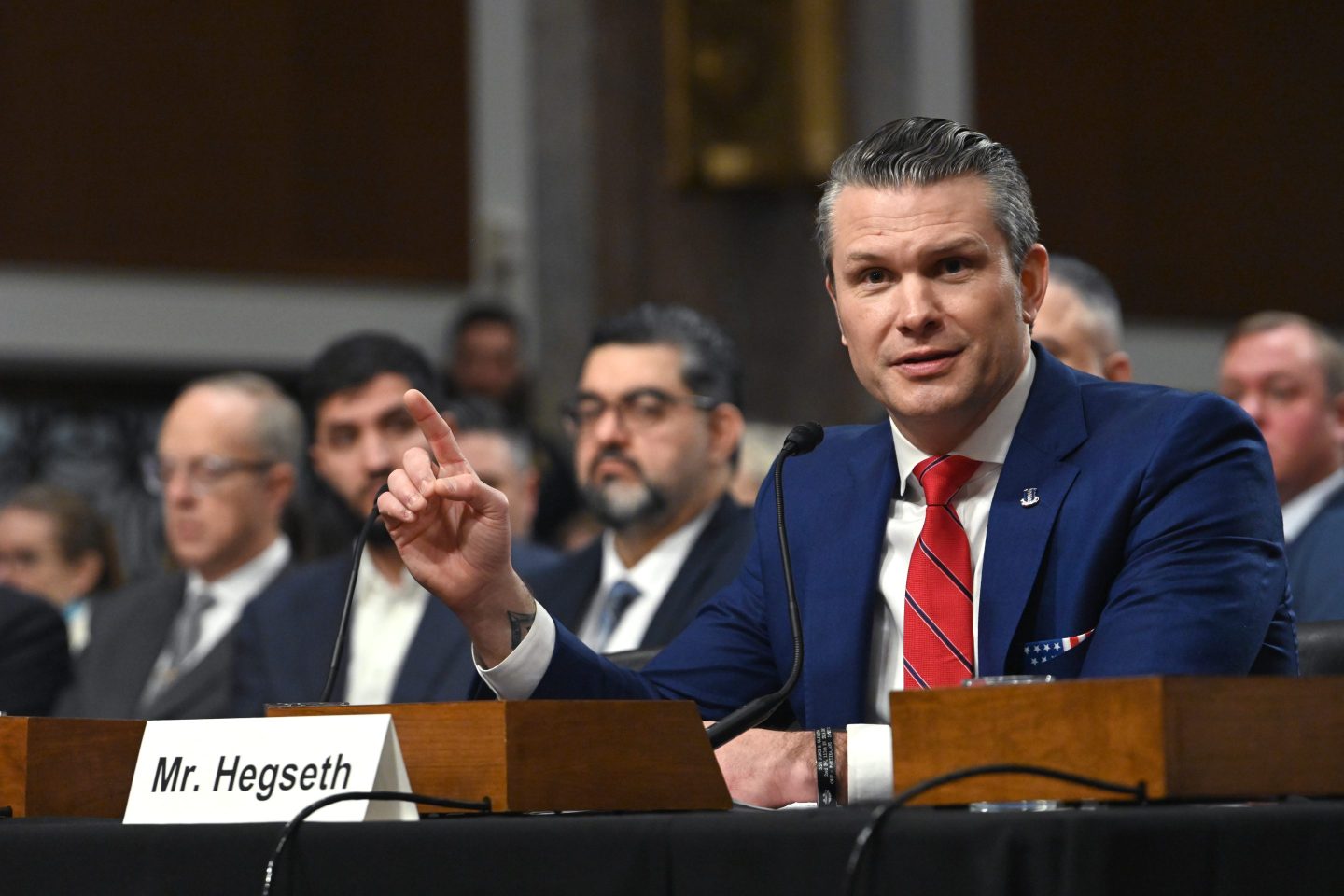
Pete Hegseth speaks during a Senate Armed Services confirmation hearing
Pete Hegseth came out strongly against diversity and inclusion initiatives during his first week as secretary of defense.Chen Mengtong—China News Service/VCG via Getty Images

A 57-year-old political bloc got a rare mention in the halls of the U.S. Senate on Wednesday.

During the confirmation hearing for Pete Hegseth, President-elect Donald Trump’s choice for Secretary of Defense, Sen. Tammy Duckworth asked the nominee for factual details about the Association of Southeast Asian Nations (ASEAN), including its membership and the U.S.’s relationship with member countries.

Hegseth responded that he was unable to name the exact members of ASEAN, yet pointed out U.S. security relationships with South Korea, Japan and Australia—none of which are members of the group in question. (Duckworth suggested Hegseth “do a little homework”)

Still, Duckworth’s question was recognition that Southeast Asia is becoming a key area of geopolitical interest for the U.S., due to its economic dynamism, natural resources, manufacturing strength, and proximity to China, increasingly seen by Washington as the U.S.’s key geopolitical rival. 

So what is ASEAN?

The Association of Southeast Asian Nations, or ASEAN, is an intergovernmental organization that comprises 10 states based in Southeast Asia. Five countries—Thailand, Indonesia, Malaysia, the Philippines, and Singapore—founded the group in 1967. The bloc has since expanded to include Brunei, Vietnam, Laos, Myanmar, and Cambodia. 

The bloc covers a total GDP of around $4.2 trillion and a total population of close to 700 million.

Nominations are now open:
Fortune is now accepting nominations for the 2025 Southeast Asia 500—the definitive ranking of the region’s largest companies. Start your nomination here.

The group aims to promote cooperation among its members on both economic and security matters. Yet in practice, the group has tended to focus on the former. ASEAN prioritizes consensus among its members, and it has proved difficult to reach agreement on security-related issues like ownership of the South China Sea.

ASEAN member states cover the full range of government types and levels of economic development, such as the oil-rich absolute monarchy of Brunei, the multiparty democracy of the Philippines, and the one-party socialism of Laos. 

Why Southeast Asia matters

Economists believe Southeast Asia is poised to become one of the world’s most dynamic economic regions. A little over 200 million Southeast Asians are youths, which means the region is set to enjoy a growing labor force and consumer pool. 

The International Monetary Fund predicts that Southeast Asia’s GDP will expand by 4.7% this year, compared to 4.5% for China and 2.2% for the U.S. The Asian Development Bank and commercial banks like HSBC and Citigroup also have a positive outlook for the region. 

The region has benefited from the reordering of global supply chains. Countries like Vietnam and Malaysia have gained as companies moved manufacturing out of China.

Southeast Asia also has a significant presence in strategic sectors like chips and green energy. Both Malaysia and Singapore have had a semiconductor industry since the late 1960s; Fortune 500 chipmakers like Intel and Micron have well-established manufacturing in these two countries. 

Indonesia sits on vast reserves of natural resources, including nickel, used to make batteries for electric vehicles.

Why the U.S. cares about Southeast Asia

Southeast Asia has also emerged as a zone of geopolitical interest due to its position between major powers like China, the U.S. and India.

ASEAN professes non-alignment as an organization, yet China is the largest trading partner for many ASEAN economies. Chinese companies see Southeast Asia as a key growth driver, as growth in China slows and as geopolitical tensions threaten to close off access to the U.S. economy. 

Several ASEAN nations also maintain strong defense ties with Washington. The U.S. has a mutual defense treaty with the Philippines, and the U.S. military conducts regular training exercises with Thailand, the Philippines and Singapore. Washington and Hanoi, once former enemies, have also expanded their security relationship, and U.S. navy ships have made port calls in Vietnam in recent years. 

Some Southeast Asian nations are locked in a territorial dispute with China regarding the South China Sea, which houses one of the world’s busiest shipping routes. About one-third of all shipping passes through the region. China, the Philippines, Vietnam, and Malaysia all claim part, if not all, of the South China Sea

The U.S. conducts regular “freedom of navigation” exercises through the South China Sea, and has backed the Philippines in its territorial dispute with China. Yet ASEAN’s policy of consensus has limited its ability to act on the issue, in part due to countries like Cambodia, which leans more towards Beijing.  

Join us at the Fortune Workplace Innovation Summit May 19–20, 2026, in Atlanta. The next era of workplace innovation is here—and the old playbook is being rewritten. At this exclusive, high-energy event, the world’s most innovative leaders will convene to explore how AI, humanity, and strategy converge to redefine, again, the future of work. Register now.
About the Author
By Lionel LimAsia Reporter
LinkedIn icon

Lionel Lim is a Singapore-based reporter covering the Asia-Pacific region.

See full bioRight Arrow Button Icon

Latest in Leadership

student
CommentaryEducation
International students skipped campus this fall — and local economies lost $1 billion because of it
By Bjorn MarkesonDecember 10, 2025
48 minutes ago
NewslettersCIO Intelligence
Inside tractor maker CNH’s push to bring more artificial intelligence to the farm
By John KellDecember 10, 2025
3 hours ago
Hillary Super at the 2025 Victoria's Secret Fashion Show held at Steiner Studios on October 15, 2025 in New York, New York.
NewslettersCEO Daily
Activist investors are disproportionately targeting female CEOs—and it’s costing corporate America dearly
By Phil WahbaDecember 10, 2025
4 hours ago
Zhenghua Yang
SuccessSmall Business
At 18, doctors gave him three hours to live. He played video games from his hospital bed—and now, he’s built a $10 million-a-year video game studio
By Preston ForeDecember 10, 2025
5 hours ago
AsiaCoupang
Coupang CEO resigns over historic South Korean data breach
By Yoolim Lee and BloombergDecember 10, 2025
7 hours ago
Databricks CEO speaking on stage.
AIBrainstorm AI
Databricks CEO Ali Ghodsi says his company will be worth $1 trillion by doing these three things
By Beatrice NolanDecember 9, 2025
14 hours ago

Most Popular

placeholder alt text
Economy
‘Fodder for a recession’: Top economist Mark Zandi warns about so many Americans ‘already living on the financial edge’ in a K-shaped economy 
By Eva RoytburgDecember 9, 2025
17 hours ago
placeholder alt text
Success
When David Ellison was 13, his billionaire father Larry bought him a plane. He competed in air shows before leaving it to become a Hollywood executive
By Dave SmithDecember 9, 2025
1 day ago
placeholder alt text
Banking
Jamie Dimon taps Jeff Bezos, Michael Dell, and Ford CEO Jim Farley to advise JPMorgan's $1.5 trillion national security initiative
By Nino PaoliDecember 9, 2025
19 hours ago
placeholder alt text
Uncategorized
Transforming customer support through intelligent AI operations
By Lauren ChomiukNovember 26, 2025
14 days ago
placeholder alt text
Success
Even the man behind ChatGPT, OpenAI CEO Sam Altman, is worried about the ‘rate of change that’s happening in the world right now’ thanks to AI
By Preston ForeDecember 9, 2025
22 hours ago
placeholder alt text
Economy
The 'forever layoffs' era hits a recession trigger as corporates sack 1.1 million workers through November
By Nick Lichtenberg and Eva RoytburgDecember 9, 2025
24 hours ago
Rankings
  • 100 Best Companies
  • Fortune 500
  • Global 500
  • Fortune 500 Europe
  • Most Powerful Women
  • Future 50
  • World’s Most Admired Companies
  • See All Rankings
Sections
  • Finance
  • Leadership
  • Success
  • Tech
  • Asia
  • Europe
  • Environment
  • Fortune Crypto
  • Health
  • Retail
  • Lifestyle
  • Politics
  • Newsletters
  • Magazine
  • Features
  • Commentary
  • Mpw
  • CEO Initiative
  • Conferences
  • Personal Finance
  • Education
Customer Support
  • Frequently Asked Questions
  • Customer Service Portal
  • Privacy Policy
  • Terms Of Use
  • Single Issues For Purchase
  • International Print
Commercial Services
  • Advertising
  • Fortune Brand Studio
  • Fortune Analytics
  • Fortune Conferences
  • Business Development
About Us
  • About Us
  • Editorial Calendar
  • Press Center
  • Work At Fortune
  • Diversity And Inclusion
  • Terms And Conditions
  • Site Map

© 2025 Fortune Media IP Limited. All Rights Reserved. Use of this site constitutes acceptance of our Terms of Use and Privacy Policy | CA Notice at Collection and Privacy Notice | Do Not Sell/Share My Personal Information
FORTUNE is a trademark of Fortune Media IP Limited, registered in the U.S. and other countries. FORTUNE may receive compensation for some links to products and services on this website. Offers may be subject to change without notice.