• Home
  • Latest
  • Fortune 500
  • Finance
  • Tech
  • Leadership
  • Lifestyle
  • Rankings
  • Multimedia
TechJapan
Asia

Japan lost its early lead in chips to companies in Korea and Taiwan. Now a new TSMC project could lead the way to ‘a renaissance of semiconductors’

By
Lionel Lim
Lionel Lim
Asia Reporter
Down Arrow Button Icon
By
Lionel Lim
Lionel Lim
Asia Reporter
Down Arrow Button Icon
March 2, 2024, 4:00 PM ET
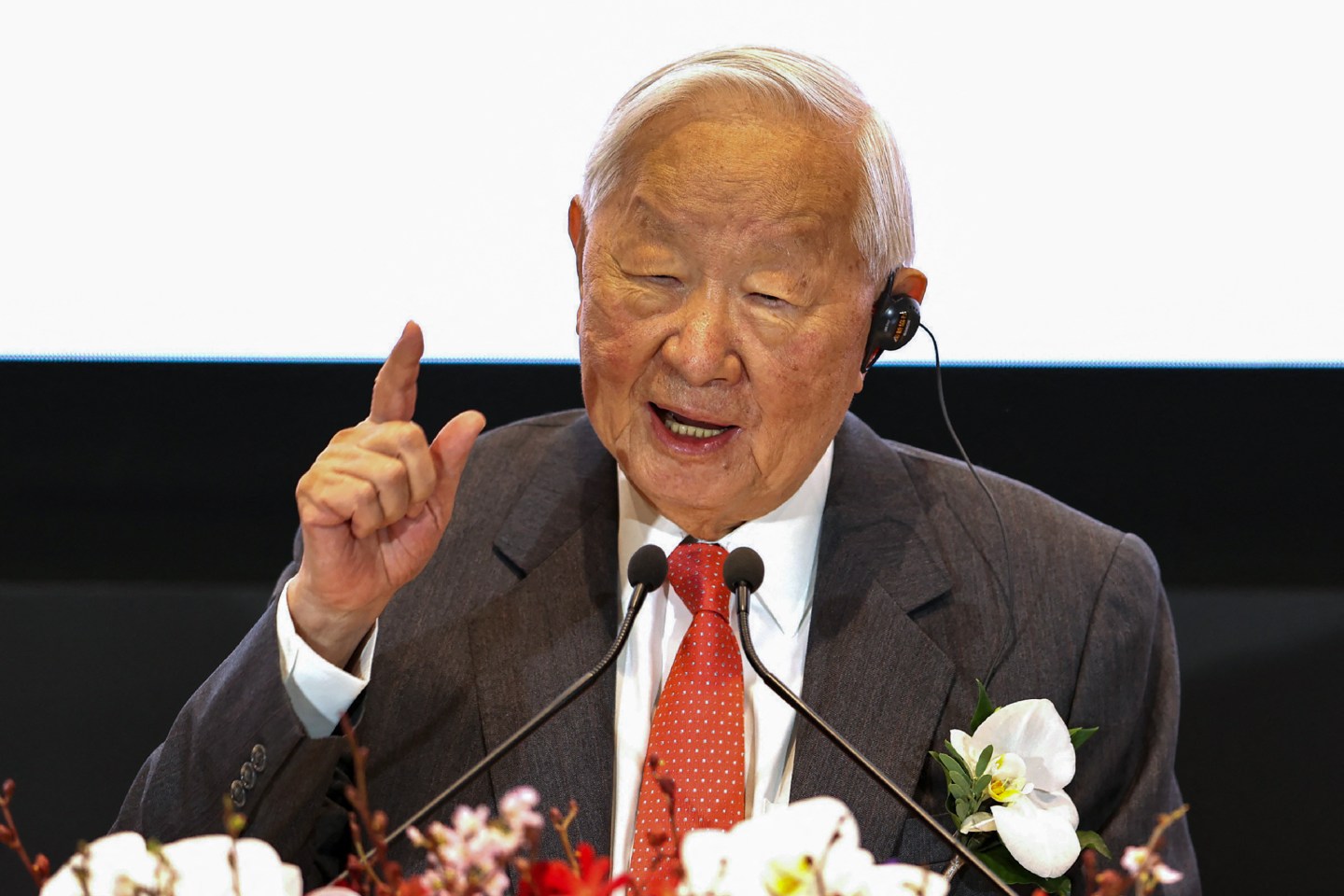
Morris Chang, founder of TSMC, predicted the company's new Kyushu plant will help revive Japan's once-world-leading chip industry.
Morris Chang, founder of TSMC, predicted the company's new Kyushu plant will help revive Japan's once-world-leading chip industry. STR/Jiji Press/AFP/Getty Images

Morris Chang, founder of Taiwan Semiconductor Manufacturing Company, gave a bold prediction when he opened the chipmaker’s new facility in Japan’s Kyushu island on Feb. 24. Chang predicted that the new foundry, backed by billions of dollars in Japanese government money, would spark “a renaissance of semiconductors” for the Asian country.

Recommended Video

Most chip conversations focus on Taiwan or South Korea, which host some of the world’s leading chipmaking companies. Governments are courting firms like TSMC, Samsung and SK Hynix to set up new facilities in their countries, ostensibly to boost supply chain resiliency.

But it was a different picture 50 years ago. In the 1980s, six of the top 10 chip manufacturers were Japanese. The country’s manufacturers controlled about half the market in 1988. But Japan’s chip dominance faded due to a combination of changing market trends, the rise of new competition, and geopolitical pressure. 

Now, Tokyo hopes it can revive its chip fortunes with a new government strategy backed by billions of dollars—with TSMC’s plant as the first stage in Chang’s predicted “renaissance.” 

TSMC’s new plant on ‘Silicon Island’

Much like how the U.S. has Silicon Valley and Taiwan has Hsinchu Industrial Park, Japan has its own chipmaking hub: “Silicon Island,” the industry’s nickname for the island of Kyushu.

Some of the companies with bases on Japan’s third-largest island include Tokyo Electron, Sony and Renesas. And now it’s also home to a new plant from the world’s leading producer of leading-edge chips: TSMC. The world’s largest contract chip manufacturer opened the plant on Feb. 24 in Kyushu’s Kumamoto prefecture.

The plant is a joint venture including local heavyweights Sony and Denso. The Japanese government chipped in too, allotting 476 billion Japanese yen ($3.2 billion) in grant money. Tokyo is promising an additional 732 billion yen ($4.9 billion) in further support for a second TSMC plant. The Taiwanese chipmaker said in early February it was opening a second plant with Toyota joining as a new investor.

The TSMC plant is the first step in what Tokyo hopes will be a revival of Japan’s chip industry. In June 2021, the Japanese government released a strategy that put semiconductors at the center of its economic security policy. Tokyo promised subsidies for domestic chip manufacturing, a research center for advanced chips, and a deeper partnership with the U.S.

“If TSMC is there, that means [Japan’s chipmaking] capacity will be much bigger than before,” says Helen Chiang, who leads Asia semiconductor research at the consulting firm IDC. “It can attract other companies to invest in Japan, like Intel or Samsung.”

A chip renaissance

Japan used to dominate the semiconductor industry. Large domestic demand for chips helped to support the sector between the 1960s to 1980s, expanding Japan’s share of semiconductor design and manufacturing. Japanese firms also had easier access to financing than their U.S. counterparts. Soon, companies like NEC, Hitachi and Toshiba were taking over the global market. 

But eventually Japan lost ground to other economies like South Korea and Taiwan. While some observers point to the rise of firms like TSMC and Samsung that invested in foundries, or missed opportunities during the PC boom, Chiang thinks the reason for Japan’s decline is partly due to geopolitics. The U.S. saw Japan as an economic rival starting from the 1970s, and may have worked with South Korean firms as an alternative, she suggests.

In the 1980s, U.S. companies complained that Japanese firms were dumping chips onto the U.S. market. The Semiconductor Industry Association in the U.S. and companies like Micron and Intel filed anti-dumping lawsuits against Japanese exporters in 1985. 

One year later, Japan agreed to voluntarily limit its sales to the U.S., and pledged to open up at least 20% of its own market to foreign producers.

Today, Japan is nowhere near the cutting-edge when it comes to chip production, with its most advanced foundries producing chips that are a decade behind what TSMC can do, at best. 

Yet Chiang emphasizes that Japan still has a firm grip on the market when it comes to supplying equipment to make semiconductors. 

And that gives Japan some leverage in the chip industry. In early 2023, Japan and the Netherlands agreed to limit the export of advanced chip making equipment to Chinese companies, aligning themselves with U.S. efforts to constrain China’s chip sector. That had an unexpected consequnce: Chinese companies scrambled to grab chipmaking tools that were not subject to export restrictions. Strong demand for chip making tools helped grow Japan’s exports to China by 29% in January.  

Japan’s next steps

TSMC’s current plant in Japan will begin production by the end of the year, and will develop chips in the 12 nanometer to 28 nanometer range, which will be the most advanced semiconductors produced in Japan.

That advanced production will raise the level of talent in Japan, Chiang says. Japanese firms can learn from being a part of TSMC’s production in the country. Companies may even be able to build a long-term relationship with TSMC, perhaps working with the Taiwanese manufacturer with its planned facility in Germany, scheduled to start operation in 2027.

TSMC isn’t the only chipmaker attracted by Tokyo’s offer of money. Samsung and U.S.-headquartered Micron are also planning massive investments in Japan.

“Japan will play a more important role” in the chip sector going forward, Chiang says. “It will not only have the stream of materials and equipment, but [Japan] will enlarge [its] influence in foundries.”

Japanese officials are already hopeful that the TSMC project will boost the surrounding economy. Above-average pay at the plant is already having “a ripple effect” on the surrounding area, Ken Saito, Japan’s economy minister, said at the opening ceremony on Feb. 24. 

But there’s still more work to be done to reverse the country’s fortunes. “To revive the Japanese chip industry, this is where the real challenge begins,” he said.


Join us at the Fortune Workplace Innovation Summit May 19–20, 2026, in Atlanta. The next era of workplace innovation is here—and the old playbook is being rewritten. At this exclusive, high-energy event, the world’s most innovative leaders will convene to explore how AI, humanity, and strategy converge to redefine, again, the future of work. Register now.
About the Author
By Lionel LimAsia Reporter
LinkedIn icon

Lionel Lim is a Singapore-based reporter covering the Asia-Pacific region.

See full bioRight Arrow Button Icon

Latest in Tech

Finance
Lorem ipsum dolor sit amet, consectetur adipiscing elit, sed do eiusmod tempor incididunt ut labore et dolore magna aliqua. Ut enim ad minim veniam
By Fortune Editors
October 20, 2025
Finance
Lorem ipsum dolor sit amet, consectetur adipiscing elit, sed do eiusmod tempor incididunt ut labore et dolore magna aliqua. Ut enim ad minim veniam
By Fortune Editors
October 20, 2025
Finance
Lorem ipsum dolor sit amet, consectetur adipiscing elit, sed do eiusmod tempor incididunt ut labore et dolore magna aliqua. Ut enim ad minim veniam
By Fortune Editors
October 20, 2025
Finance
Lorem ipsum dolor sit amet, consectetur adipiscing elit, sed do eiusmod tempor incididunt ut labore et dolore magna aliqua. Ut enim ad minim veniam
By Fortune Editors
October 20, 2025
Finance
Lorem ipsum dolor sit amet, consectetur adipiscing elit, sed do eiusmod tempor incididunt ut labore et dolore magna aliqua. Ut enim ad minim veniam
By Fortune Editors
October 20, 2025
Finance
Lorem ipsum dolor sit amet, consectetur adipiscing elit, sed do eiusmod tempor incididunt ut labore et dolore magna aliqua. Ut enim ad minim veniam
By Fortune Editors
October 20, 2025

Most Popular

Finance
Lorem ipsum dolor sit amet, consectetur adipiscing elit, sed do eiusmod tempor incididunt ut labore et dolore magna aliqua. Ut enim ad minim veniam
By Fortune Editors
October 20, 2025
Finance
Lorem ipsum dolor sit amet, consectetur adipiscing elit, sed do eiusmod tempor incididunt ut labore et dolore magna aliqua. Ut enim ad minim veniam
By Fortune Editors
October 20, 2025
Finance
Lorem ipsum dolor sit amet, consectetur adipiscing elit, sed do eiusmod tempor incididunt ut labore et dolore magna aliqua. Ut enim ad minim veniam
By Fortune Editors
October 20, 2025
Finance
Lorem ipsum dolor sit amet, consectetur adipiscing elit, sed do eiusmod tempor incididunt ut labore et dolore magna aliqua. Ut enim ad minim veniam
By Fortune Editors
October 20, 2025
Finance
Lorem ipsum dolor sit amet, consectetur adipiscing elit, sed do eiusmod tempor incididunt ut labore et dolore magna aliqua. Ut enim ad minim veniam
By Fortune Editors
October 20, 2025
Finance
Lorem ipsum dolor sit amet, consectetur adipiscing elit, sed do eiusmod tempor incididunt ut labore et dolore magna aliqua. Ut enim ad minim veniam
By Fortune Editors
October 20, 2025
Rankings
  • 100 Best Companies
  • Fortune 500
  • Global 500
  • Fortune 500 Europe
  • Most Powerful Women
  • Future 50
  • World’s Most Admired Companies
  • See All Rankings
Sections
  • Finance
  • Leadership
  • Success
  • Tech
  • Asia
  • Europe
  • Environment
  • Fortune Crypto
  • Health
  • Retail
  • Lifestyle
  • Politics
  • Newsletters
  • Magazine
  • Features
  • Commentary
  • Mpw
  • CEO Initiative
  • Conferences
  • Personal Finance
  • Education
Customer Support
  • Frequently Asked Questions
  • Customer Service Portal
  • Privacy Policy
  • Terms Of Use
  • Single Issues For Purchase
  • International Print
Commercial Services
  • Advertising
  • Fortune Brand Studio
  • Fortune Analytics
  • Fortune Conferences
  • Business Development
About Us
  • About Us
  • Editorial Calendar
  • Press Center
  • Work At Fortune
  • Diversity And Inclusion
  • Terms And Conditions
  • Site Map
  • Facebook icon
  • Twitter icon
  • LinkedIn icon
  • Instagram icon
  • Pinterest icon

Latest in Tech

Elon Musk, wearing all black and in front of a blue background, presses his hands together.
Big TechDavos
Elon Musk makes the case for why his $2.2 trillion tech empire is the only way to save humanity as the only intelligent life in the universe
By Sasha RogelbergJanuary 22, 2026
12 hours ago
sternfels
CommentaryConsulting
AI makes human intelligence more important, not less 
By Bob Sternfels and Lucy PerezJanuary 22, 2026
16 hours ago
Building with a Deloitte company sign
Future of WorkConsulting
Deloitte to scrap traditional job titles as AI ushers in a ‘modernization’ of the Big Four
By Jake AngeloJanuary 22, 2026
16 hours ago
NewslettersEye on AI
OpenAI’s former head of sales is entering VC. She still calls herself an ‘AGI sherpa’
By Sharon GoldmanJanuary 22, 2026
17 hours ago
David Sacks gestures during a speech outside the White House
AITech
America could ‘lose the AI race’ because of too much ‘pessimism,’ White House AI czar David Sacks says
By Tristan BoveJanuary 22, 2026
17 hours ago
Elon Musk, in front of a blue "World Economic Forum" background, puts his hand to his mouth.
EnergyDavos
Elon Musk warns the U.S. could soon be producing more chips than we can turn on. And China doesn’t have the same issue
By Sasha RogelbergJanuary 22, 2026
17 hours ago

Most Popular

placeholder alt text
Economy
'Some form of crisis is almost inevitable': The $38 trillion national debt will soon be growing faster than the U.S. economy itself, watchdog warns
By Nick LichtenbergJanuary 22, 2026
17 hours ago
placeholder alt text
Success
Nvidia CEO Jensen Huang says ‘a lot’ of six-figure jobs in plumbing and construction are about to be unlocked because someone needs to build all these new AI centers
By Preston ForeJanuary 21, 2026
2 days ago
placeholder alt text
Politics
Jamie Dimon tells Davos: ‘You didn’t do a particularly good job making the world a better place’
By Eleanor PringleJanuary 21, 2026
2 days ago
placeholder alt text
Energy
Elon Musk warns the U.S. could soon be producing more chips than we can turn on. And China doesn’t have the same issue
By Sasha RogelbergJanuary 22, 2026
17 hours ago
placeholder alt text
Economy
Jamie Dimon says he’d have no issue paying higher taxes if it actually went to people who need it. Right now it just goes to the Washington ‘swamp’
By Eleanor PringleJanuary 21, 2026
2 days ago
placeholder alt text
AI
Elon Musk says that in 10 to 20 years, work will be optional and money will be irrelevant thanks to AI and robotics
By Sasha RogelbergJanuary 19, 2026
4 days ago

© 2026 Fortune Media IP Limited. All Rights Reserved. Use of this site constitutes acceptance of our Terms of Use and Privacy Policy | CA Notice at Collection and Privacy Notice | Do Not Sell/Share My Personal Information
FORTUNE is a trademark of Fortune Media IP Limited, registered in the U.S. and other countries. FORTUNE may receive compensation for some links to products and services on this website. Offers may be subject to change without notice.