• Home
  • Latest
  • Fortune 500
  • Finance
  • Tech
  • Leadership
  • Lifestyle
  • Rankings
  • Multimedia
ConferencesPfizer
Asia

Pfizer CEO Albert Bourla wants to tap ‘Chinese science’ as the drug company looks for a new target after COVID

By
Lionel Lim
Lionel Lim
Asia Reporter
Down Arrow Button Icon
By
Lionel Lim
Lionel Lim
Asia Reporter
Down Arrow Button Icon
October 12, 2023, 6:34 AM ET
Pfizer CEO Albert Bourla wants to bring the same speed used in developing the COVID vaccine to developing cancer treatments.
Pfizer CEO Albert Bourla wants to bring the same speed used in developing the COVID vaccine to developing cancer treatments. Pat Greenhouse—The Boston Globe/Getty Images

Addressing COVID-19 helped boost Pfizer’s sales to record levels. Now, with the pandemic increasingly in the rearview mirror, CEO Albert Bourla says cancer is the company’s next big target—and thinks “Chinese science” can be the source of new innovations to “help the world’s patients.”

Recommended Video

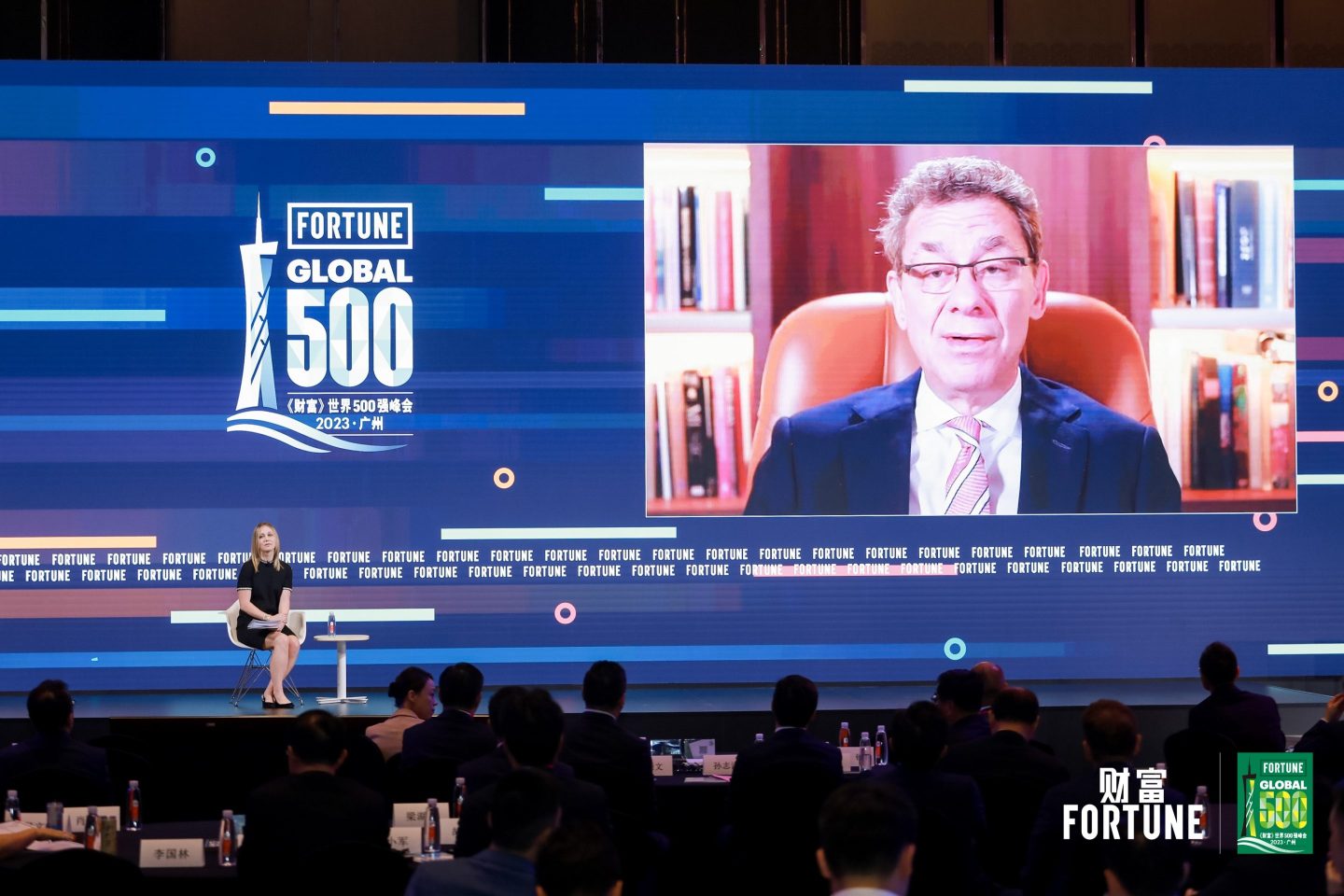
Pfizer needs new goals as it shifts to a “period of peace,” after a “period of war” during the COVID pandemic, Bourla told Fortune editor-in-chief Alyson Shontell at the Fortune Global 500 Summit in Guangzhou on Thursday.

Bourla, who spoke via video link, referenced a motto he often used to motivate employees during the pandemic in describing the company’s approach to cancer medicine.

“Time is life,” Bourla said. “If we were able to bring a cancer medicine [to market] one year earlier, that means…a very different world for a father or a mother,” he continued.

The Pfizer CEO suggested the company’s success partnering with Germany’s BioNTech on a COVID vaccine, which they brought from formulation to market in just under a year, was cause for optimism. “The question that we ask ourselves is, if we were able to do it with COVID, why not with cancer?” he said. (Before the COVID pandemic, it might have taken up to a decade for a pharmaceutical company to bring a vaccine to market.)

The industry might soon be able to match that speed when it comes to cancer treatments, Bourla suggested. “We have a very, very good understanding of why cancer is created, why some medicines work and then [stop] working,” he said, predicting that both Pfizer and the broader industry will soon be able to introduce new products “every month and every year.”

Time for a pivot

Pfizer’s speed with COVID treatments was good for its business. The company reported a record $100 billion in revenue for 2022. COVID vaccine sales alone came in at almost $38 billion.

But now the boom in COVID treatments is fading.

Pfizer needs another win on the scale of the COVID-19 vaccine or its COVID treatment Paxlovid. In its recent earnings, the company reported a more than 50% decline in sales for its fiscal second quarter when compared with the same period a year ago, and blamed an expected decline in demand for its COVID treatments. Pfizer will release its next quarterly earnings report at the end of October.

Earlier this year, Pfizer agreed to acquire the oncology-focused biotech company Seagen for $43 billion, one of the largest acquisitions in 2023 thus far. On Thursday, Bourla suggested the purchase would double Pfizer’s capacity for cancer research.

The deal’s size is attracting regulatory scrutiny: The U.S. Federal Trade Commission has asked for more details, and the EU will decide whether to further probe the deal next week.

Tapping Chinese science

On Thursday, Bourla said he hoped to tap into Chinese expertise in Pfizer’s search for new treatments. There’s been “tremendous progress” in Chinese science, he said, and expressed hopes for “tangible examples of collaboration” in the coming years.

“We can make a difference by enabling [Chinese biotech firms] to do better,” he said.
Fortune China

Chinese biopharmaceutical companies could start to transform the global ecosystem for drug development by 2028, predicts an August report from McKinsey & Co. By early 2022, the report said, “China lagged behind only the United States in the market capitalization of biotech companies that had launched since 2015”; the report also noted that China has worked to bring its regulatory system more in line with global standards.

In March of this year, Pfizer signed on to “Healthy China 2030,” an official initiative to expand China’s health coverage and develop its medical industry. At the time, the company said it would focus on improving the health of rural populations.

“The good thing with the Chinese government is that they are very strategic about their priorities,” Bourla said on Thursday. “The best and safest way to be able to have an impact [is] when the efforts of your company and the efforts of the government are all aligned.”

Pfizer is also partnering with local pharmaceutical giants, like Sinopharm and CSPC Pharmaceutical Group, to market and manufacture products like Paxlovid domestically. BioNTech, Pfizer’s partner in creating its COVID vaccine, also won approval from Beijing to provide its mRNA vaccine in China last December—though only to foreigners, and not to locals.

Yet U.S. politicians and officials are increasingly skeptical of business ties between U.S. companies and China.

Chinese biotech was briefly in the crosshairs of the Biden administration in 2022, with one official saying last October that he’d “put down money” on new U.S. controls on the sector. Ultimately, the White House spared biotech from its recently announced ban on U.S. entities investing in strategic technologies in China.

Join us at the Fortune Workplace Innovation Summit May 19–20, 2026, in Atlanta. The next era of workplace innovation is here—and the old playbook is being rewritten. At this exclusive, high-energy event, the world’s most innovative leaders will convene to explore how AI, humanity, and strategy converge to redefine, again, the future of work. Register now.
About the Author
By Lionel LimAsia Reporter
LinkedIn icon

Lionel Lim is a Singapore-based reporter covering the Asia-Pacific region.

See full bioRight Arrow Button Icon

Latest from our Conferences

InnovationBrainstorm AI
Backflips are easy, stairs are hard: Robots still struggle with simple human movements, experts say
By Nicholas GordonDecember 11, 2025
2 days ago
ConferencesBrainstorm AI
Exelon CEO: The ‘warning lights are on’ for U.S. electric grid resilience and utility prices amid AI demand surge
By Jordan BlumDecember 9, 2025
4 days ago
AIBrainstorm Design
AI’s reliance on patterns can lead to ‘somewhat mediocre’ results, warns CEO of design consultancy IDEO
By Andrew StaplesDecember 9, 2025
5 days ago
Logo of Fortune Brainstorm AI conference
ConferencesBrainstorm AI
Fortune Brainstorm AI 2025 Livestream
By Fortune EditorsDecember 8, 2025
6 days ago
Workplace CultureBrainstorm Design
How two leaders used design thinking and a focus on outcomes to transform two Fortune 500 giants
By Christina PantinDecember 4, 2025
10 days ago
Workplace CultureBrainstorm Design
Designer Kevin Bethune: Bringing ‘disparate disciplines around the table’ is how leaders can ‘problem solve the future’
By Fortune EditorsDecember 3, 2025
11 days ago

Most Popular

placeholder alt text
Success
Apple cofounder Ronald Wayne sold his 10% stake for $800 in 1976—today it’d be worth up to $400 billion
By Preston ForeDecember 12, 2025
2 days ago
placeholder alt text
Economy
Tariffs are taxes and they were used to finance the federal government until the 1913 income tax. A top economist breaks it down
By Kent JonesDecember 12, 2025
2 days ago
placeholder alt text
Success
40% of Stanford undergrads receive disability accommodations—but it’s become a college-wide phenomenon as Gen Z try to succeed in the current climate
By Preston ForeDecember 12, 2025
2 days ago
placeholder alt text
Economy
The Fed just ‘Trump-proofed’ itself with a unanimous move to preempt a potential leadership shake-up
By Jason MaDecember 12, 2025
1 day ago
placeholder alt text
Success
Apple CEO Tim Cook out-earns the average American’s salary in just 7 hours—to put that into context, he could buy a new $439,000 home in just 2 days
By Emma BurleighDecember 12, 2025
2 days ago
placeholder alt text
Economy
For the first time since Trump’s tariff rollout, import tax revenue has fallen, threatening his lofty plans to slash the $38 trillion national debt
By Sasha RogelbergDecember 12, 2025
2 days ago
Rankings
  • 100 Best Companies
  • Fortune 500
  • Global 500
  • Fortune 500 Europe
  • Most Powerful Women
  • Future 50
  • World’s Most Admired Companies
  • See All Rankings
Sections
  • Finance
  • Leadership
  • Success
  • Tech
  • Asia
  • Europe
  • Environment
  • Fortune Crypto
  • Health
  • Retail
  • Lifestyle
  • Politics
  • Newsletters
  • Magazine
  • Features
  • Commentary
  • Mpw
  • CEO Initiative
  • Conferences
  • Personal Finance
  • Education
Customer Support
  • Frequently Asked Questions
  • Customer Service Portal
  • Privacy Policy
  • Terms Of Use
  • Single Issues For Purchase
  • International Print
Commercial Services
  • Advertising
  • Fortune Brand Studio
  • Fortune Analytics
  • Fortune Conferences
  • Business Development
About Us
  • About Us
  • Editorial Calendar
  • Press Center
  • Work At Fortune
  • Diversity And Inclusion
  • Terms And Conditions
  • Site Map

© 2025 Fortune Media IP Limited. All Rights Reserved. Use of this site constitutes acceptance of our Terms of Use and Privacy Policy | CA Notice at Collection and Privacy Notice | Do Not Sell/Share My Personal Information
FORTUNE is a trademark of Fortune Media IP Limited, registered in the U.S. and other countries. FORTUNE may receive compensation for some links to products and services on this website. Offers may be subject to change without notice.