- Masters winners can earn millions of dollars for placing at the iconic golf tournament. That’s much more than the original $1,500 prize for the winner of the inaugural tournament in 1934. Some professional golfers claim, though, that the money isn’t the reason they’re playing in the tournament.
There are few enduring traditions of the Masters tournament, one of the four main championships in men’s professional golf: the iconic green blazer awarded to the winner, caddies’ white jumpsuits, the Champions Dinner, the Par 3 Contest, and egg salad sandwiches. In fact, sports broadcaster Jim Nantz coined the Masters as a “tradition unlike any other.”
But one major factor that’s changed over the 92 years since the inaugural tournament is the payout for the winner.
The original purse, explained
Back in 1934, Masters founders Bobby Jones and Clifford Roberts set up a $5,000 “purse,” or pool of money, for tournament participants, with $1,500 going to the winner and descending incremental amounts going to other place finishers, according to Today’s Golfer.
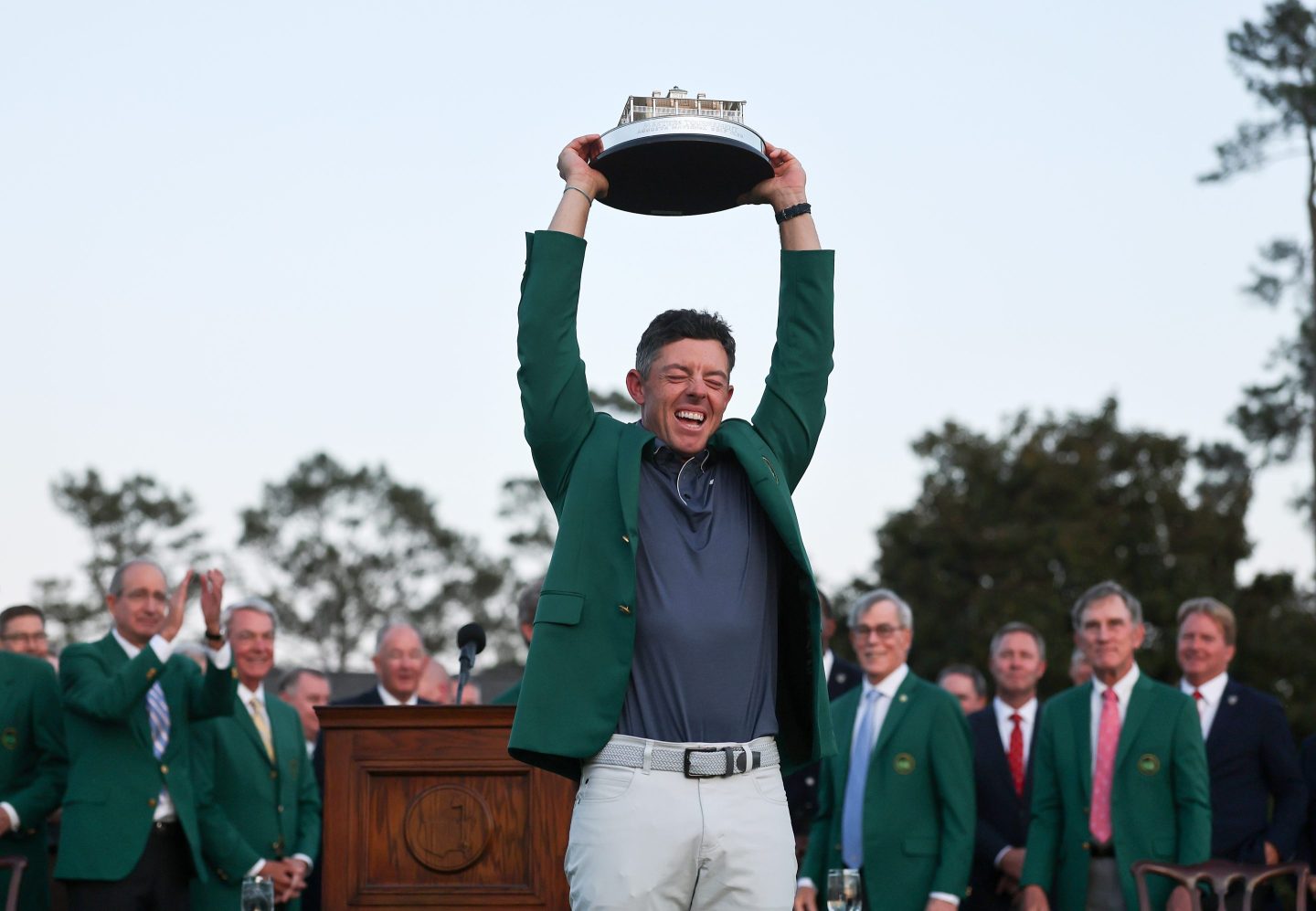
The $1,500 prize that went to inaugural winner Horton Smith would be worth more than $37,000 in purchasing power today, according to the U.S. Bureau of Labor Statistics’ CPI Inflation Calculator. Although the official purse and winner’s payout for the 2026 Masters tournament hasn’t yet been finalized, Rory McIlroy’s payout in 2025 was a record-breaking $4.2 million. That’s over 113 times more than Smith’s payout in 1934. As of June 2025, McIlroy’s net worth was estimated at about $84 million, according to Forbes.
How prize money has grown over 92 years
The total purse in 2025 was $21 million, so the top 50 players or so left with a pay day. The top four players at last year’s Masters went home with more than $1 million, and places one through 25 earned well over $100,000. That was the largest purse in Masters history, and the pool of money has always stayed the same or increased, Today’s Golfer reports.
McIlroy told Sky Sports in 2022 that anyone who thinks golfers are underpaid “need their heads examined.”
“I play golf for a living. There’s nurses and teachers and they’re the ones that should be getting paid a lot more,” McIlroy said. “So, I just wouldn’t feel right at all saying that I get underpaid for playing a game for a living.”
Looking back, iconic golfer Arnold Palmer—namesake for the popular lemonade-iced-tea drink—was the first Masters winner to go home with a five-figure payout in 1958, according to Golfweek. By 1984, the winner’s payout reached six figures, but it wasn’t until 2001 that a Masters winner earned more than $1 million from the tournament: that honor went to Tiger Woods.
Although Ben Hogan earned just $3,000 for winning the 1951 Masters and $5,000 for the 1953 tournament, he famously said it was more about the game than the money.
“If the Masters offered no money at all, I would be here trying just as hard,” Hogan said.
What $1,500 buys you in 2026 (not much)
While $1,500 went much further back in 1934 than it does today, its current monetary equivalent of about $37,000 won’t get people too far. It’s not nearly enough to put a down payment on a typical home, according to Zillow. The average down payment on a house in the U.S. is nearly $80,000, according to Bankrate. That’s 19% of the median sale price in the fourth quarter, which was $414,900.
But the 2025 Masters payout of $4.2 million could afford a player the chance to buy a median-priced home in Los Angeles, which would set them back about $1.1 million, according to Realtor.com.
The Masters payout for 1934 also wouldn’t be enough to buy a brand-new Tesla; some models start around $50,000. But today’s winner could afford a fleet of new cars—or splurge on an expensive sports car.
The average player on the PGA Tour in the 2021 season earned $1.5 million, according to Sports Illustrated.
A version of this story was originally published on Fortune.com on April 8, 2025.