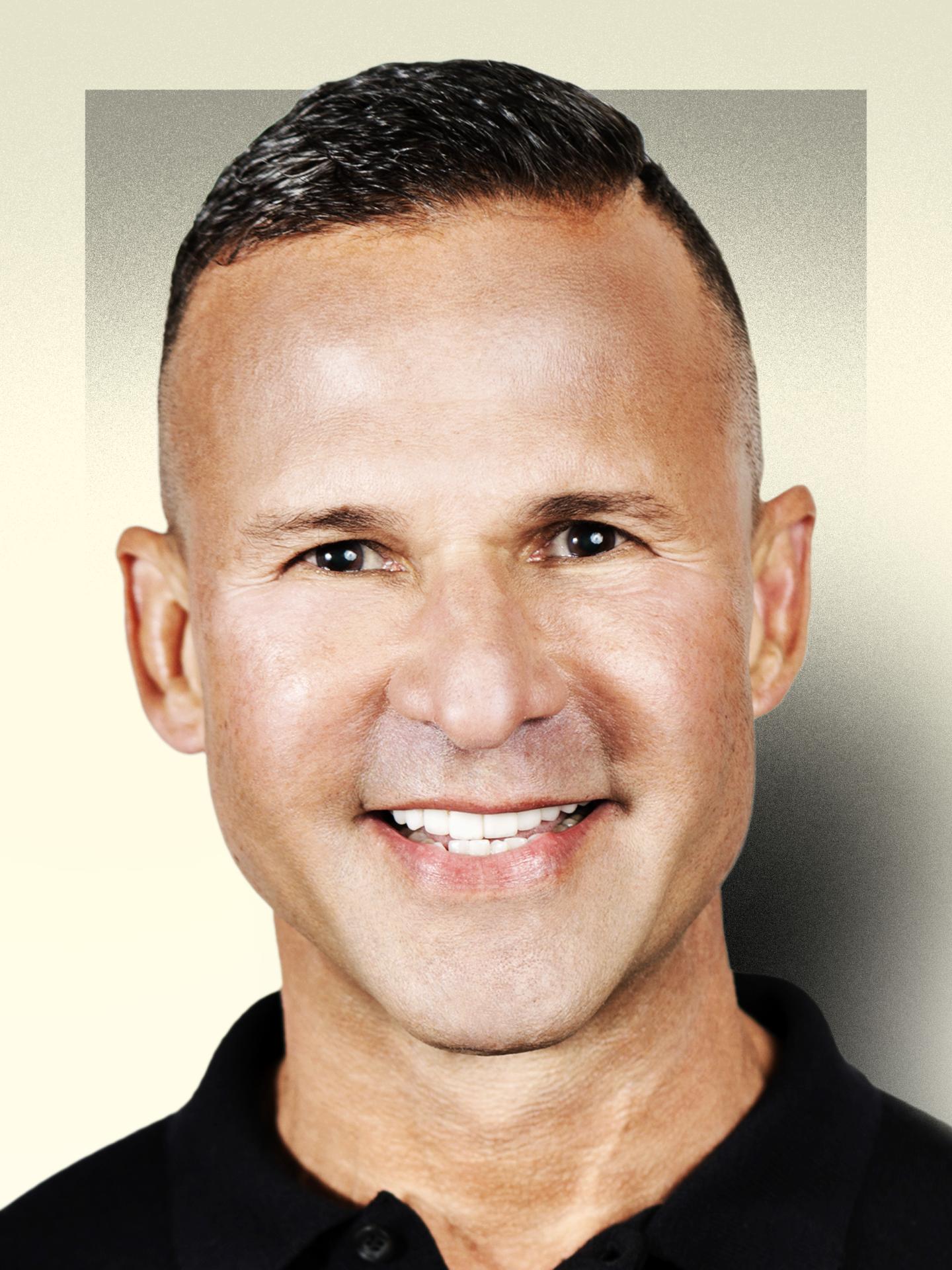
Carlos Abrams-Rivera has a big job on his hands.
The CEO of Kraft Heinz, who took on the top role in January of 2024, has extensive experience in the consumer packaged goods (CPG) sector. He started his career at Kraft Foods, and previously worked at Mondelez and Campbell. Now, his task is to turn around the fortunes of a company rich in brand names like Kool Aid, Jello-O and Lunchables, but struggling with its sales and stock price.
Strong headwinds are challenging the CPG sector overall—the three-year return for the group, as tracked by Yahoo Finance, is down 21%, while the S&P has climbed around 8.75% over that same period. Meanwhile, Kraft Heinz’s stock price peaked in 2017, falling from $96.65 in February of that year to $20.06 in March of 2020, a 79% decline. The stock is currently hovering around $29. Along with nearly every other company in America, it’s now also facing a deeply uncertain tariff environment. Revenue declined last year, and in Q1 earnings for 2025, the company announced a 6.4% net sales decrease. It also lowered its outlook for organic net sales and adjusted EPS.
Abrams-Rivera has been particularly vocal about innovation, and how to make Kraft Heinz (No. 156 on the 2024 Fortune 500) think more like a tech company through things like the Agile @ Scale initiative. That has been in play for four years and now includes around 75 interdisciplinary teams, which the company calls “agile pods,” to work on its biggest pain points and opportunities, including issues around product innovation and the supply chain.
“As I looked around CPG, one of the things that struck me was that most of the companies who have used technical and digital tools to transform the company were not in CPG,” he told Fortune in early April about his thinking when he joined the company. “The way we talked about it at the company was: listen, we have to go in this new direction. And what we’re going to do is we’re going to basically cross this bridge and burn the bridge behind us.”
This interview has been edited and condensed for clarity.
You’ve been CEO for a little more than a year now. What’s the biggest thing you’ve learned so far?
It was certainly a different year than I expected, certainly a lot more eventful and a little more volatile. I think one thing that I’ve actually shared internally with the company is that in moments like this, it’s important not only to have plan A, but have plan A, B and C, because the reality is we cannot foresee everything, but we can be very sure about being able to control those things within our power. So having the clarity of no matter what head winds are coming at you that you were focused on driving execution on those things you can control, is probably one of the biggest learnings as I think about the first year.
The other thing is, it gave me the opportunity last year to really connect to the company. As I went around the company, being able to see our people very excited about our company, very excited about our future, and frankly, that has given me quite a bit of inspiration. At the end of the year we had our engagement survey—in spite of a very turbulent 2024, we had the highest engagement we’ve ever had at this company. So even with the change in CEO, with the volatile environment, I think people are very much connected to our company, believe in what we’re doing, and believe in our future.
“It’s important not only to have plan A, but have plan A, B, and C.”
Carlos Abrams-Rivera, CEO, Kraft Heinz
Speaking to that volatility: last year revenue and sales were down last year. It looks like it’s going to be a tough year ahead. What headwinds is the company facing right now?
I think first of all, as I said, it’s a volatile environment, I think we can all agree with that. And I think as we’re starting the year, what you’re seeing is a little bit more of the continuation of 2024 in terms of the consumer under pressure. That idea of the consumer continuing to focus on driving the best value, continuing to shop at different venues and expanding the number of trips they’re doing, we continue to see that.
That expectation to potentially reduce interest rates hasn’t happened, and I don’t think it’s going to happen for a while. So if you think about that consumer who is having to manage the cash flow of the family, whether that is their mortgage rates, their car payments, their credit cards, they’re going to be looking for value. And I think for me, the important thing is that us as a company continue to drive that sense of how we are going to be on their side to provide value-driven solutions.
Value is not necessarily about just price. Value is also about making sure we have products that have the highest quality, that have the great taste that the whole family can enjoy. So it has to be accessible, it has to be affordable. That’s where different packages come in. Making sure that we have products in different formats in stores, whether that is from a club store, to a Dollar General, to a Walmart. We are going to be in all those venues, in different sizes and packaging that a family can fit within the cash flow, but not compromising the quality and the great taste.
You’ve talked about wanting to innovate at the company. How are you going about that, and what have been some hits and misses?
We think about innovation in two ways. Yes, there is the traditional sense of us bringing new ideas to the world. But it’s also innovation in terms of renovating our core products. And we’re doing both.
If you look at last year, we launched a new set of products on the Taco Bell brand for meal kits that provided a great way for families to have the Taco Bell experience at home in a moment in which they’re looking for good value solutions. That business grew over 24% last year. We saw the consumer pain point, we provided a great value, and it was an innovation that was new to families in the U.S. Now we’re expanding that into Canada as well.
In terms of more challenges, what I will say is there are places where consumers in the past maybe have been willing to spend a little more for, whether it’s premiumization or convenience, that right now they’re thinking maybe there’s a way for us to bring it home. So I think that those things we’re probably going to be doing less of, and we’re going to be focused a little more on our core products to make sure they deliver well. Overall it’s not only what we are doing, but what we are not doing—innovation that is going too far away from our core.
I’ll give you another example when we think about innovation in our core—the idea of us bringing a different packaging and a different size, it may not be a sexy innovation, but it’s a value added to consumers. We can sell a dollar version of our products at Dollar General, as a way for us to solve a pain point for our consumer. So as we think about our Capri Sun and now bringing it into the club environment, which for the first time, we’re out of the pouch, we now have it in a multi serve product for families—that is a core innovation. That may not be the sexiest type of innovation, but it solves a pain point for families that are looking for value too, and a way of keeping them in our franchise for longer.
You’ve talked about focusing in part on emerging markets. Can you tell me more about that?
We actually have increased volume over the last three years in emerging markets. Last year, [Heinz] grew double digits in emerging markets. So we are seeing that that’s a part of our business that continues to do well, that we still have a tremendous amount of white space for us to continue to grow in, and that we have proven already that we have grown.
How are you thinking about the major tariff policy changes happening on the national level right now?
We are very dependent on the local farmers, local agriculture in order for us to deliver our product. Seventy percent of our revenue in Kraft Heinz globally comes from the U.S., and 99% of goods we sell in the U.S. are made in the U.S. So for us, it’s less of a concern, because our tomatoes are grown in California, our potatoes are grown between Oregon and Idaho.
What about selling products in Canada or Mexico?
Mexico is less than 1% of our business, and 70% of the products that we sell in Canada are made in Canada. Our Heinz ketchup is coming from tomatoes that are grown in Canada. Our Philadelphia Cream Cheese is made with dairy from Canada. Our Kraft Mac & Cheese, coming from ingredients in Canada. So all those products are actually sourced locally, even in Canada for the most part.
Consumer sentiment was suffering already in 2024. It’s now reached its lowest point since 2009. Are you sticking with the same plan from last year, or making any adjustments?
There’s a lot of articles being written about a potential recession—those are economic terms. If you are a family who makes $100,000 and your mortgage rate is high, and your cash payments are high, and you have a big credit card, it doesn’t matter what you call it, right? They’re managing their cash flow in the family, and we need to make sure we’re [giving] them products that have great quality, great taste and the same products that they can trust to bring to their homes.
Whatever is happening in terms of economic or stock market changes, that reality is true in 2024 and so far has continued into 2025. So that’s the way in which we can now approach the way we think about providing solutions for families. We have to have the agility for us to move quickly as families may need different things.
One of the things that we’re seeing right now is, again, the idea of families looking for smaller baskets when they go shopping, but going to more places to do the shopping, is something that continues into 2025. So for us, our focus on driving our distribution, so that no matter whether they’re shopping online, they’re shopping at drug [stores], they’re shopping at club [stores], that we are there for them with the right format. So that idea of us continuing to bring that agility in this environment is our focus as we go through the year.
What we are also watching is making sure that in those moments in which families have special occasions, that we also have the right value proposition, in particular, in those critical moments throughout the year. There’s going to be Memorial Day, there’s going to be July Fourth—making sure we have the products with the right price for that particular family, so that they can have a great experience on that particular occasion. So we are going to be also looking at places where it makes sense for us to be a little more thoughtful about our pricing to make sure we can make a better experience for families during those particular moments.
We know that we can be there for those special occasions. That family would also use [our products] afterwards throughout the year. So with both making sure that we are providing the solutions, no matter what the format is, no matter where they’re shopping, and then in those critical moments throughout the year, when we see a lot of families coming to us for opportunities to solve occasion-driven behaviors, and get-togethers, that we are there with the right price, because we know that will help also create the loyalty in the future.