
With its v-shaped base and sloping windows that cantilever outward over the Chicago River, the 54-story skyscraper that houses Hyatt Hotels’ headquarters is a “statement” building that awes tourists and architecture buffs alike. Inside, on the walls of the seventh-floor lobby, there’s a much more modest attraction: a colorful, slightly kitschy exhibit about the hospitality company’s history, stretching along one long wall.
Sepia-toned photos capture Hyatt’s 1950s origins as an airport-adjacent Los Angeles motor lodge; faded Polaroid mockups capture the huge, chandelier-lit atrium lobbies that made its downtown hotels buzzy hubs for wedding receptions and conventions in the 1970s. A cheeky collection of tchotchkes—room keys with candy-colored plastic fobs, royal-blue diner coffee cups, “do not disturb” door hangers—leads the visitor through the decades. The exhibition is still under construction, however, so it stops in the year 2000, giving way to a wall of bare concrete.
That change, from cluttered to spare, is an apt metaphor for the company itself. Over the past dozen years, Hyatt has been transitioning from a hotel company that owns a lot of real estate to a hospitality network that owns a lot of hotel brands. This shift to an asset-light business model has paid off—in higher profits, a warmer reception from Wall Street, and a much bigger footprint in the four- and five-star segments of the hotel economy.
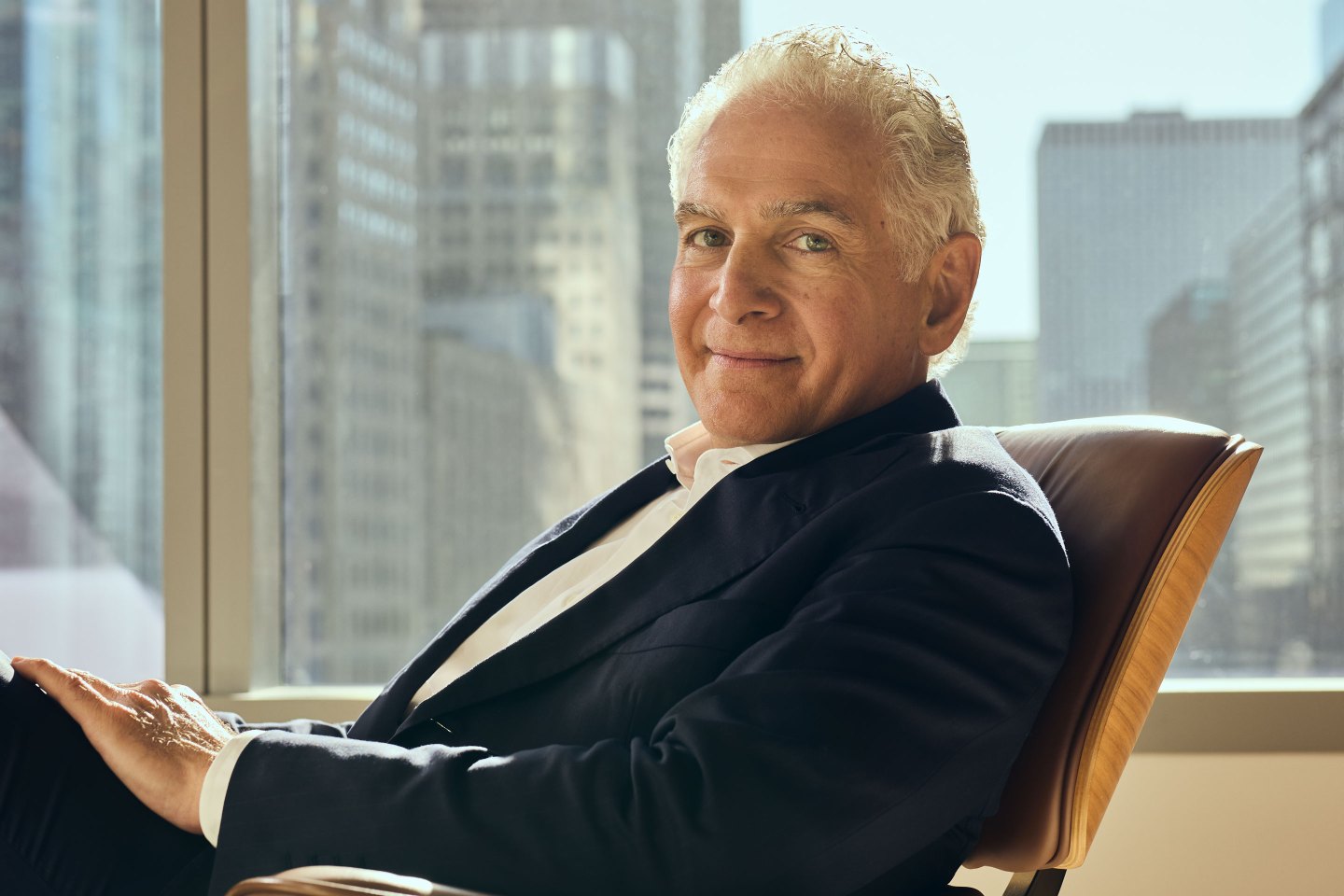
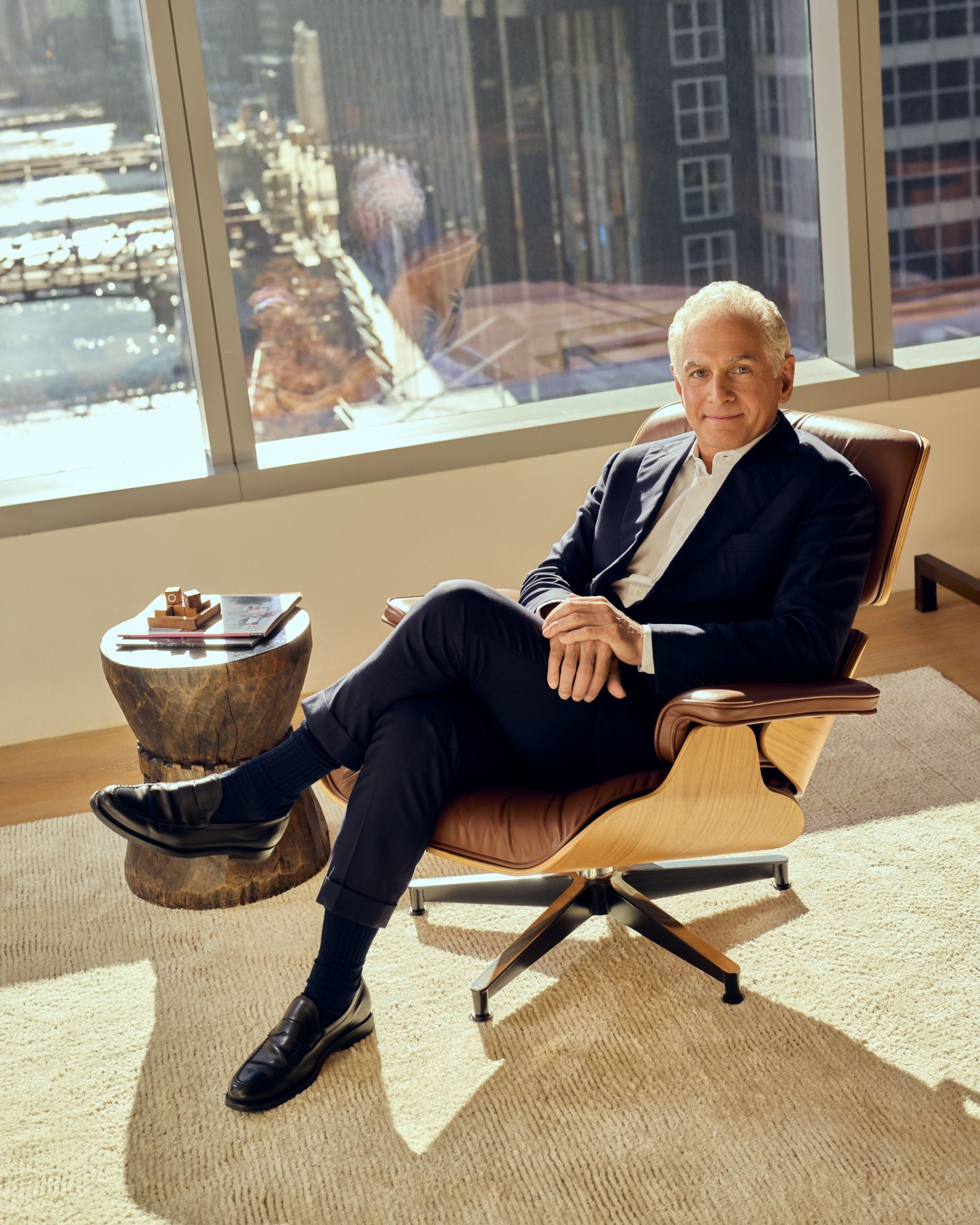
The leader who has steered Hyatt through this decluttering process is Mark Hoplamazian, its chief executive for nearly two decades. (He met with Fortune in December, on the day after his 19th anniversary.) Trim, friendly, and energetic, Hoplamazian says he started the job as a newbie to hospitality—“in a complete state of ignorance,” he recalls, “and it remains true, I have nothing but questions.”
Indeed, Hoplamazian is first and foremost a finance person; after earning an MBA at the University of Chicago’s business school, he spent 17 years as a financial and investment advisor to businesses owned by the Pritzkers, the politically influential family that founded Hyatt and remain its controlling shareholders. (One scion, Illinois Gov. JB Pritzker, is a likely 2028 Democratic presidential candidate.) Hoplamazian’s biggest accomplishment in his early years as CEO included taking Hyatt public in 2009 (ticker symbol: H).
“There’s this idea that you have two ears and one mouth, and you should use them in the same proportion. Really being inquisitive and staying in a learner’s mindset are good, good practices for a leader. I still have to practice that all the time, because things are changing so rapidly.”
Be that as it may, he has learned to talk about the minutiae of resorts, loyalty programs, and amenities with the zeal of a hospitality industry lifer. And his financial savvy has helped Hyatt remake itself into an upscale-lodging conglomerate, a Berkshire Hathaway of luxury hotels, with healthy stock returns to match.
Hyatt wasn’t the first hotel chain to distance itself from the hotelowning business; Hilton and Marriott had a head start. But since Hoplamazian initiated the change, it has gone remarkably quickly, driven in part by his understanding of investors’ mindset.
“Wall Street prefers segregation of different activity bases,” Hoplamazian explains. “If you have a real-estate-intensive business, that’s easy to understand, and [investors] can evaluate that in a certain way. And if you have a fee-based business, you can evaluate that and compare it more easily to others.”
Analysts at J.P. Morgan estimate that Hyatt’s earnings have gone from 44% “fee-based” (income from managing and operating hotels, or licensing them to franchisees) in 2015, to 57% in 2019, to 80% today—and the company is aiming for more than 90% in 2027. It has done this, primarily, by selling off huge swaths of real estate. With less reliance on the appreciation of the properties themselves, fee-based models tend to produce higher and more predictable earnings: A company becomes less vulnerable to swings in the real estate market, while shedding a lot of hefty maintenance costs.
Decluttering the balance sheet
Hyatt has sold off much of its real estate and built its “fee-based” earnings from operating hotels
44%
Hyatt’s fee-based income as a share of total earnings in 2015
90%+
Hyatt’s target for fee-based income as a share of total earnings in FY2027
Source: Hyatt
And selling off all that real estate “really focuses one’s attention,” Hoplamazian says. “Instead of splitting your attention between being a great property owner and asset manager and a brand-builder, you are now really focused on brand-building.”
Just as important, the asset sales freed up billions of dollars in cash, much of which Hoplamazian has deployed to scoop up upscale and luxury hotel lines. Hyatt has made at least 10 such acquisitions since 2017—so many that today, if you stay at a Dream hotel, or the Standard, or a Thompson, or a Miraval spa, or an Alila beach resort in China, or the Gilded Age–era Chicago Athletic Association, you’re actually staying at a Hyatt (which comes in handy when you’re gathering loyalty points). Hyatt now operates almost 1,500 hotels and resorts in roughly 80 countries, and most are managed or franchised rather than owned outright.
Hyatt’s clientele have always skewed a little ritzier than its larger rivals’, but the buying spree has widened that gap. More than 70% of Hyatt’s rooms are in properties classified as “luxury” or “upper upscale,” according to J.P. Morgan, well ahead of the rates at Marriott (51%) and Hilton (28%).
Having expanded this portfolio of pampering properties, Hoplamazian clearly relishes leading them—to say nothing of staying in them. He’s on the road for much of the year, making site visits. Among other things, he’s making sure the company is adapting to an evolving luxury guest demographic. Ultra-high-end marquee properties like the Park Hyatt in Manhattan continue to cater to C-suite executives, as well as “heads of state” and “members of royal families,” Hoplamazian notes (rather casually).
Overall, however, Hyatt’s target demo is skewing younger and hipper. Wooing these customers involves “a sharp attention paid to well-being holistically, how people are eating, where they get their exercise,” he says. Those guests increasingly can find Miraval-branded spa facilities and mindfulness activities at Hyatt properties—luxury synergy in action.
“In ’26, no matter what happens, the so-called K-shaped economy is going to persist. That doesn’t make me happy, by the way.”
Mark Hoplamazian, Hyatt CEO
There’s no brand that exemplifies this segment of the luxury market so well as the design-forward Standard hotel chain, acquired by Hyatt in 2024. Hoplamazian reaches effusive heights gushing about the Standard’s flagship hotel in Manhattan, and its vibrancy as a hub for the young and affluent. “The team is brilliant,” he says. “It’s everything from lighting to music to the flow of people to how you program the space, to how you program the mixology—the level of detail they go to to create the right vibe is extraordinary.”
The high end isn’t Hyatt’s only story. Luxury will likely be its biggest growth engine in the short term, Hoplamazian acknowledges. But he notes that the greatest share of Hyatt’s projects under construction will operate under more affordably priced flags like Hyatt Studios and Hyatt Place. Hyatt’s relatively high reliance on leisure travelers could make it vulnerable in a downturn; those midtier brands, which capture more business clientele, could insulate it if demand shrinks in precarious economic times.
“In ’26, no matter what happens, the so-called K-shaped economy is going to persist,” he remarks. “That doesn’t make me happy, by the way.”
At one point in our conversation, we walk by the bare exhibition wall. When asked what photos or artifacts he’d want to see here—what images would represent his leadership—Hoplamazian draws an uncharacteristic blank. His industry is changing so constantly, he says later, that it’s hard to know what would symbolize it.
Some days, he admits, “I’m back to where I started and seeing the place for the first time.” But as he’s discovered, that beginner’s mindset can serve a leader well.
This article appears in the February/March 2026 issue of Fortune with the headline “The Berkshire Hathaway of hotels: How a numbers guy made Hyatt a luxury giant.”